Patch Backing Options: Engineering Specs That Prevent Field Failures
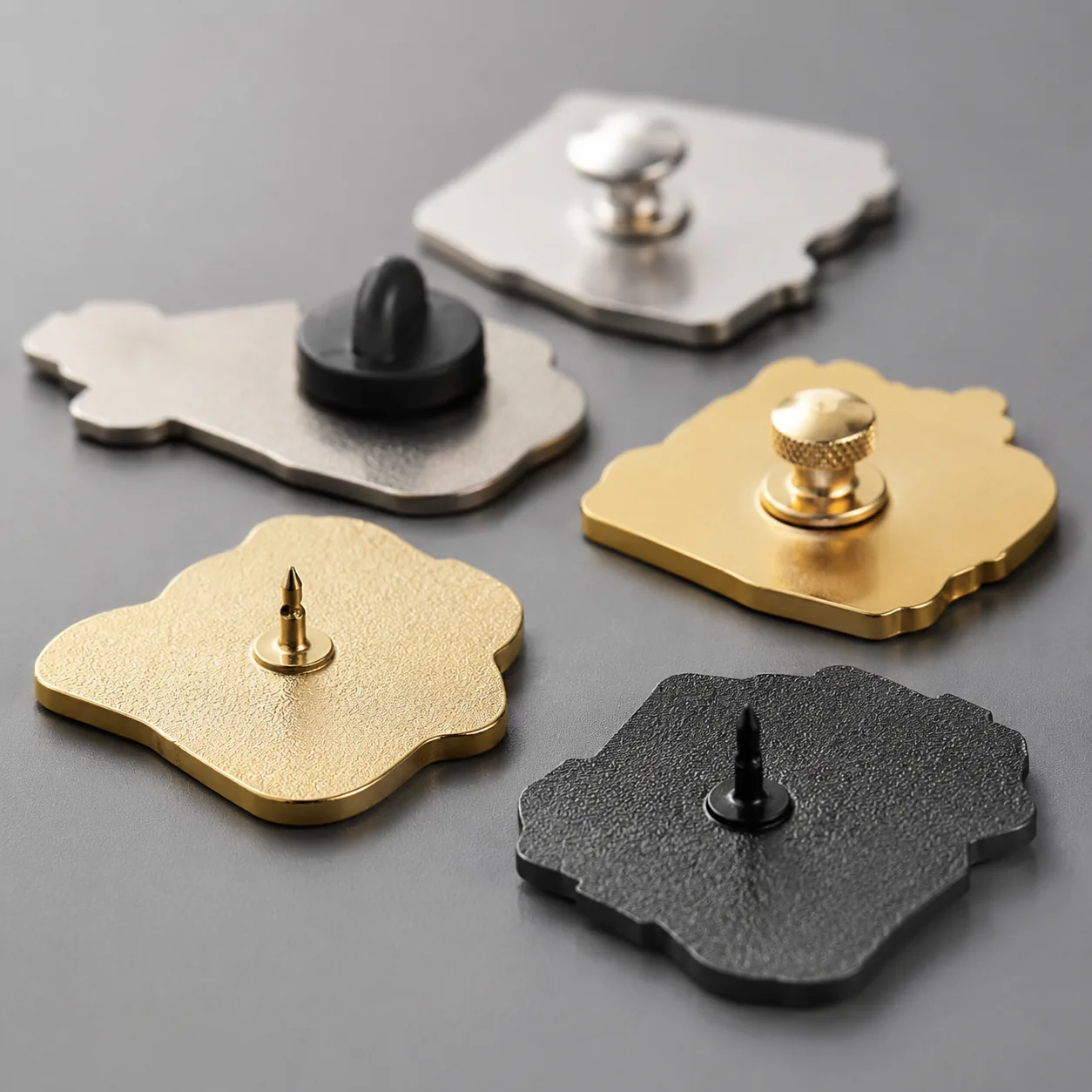
Why approved patches still fail in the field
Most patch failures are not caused by the front artwork. The embroidery can match the Pantone thread callout, the PVC relief can be clean, and the woven text can pass the visual sample, yet the finished item still fails when the backing is wrong for the surface. Common complaints include iron-on patches peeling from coated polyester jackets, hook-backed badges curling on curved sleeves, adhesive-backed patches leaving residue on event apparel, and stiff backing making a cap patch uncomfortable.
For B2B orders, backing should be specified with the same discipline as size, border, thread color and logo position. A workable RFQ states the patch construction, target garment or surface, wash or removal expectations, backing material and thickness, heat-press process, packing method and inspection criteria. If those details are missing, a factory may quote the lowest compatible backing, not the backing that survives the buyer’s use case.
At ZheCraft, patch approval is normally split into three layers: front appearance, backing construction and attachment performance. This matters because backing affects more than adhesion. It changes die-cut tolerance, edge rigidity, total thickness, carton packing, inspection method and sometimes the correct border style. The practical ranges below can be copied into a purchase specification and adjusted after sample testing on the actual garment or surface.
Backing options by use case, cost and lead time
There is no universal best backing. Sew-on patches remain the most durable for washable workwear, denim, caps and bags, but they require sewing access. Heat-seal film is convenient for retail packs and staff distribution, but it is sensitive to fabric coating, heat, pressure and operator technique. Hook-and-loop is the standard choice for removable role badges, tactical patches and uniforms. Pressure-sensitive adhesive is mainly for short-term events, packaging and display use. Magnetic backing is suitable for non-piercing display on metal surfaces, not for laundering or active apparel.
The safest first decision is whether the patch must be permanent, removable or temporary. Permanent washable applications should use sew-on or heat seal plus perimeter stitching. Removable applications should use hook backing, with a matching loop panel supplied if the garment does not already have one. Temporary conference, packaging or point-of-sale use may justify adhesive backing, provided the buyer accepts limited fabric performance.
| Backing type | Best use | Typical add-on cost, USD FOB | Normal MOQ | Lead-time impact |
|---|---|---|---|---|
| Sew-on, no adhesive | Workwear, caps, denim, canvas bags | +0.00 to +0.03 per pc | 100 pcs fabric patches | No extra time |
| Heat-seal iron-on film | Retail patches, school uniforms, light workwear | +0.03 to +0.09 per pc | 100 to 300 pcs | +1 to 2 days |
| Hook side only | Tactical, staff roles, removable morale badges | +0.08 to +0.25 per pc | 100 to 300 pcs | +2 to 4 days |
| Hook and loop pair | Uniform kits without existing loop panels | +0.15 to +0.48 per pc | 100 to 300 pcs | +3 to 5 days |
| Pressure-sensitive adhesive | Events, folders, packaging, display boards | +0.04 to +0.13 per pc | 300 pcs | +1 to 2 days |
| Magnetic backing, PVC or rigid patch | Metal lockers, displays, refrigerator magnets | +0.20 to +0.65 per pc | 300 pcs | +3 to 6 days |
For planning, a 75 mm embroidered patch with merrowed edge commonly ranges from USD 0.35 to 0.95 FOB at 500 pcs before premium backing. A 60 mm woven patch often ranges from USD 0.25 to 0.75 FOB at 500 pcs. A molded PVC patch is usually higher, around USD 0.60 to 1.90 FOB at 500 pcs depending on size, color count, relief depth, mold complexity and backing. These are quoting ranges, not fixed prices; final cost depends on coverage, edge finish, packing, inspection level and current material costs.
Sew-on backing for maximum wash durability
Sew-on patches normally use no adhesive layer, or only a thin stabilizer on the reverse side. Embroidered patches are typically built on twill or felt and finish around 1.2 to 2.5 mm thick, depending on thread coverage and merrow border height. Woven patches are thinner, usually 0.4 to 0.8 mm, which makes them better for small text, curved caps and lightweight apparel. PVC patches vary more widely, commonly 2.0 to 4.0 mm for standard 2D or low 3D designs.
The main benefit is repeatable wash durability. A patch stitched around the full perimeter can outlast heat-seal film on cotton, denim, canvas and many uncoated polyester fabrics. Specify a sewing allowance of at least 2.0 mm from the finished edge, or 2.5 mm on thick merrowed borders, so the garment factory does not stitch through dense edge overlock and distort the shape. On narrow name strips or shield shapes, confirm that the stitch path does not cover small text.
Sew-on is not ideal when end users must attach patches themselves without sewing tools. It is also risky for shapes under 12 mm wide, where the seam path becomes visible or uneven. For production tolerance, embroidered patches should usually be accepted at plus or minus 1.0 mm on outer dimensions because thread tension and border density move during finishing. Woven patches can often hold plus or minus 0.5 mm. PVC patches may hold plus or minus 0.3 to 0.5 mm if the mold is stable and relief height is not excessive.
Iron-on backing: specify film and heat process
Iron-on backing is usually EVA, PES or TPU heat-activated film laminated to the reverse side. Common film thickness is 80 to 180 microns. Thicker film can improve grip on rough or porous fabric but makes the patch feel stiffer and may create a visible glue edge. Thinner film gives a cleaner hand feel but can peel on textured, coated or highly elastic garments. For most apparel patches, PES or TPU film at 100 to 150 microns is a practical starting point.
The critical specification is not just “iron-on”; it is the complete heat process. A controlled factory press often starts at 150 to 165 degrees Celsius, 12 to 18 seconds, medium pressure around 3 to 4 bar, followed by cooling under pressure and cold peel if required by the film. Household irons are less consistent because temperature and pressure vary across the soleplate. Retail patches should include clear application instructions and should not claim industrial wash durability unless tested on the actual fabric.
Iron-on is a poor choice for waterproof coatings, silicone-treated performance fabrics, oily leather, softshell laminates, heat-sensitive prints and some nylon fabrics that glaze or deform under pressure. If the patch will be washed often, specify heat seal plus perimeter stitching rather than relying on film alone. A measurable wash claim is better than a vague “strong adhesive” claim, for example: pass 5 home-wash cycles at 30 degrees Celsius with no edge lift over 2 mm.
| Iron-on spec item | Recommended buyer wording | Inspection target |
|---|---|---|
| Film type | PES or TPU heat-seal film, 100 to 150 microns | No brittle film, no missing lamination |
| Heat setting | 155 degrees Celsius, 15 seconds, 3.5 bar, cold peel | One repeatable process for sample and bulk |
| Test fabric | Approve on buyer-supplied garment fabric | Avoids false pass on standard cotton cloth |
| Peel check | After full cooling, edge lift under 2 mm by hand peel | Prevents warm-adhesive false results |
| Glue edge | Exposed glue beyond patch edge max 0.5 mm | Prevents shiny halos and bag sticking |
Hook-and-loop backing for removable uniforms
Hook-and-loop backing is common for tactical, aviation, security, medical, school and event role patches. The hook side is stitched or laminated to the patch, and the loop side may be supplied separately or already sewn to the garment. The RFQ must state whether the quote is for hook only or a complete hook-and-loop pair. This single missing detail can change the unit price by USD 0.07 to 0.25 on common badge sizes.
Standard hook-and-loop thickness is roughly 1.5 to 2.5 mm combined. That added stiffness is acceptable on a 90 mm chest badge but can cause corner lift on a 45 mm curved sleeve patch. For small badges, specify hook coverage inset 1.5 to 2.0 mm from the patch edge and stitch the perimeter through the backing. This reduces corner curl and helps prevent delamination during repeated removal.
Hook backing is not suitable for fine knit apparel, baby products or luxury garments because exposed hooks can snag fibers. It is also louder and bulkier than sew-on or heat-seal backing. For uniform programs, order spare loop panels when garments and patches are issued separately. A practical allowance is 5 to 10 extra loop panels per 100 patches, especially for field teams where garments are replaced at a different interval than badges.
A useful durability check is 20 attachment-removal cycles on a standard loop panel, then inspect for edge lift, stitch failure and excessive hook contamination. For higher-duty uniform programs, request 50 cycles during sample approval. If the patch must hold during running, kneeling or shoulder-strap contact, test it on the actual garment position rather than on a flat table panel.
Adhesive and magnetic backing: temporary or display use
Pressure-sensitive adhesive backing is often over-sold. It is useful for temporary placement on packaging, folders, smooth plastic cards, display boards and event materials. It should not be specified as permanent apparel attachment unless the item is decorative, not washed and not expected to survive repeated flexing. On fabric, adhesion depends heavily on weave, dust, coating and surface energy; on coated paper, acrylic board or rigid plastic, results are more predictable.
Adhesive liners typically add 100 to 200 microns of thickness. Application works best on clean, dry, flat surfaces above 15 degrees Celsius. For residue-sensitive events, specify removable adhesive. For box, card or board mounting, specify permanent adhesive and test carton coating compatibility. Acceptance criteria should include liner alignment, no exposed adhesive over 0.5 mm, no adhesive transfer to patch fronts and no liner shift after carton compression.
Magnetic backing belongs in a different category. It is suitable for PVC patches, molded emblems or rigid display patches used on lockers, refrigerators, tool cabinets or metal point-of-sale fixtures. It is not a safe backing for children’s apparel, laundering, medical environments near sensitive equipment, or applications where the patch may detach during movement. For magnets, specify magnet thickness, usually 0.5 to 1.0 mm for light patches, and confirm pull force on the actual metal surface.
Do not pack adhesive-backed or hook-backed patches loose in bulk cartons. Adhesive release liners can shift under pressure, and hook tape can abrade patch fronts. For export cartons moving by sea for 25 to 40 days, use individual OPP bags or 50-piece inner bags with liner-to-liner or hook-to-hook orientation. Add desiccant when humidity control matters for paper cards, adhesive liners or long storage.
MOQ tiers, sampling and production timing
Normal MOQ for custom embroidered or woven patches is 100 pcs, with cleaner pricing at 300, 500 and 1,000 pcs. PVC patches often start at 300 pcs because mold setup and color mixing are less efficient at very low volume. If a buyer needs multiple names or departments, quote by shared construction where possible: one base size, same border and backing, then variable artwork by line item. That keeps setup and inspection simpler.
A realistic pricing request should ask for tiered FOB prices at 100, 300, 500 and 1,000 pcs. At 100 pcs, setup and sampling carry more weight, so backing add-ons may appear proportionally high. At 500 pcs and above, material yield improves and unit pricing stabilizes. Individual barcode labels, retail cards, polybags with suffocation warnings and carton marks can add USD 0.02 to 0.12 per pc depending on complexity and local labor.
Sampling usually takes 5 to 8 days for embroidered or woven patches after artwork approval, and 7 to 12 days for PVC patches because mold development and color matching take longer. Mass production is typically 10 to 18 days after sample approval for fabric patches and 14 to 24 days for PVC patches. Add 2 to 5 days for hook-and-loop pairs, magnetic inserts, retail carding, barcode labeling, or buyer-specific wash and peel testing. Air freight often takes 3 to 7 days after dispatch; sea freight is commonly 25 to 40 days port to port, before customs and inland delivery.
QC checks to write into the purchase order
Backing inspection should be part of the AQL plan, not a casual warehouse check. For standard B2B patch orders, AQL 2.5 for major defects and AQL 4.0 for minor defects is common. Critical defects should have zero acceptance, including sharp foreign matter, wrong backing type, wrong adhesive liner, unsafe magnet exposure, mold contamination, loose needles or any issue that makes the patch unsafe for normal handling.
Define tolerances by construction. Embroidered patches usually need plus or minus 1.0 mm on outer size. Woven patches can often hold plus or minus 0.5 mm. PVC patches commonly hold plus or minus 0.3 to 0.5 mm depending on mold and relief. Backing inset should be controlled separately, typically plus or minus 0.5 mm for hook tape, heat film and adhesive liner alignment. Total thickness should be checked with a caliper on at least 5 pcs per inspection lot.
- Confirm backing type, color and construction against the approved sample before mass production.
- Measure outer size, backing inset and total thickness on at least 5 pcs per inspection lot.
- Bend each backing type 180 degrees by hand for 3 cycles and inspect edge lift.
- For iron-on patches, run peel checks only after full cooling, not while adhesive is warm.
- For hook-and-loop patches, test 20 removal cycles on a standard loop panel, or 50 cycles for uniform programs.
- For adhesive patches, inspect liner alignment and exposed glue, with exposed adhesive limited to 0.5 mm.
- Check packing orientation so hook tape, heat film or adhesive does not damage patch fronts.
- Record defects by backing failure type, not only by visual appearance.
RFQ wording that prevents quoting errors
A strong RFQ removes guessing. Instead of writing “embroidered patch with Velcro,” write: “75 mm embroidered patch, merrowed edge, black hook backing stitched with 2 mm inset, matching loop piece supplied separately, individual OPP bag, AQL 2.5 major and 4.0 minor.” That line tells the factory what material, labor, cutting, stitching, packing and inspection are required.
For iron-on orders, include the fabric and the use environment. A practical RFQ is: “65 mm woven patch for cotton school uniform, PES heat-seal film 120 microns, heat press 155 degrees Celsius for 15 seconds at 3.5 bar, cold peel, must pass 5 home-wash cycles at 30 degrees Celsius with no edge lift over 2 mm.” If the buyer cannot provide garment fabric, state that performance approval applies only to the factory’s standard test cloth.
Before placing the order, decide whether the patch must be permanent, removable or temporary, then send the actual garment fabric or target surface if attachment performance matters. Approve one pre-production sample with final backing, not just the front face. Keep that sample with the RFQ wording for reorders, because small changes such as 100 micron film to 180 micron film, hook-only to hook-and-loop pair, or removable adhesive to permanent adhesive can change price, hand feel and field performance.
- State patch type, size, edge finish and backing in one line.
- Define target garment or surface, including coating, stretch or heat sensitivity if known.
- Request MOQ tier pricing at 100, 300, 500 and 1,000 pcs.
- Specify wash, peel, removal-cycle or residue tests where relevant.
- Set tolerances for outer size, backing inset, total thickness and exposed glue.
- Approve a physical sample with final backing and final packing before bulk production.
- Keep the approved sample, heat settings and RFQ wording together for repeat orders.
Have a project? Send your artwork and target quantity and we’ll reply with a detailed quotation within 12 working hours.
Ready to get this made?
Send your sketch, target quantity and ship-date. Detailed quotation in 12 hours.



