Patch Backing Failures: Specs That Stop Peeling and Curling
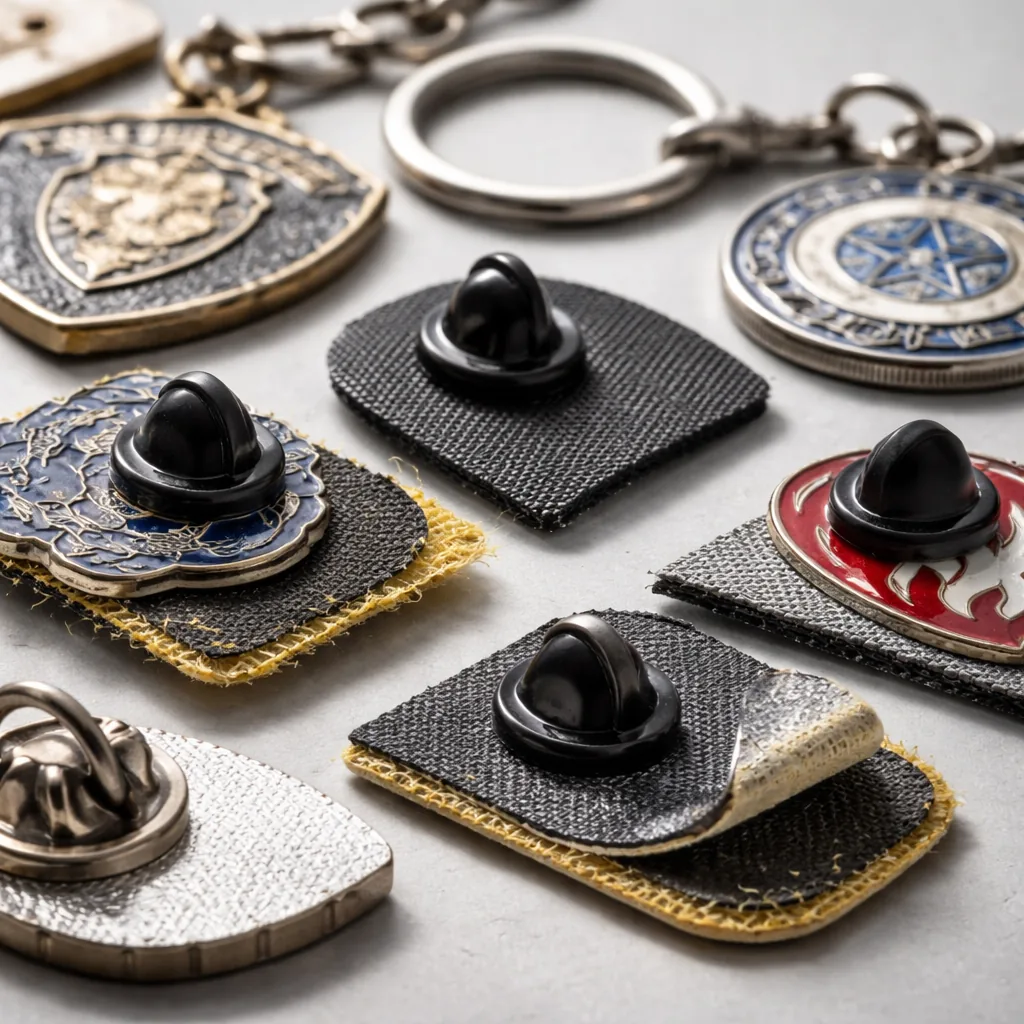
1. Specify Heat-Seal Film, Not Generic Iron-On Backing
Most iron-on patch claims are not caused by poor embroidery. They start with an RFQ that says only “iron-on backing” and leaves the factory to choose the film, thickness, bonding temperature, pressure, and test fabric. That wording is too loose for uniforms, school merchandise, retail patches, and sports club programs because adhesion depends on the garment surface as much as the patch construction.
Write the backing as TPU or PA hot-melt film with a micron range. For embroidered patches, TPU film at 80-120 microns is common; 100 microns is a practical default for 60-90 mm patches. Woven patches often need 100-150 microns because the back surface is flatter and loose yarn ends must be sealed. PA film is cheaper and bonds well to cotton, but TPU usually performs better on polyester blends, flexing garments, and repeated washing. For coated nylon, silicone finishes, softshell, stretch knits, leather, or waxed canvas, do not approve heat-seal backing until the factory tests the actual fabric or a confirmed substitute with similar GSM, coating, and finish.
| Failure risk | Specification to write | Factory control point | Typical FOB cost impact |
|---|---|---|---|
| Edge peel after washing | TPU hot-melt film, 100-120 microns | Heat press at 150-165°C for 12-18 seconds, 3-4 bar; cool 24 hours before peel check | Adds USD 0.015-0.045 per 70 mm patch |
| Weak bond on polyester | Buyer fabric or matched 160-220 gsm polyester substitute | One 40°C wash, air dry, no edge lift over 2 mm | USD 20-60 test charge, often waived at 500+ pcs |
| Adhesive bleed through thread | Lower-melt TPU or shorter dwell time | No visible glue on front at 30 cm under D65 or normal white light | Usually no unit increase if set before sampling |
| Overly stiff hand feel | 80-100 micron TPU instead of 150 micron film | Bend around 20 mm mandrel without cracking or delamination | May reduce wash margin on heavy embroidery |
| Retail misuse claim | State “heat press recommended,” not “permanent home iron” | Instruction card lists temperature, pressure, fabric limits, and 24-hour wash delay | Adds USD 0.02-0.06 for printed card |
2. Control Curling Through Construction and Cooling Checks
Curling is often blamed on cartons, but the defect usually starts in the patch build. Dense embroidery shrinks the face fabric. Stabilizer, backing film, and merrow thread shrink at different rates when heat is applied. Small patches under 50 mm, long name tapes, shield shapes with sharp corners, and designs with heavy satin borders have the highest risk because the border pulls against a small body area.
Set realistic thickness and flatness limits. A 75 mm embroidered patch with about 70% thread coverage typically finishes at 1.8-2.4 mm before backing. A merrowed border adds about 0.5-0.8 mm at the perimeter. If thread coverage exceeds 85%, add a flatness requirement: after heat press and at least 30 minutes of cooling, edge lift must not exceed 2.0 mm when the patch sits face up on a flat table for 30 seconds. For carded retail patches under 60 mm, use 1.5 mm because curled corners are visible through clear bags.
Require the supplier to inspect flatness after cooling, not while the patch is still warm and flexible. Backing should reach the border evenly without adhesive overflow beyond the edge. For name tapes and long rectangular patches, specify low-shrink twill or woven base fabric and pack in flat stacks of 50-100 pieces. Avoid overfilled polybags for ocean freight; pressure and humidity can set a permanent curve before the goods reach the warehouse.
3. Choose Sew-On or Hook-and-Loop for High-Wear Uses
Heat-seal backing is convenient, but it is not the safest attachment for every garment. It performs poorly on waterproof coatings, silicone finishes, stretch knits, down jackets, ribbed fabric, leather, waxed canvas, and many softshell materials. End users also apply patches with home irons that have uneven temperature, low pressure, or steam residue, so a retail claim of “permanent iron-on” is risky unless the garment and application process are controlled.
For industrial uniforms, tactical bags, outdoor gear, rental workwear, and high-wear sleeves, sew-on or hook-and-loop backing is usually more reliable. Heat-seal can be used as a positioning aid before sewing, but it should not be the only retention method if the patch will face abrasion, dry cleaning, tumble drying, or more than 20 wash cycles. A school blazer or souvenir jacket may tolerate heat-seal. A workwear sleeve scraped by tools, straps, and repeated laundering should be sewn.
- Use sew-on backing for coated nylon, waterproof polyester, stretch fabrics, leather, waxed canvas, and heavily textured garments.
- Use TPU heat-seal backing for cotton, cotton-poly blends, school patches, souvenir patches, and controlled low-abrasion retail use.
- Use hook-and-loop backing for removable uniform patches, morale patches, tactical kits, rental uniforms, and event staff badges.
- Use sticker adhesive only for temporary placement, packaging decoration, sample presentation, or one-day event use.
- Do not market a patch as permanently home-ironable unless fabric type, temperature, pressure, wash delay, and care label are controlled.
- For children’s retail patches, add warning text if the item is decorative and not tested as a permanent garment repair product.
4. Set Storage and Residue Limits for Sticker Backing
Peel-and-stick backing is usually a pressure-sensitive adhesive on release paper. It is intended for temporary placement or for holding the patch in position before sewing. It is not the same as washable garment adhesive. Unless a special adhesive system is tested on the target fabric, a sticker-backed patch should not be sold as laundry-safe.
Common failures include residue on dark fabric, liner separation in humid cartons, dried adhesive after long storage, and poor tack on textured garments. For event patches and short-life promotions, a 60-80 micron pressure-sensitive adhesive layer is normally adequate. For retail patches stored 6-12 months, specify 80-100 gsm release paper, sealed inner polybags, and an aging check: 48 hours at 45°C, then liner peel and tack check after returning to room temperature. For Southeast Asia, the Gulf, or humid coastal markets, add silica gel at carton level and require intact inner polybag sealing.
Sticker backing is inexpensive, typically adding USD 0.01-0.03 per piece on a 60-80 mm embroidered patch at 500+ pieces. The commercial risk is the label claim, not the adhesive cost. A catalog line that says “stick-on washable patch” creates a performance promise the factory probably did not quote. Keep temporary sticker backing, heat-seal backing, and industrial adhesive as separate item-master options so purchasing cannot approve the wrong construction by a loose name.
5. Define Hook-and-Loop Side, Grade, and Attachment Method
Hook-and-loop failures are usually practical: weak grip, fuzzy loop surface, excess thickness, or the wrong side delivered. Many RFQs say “Velcro backing” without stating whether the patch needs hook side only, loop side only, or a complete set. That omission can delay shipment if the garment already has hook fields and the factory produces patches with hook on the back plus no loop side supplied.
Write the construction as “hook side sewn to patch, loop side supplied separately,” unless the garment already has loop fields. Standard nylon hook-and-loop is usually 1.8-2.5 mm combined thickness. For morale patches, rental uniforms, and workwear, require perimeter stitching with a 2-3 mm stitch margin rather than glue-only attachment. Repeated peeling can delaminate glued layers, especially on PVC patches or dense embroidery with a smooth reverse side. For low-profile caps or children’s garments, confirm the finished thickness because hook-and-loop can make a small patch feel bulky.
Pricing depends on size, artwork, backing, and packing. For a 75 mm embroidered patch with 7-9 thread colors, typical factory MOQ is 100 pcs for trial orders, 300-500 pcs for economical production, and 1,000 pcs for best unit pricing. FOB China ranges commonly run USD 0.45-1.20 for standard sew-on, USD 0.50-1.35 with TPU heat-seal, USD 0.65-1.65 with hook-and-loop, and USD 0.70-1.90 with loop side plus retail card packing. Small rush orders below 300 pcs may add USD 25-80 for digitizing, mold, or setup, depending on artwork.
6. Prevent PVC Delamination and Woven Edge Fray
Backing failures are not limited to embroidery. PVC patches can delaminate when the base is too thin, the border is too narrow, or hook-and-loop is bonded without mechanical retention. Woven patches can fray when the heat-cut edge sits too close to the artwork or the backing film does not fully seal yarn ends. These issues often appear after handling and packing, not during front artwork approval.
For soft PVC patches, specify minimum base thickness at 2.0 mm for flat 2D designs and 2.5-3.0 mm for raised multi-level designs. The outside border should be at least 1.5 mm wide; 2.0 mm is safer if hook-and-loop is stitched behind it. For woven patches, allow 1.0-1.5 mm between visible artwork and the heat-cut edge. Avoid text below 1.2 mm high on woven patches and below 1.5 mm on embroidered patches if it must remain legible after cutting, backing, and inspection.
Add reverse-side delamination checks to pre-shipment inspection. Manual peel checks are acceptable for standard orders, but high-risk PVC patches with hook-and-loop should have an agreed 90-degree peel target, often 8-12 N per 25 mm width depending on PVC hardness, adhesive, and stitching. If the buyer needs a higher value, quote it before sampling because stronger bonding may require longer curing, extra adhesive, or stitched retention that changes the appearance and price.
7. Put Reverse-Side Defects Into the AQL Plan
Patch inspections often focus on logo shape, thread color, border cleanliness, and front-face appearance. The reverse side receives a quick glance even though backing failure causes many field complaints. A useful inspection plan covers dimensions, backing type, backing adhesion, flatness, hook-and-loop alignment, adhesive bleed, liner condition, packing pressure, and carton humidity protection.
Use AQL by defect severity. For most promotional and uniform patch orders, AQL 2.5 for major defects and AQL 4.0 for minor defects is reasonable. Critical defects should be zero tolerance when they affect safety, brand use, or attachment function. Major defects include missing backing, wrong backing type, wrong hook-and-loop side, open seams over 5 mm, heavy adhesive bleed, failed wash or peel checks, and size outside tolerance. Minor defects include slight thread fuzz, small backing-film wrinkles, light liner scuffing, or flatness deviations within the agreed limit.
Dimensional tolerance must match the product. For embroidered and woven patches under 100 mm, ±1.0 mm is workable. For larger embroidered shapes, ±1.5 mm is more realistic because fabric and thread shrink during stitching. PVC molded outlines can often hold ±0.5 mm, but raised layer height and soft PVC shrinkage still need tolerance. If the patch must fit a recessed area on a cap, bag, card, or uniform panel, state the maximum finished size and maximum thickness, not only the artwork size.
8. Approve Production With Measurable Backing Requirements
Before issuing a purchase order, decide which failure matters most: laundry peel, corner curl, temporary adhesive residue, wrong hook-and-loop side, edge fray, retail presentation, or long warehouse storage. Convert that risk into a measurable RFQ line. Factories can engineer around risks they see before sampling; they cannot reliably fix vague expectations after mass production is packed.
A complete RFQ should include finished size in millimeters, patch type, thread or PVC color references, backing type, garment fabric, washing expectation, packing method, inspection level, and tolerance. For heat-seal patches, add film type, micron range, bonding temperature, dwell time, pressure, wash delay, and test fabric. For hook-and-loop, confirm hook side, loop side, or both sides, plus whether the attachment is sewn, glued, or both. For sticker backing, define temporary use, release paper GSM, storage expectation, and residue limit on the target surface.
Plan lead time around testing instead of compressing it. Digital artwork review usually takes 1-2 working days. Sample production takes 5-8 days for embroidered or woven patches and 7-10 days for PVC patches. Mass production normally takes 10-18 days after sample approval for 500-5,000 pcs, plus 2-4 days for wash testing, aging checks, or revised backing trials. For 10,000+ pcs, allow 18-25 days depending on machine loading and packing complexity. A clear backing spec adds a small cost at quotation stage, but it prevents the larger cost of returns, rework, and delayed retail launch.
Have a project? Send your artwork and target quantity and we’ll reply with a detailed quotation within 12 working hours.
Ready to get this made?
Send your sketch, target quantity and ship-date. Detailed quotation in 12 hours.



