Patch Backing Failures: Specs That Prevent Peeling, Curling, and Returns
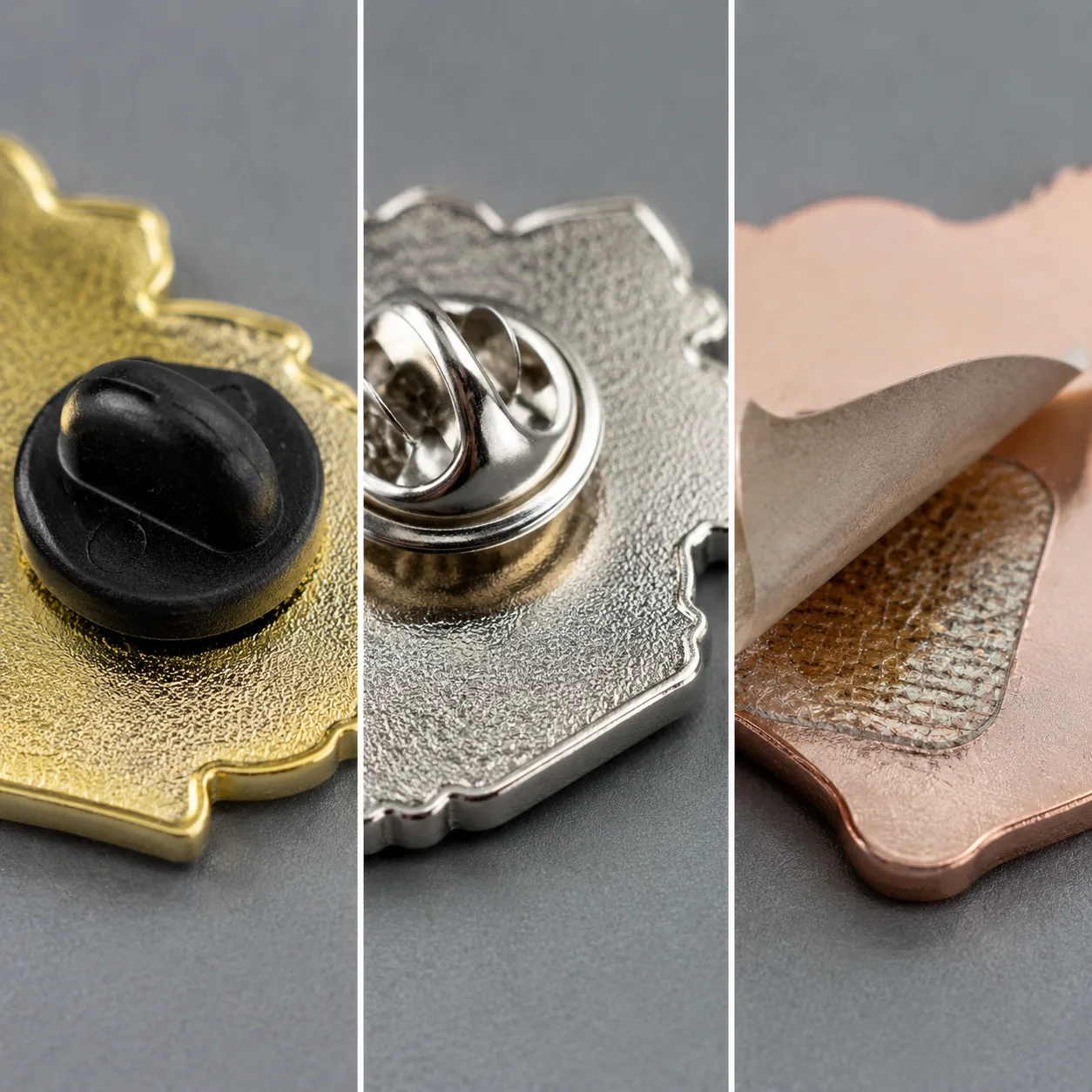
1. Heat-Seal Film Peels Because the Chemistry Does Not Match the Garment
Most patch returns are blamed on embroidery, but the failure often starts under the patch. A backing film can look flat in the sample room and still lift after the first wash, after a home iron application, or after a heat press on a coated garment. The root cause is usually a mismatch among hot-melt chemistry, patch base fabric, receiving fabric, press conditions, and cure time. A polyester twill patch applied to a cotton hoodie is a different job from the same patch applied to nylon, fleece, canvas, softshell, elastic fabric, or water-repellent workwear.
For standard embroidered patches, common heat-seal films are EVA, PA, and PES. EVA is the lowest-cost option and is acceptable for cotton and cotton-poly promotional garments with light wash expectations. PA film is a stronger default for uniforms, polyester twill, and retail apparel. PES film is usually selected where higher wash resistance or industrial laundry exposure is expected, but it may require higher activation temperature and can damage heat-sensitive fabrics.
A serious RFQ should never say only “iron-on backing.” It should state the garment fabric, press temperature, dwell time, pressure, cooling method, and wash expectation. A practical starting point for PA film is 150–165°C, 12–18 seconds, 0.3–0.5 MPa pressure, then a 24-hour rest before peel testing. PES may need 160–175°C depending on supplier grade. Home irons are less controlled than heat presses; if the product will be sold to consumers as iron-on, include printed application instructions and test with a household iron, not only a factory press.
Avoid promising heat-seal performance on nylon, PU-coated fabric, silicone-treated fabric, waterproof shells, stretch fabric, leather, and heavily textured fleece unless the factory has tested the exact substrate. On these materials, sew-on, hook-and-loop, or a mechanical attachment is normally safer than a permanent heat-seal claim.
| Backing type | Typical thickness | Best use | Key risk | FOB add-on at 75 mm |
|---|---|---|---|---|
| EVA heat-seal | 100–150 micron | Cotton, cotton-poly, event giveaways | Lower wash and heat resistance | USD 0.01–0.04/pc |
| PA heat-seal | 120–180 micron | Uniforms, polyester twill, retail patches | Needs controlled heat and pressure | USD 0.03–0.08/pc |
| PES heat-seal | 120–200 micron | Workwear, higher wash durability | Higher temperature may harm garment | USD 0.04–0.10/pc |
| Pressure-sensitive adhesive | 80–120 micron adhesive layer | Temporary display, packaging, paper cards | Not washable garment attachment | USD 0.02–0.06/pc |
| Sew-on, no backing | None or light stabilizer | Leather, nylon, caps, thick garments | Requires sewing at application | Usually no add-on |
| Hook only | 0.9–1.6 mm tape | Morale patches, uniforms, bags | Buyer may expect loop panel too | USD 0.06–0.15/pc |
| Hook plus loop panel | 0.9–1.6 mm each side | Complete tactical or uniform sets | Bulkier packing and higher cost | USD 0.12–0.30/pc |
2. Pressure-Sensitive Adhesive Is Temporary Unless Proven Otherwise
Pressure-sensitive adhesive backing is useful, but it is often oversold. It helps a patch stick to a retail card, notebook, folder, display board, or product mockup before final attachment. It is not a reliable permanent garment backing and should not be described as washable unless the exact fabric, adhesive grade, laundering method, and service life have been validated.
The typical construction is an 80–120 micron adhesive layer protected by release paper. On clean coated paperboard, glass, acrylic, or smooth plastic, adhesion can be adequate for short-term display. On fabric, especially fleece, canvas, washed cotton, textured nylon, or anything with lint, the contact area is broken and the adhesive can fail within hours. Humidity, dust, hand oil, and carton compression make the problem worse. A thin release liner can also curl, allowing corners to lift before the customer opens the pack.
If the order uses adhesive backing, define the claim in writing: “temporary placement only,” “not for laundering,” “not for outdoor exposure,” or “for display card attachment only.” For retail packs, use release paper of at least 80 gsm; 90–120 gsm is better for larger patches over 90 mm or heavier merrowed borders. Ask for a 180-degree peel check on the actual card or product surface after 24 hours and again after 72 hours at 23°C and 50% RH. A simple factory threshold is no corner lift over 3 mm on the approved display material after 72 hours.
Small detachable patches can also create compliance concerns for children’s products. If a patch can peel away and is small enough to be a choking hazard, treat it as a critical risk and do not rely on a weak adhesive claim.
3. Hook-and-Loop Fails When Tape Stiffness, Stitching, and Size Are Not Matched
Hook-and-loop backing usually fails in two ways: the stitch line tears through the patch edge, or the hook tape curls and delaminates after repeated removal. The cause is rarely one single component. It is usually a combination of hook tape that is too stiff, insufficient sewing margin, poor lamination, or a patch shape with narrow points that cannot support repeated pulling.
A 50 mm morale patch and a 110 mm sleeve patch should not use the same tape construction. For small patches under 70 mm wide, softer hook tape around 0.9–1.2 mm thick reduces curling. For larger uniform patches, 1.2–1.6 mm hook tape gives better holding strength but needs a stronger patch border and tighter sewing control. The hook tape should sit 1.0–1.5 mm inside the finished outline so it does not show from the front. A normal sewing margin is 2.0–3.0 mm from the edge, with 8–10 stitches per inch for embroidered or woven patches.
Many commercial disputes come from the phrase “Velcro backing.” Velcro is a brand name, and the quotation may include only hook backing while the buyer expected both hook and matching loop panels. Quote hook only, loop only, or hook plus loop as separate line items. For a 75 mm embroidered patch, hook backing normally adds USD 0.06–0.15 per piece FOB. Hook plus a matching loop panel usually adds USD 0.12–0.30 per piece, depending on tape grade, shape, color, and whether the loop panel needs adhesive or sewing margin.
- Specify “hook only,” “loop only,” or “hook plus matching loop panel”; do not write only “Velcro backing.”
- State tape color: black, white, olive, navy, coyote, or custom dyed. Custom tape colors often require 1,000–3,000 pcs MOQ.
- Keep hook tape inset 1.0–1.5 mm from the finished patch outline, especially on irregular shapes.
- Use softer 0.9–1.2 mm hook tape for small patches under 70 mm; use 1.2–1.6 mm tape for repeated-use tactical patches.
- Request a manual pull test after 20 attachment-removal cycles for promotional use and 50 cycles for uniform or tactical use.
- Check that the hook does not abrade light-colored embroidery during bulk packing.
4. Borders, Cut Lines, and Backing Must Be Engineered Together
Backing is not a separate afterthought. It changes the whole patch structure. A merrowed border that works on a flat sew-on patch may pucker when thick hook tape is added. A laser-cut woven patch may fray if the backing film does not seal the cut fibers. A PVC patch may need a recessed sewing channel instead of a textile-style backing. If the supplier quotes the backing after the artwork is already approved, the sample may pass visually but fail in handling.
For embroidered patches, a standard merrowed border is usually 2.5–3.5 mm wide and works best on round, oval, shield, square, and rectangular shapes. For irregular shapes, inside corners, thin letter strokes, or pointed details under 4 mm, use a satin stitch or heat-cut edge instead. With heat-seal backing, keep protruding details at least 3 mm wide or they may lift during pressing. With hook backing, avoid narrow tails and sharp corners unless the hook silhouette is simplified into a stronger shape.
Write tolerances into the PO. For common embroidered and woven patches, a realistic finished-size tolerance is ±1.5 mm for patches under 100 mm and ±2.0 mm for patches 100–150 mm. Border registration tolerance is normally ±1.0 mm. For laser-cut woven labels, ±1.0 mm may be possible on simple shapes, but soft textile goods should not be judged like die-cast metal parts. If a retail card window, cap panel, or uniform placement requires a tighter fit, state the maximum size before sampling.
Thickness also matters. A dense embroidered patch with heat-seal backing may finish around 1.5–2.5 mm thick. The same patch with hook-and-loop can reach 3.0–4.5 mm total thickness. That changes packing, postage thickness, carton compression, and how the patch sits on sleeves or caps.
5. Visual QC Is Not Enough: Add Use Tests to the Purchase Order
Visual inspection catches wrong colors, stains, loose threads, poor trimming, missing borders, and obvious delamination. It does not prove that a backing will survive pressing, washing, rubbing, or repeated removal. Backing quality needs physical tests written into the purchase order, not informal comments after production.
For heat-seal patches, test on the declared garment fabric, not on random cotton scrap. Press 5–10 pieces per backing type using the approved temperature, dwell time, and pressure. Let the samples rest 24 hours before peel evaluation. A practical factory limit is no continuous edge lift over 5 mm after corner hand peel, no bubbling, and no film migration beyond the patch edge. If the buyer has a lab requirement, set a peel-strength number, such as minimum 8–12 N/25 mm, and define the test method.
For washable goods, run at least 3 cycles at 30°C or 40°C before mass approval; 5 cycles is better for uniforms or retail apparel. Specify air dry or tumble dry. Tumble drying is more aggressive and can expose weak film faster. For hook-and-loop, test 20 attachment-removal cycles for light promotional use and 50 cycles for uniform or tactical use. For adhesive backing, check corner lift after 24 and 72 hours on the actual display material.
At final inspection, many buyers use ANSI/ASQ Z1.4 single sampling with AQL 2.5 for major defects and AQL 4.0 for minor defects. Major defects include wrong backing, missing loop panels, visible delamination, film contamination on the face, severe border distortion, or incorrect backing color where visible. Minor defects include small thread tails, slight border waviness within tolerance, or minor liner wrinkles that do not affect use. Critical defects, such as small parts detaching from a children’s item, should be zero tolerance.
| QC check | Sample size | Fail condition | Timing |
|---|---|---|---|
| Heat press trial | 5–10 pcs per backing and fabric | Edge lift over 5 mm, bubbling, scorch marks, film squeeze-out | Before bulk production |
| Wash test | 3–5 pcs minimum | Film separation, color bleed, heavy shrinkage, edge curl | Pre-production or first article |
| Peel strength test | 3 strips or finished patches where measurable | Below agreed N/25 mm or visible adhesive failure | For uniforms and repeat programs |
| Hook cycle test | 5 pcs | Stitch break, tape delamination, severe curl after 20–50 cycles | Sample approval and random final QC |
| Adhesive aging check | 5 pcs | Corner lift over 3 mm on approved surface after 72 hours | Before packing artwork is locked |
| Final AQL inspection | ANSI/ASQ Z1.4 or agreed plan | Major AQL 2.5, minor AQL 4.0 unless stricter stated | Before shipment release |
6. Packing Can Create Backing Defects After Good QC
Some backing failures are made inside the carton, not on the sewing machine. Heat-seal patches packed while still warm can transfer film, create gloss marks, or develop pressure lines. Adhesive-backed patches can shift if the liner is weak or the stack is compressed. Hook-backed patches can grab thread from the patch below and arrive fuzzy, dirty, or with pulled stitches.
For heat-seal and adhesive patches, pack only after cooling and after any required curing rest. Polybags should allow the patch to lie flat with 3–5 mm clearance. Do not fold oversized patches into undersized bags. For merrowed patches over 90 mm, avoid stacks so tight that the border embosses the patch face. A practical export carton limit is 10–15 kg gross weight for mixed promotional orders; heavier cartons increase edge compression and make carton drops more damaging.
For retail programs, define whether each patch is individually bagged, mounted on a backing card, grouped as a set, or bulk packed. Individual OPP bags usually add USD 0.01–0.03 per patch. Printed backing cards add about USD 0.03–0.12 depending on size, paper weight, printing, and MOQ. Header cards with Euro holes, barcode labels, or FSC paper claims need separate artwork approval and may add 3–7 days.
Hook-backed patches should be separated with release film, tissue, or face-to-face grouping when the embroidery is high pile, light colored, metallic, or chenille. For adhesive-backed retail cards, confirm liner direction so the consumer can peel the patch without damaging the card print.
7. Price, MOQ, and Lead Time Change with the Backing Spec
Backing affects cost, MOQ, and schedule more than buyers expect. A simple 75 mm embroidered sew-on patch at 500 pieces may be USD 0.35–0.85 FOB, depending on stitch coverage, thread count, base fabric, and border. Add heat-seal backing and the price may rise by USD 0.01–0.10. Add hook plus loop and the same patch may move to USD 0.55–1.20 FOB, especially if the shape is irregular or tape must be custom cut.
Typical MOQ is 100 pcs for straightforward embroidered or woven patches, 300–500 pcs for efficient pricing, and 1,000 pcs or more when custom dyed hook tape, special adhesive, custom release liner, or retail card packing is involved. Custom PVC or silicone patches often start at 100–300 pcs but require mold cost, commonly USD 40–150 per design depending on size and depth.
Sampling normally takes 5–8 days after artwork approval for embroidered or woven patches. Add 2–4 days if the factory must test heat-seal backing on supplied fabric. Mass production is commonly 10–18 days for standard embroidered or woven patches, 12–22 days when hook panels or packing sets are included, and 18–30 days for complex retail kits, custom tape colors, or special adhesive validation. International transit and customs are separate from production lead time.
When comparing quotes, make sure every supplier is pricing the same backing, same film chemistry, same tape thickness, same loop-panel requirement, same packing, and same inspection level. A cheaper quote may simply use EVA instead of PA, hook only instead of hook plus loop, 60 gsm liner instead of 90 gsm liner, or adhesive backing instead of real heat-seal film. These differences are hard to see in a product thumbnail, but they decide whether the patch survives actual use.
8. Approval Checklist Before Releasing Mass Production
Do not approve patch backing from a photo alone. The approval sample must be built exactly like mass production, including backing film, hook tape, adhesive liner, border type, cut line, packing method, and any retail card. Then test the sample on the real garment, card, bag, cap, or uniform panel. If the final substrate is not known, choose sew-on or hook-and-loop rather than promising permanent heat-seal performance.
A good purchase spec can be short, but it must remove assumptions. Include patch size and tolerance, base fabric, border type, backing chemistry and thickness, application conditions, wash or cycle test, AQL level, and packing style. For repeat programs, keep the approved sample and backing spec together so the reorder does not drift to a cheaper film, thinner liner, or different hook tape.
- Send the real use surface or garment swatch, not only the patch artwork.
- Name the backing: EVA, PA, PES, pressure-sensitive adhesive, sew-on, hook only, or hook plus loop.
- State film thickness in micron, hook tape thickness in mm, and release liner weight in gsm where relevant.
- Approve heat-press settings: temperature, dwell time, pressure, cooling method, and 24-hour rest before peel check.
- Set wash testing: 3–5 cycles at 30°C or 40°C, with air dry or tumble dry clearly stated.
- Use realistic textile tolerances: typically ±1.5 mm under 100 mm and ±2.0 mm above 100 mm.
- Set final inspection at major AQL 2.5 and minor AQL 4.0 unless your brand requires stricter limits.
- Keep one signed golden sample with backing notes, packing notes, and acceptable edge-lift limits.
Have a project? Send your artwork and target quantity and we’ll reply with a detailed quotation within 12 working hours.
Ready to get this made?
Send your sketch, target quantity and ship-date. Detailed quotation in 12 hours.



