Patch Backing Decisions: Sew-On, Iron-On, Hook-and-Loop or Adhesive
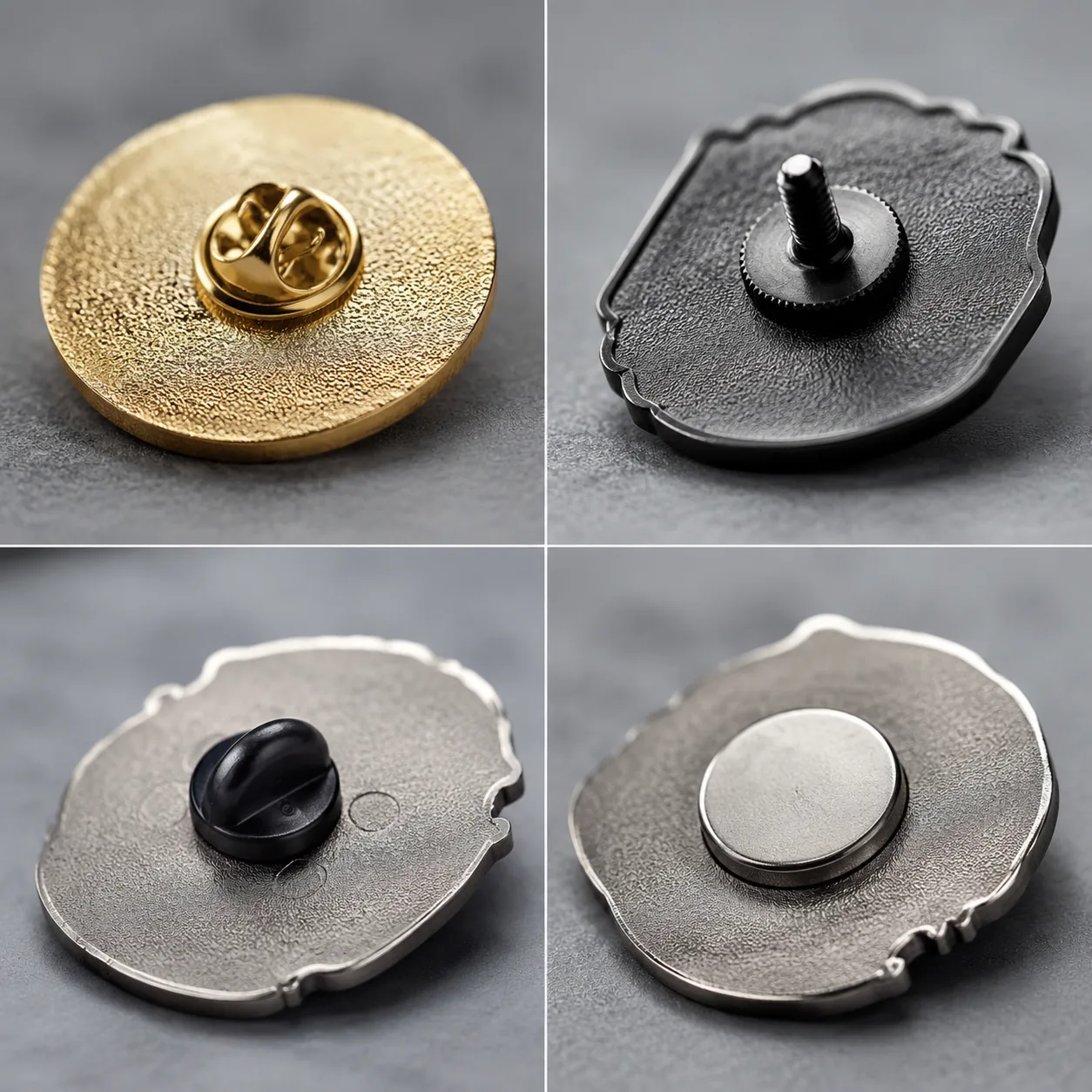
Define the Failure Mode Before Choosing Backing
Patch backing is an engineering choice, not a cosmetic add-on. The wrong backing usually fails in one of four ways: it detaches after laundering, damages the garment, slows application, or makes the finished item too stiff. A trade-show cap worn twice can accept a lighter attachment than a workwear sleeve expected to survive 40 domestic wash cycles or repeated industrial laundry.
For B2B orders, decide the backing before final quotation because it changes raw material, labor, packing, inspection and sometimes the patch construction. A 75 mm embroidered patch can price differently as plain sew-on, iron-on, hook-and-loop or pressure-sensitive adhesive. At 1,000 pieces, backing choice alone can move FOB Yiwu pricing by about USD 0.03 to 0.35 per piece, before any change in embroidery coverage, border or packaging.
- Use sew-on when durability, wash resistance and brand protection matter more than application speed.
- Use iron-on only when the buyer controls heat-press temperature, pressure and dwell time.
- Use hook-and-loop when patches must be removed, rotated, personalized or washed separately.
- Use adhesive for event badges, packaging, display cards and short-term fabric placement.
- Reject adhesive-only backing for workwear, outdoor jackets, uniforms requiring laundering or textured fabric.
Permanent, Removable or Temporary: Match the Use Case
Permanent patches normally use sew-on construction or heat-activated glue. Sew-on gives the highest confidence because thread mechanically locks the patch to the garment and is not dependent on glue age, humidity or wash chemistry. It is the safest route for uniforms, club jackets, canvas bags and premium merchandise, especially when the patch is wider than 80 mm, heavier than 12 g, or applied to a garment that will be laundered frequently.
Iron-on backing is also permanent in intent, but only when the adhesive film is matched to the fabric and pressed correctly. Typical hot-melt films for embroidered and woven patches add 0.15 to 0.35 mm thickness and bond best to cotton, cotton-poly twill, denim and stable woven fabrics. They perform poorly on silicone finishes, water-repellent coatings, PU-coated bags, nylon shells and some sublimated polyester jerseys.
Removable patches usually require hook-and-loop, with hook tape on the patch and loop tape on the garment. A complete hook-and-loop system commonly adds 2.2 to 3.2 mm total thickness and USD 0.15 to 0.40 per piece at mid-volume. It is useful for name tapes, rank patches, event roles and tactical bags, but it can feel bulky on thin fashion garments and may curl at the corners if the loop panel is undersized.
Temporary patches use pressure-sensitive adhesive. Buyers should define the required hold time in hours or days rather than asking for sticker backing. A light acrylic adhesive may hold 4 to 24 hours on clean paper, card or plastic packaging. A stronger adhesive may hold 1 to 7 days on smooth synthetic fabric in dry indoor conditions. Neither should be described as washable without testing on the exact fabric and wash process.
Fabric, Heat and Wash Conditions Drive the Decision
Backing performance depends heavily on the base garment. Cotton twill, denim and canvas accept sewing and heat pressing well. Polyester sportswear, nylon jackets, softshells and coated bags are more difficult because heat can distort fibers, coatings can block adhesive penetration, and needle holes may reduce water resistance.
For iron-on patches, a common starting window is 150 to 165 degrees Celsius, 12 to 18 seconds, and 0.3 to 0.5 MPa platen pressure. The platen should be calibrated within plus or minus 5 degrees Celsius, and dwell time should be controlled within plus or minus 2 seconds. Hand irons are unreliable for production because pressure is uneven, especially over merrowed borders, dense embroidery, chenille or curved cap panels.
Wash requirements should be written into the RFQ. Promotional apparel may only need 5 to 10 domestic wash cycles at 30 degrees Celsius. School uniforms, scout patches and workwear often need 25 to 50 cycles at 30 to 40 degrees Celsius, with air-dry or tumble-dry conditions stated. Industrial laundry is a separate requirement; high alkalinity, higher temperature and mechanical abrasion can defeat a glue bond that survives domestic washing.
| Backing | Best fabric match | Realistic wash target | Main technical risk | Avoid on |
|---|---|---|---|---|
| Sew-on | Cotton, denim, canvas, uniforms, bags | 25 to 50 domestic cycles or more with correct thread | Slow application; visible stitch line; needle holes | Very thin waterproof shells or sealed rainwear |
| Iron-on | Cotton, cotton-poly twill, stable woven fabric | 5 to 25 domestic cycles when pressed correctly | Low pressure, wrong temperature, coated fabric, edge lift | Nylon, PU coating, heat-sensitive polyester, reflective film |
| Hook-and-loop | Uniform panels, tactical bags, staff apparel | Patch removed before washing; loop panel washed with garment | Bulk, lint, corner lift, weak loop-panel sewing | Infantwear, thin knits, lightweight fashion tops |
| Adhesive | Event badges, packaging, displays, short-use fabric | Usually not washable | Peeling, residue, weak hold on texture or dust | Workwear, outdoor gear, reusable uniforms |
| Plain backing | Buyer-sewn garments and factory assembly | Depends on buyer stitching | Fraying if border is weak or sewing is missed | Buyers without sewing capability |
Installation Labor Can Cost More Than the Patch
A low FOB patch can become expensive during application. Sew-on backing has the lowest material cost, but application can take 45 to 120 seconds per patch depending on garment handling, patch size and stitch path. In a garment factory, that may be efficient because operators, machines and fixtures are already available. In a warehouse, event site or retail store, it is usually too slow and inconsistent.
Iron-on backing reduces sewing labor but transfers control risk to the heat-press process. For production, specify a flat press, clean lower platen, no steam, and a peel method such as cold peel after 10 to 20 seconds if the adhesive film requires it. For thick embroidery, a silicone pad or pressure adjustment may be needed so the adhesive layer contacts the garment evenly instead of bridging over raised threads.
Hook-and-loop shifts labor to the garment side. The loop panel must be sewn or heat-applied separately and aligned to the patch. For a 75 mm patch, a hidden loop panel is often specified 2 to 3 mm smaller than the patch outline. If the loop panel is visible by design, it should be 2 to 3 mm larger to allow easier alignment. Off-center loop panels are a common bulk defect because patch suppliers and garment factories often work from different drawings.
- Confirm who applies the patch: patch factory, garment factory, distributor or end user.
- State whether application happens before or after garment washing, printing, embroidery or final packing.
- For heat press, print temperature, pressure, time and peel method on the polybag or carton label.
- For sewing, specify stitch type, stitches per inch, thread color and whether the inside stitch line is acceptable.
- For hook-and-loop, approve the patch sample and garment loop-panel placement before bulk assembly.
Patch Construction Must Support the Backing
Backing cannot compensate for a weak patch structure. Embroidered patches with 30 to 70 percent thread coverage usually bond better than fully dense embroidery because some base fabric remains available for adhesive contact. Very dense embroidery, metallic thread, chenille and 3D foam create raised surfaces that reduce pressure transfer during heat pressing.
Woven patches are thinner, typically 0.45 to 0.80 mm before backing, and pair well with iron-on or adhesive when the buyer wants flat branding and fine detail. Embroidered patches are commonly 1.2 to 2.5 mm depending on thread density and backing layers. PVC patches are heavier and thicker, often 2.5 to 4.0 mm, so they normally require sewing channels, hook-and-loop, molded holes or other mechanical attachment rather than light adhesive.
Border choice affects both attachment and appearance. Merrowed borders are strong on circles, rectangles, ovals and shields, but the raised edge can reduce heat contact near the perimeter. Laser-cut and heat-cut borders suit complex shapes and thin woven patches. Normal outline tolerance is plus or minus 0.5 mm for simple woven or embroidered shapes and plus or minus 1.0 mm for flexible complex outlines. For molded PVC, practical tolerance is often plus or minus 0.3 mm on the outline and plus or minus 0.2 mm on raised detail height.
MOQ, FOB Pricing and Lead Time Benchmarks
MOQ depends on construction, backing and setup burden. For ZheCraft-style custom patch sourcing, practical MOQ is usually 100 pieces for embroidered or woven patches with sew-on, plain or iron-on backing. Hook-and-loop projects often start at 300 pieces because hook tape, loop tape and cutting loss must be controlled. Molded PVC commonly starts at 500 pieces because tooling, color setup and material weight make very small runs inefficient.
As a working FOB Yiwu benchmark, a 75 mm embroidered patch at 1,000 pieces often runs USD 0.38 to 0.85 with plain or sew-on backing, USD 0.42 to 0.95 with iron-on, USD 0.58 to 1.25 with hook-and-loop, and USD 0.45 to 1.05 with adhesive. A woven patch of similar size may run USD 0.32 to 0.78. PVC can range from USD 0.75 to 1.80, excluding mold cost, because material weight and curing time are higher.
Keep setup separate from unit pricing. Embroidery digitizing is commonly USD 20 to 60 per design, woven setup USD 30 to 80, and PVC mold cost USD 80 to 180 for common promotional sizes. Sample lead time is usually 5 to 9 days after artwork approval. Bulk lead time is commonly 10 to 22 days depending on backing, order volume and whether the buyer approves a physical sample before mass production.
| Order factor | Plain or sew-on | Iron-on | Hook-and-loop | Adhesive |
|---|---|---|---|---|
| Typical MOQ | 100 pcs | 100 pcs | 300 pcs | 100 pcs |
| 75 mm embroidered FOB at 1,000 pcs | USD 0.38 to 0.85 | USD 0.42 to 0.95 | USD 0.58 to 1.25 | USD 0.45 to 1.05 |
| Added thickness | 0 to 0.20 mm | 0.15 to 0.35 mm | 1.5 to 2.5 mm on patch side | 0.08 to 0.20 mm |
| Sample lead time | 5 to 7 days | 5 to 8 days | 6 to 9 days | 5 to 8 days |
| Bulk lead time | 10 to 16 days | 12 to 18 days | 14 to 22 days | 12 to 18 days |
QC Tests That Prove the Backing Works
Backing QC must test attachment performance, not only front appearance. For sew-on patches, inspect border integrity, loose threads, backing fray, needle clearance and edge stability. For heat-activated and adhesive backing, test peel after application to the real garment fabric or an approved equivalent. Retest after 24 hours because some adhesive systems continue to stabilize after pressing or pressure application.
A practical bulk inspection plan is AQL 2.5 for major defects and AQL 4.0 for minor appearance defects. Major defects include wrong backing, missing glue on more than 10 percent of the back surface, hook tape delamination, contaminated adhesive liner, size outside tolerance, incorrect color placement or mixed backing types in the same carton. Minor defects include light thread fuzz, small backing wrinkles, minor edge waviness or slight liner marks that do not affect use.
Dimensional tolerances should be stated before sampling. For embroidered and woven patches, allow plus or minus 1.0 mm on flexible complex outlines and plus or minus 0.5 mm for simple geometric shapes when fit is critical. Hook-and-loop alignment should be within plus or minus 1.0 mm from the approved sample. For adhesive liner kiss-cutting, require clean release without tearing after normal storage at 20 to 30 degrees Celsius and 40 to 70 percent relative humidity.
- Approve one sealed golden sample showing front, back, border, backing layer, thickness and packaging.
- Run heat-bond tests on the actual garment fabric for every iron-on order.
- Check at least 10 pieces per carton for backing coverage, liner cleanliness and edge lift.
- For hook-and-loop, open and close the sample 20 times and inspect stitching or lamination lift.
- For adhesive, apply to the target surface for 24 hours, then peel and check residue.
- Reject cartons with mixed backing types unless mixed packing was approved in writing.
PO Checklist: Specify Backing Before Production
Do not upgrade backing automatically. Hook-and-loop is over-specified for low-cost giveaways if the patch will never be removed. Iron-on is unnecessary when a garment factory will sew patches during production, and the extra glue layer can make needle penetration harder. Adhesive is useful for retail display cards, event labels, photo props and packaging decoration, but it is not a substitute for sewing or a qualified heat bond.
Before placing the PO, prepare a backing decision sheet with patch type, finished size, backing type, garment fabric, application method, wash target, packaging and inspection level. Attach artwork at actual size and specify whether ZheCraft or the garment supplier must provide application instructions. If heat pressing is required, send fabric swatches or full fabric composition, coating and finish details. If hook-and-loop is required, state whether the order includes hook only, loop only, or both sides packed as a set.
A safe purchasing sequence is quotation, digital proof, pre-production sample, application test, golden sample approval, bulk production and AQL inspection. Do not skip the application test for iron-on, adhesive or hook-and-loop orders. The patch front can look perfect while the backing is wrong for the garment. Spending 2 to 3 extra days on a controlled sample test is usually cheaper than sorting thousands of loose or damaged patches after delivery.
Have a project? Send your artwork and target quantity and we’ll reply with a detailed quotation within 12 working hours.
Ready to get this made?
Send your sketch, target quantity and ship-date. Detailed quotation in 12 hours.



