Patch Backing Decisions: Sew-On, Heat-Seal, Hook-and-Loop or Adhesive
Define the Attachment Failure First
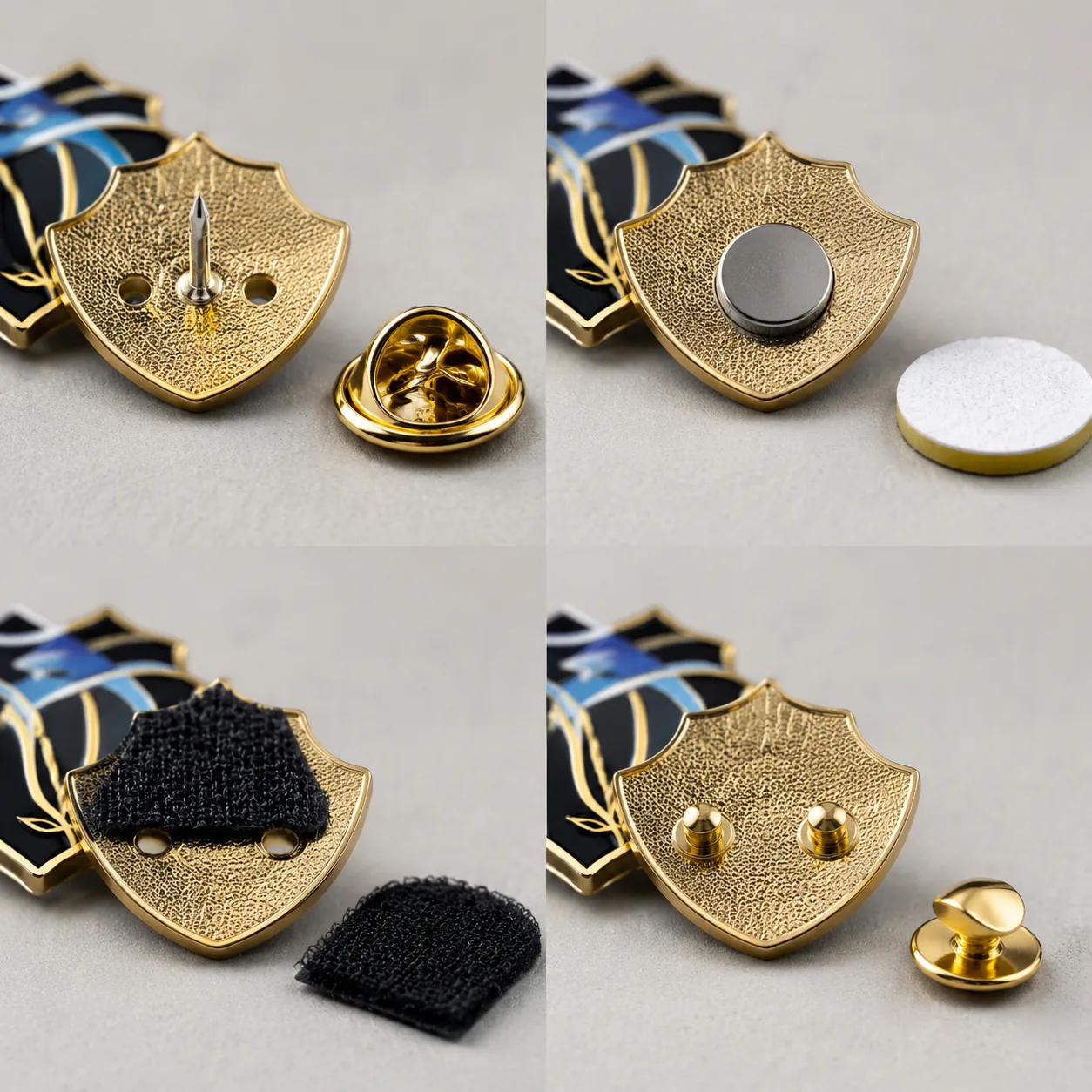
Patch backing is an engineering decision, not a trim afterthought. It determines how the patch is applied, how long it stays attached, how thick the finished garment becomes, and which failure the buyer sees first: heat film lifting after laundering, adhesive residue on uniforms, hook tape scratching a lining, or a sew-on patch arriving with too little border for the needle.
For procurement teams, backing can change finished thickness by 0.05 to 1.5 mm, carton volume by 10 to 35 percent, operator application time by 20 to 90 seconds per garment, and inspection criteria. It also changes liability. Heat can damage PU coatings and DWR finishes, hook-and-loop adds bulk and abrasion risk, and pressure-sensitive adhesive should not be sold as washable apparel backing unless it has passed fabric-specific testing.
Use this framework for embroidered, woven, chenille, leather, faux leather and PVC patches used on uniforms, caps, tactical bags, club apparel, race packs, retail gifts and event merchandise. The cost and lead-time figures below reflect common Yiwu custom production ranges. Final FOB pricing still depends on finished size, stitch coverage, color count, edge construction, backing area, packing method and order quantity.
Choose Permanent, Removable or Temporary
Start with the service life. If the patch must last the life of a uniform or workwear garment, sew-on remains the most reliable option because the attachment is mechanical and visible. Heat-seal can perform well when the fabric and press process are controlled, but uniform programs often add a sew channel or perimeter stitching as insurance. If the patch must move between garments or identify rotating roles, specify hook-and-loop. If the patch is for a conference, packaging insert or short campaign, pressure-sensitive adhesive may be acceptable, but it should be described as temporary.
Sew-on works on cotton twill, denim, polyester jackets, caps, canvas bags and many knits if the design includes a usable sewing margin. Specify a 2.0 to 3.0 mm stitchable border for flat edges, or a 2.5 to 4.0 mm merrowed border for circles, shields, rectangles and other simple shapes. For dense embroidery, allow at least 1.5 mm clearance between the artwork and stitch path so the operator does not cover letters or cut into the design.
Heat-seal works best on flat woven fabrics that tolerate 150 to 170°C for 12 to 18 seconds at 0.25 to 0.40 MPa. It is high risk on fleece pile, silicone-treated fabric, leather, PVC-coated bags, PU-coated nylon, DWR finishes and curved cap panels unless tested on the actual substrate. Household irons are not equivalent to calibrated pneumatic presses because pressure and dwell time vary across the patch.
| Backing choice | Best use case | Added thickness | Durability target | Typical FOB add-on |
|---|---|---|---|---|
| Sew-on, no adhesive | Uniforms, denim, caps, canvas bags, long-life apparel | 0.0 to 0.1 mm | 30 to 50 domestic washes when sewn correctly | USD 0.00 to 0.03 per patch |
| Heat-seal film | School badges, workwear, retail apparel applied by press | 0.08 to 0.18 mm | 10 to 30 washes on compatible fabric | USD 0.03 to 0.08 per patch |
| Hook-and-loop set | Tactical gear, name tapes, club roles, removable IDs | 0.8 to 1.5 mm | 500 to 3000 open-close cycles by tape grade | USD 0.12 to 0.45 per patch |
| Pressure-sensitive adhesive | Event badges, package decoration, temporary campaigns | 0.05 to 0.12 mm | Not recommended for laundering | USD 0.03 to 0.10 per patch |
| Iron-on plus sew channel | Retail patches where the buyer may iron or sew | 0.08 to 0.18 mm | Best after sewing; iron-only is limited | USD 0.04 to 0.09 per patch |
Control the Application Method
A suitable backing can still fail when the application process is uncontrolled. A patch pressed for 8 seconds with a domestic iron does not equal one pressed for 15 seconds on a calibrated heat press with verified platen temperature and pressure. For loose retail patches, avoid broad claims such as permanent iron-on unless the tested fabric, pressure, peel method and wash procedure are defined.
For central application at an apparel factory, heat-seal and sew-on can both be controlled. Before sampling, ask the garment factory for fabric composition, surface finish, heat tolerance, seam layout and whether the patch will cross a panel curve or seam allowance. For field application by volunteers, club members or event staff, sew-on and hook-and-loop are usually more predictable because the process is visible and easier to inspect.
For removable patches, clarify whether the buyer needs hook-only or a complete hook-and-loop set. Many tactical jackets, plate carriers and backpacks already have loop panels; supplying hook-only patches reduces cost, thickness and carton volume. If the garment has no loop panel, quote the patch with hook tape on the back plus a separate loop piece for sewing to the garment.
- Identify the applicator: garment factory, distributor, event staff, retailer or end user.
- Confirm the surface: cotton, polyester, nylon, fleece, leather, PU-coated fabric, PVC-coated fabric or blended textile.
- For heat-seal, state temperature, dwell time, pressure and hot-peel or cold-peel method on the purchase order.
- For retail iron-on patches, write instructions only after testing a realistic home-iron process.
- For hook-and-loop, specify hook-only, loop-only or complete set before sampling.
- For curved caps or bags, test the patch on the actual panel shape, not only on flat fabric.
Match Backing to Patch Construction
Embroidered patches accept the widest range of backings because the twill base and thread mass provide dimensional stability. Woven patches are thinner and can show film waviness if the adhesive is too stiff or the patch is wider than 90 mm. Chenille patches are bulky and should normally be sewn. PVC patches are molded and usually require a recessed sew channel, hook tape or pressure-sensitive adhesive for non-wash uses; standard iron-on film does not reliably bond to many flexible PVC compounds after laundering.
For embroidered patches, common bases are 210D to 300D polyester twill with 75D to 150D polyester or rayon thread. For patches under 80 mm, an 80 to 120 micron heat-seal film is usually sufficient. For large back patches over 100 mm, 120 to 180 microns can improve adhesive coverage, but it increases stiffness and makes curved application harder.
For woven patches, use lighter film when drape matters. A 50 to 80 micron film is usually better than a heavy film on thin sleeve badges, labels or soft retail apparel. For PVC patches that will be sewn, specify a recessed sew channel 2.5 to 3.5 mm wide with a minimum wall thickness of 1.2 mm so needle holes do not tear through the edge during application.
| Patch type | Preferred backing | Backing to avoid first | Key specification |
|---|---|---|---|
| Embroidered | Sew-on or heat-seal | Thick hook-and-loop on patches under 35 mm | 2.0 to 3.0 mm stitchable border |
| Woven | Sew-on or light heat-seal | Heavy film on thin flexible designs | 50 to 80 micron film when drape matters |
| PVC | Hook tape or molded sew channel | Standard iron-on film for washable apparel | 2.5 to 3.5 mm sew channel, 1.2 mm wall |
| Chenille | Sew-on | Pressure-sensitive adhesive for garments | Secure pile edge before sewing |
| Leather or faux leather | Sew-on, rivet holes or low-heat tested film | High-temperature heat-seal on delicate finishes | Confirm finish, needle size and heat tolerance |
Specify Wash, Peel and Cycle Targets
Do not ask whether a backing is strong. Define the acceptance target before sampling. For promotional apparel, a practical heat-seal target is no edge lift above 2 mm after 5 to 10 wash-and-dry cycles. For uniform programs, specify 20 to 30 cycles or require sewing. For premium workwear, 30 wash cycles may be realistic only after fabric-specific press testing and perimeter reinforcement.
Peel strength gives a clearer benchmark than supplier wording. On compatible cotton or polyester, a heat-seal target of 8 to 12 N per 25 mm strip after 24 hours conditioning is practical for many apparel patches. For pressure-sensitive adhesive on smooth plastic, coated paper or hangtag packaging, 4 to 8 N per 25 mm may be acceptable. Fabric results vary too widely for durable wash claims unless the exact fabric and application method are controlled.
Hook-and-loop durability depends on tape grade, stitch density and tape width. Standard nylon tape is often quoted at 500 to 1000 open-close cycles for promotional use. Outdoor, police, military and industrial buyers may request 2000 to 3000 cycles. Inspect whether the tape stitching fails before the hook surface wears out; skipped stitches and poor edge lock are common field failures.
- Promotional apparel: no edge lift over 2 mm after 5 to 10 wash cycles.
- Uniform programs: 20 to 30 wash cycles or sewn attachment.
- Retail loose patches: avoid wash claims unless fabric and application are controlled.
- Outdoor bags: test adhesive or tape after 40°C humidity exposure for 24 to 48 hours.
- Hook-and-loop: define open-close cycle target, tape material and stitch pattern.
- PVC patches: check cracking, edge tearing and stitch-channel distortion after sewing.
Engineer Edges, Corners and Tolerances
Most backing failures start at the edge. A sharp 90-degree corner on a heat-seal patch lifts faster than a 2.0 to 3.0 mm radius corner because it catches during washing and wear. If brand artwork permits, round small corners and keep narrow extensions at least 4.0 mm wide for embroidered and woven patches.
For sew-on patches, the border must give the operator enough material to catch without covering the artwork. A merrowed border is normally 2.5 to 4.0 mm wide and suits circles, shields, rectangles and simple curves. Laser-cut woven patches can use a satin stitch edge, but the stitch line should sit at least 1.5 mm inside the cut edge to reduce fraying.
For heat-seal patches over 100 mm, specify film coverage close to the edge without overflow. A film-position tolerance of ±0.5 mm is normal for medium patches; small patches under 30 mm may need ±0.3 mm. Adhesive overflow collects lint, sticks to packing sleeves and looks like a quality defect even when the front side passes inspection.
| Detail | Recommended spec | Reason |
|---|---|---|
| Corner radius | 2.0 to 3.0 mm minimum where artwork permits | Reduces peeling and snagging |
| Sew border | 2.0 to 3.0 mm minimum; 2.5 to 4.0 mm for merrowed edge | Gives enough needle capture area |
| Narrow extensions | 4.0 mm minimum width for fabric patches | Prevents curling, fraying and weak adhesive contact |
| Heat film position | ±0.5 mm typical; ±0.3 mm for very small patches | Prevents exposed adhesive and uneven lift |
| PVC sew channel | 2.5 to 3.5 mm wide, 1.2 mm minimum wall | Reduces tearing during sewing |
| Dimensional tolerance | ±1.0 mm under 80 mm; ±1.5 mm for 80 to 150 mm; ±2.0 mm above 150 mm | Sets measurable incoming inspection limits |
Compare MOQ, FOB Cost and Lead Time
Backing cost is usually smaller than embroidery, weaving or molding cost, but it can change the best buying strategy. For a simple 70 mm embroidered patch with up to 75 percent embroidery coverage, a 500-piece order commonly falls around USD 0.45 to 1.20 FOB per patch before premium packing. Heat-seal adds roughly USD 0.03 to 0.08. Hook-and-loop adds USD 0.12 to 0.45 depending on patch size, tape grade, stitch pattern and whether the loop side is included.
Typical MOQs are 100 pieces for sample-style custom runs, 300 pieces for economical small bulk, and 500 to 1000 pieces for better unit pricing. PVC patches carry more tooling impact at low quantities because mold cost must be amortized. Embroidered and woven patches have lower setup cost, but frequent size, color or backing changes still increase handling, sampling and QC cost.
Lead time should include application testing when backing is critical. Embroidered or woven patches normally require 5 to 8 days for sampling and 10 to 18 days for bulk after approval. PVC patches often require 7 to 10 days for sample molds and 15 to 25 days for bulk. Custom-dyed hook-and-loop tape, individual retail cards, barcode labels, polybags with warnings or wash testing can add 3 to 7 days.
| Order condition | MOQ that usually makes sense | Sample time | Bulk lead time | Main cost driver |
|---|---|---|---|---|
| Embroidered sew-on patch | 300 to 500 pcs | 5 to 7 days | 10 to 16 days | Size and stitch coverage |
| Embroidered heat-seal patch | 300 to 500 pcs | 6 to 8 days | 12 to 18 days | Film grade and press testing |
| Woven patch with light film | 500 pcs | 6 to 8 days | 12 to 18 days | Thread density and cut edge |
| PVC patch with hook tape | 300 to 500 pcs | 7 to 10 days | 15 to 25 days | Mold, PVC layers and hook tape |
| Retail adhesive patch | 500 to 1000 pcs | 6 to 8 days | 12 to 20 days | Adhesive type and individual packing |
Inspect Backing Before Shipment
Incoming inspection often focuses on front-side color, shape and thread quality, but backing defects cause many returns. Use ANSI/ASQ Z1.4-style sampling or an equivalent company plan. A common commercial setting is general inspection level II, AQL 2.5 for major defects and AQL 4.0 for minor defects. Critical defects should have zero acceptance when they involve wrong backing, contamination, unsafe sharp parts, mixed customer designs or adhesive that transfers to the front face.
Major defects include wrong backing type, missing hook tape, film delamination before use, adhesive overflow beyond the patch edge, oil stains, wrong size beyond tolerance and mixed left-right orientation in paired patches. Minor defects include loose threads under 3 mm, slight film wrinkles that do not affect bonding, and color variation within the approved sample limit.
Check total thickness when patches go on uniforms, tactical gear, helmets or fitted caps. A 1.8 mm embroidered patch can exceed 3.0 mm overall after hook-and-loop is added, and that may interfere with helmet padding or create an unwanted profile on a sleeve. Keep one golden sample showing front, back, edge, thickness, packing and label position.
- Check backing type against the purchase order and approved golden sample.
- Measure length, width and total thickness by patch size class.
- Test heat-seal adhesion on the buyer’s actual fabric where possible.
- Inspect hook-and-loop stitching for skipped stitches, loose ends and edge lifting.
- Reject adhesive overflow that extends beyond the edge or sticks to packing.
- Record film micron grade, tape grade and carton quantity in the inspection report.
Write the RFQ Around the Real Risk
Decide the attachment method before finalizing artwork. Changing from sew-on to hook-and-loop after sampling may require a larger border, different packing, higher carton volume and a new quote. Changing from heat-seal to sew-on is easier, but narrow corners, thin strokes and small letters may still need redesign to create a practical stitch path.
Send the supplier artwork, finished size in millimeters, patch type, application surface, expected wash or use target, application owner and packing requirement. For heat-seal, include temperature, time, pressure and peel method. If those settings are unknown, request sample patches plus fabric test panels before bulk approval.
A complete RFQ line is: 75 mm embroidered patch, 300D polyester twill base, 80 percent embroidery coverage, merrowed edge, 100 micron heat-seal backing, applied to cotton-poly work shirt at 160°C for 15 seconds at 0.30 MPa, cold peel, no edge lift over 2 mm after 10 wash cycles, individual polybag, 1000 pieces, inspection to AQL 2.5 major and 4.0 minor. With that level of detail, the factory can quote real cost, flag risky fabrics and produce a sample that tests the backing decision rather than only showing the artwork.
Have a project? Send your artwork and target quantity and we’ll reply with a detailed quotation within 12 working hours.
Ready to get this made?
Send your sketch, target quantity and ship-date. Detailed quotation in 12 hours.



