Pad Printing vs UV Printing on Metal Giveaways
Why this comparison matters for buyers
If your giveaway looks fine on approval but starts chipping, fading, or misregistering after delivery, the problem is usually not the artwork. It is the decoration method versus the product shape, wear level, and color requirements. Pad printing and UV printing both work on metal promo items, but they fail in different ways, at different costs, and with different setup requirements. This comparison is for procurement teams and distributors choosing between the two for pins, keychains, badges, fridge magnets, and similar metal items.
The right answer depends on line detail, curve geometry, pantone accuracy, abrasion exposure, and whether you need a matte tactile print or a glossy digital image. In factory terms, these are not interchangeable processes. One is better for tiny logos on irregular surfaces; the other is better for full-color artwork and short-run flexibility.
Side-by-side spec table
Use this table as the first filter before asking for samples. It is not a substitute for a pre-production test, but it will quickly rule out bad process choices for your product shape and usage case.
| Spec item | Pad printing | UV printing |
|---|---|---|
| Typical usable line width | About 0.20-0.25 mm minimum for stable production | About 0.15-0.20 mm, but small reversed text still needs testing |
| Color count | Usually 1-6 spot colors per setup | Full-color CMYK plus white underbase, no hard color count limit |
| Best surface | Flat to mildly curved metal | Flat surfaces, light curves, coated or primed metal |
| Durability | Good when overprinted with clear coat; ink film is thin | Good scratch resistance if cured correctly; edge impact can chip |
| Tooling need | Steel or photopolymer pad plate, low to moderate setup | Digital file setup only; lower startup cost |
| Typical MOQ | 500-1,000 pcs for efficient pricing | 100-500 pcs feasible, depending on size and complexity |
| Lead time | 10-18 days after sample approval | 7-15 days after sample approval |
| FOB price range | About USD 0.03-0.12 per color per piece, excluding base product | About USD 0.08-0.30 per piece for small items, excluding base product |
| Best use case | Simple logos, corporate marks, repeat orders | Gradient art, photos, short runs, multi-color artwork |
Where pad printing wins
Pad printing is still the most practical option when the artwork is small, the product has mild curvature, and the buyer wants stable repeatability at low cost. It transfers ink from an etched plate with a silicone pad, which makes it forgiving on shallow domes, small recesses, and uneven metal surfaces. For a metal keychain or badge with one to three brand colors, it is often the cheapest path to a clean result. On repeat orders, the setup cost is already amortized, which improves unit economics significantly.
The main strength is control over spot color. If the buyer needs a specific Pantone-like match for a logo, pad printing is usually easier to tune than UV digital output, especially on dark substrates. It also handles very small decorated areas well, provided the artwork is not too fine and the designer keeps enough clear space between elements. If you want a crisp 2-color logo on a brushed zinc-alloy keychain, pad printing is usually the first process I would quote.
- Choose pad printing for 1-6 solid colors.
- Choose pad printing when the decorated area is under about 30 x 30 mm.
- Choose pad printing when repeat orders matter more than photo realism.
- Avoid pad printing for gradients, shadows, or tiny reversed text.
- Avoid pad printing on highly textured or sharply curved parts without testing.
Where UV printing wins
UV printing is the better fit when the artwork is visually complex, includes gradients, or needs a photographic look. It prints digitally and cures instantly under UV light, so you do not need color-separated plates for every design. That makes it efficient for small batches, seasonal runs, and orders with multiple SKUs that share the same base item but vary in artwork. For buyers with frequent art changes, this reduces setup friction and approval delays.
The trade-off is that UV printing is more sensitive to adhesion conditions and surface preparation. On raw metal, oil residue, oxidation, or poor primer coverage can cause poor bonding or edge lifting. It also tends to show its limits on deep curves or highly flexible parts because the printed film is still a surface layer, not part of the metal itself. If the item will rub against keys, pockets, or badges on daily use, you should ask for an abrasion test or a clear coat spec rather than assuming digital print alone is enough.
Durability, wear, and failure modes
Durability is where many buyers discover the difference too late. Pad printing usually wears by gradual thinning, especially on edges or high-friction points, while UV printing can fail by chipping, micro-cracking, or corner lift if the surface prep or curing is weak. Neither process is automatically superior; the real answer depends on how the item will be handled after delivery. If the product is a fridge magnet, desk giveaway, or presentation item, UV can be acceptable with proper coating. If it is a metal keychain carried daily, pad printing with a protective topcoat is often safer.
Ask your factory to define the coating stack, not just the print method. For example, a UV print on anodized aluminum with a 10-15 micron clear coat behaves very differently from bare metal with no overcoat. For pad printing, the ink film is usually thin, so adhesion and topcoat choice matter more than ink thickness. In both cases, the supplier should confirm the product passes a basic tape test and a rub test after full cure, not just immediately after printing.
| Failure mode | More common with pad printing | More common with UV printing |
|---|---|---|
| Color shift | Spot-color mismatch from poor ink mixing | CMYK conversion drift and saturated darks |
| Wear on edges | Ink thinning on raised corners | Chip or peel at sharp corners |
| On curved surfaces | Misregistration between colors | Ink layer distortion or pooling |
| Short-run cost issue | Plate cost on very small orders | Higher piece cost on larger runs |
| Fine detail loss | Tiny text fills in or spreads | Detail holds better, but curing must be controlled |
Cost, MOQ, and lead time trade-offs
For procurement, the real comparison is not only unit price. It is the full landed cost: setup, rework risk, sample cycles, and how many units you must order before the price becomes sane. Pad printing usually has a lower per-piece cost on simple spot-color jobs, but plate setup makes very small runs less efficient. UV printing usually looks more expensive per piece, yet it can beat pad printing when the artwork changes often or the quantity is low enough that plate costs dominate.
As a rough factory reference for metal giveaways, a simple one-color pad print can sit around USD 0.03-0.06 per piece on top of the base item at scale, while multi-color pad printing rises with each extra color and each extra setup step. UV printing on small metal items often lands around USD 0.08-0.30 per piece depending on size, ink coverage, and clear coating. Lead time for pad printing is commonly 10-18 days after sample approval; UV can be 7-15 days if the line is not congested. If your launch date is fixed, the cheapest method is the one that avoids a reprint.
Which method fits which product
The product itself often decides the process more than the artwork does. Flat or lightly domed metal badges with simple branding usually favor pad printing. Flat fridge magnets with full-color illustrations often favor UV printing, especially when the visual design is the main selling point. Keychains sit in the middle: if the artwork is logo-heavy and the shape is compact, pad printing works well; if the design uses gradients or mixed imagery, UV is usually better.
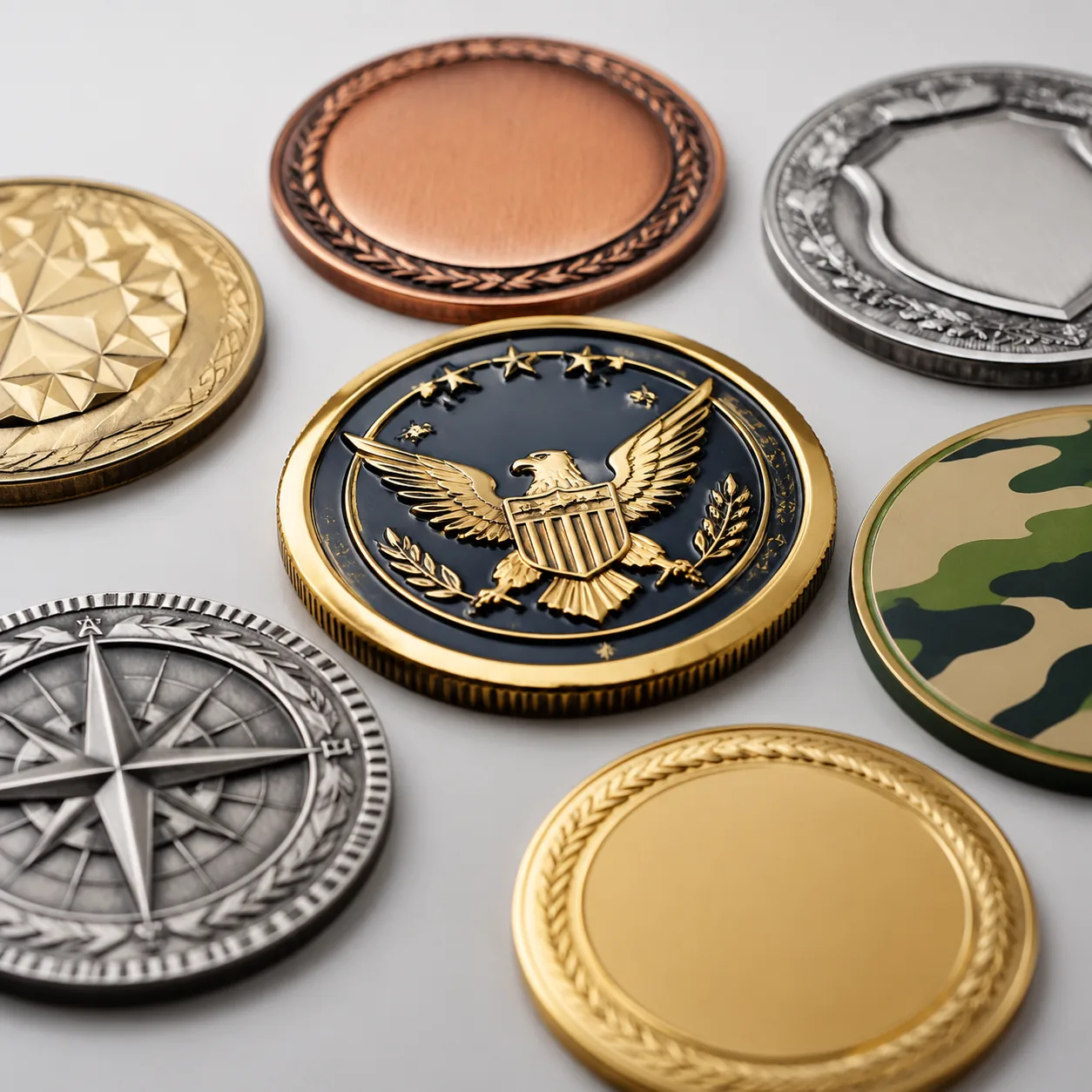
Brooches and lapel pins are a special case. If the decorated area is enamel-filled or already has strong metallic segmentation, pad printing is often used for small marks or back-side branding rather than the front art itself. For challenge coins or thicker badges, UV can work on recessed flat fields, but buyers should check whether the recess depth and edge geometry allow even curing and clean registration. If the item is heavily handled, always test the exact surface, not just a similar sample.
What to do next
Start by asking suppliers to quote both processes against the same artwork and base product, then compare on three points only: visible quality, expected wear, and total landed cost. Ask for a sample made on the exact substrate, with the actual clear coat or protective layer you plan to use, and request a simple rub test plus tape test result after full cure. If the artwork has gradients or multiple image elements, lean UV; if it is a compact logo with exact spot colors, lean pad printing. For reorder programs, lock the process, ink spec, coating, and acceptable delta before you approve the first mass run.
If you want fewer surprises, ZheCraft can quote both options from the same factory floor and align the decoration method with the actual metal base, curvature, and usage profile. That lets you compare like-for-like instead of mixing a low-quality UV process against a well-controlled pad print, which is a common source of misleading quotes. The goal is not to pick the trendier method. It is to pick the one that survives your buyer's real use case.
Have a project? Send your artwork and target quantity and we’ll reply with a detailed quotation within 12 working hours.
Ready to get this made?
Send your sketch, target quantity and ship-date. Detailed quotation in 12 hours.



