Offset Printing vs Screen Printing for Lanyards and Patches
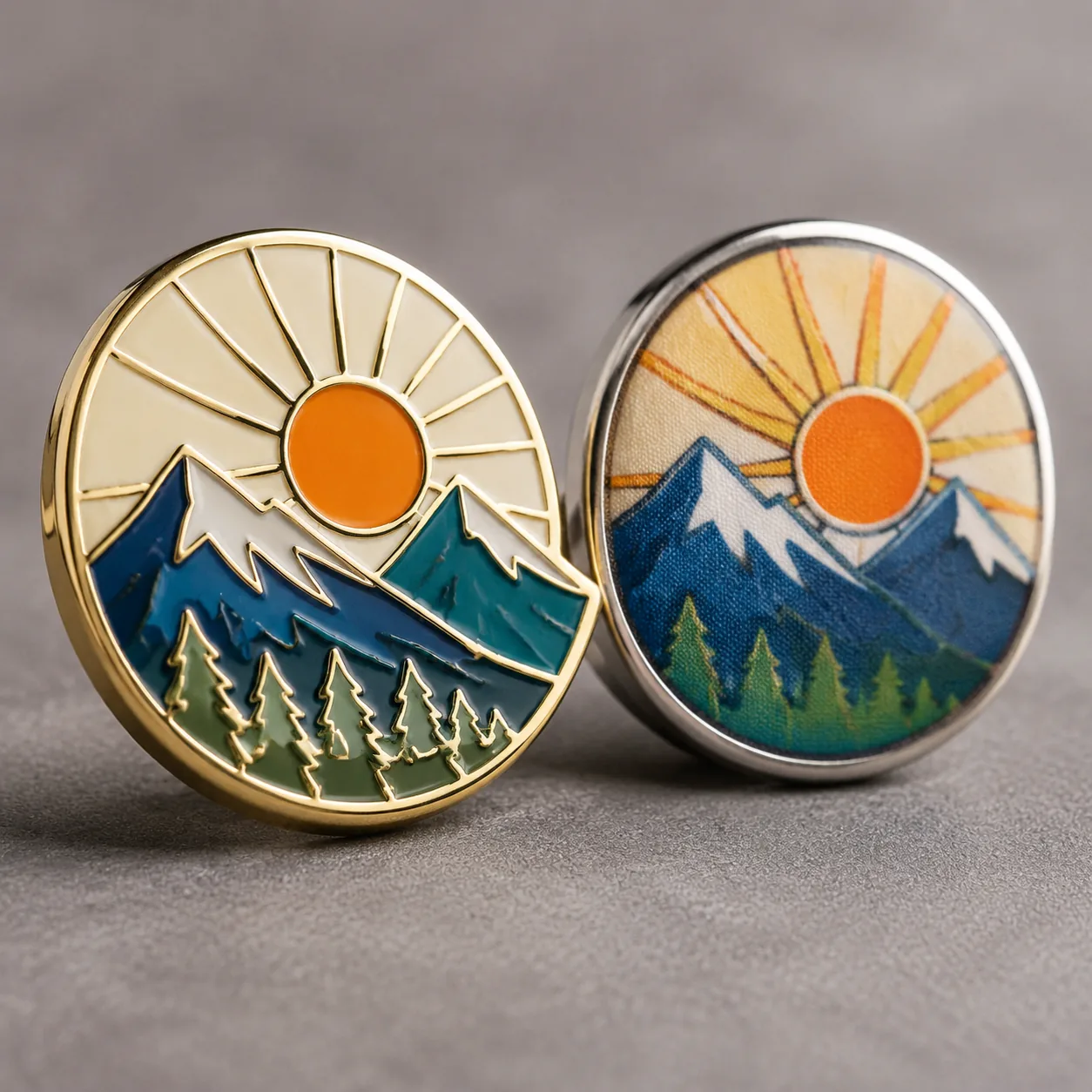
Two printing methods, one sourcing decision
For lanyards and patches, the decoration method is not a styling choice; it is a process decision that affects legibility, durability, and unit cost. Buyers usually compare offset printing and screen printing because both can be economical at volume, but they behave very differently on polyester webbing, twill, coated labels, and other textile surfaces. The wrong choice shows up fast: soft edges, poor contrast on dark bases, uneven registration, or a color match that looks acceptable in CAD but misses once ink hits fabric.
The right question is not which method is superior in general. It is which method matches the artwork, substrate, quantity, and acceptable defect band. As a sourcing rule, if the design depends on gradients or micro text, start with offset. If the design is a bold logo that must stay opaque on textured material, start with screen. That framing saves time in sampling and reduces avoidable rework.
Core specs buyers should compare
The two processes separate quickly once you compare their practical limits. Offset printing is strongest on smooth, stable surfaces and artwork that needs tonal variation. Screen printing is stronger on textile surfaces when opacity, color density, and wear resistance matter more than fine tonal detail. For lanyards and patches, the substrate often matters more than the logo itself, because a flexible weave will expose weakness in the print method long before a flat proof would.
| Spec | Offset printing | Screen printing |
|---|---|---|
| Best substrate | Smooth polyester ribbon, coated labels, flat synthetic patch faces | Woven lanyard webbing, twill patches, thicker textile surfaces |
| Minimum readable line width | 0.20-0.25 mm on stable artwork and flat stock | 0.30-0.40 mm; safer on textured fabric |
| Small text | Readable down to about 2.0 mm cap height if substrate is stable | Best kept at 2.5-3.0 mm cap height to avoid fill-in |
| Color handling | CMYK or spot-process look; good for gradients and halftones | Pantone spot colors; best for flat solids and strong contrast |
| Typical color count | 4-color process, sometimes 5-6 with specials | 1-6 colors common; more colors raise setup and registration risk |
| Registration tolerance | +/-0.15 to +/-0.25 mm on flat stock | +/-0.30 to +/-0.50 mm on fabric due to stretch |
| Ink build | Thin film, lower tactile build | Heavier film, stronger opacity on dark bases |
| Abrasion performance | Moderate; can scuff without top protection | Good on textile, but thick builds can crack if overprinted |
| Typical MOQ | 500-1000 pcs for efficient pricing | 300-1000 pcs depending on colors and screen count |
| Lead time | 7-12 days after sample approval | 8-15 days after sample approval |
| FOB price range | USD 0.18-0.55 per piece | USD 0.12-0.45 per piece |
| Best use case | Gradients, photo-like graphics, fine text | Bold logos, icons, durable identification marks |
On printed lanyards, common production widths are 15 mm, 20 mm, and 25 mm; 20 mm is the usual balance between print area and cost. For patches, buyers often work within 50-80 mm widths or diameters depending on shape, with twill bases around 0.40-0.60 mm thick and cut-edge allowances of 1.0-2.0 mm depending on whether the patch is sewn, heat sealed, or laser cut. For textile print acceptance, AQL 2.5 for major defects and AQL 4.0 for minor defects is a practical default unless the program is retail-grade and needs tighter controls.
When offset printing is the better fit
Offset printing is the better choice when the design carries more visual information than a screen build can comfortably hold. It reproduces gradients, soft shadows, halftones, and complex multi-color artwork with cleaner tonal transitions than screen printing, especially on smooth or coated substrates. That makes it useful for premium lanyards, flat synthetic labels, and patches where the print is applied to a stable face rather than directly into a coarse weave.
A good offset job typically uses 4-color process or a controlled spot-color conversion, with clean edges and a thin ink film. The process is particularly helpful when a brand has multiple regional variants, because color changes can often be handled in artwork without remaking several screens. For example, a conference lanyard can carry a full-color logo, a short URL, and a subtle gradient background without the registration burden of multiple screen passes.
The limits are clear. Offset is less forgiving on flexible, absorbent, or highly textured material, and the thinner ink layer is easier to scuff during folding, stitching, or repeated contact with metal hooks and buckles. If the artwork includes a very dark solid on a rough twill patch, offset may leave a less saturated result than the buyer expects. In those cases, the visual finish can look clean in proofing but weaken after handling.
- Choose offset if the artwork includes gradients, shadows, or photo elements.
- Keep line weight at or above 0.20 mm where possible.
- Use a physical substrate proof, not a paper printout, for approval.
- Expect a small color delta from monitor files to textile output; lock Pantone targets early.
When screen printing is the better fit
Screen printing is usually the stronger choice for simple brand marks, event logos, school identifiers, and other graphics that must read clearly at a distance. Because ink is pushed through mesh, the process can deposit a thicker, more opaque layer that covers dark webbing and textured fabric better than a light offset film. That is why screen printing remains common for lanyards, woven patch overlays, and short-run textile branding where bold solids matter more than subtle tonal shifts.
A well-run screen job usually uses 1-3 colors for the cleanest result, especially below 1,000 pieces. Four colors are feasible, and 5-6 colors are possible, but each additional screen adds setup time, alignment risk, and cost. On narrow lanyard tape, even a 0.3 mm shift can make outlines look uneven, so a design that depends on tiny type, thin reverse lines, or stacked taglines is often too demanding for screen printing.
The practical benefit is durability. A heavier screen deposit usually gives stronger color on dark backgrounds and better visibility after handling. The trade-off is that thick builds can crack, especially if the print sits on a bend point or is overprinted too heavily. If the patch or lanyard will be flexed repeatedly, the art should be simplified so the ink layer remains stable instead of being forced to do too much.
For buyers, the cleanest rule is this: if the artwork can be reduced to 1-3 Pantone colors without losing meaning, screen printing is often the lowest-risk option. If the logo depends on blended tones or small details below about 2.5 mm cap height, the design should be reviewed for offset instead. Suppliers should also confirm the smallest legible size in millimeters before sampling starts.
Cost, MOQ, and lead-time breakpoints
The lowest quoted price is not always the lowest total cost. Offset printing often becomes attractive when the artwork has enough color complexity that screen setup would be excessive, while screen printing usually wins on simple solid-color designs at moderate volume. Below 300 pieces, both methods can look expensive because setup, screen making, plate work, proofing, and color adjustment dominate the order economics.
As a practical FOB range for custom lanyards or printed textile labels, offset-printed pieces often land around USD 0.18-0.55 each at 500-1000 pcs, depending on size, finish, coating, and attachment. Screen-printed pieces often land around USD 0.12-0.45 each for 1-4 color designs at similar quantities, with the higher end appearing when white underbase, extra colors, or specialty inks are required. For simple reorder programs, the recurring cost for screen printing is often lower; for complex artwork, offset may be cheaper because it avoids multiple screens and alignment labor.
Typical production lead time is 7-12 days after sample approval for offset and 8-15 days for screen printing. Add 3-7 days for freight, carton consolidation, or extra finishing steps such as sewing, heat-sealing, or attachment assembly. If the order is urgent, ask whether the quoted lead time starts from artwork approval, sample approval, or deposit receipt; those are not interchangeable in factory scheduling.
| Order profile | Usually better choice | Why |
|---|---|---|
| Full-color campaign art with gradients | Offset printing | Less color separation work; better tone reproduction |
| Simple logo on dark polyester | Screen printing | Higher opacity and stronger contrast |
| Very small text or fine type | Offset printing | Sharper detail on stable surfaces |
| Limited colors, repeat reorder | Screen printing | Lower recurring cost when artwork stays unchanged |
| Mixed design versions across regions | Offset printing | Easier to change graphics without remaking many screens |
| Large-volume single-color branding | Screen printing | Fast production and low per-unit ink cost |
A useful quoting benchmark keeps supplier answers grounded. For 500-1,000 pcs of 15-20 mm lanyards or comparable printed textile labels, a simple 1-color screen job should usually quote near the low end of the FOB band, while a 4-color offset build with custom finishing or special coating should sit higher. If a quote comes in far below those bands, confirm whether it includes artwork cleanup, color matching, sampling, packing, and carton marks. Missing those items can create hidden cost later.
Quality control specs to lock down in the PO
Most disputes start with vague acceptance language, not bad printing. The purchase order should define the substrate, the approved color reference, the allowed registration shift, the rub resistance target, and the defect categories that count as rejectable. If the product is for retail resale, tighten the tolerance bands. If it is for an internal event handout, a wider cosmetic window may be acceptable, but the rule should still be written down.
A solid QC package usually includes a signed golden sample, a physical Pantone reference or approved master, and dry-rub and wet-rub checks on the exact production substrate. For printed lanyards, a practical default is AQL 2.5 for major defects and AQL 4.0 for minor defects. For printed patches, also define edge fray allowance, registration at the cut border, and whether base fabric show-through is acceptable after pressing or washing. If the item must survive repeated handling, ask the factory to state a minimum rub standard in measurable terms instead of saying only “good fastness.”
- Specify the exact substrate: polyester webbing, twill, woven patch, or coated label.
- Lock the primary color reference to a physical Pantone swatch when possible.
- Set registration tolerance at +/-0.3 mm for normal textile work; tighten only if the artwork supports it.
- Require a dry-rub result of at least 10-20 passes before visible loss.
- Approve one signed pre-production sample before mass production starts.
It also helps to request a defect breakdown by category: blur, missing ink, misalignment, frayed edge, shade variation, and wrong attachment. That makes incoming inspection more objective than relying on a general “good quality” promise after cartons arrive. For large programs, ask the factory to report the inspection method, sample size, and AQL plan on the QC sheet so the acceptance basis is visible before shipment.
Where each method fails in the real world
Offset printing fails most often when the buyer uses it on a textured, flexible, or highly absorbent surface. The proof may look fine, but once the item is folded, stitched, or rubbed against hardware, fine detail can soften and the thinner ink layer can scuff faster than expected. It is also weak when the buyer expects heavy abrasion resistance without adding a protective finish, because the print film is generally lighter than a screen deposit.
Screen printing fails when the art asks for photographic detail, dense micro type, or many separations squeezed into a small area. It also becomes unstable when the substrate moves too much during printing, because stretch, humidity, and mesh tension affect alignment. A 4-color logo that looks simple on screen can become labor-intensive on narrow lanyard tape if each line needs repeated correction to hold registration within tolerance.
The most common buyer mistake is over-designing the decoration for the product. A patch that will be sewn onto outerwear does not need the same visual resolution as a retail insert, and a badge lanyard viewed from one meter does not need photo realism. Matching the print method to the real viewing distance is often the fastest way to reduce cost without sacrificing brand impact.
A concrete example helps. If you need a 20 mm lanyard for a trade show, with a two-color logo and a tagline under 3 mm high, screen printing is likely the safer and cheaper route. If you need a patch with a gradient emblem, a small URL, and soft color transitions on a flat coated face, offset printing is more likely to hold the art cleanly. The key is to ask whether the decoration must look bold, detailed, or both; usually it cannot maximize all three at once.
What to do next
If your next order is a simple logo on lanyards or textile labels, ask the factory for a screen-printed sample at your target MOQ and compare it to the approved Pantone target under neutral light. If the artwork has gradients, multiple tones, or fine text, request an offset proof on the exact material and inspect it after folding and handling, not only when it is flat. The correct method is the one that still meets spec after shipping, unpacking, and day-to-day use.
For buyers sourcing from China, the fastest way to avoid rework is to send one artwork file, one Pantone target, one signed sample standard, and one clear decision on whether detail or durability matters more. If you want, we can turn this into a supplier-ready RFQ spec for lanyards, woven labels, or printed patches, including MOQ tiers, FOB ceiling, AQL targets, and sample approval language.
Have a project? Send your artwork and target quantity and we’ll reply with a detailed quotation within 12 working hours.
Ready to get this made?
Send your sketch, target quantity and ship-date. Detailed quotation in 12 hours.



