Offset Print vs Soft Enamel Pins: 2026 Re-Spec Rules
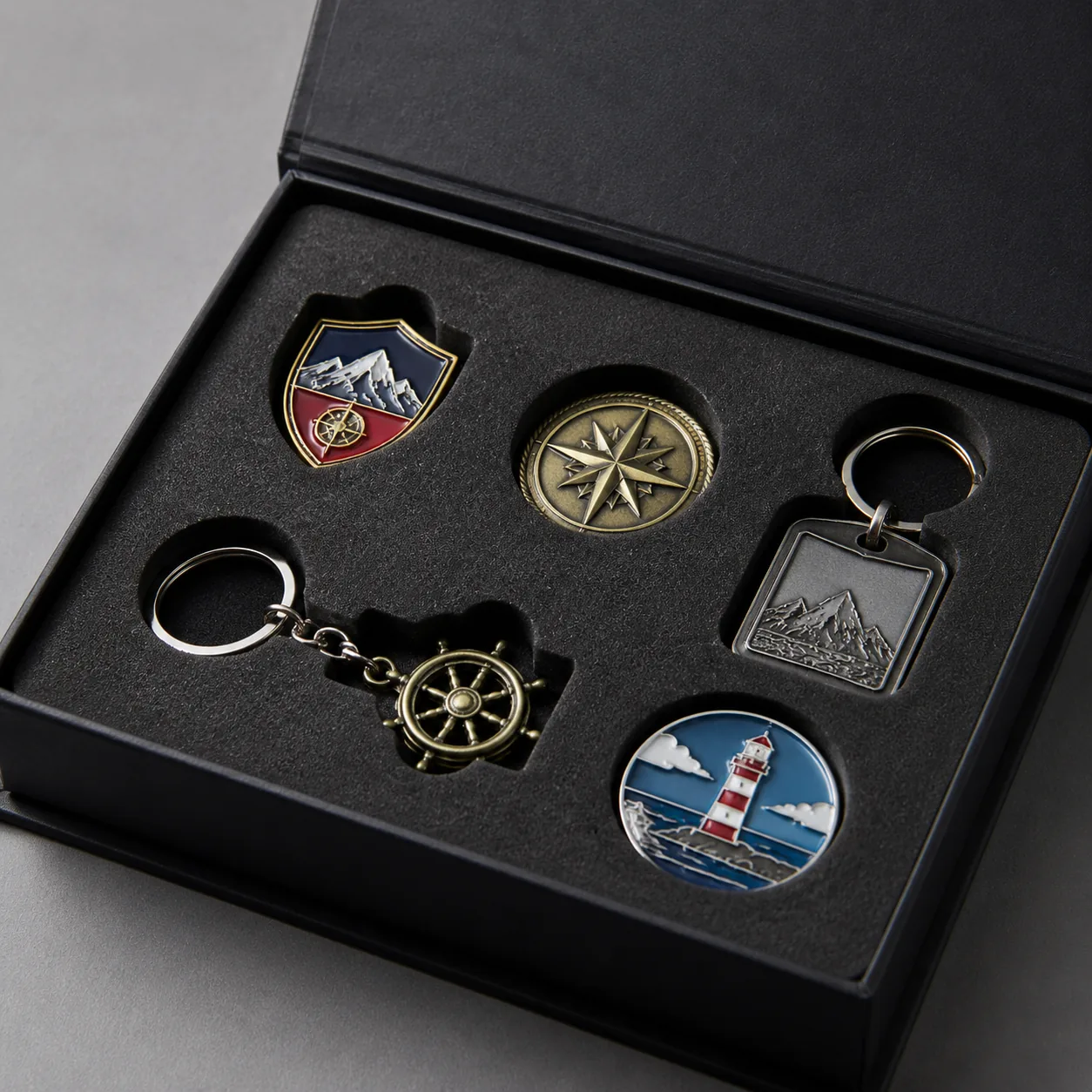
Artwork approval does not fix a mismatched build
A pin can pass design review and still fail in production if the manufacturing method does not match the artwork, final size, or use case. In 2026, the most common failures show up after engineering review: text that closes up below final scale, gradients broken into crude enamel islands, enamel underfill in narrow cells, printed faces that look flat on premium programs, or epoxy surfaces that scuff during bagging, carding, and event handout. The weak point is usually not the illustration. It is treating visual intent as if it were proof of process capability.
The decision remains simple at a high level. Offset print is better for image detail, tonal transitions, maps, mascots, and dense information. Soft enamel is better for raised metal structure, tactile depth, and badge character. Problems start when buyers expect both outcomes from one low-cost spec. A 22 mm pin with 4.5 pt legal text, drop shadows, and flesh tones is a poor soft enamel candidate. A heritage crest or service badge intended to feel like a miniature medal usually loses value when flattened into a printed face, even if the file itself is accurate.
The safer approach is to review the art at 100% production size and compare it against measurable limits: minimum line width, minimum readable text, number of color cells, gradient coverage, plating exposure, burr tolerance, surface protection, and packing method. If the design sits near those limits, re-spec before sampling. A build change during engineering review may cost 2-4 days. A mold revision or mass-production correction can cost 10-20 days plus extra tooling, sorting, and replacement freight.
Spec comparison: limits, FOB ranges, and lead times
| Spec point | Offset print pin | Soft enamel pin |
|---|---|---|
| Best fit | Gradients, halftones, photo-derived art, maps, mascots, multi-logo layouts, dense typography | Bold logos, crests, seals, insignia, club emblems, school badges, medal-style designs |
| Typical construction | CMYK or spot print on stainless steel, aluminum, or brass; usually clear epoxy dome 0.3-0.5 mm | Die-struck iron or brass, or cast zinc alloy for complex shapes; recessed enamel with raised plated metal |
| Common finished thickness | Base 0.6-1.0 mm; total 1.0-1.5 mm with epoxy | Usually 1.2-2.0 mm finished; 1.5 mm common for 25 mm die-struck pins |
| Minimum practical text | 4 pt possible in open sans serif; 5-5.5 pt safer for repeatability | 6 pt minimum in simple sans serif; 6.5-7 pt safer when enclosed by metal lines |
| Minimum line width | 0.15-0.20 mm printed line; 0.20 mm safer under epoxy | 0.25-0.30 mm metal line minimum; 0.35 mm safer for stable fill and plating |
| Color capability | CMYK process, gradients, skin tones, photos; spot colors available with extra setup | Pantone-style solid fills, typically 4-8 colors efficiently, up to 10 with rising fill risk |
| Surface feel | Smooth graphic face, flat or domed | Raised metal with recessed color and stronger tactile contrast |
| Main durability risk | Epoxy scuffing, UV yellowing over time, print misregistration, dust under dome | Enamel chip from impact, plating pits, tarnish, underfill, burrs on edges |
| Typical MOQ tiers | 100 pcs sampling tier, 300 pcs common entry run, 500/1000 pcs best price breaks | 100 pcs sampling tier, 200-300 pcs common entry run, 500/1000 pcs better mold recovery |
| Sample lead time | 5-7 days standard; 7-9 days with custom carding or numbered backing | 7-10 days standard; 10-12 days with backstamp, cutout, dual plating, or multiple posts |
| Mass production lead time | 10-14 days after sample approval; 14-18 days with assembly or card insertion | 12-18 days after approval; 18-22 days for complex fills, spinners, or multi-part sets |
| FOB price, 1 in, 100 pcs | USD 0.80-1.40 | USD 0.95-1.70 |
| FOB price, 1 in, 500 pcs | USD 0.48-0.90 | USD 0.58-1.10 |
| FOB price, 1 in, 1000 pcs | USD 0.42-0.78 | USD 0.52-0.98 |
| Typical tooling charge | USD 40-90 depending on size, cut line, and backing setup | USD 50-120 depending on mold detail, size, and plating complexity |
| Realistic dimensional tolerance | ±0.15 mm on cut size; tighter only on simple round or square forms | ±0.15 mm on size; ±0.10 mm thickness common on standard runs |
| Best QC focus | Legibility, print registration, epoxy clarity, edge smoothness, post bond | Fill depth, line sharpness, plating consistency, burr control, post alignment |
At 20-25 mm, small deviations become obvious. A 0.05 mm shift in border width or a 1 pt difference in text size can decide whether a crest remains readable or closes up. Offset print is usually safer when the artwork cannot be separated into clean enamel cells without losing hierarchy. Soft enamel is stronger when the design relies on raised outlines and plated contrast to signal quality at first glance.
2026 re-spec triggers: change the build before sampling
Re-spec means changing the manufacturing method or construction during engineering review after the artwork is tested against process limits. Re-spec requests are increasing because buyers want smaller pins while adding more content: anniversary dates, legal lines, sponsor stacks, serial data, app icons, QR-like geometry, and stricter brand color demands. That combination pushes many layouts outside the efficient range for standard soft enamel.
Use offset print review when any of these conditions apply at final size: more than 20-25% of the face uses gradients or halftones; any critical line drops below 0.25 mm; must-read text falls below 6 pt; the design includes skin tones, map detail, or photo shading; or the artwork carries more than 8-10 distinct colors that cannot be merged. Use soft enamel review when the art holds at roughly 4-8 solid colors, major text stays above 6 pt, and metal boundaries can remain at 0.30 mm or wider without redrawing key elements.
There is also a workable middle ground. If the design needs a premium metal body but contains one detail zone that will not survive enamel, a hybrid build often outperforms a forced binary choice. A common example is a die-struck soft enamel outer badge with a printed center seal under epoxy. On a 1000-piece order, that hybrid usually adds USD 0.10-0.25 per piece FOB and extends sample lead time by 2-4 days, but it preserves legibility while keeping the tactile value buyers want.
- Move from soft enamel to offset print when gradients, faces, maps, or sponsor micro-logos cannot be simplified without losing meaning.
- Move from offset print to soft enamel when the design is logo-led and the selling point is collectible, medal-like, or jewelry-style finish.
- Request both build mockups when final size is under 25 mm and the layout includes text, shield borders, date ribbons, or fine internal outlines.
- Recheck the method if marketing adds late legal text, variable numbering, QR-style geometry, or extra color variants after first approval.
True cost includes yield, packing, and revision speed
Quoted FOB cost is only one part of the decision. Buyers should also estimate approval cycles, yield loss, rework exposure, and packaging protection. Offset print often prices well on complex art because it avoids multiple enamel fills and extremely fine die-struck segmentation. But a lower line-item quote can disappear if the pins are bulk packed, inserted into cards at speed, or handed out at trade shows where epoxy rub marks become visible after transit and setup.
Soft enamel often quotes slightly higher because mold detail, fill balance, polishing, and plating all influence the result. Once engineered correctly, repeat runs are usually stable because the visual effect depends on solid metal boundaries rather than high-density printed detail. That makes soft enamel commercially strong for service awards, club insignia, museum badges, school emblems, and identity-led retail merch where tactile value supports a higher resale price.
Packaging changes economics more than many buyers expect. For a 25 mm pin, bulk PE bag packing may be acceptable for standard nickel soft enamel with durable borders. Premium imitation gold soft enamel or printed epoxy pins usually benefit from individual polybags or card mounting. Individual polybag packing typically adds about USD 0.03-0.06 per piece FOB. Card mounting with insertion commonly adds USD 0.05-0.12 per piece, depending on card size, pin orientation, and labor content. Those increments are often cheaper than absorbing a 3-5% cosmetic rejection rate from surface scuffing or post scratching.
Revision speed also affects total cost. Offset print samples are faster to correct when the issue is purely graphic, because the factory may only need file changes and a new print proof. Soft enamel corrections slow down when the metal structure is wrong, because fixes can require mold rework, revised border widths, or new color breaks. If launch timing is tight and the artwork is detail-heavy, schedule risk should be costed alongside unit price.
QC rules for offset print: registration, epoxy, and hardware
Offset print pins should be inspected as both printed products and metal hardware. The main checkpoints are readability at actual size, print-to-cut registration, color control against the approved reference, epoxy clarity, dome coverage, edge smoothness, and attachment security. For many promotional orders, AQL 2.5 major and AQL 4.0 minor is common. For licensed artwork, retail packs, or premium membership programs, buyers often tighten to AQL 1.5 major and AQL 2.5 minor.
A practical registration tolerance on small pins is usually ±0.10-0.15 mm, with the tighter end used for faces, circular seals, and logo lockups. Critical text should be judged from a physical sample, not an enlarged screen proof. For color control, a signed physical sample or Pantone-targeted reference is stronger than PDF approval because CMYK simulation under epoxy can shift hue, saturation, and apparent density.
Epoxy acceptance limits should be written into the approval sheet. On premium orders, bubbles above 0.30 mm, visible trapped dust at normal viewing distance of about 30-40 cm, fisheyes, exposed dry edges, or dome pullback from the cut edge should be treated as major defects. Burrs should generally be held below 0.10 mm protrusion if the pin will be inserted into apparel, gift sets, or printed backing cards. Bases below 0.8 mm need closer review because post welding or adhesive stress can telegraph to the front face or distort flatness.
- Approve one physical color reference when brand accuracy matters more than approximate CMYK similarity.
- Review every text line at 100% final size, not enlarged art on screen.
- State epoxy limits for bubbles, clarity, yellowing exposure, and edge coverage before sample sign-off.
- Define AQL, post pull or twist checks, and carton packing requirements on the PO.
QC rules for soft enamel: fill depth, metal definition, and plating
Soft enamel inspection starts with the relationship between recessed color and raised metal line. The finish only looks premium when both are controlled together. The most useful checkpoints are fill depth, line sharpness, color separation, burr level, final dimensions, thickness consistency, plating appearance, and post alignment. Buyers who approve only color swatches but ignore metal geometry often discover that production cannot hold the same crispness across a full lot.
A common target is enamel sitting 0.05-0.12 mm below the raised metal line. Shallower fill raises overflow risk during polishing and curing. Deeper fill makes the piece look underfilled, especially on broad color zones. For a 25 mm die-struck pin, realistic dimensional tolerance is often ±0.15 mm, while thickness tolerance of ±0.10 mm is reasonable on standard runs. Major defects typically include exposed base metal inside a fill cell, visible pits, flood-over that erases the border, severe color contamination, or burrs sharp enough to catch on fabric.
Plating must be specified more precisely than just 'gold' or 'silver.' Decorative nickel, black nickel, or imitation gold on promotional pins often runs in roughly the 0.03-0.08 micron range, which is adequate for appearance but not for aggressive corrosion conditions or long unprotected storage. If the badge will sit in retail inventory, be stored for 6-12 months, or be worn repeatedly, buyers should define finish type, anti-tarnish treatment, and acceptable tone variation during approval. Vague plating language is a frequent source of disputes because parts can pass shipment inspection and still discolor later.
Attachment alignment matters more as size increases. Pins above 35 mm width usually perform better with two posts to reduce rotation. On long horizontal badges, post placement tolerance should be checked during final inspection because the front face can look acceptable while the back hardware makes the piece unstable when worn.
Safer build by buyer scenario
The safer build depends less on category and more on where the pin creates value. If the value comes from preserving artwork fidelity, use the process that protects detail. If the value comes from metal presence, prestige, and tactile structure, use the process that protects boundaries and plating contrast.
| Buyer scenario | Safer default build | Why |
|---|---|---|
| Conference giveaway with gradient-heavy sponsor art at 22-25 mm | Offset print | Preserves tonal shading, secondary logos, and dense typography with fewer redraws |
| Museum, military-style, or heritage emblem pin | Soft enamel | Creates stronger outline definition and a more collectible badge character |
| Startup launch pin with tiny slogan under the logo | Offset print | Higher probability of readable type without widening the full layout |
| Corporate recognition or service badge | Soft enamel | Better perceived value, cleaner logo blocks, and stronger hand feel |
| Children's campaign pin with simple bright shapes and 4-6 colors | Soft enamel | Flat iconography suits enamel cells and structure stays visually durable |
| Retail illustration pin adapted from poster or book art | Offset print | Retains original illustration detail with fewer compromises than segmented enamel |
| School crest with shield border and small motto | Soft enamel if text can be enlarged; offset print if motto must stay under 6 pt | Decision depends on whether border prestige or micro-text legibility matters more |
PO checklist: lock measurable acceptance criteria before deposit
The fastest way to reduce defects is to approve against a build-specific production sheet, not just an artwork image. A purchase order that says 'approved as per artwork' leaves too much open to interpretation. The buyer should state what the product is, where the risks are, and what counts as acceptable before tooling starts.
- Confirm the final build method from artwork risk, not from habit or the previous project.
- Lock final size in millimeters and verify all critical text at true scale.
- Specify base material, thickness, plating, attachment, backing card, and packing method in one approval file.
- Set acceptance criteria for the most likely defects: print shift, epoxy bubbles, and scratches for offset print; fill depth, plating pits, and burrs for soft enamel.
- State MOQ tier, tooling charge, sample lead time in days, mass-production lead time in days, and FOB price band on the approval sheet.
- Define AQL level, substitution policy, carton marking, and whether a signed pre-production sample is mandatory.
If one supplier is producing pins alongside coins, keychains, medals, or badges, a shared approval template for finish names, Pantone references, hardware checks, and packing labels reduces preventable disputes. Standardization matters because many shipment arguments begin with inconsistent terminology between procurement, design, and factory teams rather than with the product itself.
Before releasing the order, print the artwork at 100% size and mark any marginal text, outlines, gradients, or color breaks. Then ask the supplier for a side-by-side engineering recommendation listing size, material, thickness, finish, color method, MOQ, lead times, tooling, FOB range, key defect risks, and recommended AQL. Spending a few extra days on a pre-production re-spec is usually far cheaper than locking the wrong build into production and paying later in delay, rework, replacement freight, or customer-facing quality issues.
Have a project? Send your artwork and target quantity and we’ll reply with a detailed quotation within 12 working hours.
Ready to get this made?
Send your sketch, target quantity and ship-date. Detailed quotation in 12 hours.



