Need Custom Pins in 18 Days? A 2026 Rush-Order Playbook
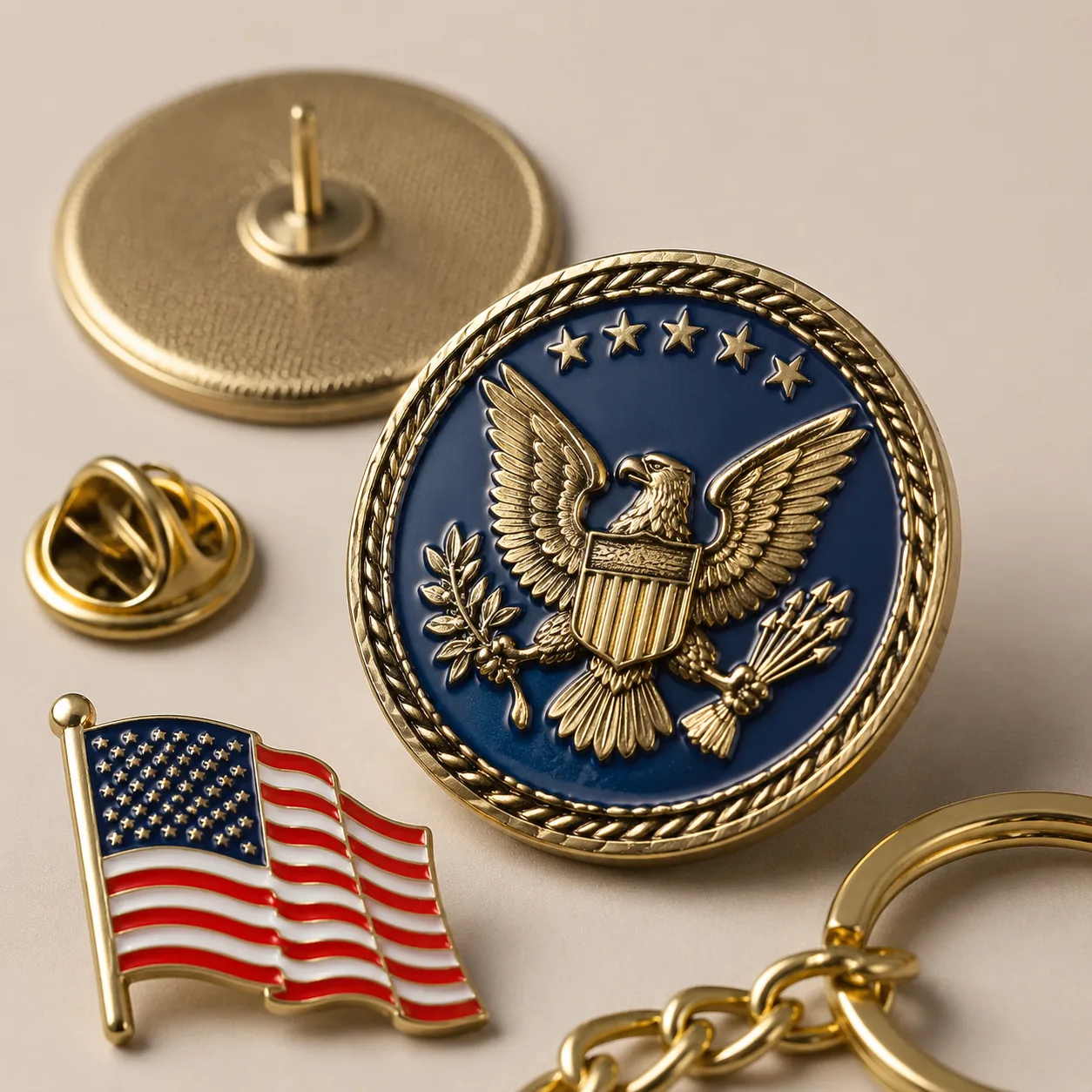
The real rush-order problem: 18 days, 1,800 pins, and no room for rework
You have 18 calendar days before a trade show. The requirement is 1,500 giveaway pins plus 300 better-presented pieces for VIP packs. Artwork exists, but it was built for web use rather than metal production, and freight is not booked. In this situation, speed does not come from telling a factory to “rush harder.” It comes from locking the few specifications that actually control tooling, plating, color application, packing labor, and dispatch before the job enters revision loops.
For custom pins made in China, a standard post-approval production window is usually 10 to 18 days for 1,000 to 3,000 pieces, depending on process, quantity, finish, attachment style, and packaging. A genuine rush can compress a simple order to roughly 5 to 8 production days, but only when four conditions are already true: production-ready vector art, one internal approver, standard plating, and simple packing. On an 18-day clock, losing 24 hours in proofing usually does more damage than paying an extra USD 0.06 to 0.12 per piece.
The safest structure for event orders is one SKU, or at most two SKUs sharing the same die, same plating route, and same base construction. For example, run all 1,800 pieces as the same 30 mm soft enamel pin, then differentiate the 300 VIP units by backing card or stock paper box. If you split giveaway and VIP units into different metal processes or different platings, you create parallel production queues, extra QC variables, and less recovery time if anything slips.
Days 1-2: freeze the specs that actually move the schedule
The first task is not price negotiation. It is reducing the specification list to the variables that change manufacturing sequence: finished size in millimeters, process, base metal, plating, attachment, color method, and packing format. Everything else should be simplified or removed. Rush orders fail when the buyer keeps using the RFQ stage as a brand workshop.
For most trade-show handouts, the lowest-risk default is a 25 to 35 mm soft enamel pin with one standard plating finish and a butterfly clutch. One post is usually adequate up to about 30 mm for compact shapes, while two posts are safer for pieces above 32 to 35 mm wide, long horizontal designs, or top-heavy silhouettes that may spin on fabric. Typical body thickness is 1.2 to 1.5 mm for stamped iron or brass, and around 2.0 to 2.5 mm for die-cast zinc alloy depending on relief depth.
Choose stamped iron when the outline is simple, the face is mostly flat, and FOB cost matters. Choose die-cast zinc alloy when the pin has interior cutouts, irregular contours, rounded edges, or sculpted relief that would be difficult to trim cleanly in stamped metal. If the art includes gradients, halftones, micro text, map lines, or fine labels below practical enamel size, printed metal with epoxy is usually faster and more legible than forcing the design into enamel cells.
- Freeze finished size as an exact number, such as 30 mm or 32 x 28 mm
- Use one plating finish across the full order; dual or selective plating commonly adds 1-2 production days
- Standardize one attachment type and one backing card size per SKU
- Keep raised metal lines at 0.30 mm minimum; 0.35 mm is safer for rush mass production
- Avoid enamel cells below 0.50 mm and cutout bridges below 1.2 mm
- Avoid glitter, glow, sliders, hinges, danglers, and blinkers unless they are essential
- Confirm carton split rules before production: by booth, region, rep, or campaign pack
Also lock your commercial terms early. For a 1,800-piece rush order, many suppliers will quote FOB China port or EXW, while freight moves by express under the buyer account or rebilled courier cost. If you have no time to compare multiple freight structures, choose the clearest one, not the cheapest-looking one.
Pick the build by manufacturability, not by what sounds premium
Rush projects are usually won or lost at process selection. Buyers often request hard enamel because it sounds premium, but under time pressure imitation hard enamel is not always the safest route. It requires a flatter fill profile, more polishing control, and tighter cosmetic consistency across the lot. Soft enamel is generally more forgiving and faster through filling, baking, inspection, and touch-up, especially when the design uses clear metal borders and solid Pantone colors.
If the design contains many small islands of color, narrow interior voids, or an uneven die-cut outline, cast zinc alloy is often safer than stamped iron because the mold handles contour complexity better. If the shape is a shield, circle, rectangle, or another clean outline, stamped iron is usually faster and cheaper from 500 to 3,000 pieces. For micro text, QR-like details, gradients, or layered visuals, offset or UV print on metal with epoxy can eliminate a redraw cycle and reduce approval friction.
| Build option | Best rush-use case | Typical MOQ | Typical production after approval | FOB unit price at 1,000 pcs | FOB unit price at 3,000 pcs | Typical tooling charge | Main trade-off |
|---|---|---|---|---|---|---|---|
| Soft enamel stamped iron | Simple logos, solid colors, standard shapes | 100 pcs | 5-8 days | USD 0.45-0.85 | USD 0.32-0.62 | USD 50-90 | Recessed enamel face; less flat than imitation hard enamel |
| Soft enamel cast zinc alloy | Irregular outlines, cutouts, sculpted relief | 100 pcs | 6-9 days | USD 0.60-1.05 | USD 0.48-0.82 | USD 70-140 | Higher cost and slightly longer setup than stamped iron |
| Imitation hard enamel | Flatter premium face, limited colors, cleaner geometry | 100 pcs | 7-10 days | USD 0.70-1.20 | USD 0.55-0.95 | USD 60-110 | More polishing control required under rush timing |
| Printed metal with epoxy | Gradients, fine detail, maps, small text | 100 pcs | 4-7 days | USD 0.50-0.95 | USD 0.38-0.72 | USD 30-80 | Less tactile metal separation than enamel |
| Die-struck without color | Corporate crests, formal awards, heritage styling | 100 pcs | 5-7 days | USD 0.40-0.80 | USD 0.30-0.58 | USD 50-90 | Lower visual impact for colorful giveaway use |
For plating, standard bright gold, bright nickel, black nickel, and dyed black usually run more smoothly than antique finishes, pearlized coatings, or dual plating. Decorative plating on promotional pins is thin, commonly around 0.03 to 0.08 microns for flash gold-type finishes rather than heavy jewelry plating. That is normal for event merchandise, but if the product will be used outdoors, near salt air, or in humid environments, say so at RFQ stage. A clear protective topcoat may reduce early tarnish and scratching, though it can shift gloss and should be approved before mass production.
If you need both giveaway and VIP versions, the fastest structure is usually one metal build with different packing. Example: 1,500 pins bulk packed or carded in OPP bags for booth use, and 300 of the same pin on a printed card or in a stock paper box for VIP kits. One die, one plating route, and one QC standard protect the schedule far better than chasing two metal finishes.
Day 3: approve artwork like a production engineer
A rush proof is not a creative exploration. It is a production control sheet. It should lock final size, Pantone references, line widths, metal finish, backside text, attachment locations, packaging dimensions, barcode if any, and carton split notes. Sending multiple logo files and asking the supplier to choose is one of the fastest ways to lose a day.
For enamel pins, practical minimums matter. Raised metal lines should be at least 0.25 to 0.30 mm, with 0.35 mm preferred for stable mass production. Enamel cells below about 0.50 mm can fill inconsistently or look muddy after bake and polish. Text below roughly 1.0 mm cap height is risky in enamel and is usually better enlarged, moved to the backing card, or converted to print. Interior cutout bridges should generally stay at or above 1.2 mm, and 1.5 mm is safer on thin stamped constructions.
Backside engineering should be visible on the proof, not decided later. Pins above roughly 30 mm square or 35 mm wide should normally use two posts to reduce spinning. Post positions must not collide with recessed logos, copyright lines, mold numbers, or serial marks on the back. If magnets are required instead of posts, specify that on Day 1. Magnet assemblies add labor, can increase packing thickness, and may trigger route-specific shipping or labeling questions.
On an 18-day schedule, a shipped pre-production sample is usually too slow. Couriering a sample can consume 3 to 5 days door to door even if the factory is efficient. For moderate-value event orders, a practical approval path is one digital proof followed by first-article photos or a short video showing front, back, edge, clutch fit, and actual packing. That is usually enough to catch plating errors, line-weight problems, missing details, or card alignment issues without losing nearly a week.
Days 4-9: control the production steps where rush jobs usually slip
After approval, the normal sequence is tooling, die test, stamping or casting, trimming, polishing, plating, color fill or printing, curing, post soldering or assembly, inspection, and packing. The usual slip points are tooling correction, plating queue delay, and attachment rework. A design that looks simple on screen can still cause delay if it contains undercuts, unsupported lettering, thin bridges, or post locations that interfere with backside text.
Define acceptance standards in measurable terms instead of asking for “perfect quality.” For promotional metal goods, AQL 2.5 for major defects and AQL 4.0 for minor defects is a common and workable standard; critical defects should remain zero acceptance. In a rush pin order, critical defects typically include wrong logo, wrong plating, missing post, detached clutch, exposed sharp burr, mixed-SKU packing, or carton count shortage outside the agreed over/under range.
Set tolerances in writing. For a 30 mm pin, overall size tolerance of plus or minus 0.30 mm is practical. Thickness tolerance of plus or minus 0.15 mm is common for promotional use. Weight tolerance of plus or minus 10 percent is usually acceptable unless the pin is part of a matched gift set. For hand-inserted backing cards, card placement tolerance of plus or minus 1.0 mm is realistic. Pantone matching on soft enamel should be treated as a commercially reasonable visual match rather than laboratory color precision unless tighter control has been explicitly quoted.
Ask for process-specific checks rather than generic assurances. Request 100 percent visual inspection for front-face defects and plating consistency, clutch-fit checks by packing batch, and pull tests on soldered posts from each production lot. A common internal control is 3 to 5 pull-test samples per lot using a simple manual force check or shop standard fixture. If the run includes epoxy, ask the factory to screen out major bubbles, edge overflow, and sink marks. If the order includes 300 VIP units, instruct the factory to isolate, inspect, and pack that subset first so it can ship ahead if the main run slips.
| Control point | Recommended rush standard | Why it matters |
|---|---|---|
| Visual inspection | 100% front-face appearance check | Catches wrong plating, fill gaps, burrs, mixed finishes |
| Post attachment | Pull test on samples from each lot | Reduces field failures from weak solder or poor bonding |
| Clutch fit | Functional check per packing batch | Avoids loose butterfly clutches during booth distribution |
| Count accuracy | Over/under tolerance agreed in PO, typically 0 to +2% | Prevents shortage disputes on event-critical orders |
| VIP subset isolation | Pack 300 VIP units first and label separately | Enables split shipment if the main run is delayed |
Day 10: use packing that saves time instead of adding handwork
Custom packing causes more rush-order delays than many buyers expect. For event use, bulk packing or simple individual polybagging is usually the fastest route. Full retail presentation with custom inserts, sleeves, foam, or rigid boxes can add 1 to 4 days depending on stock availability and hand labor. If card artwork is not approved by Day 3, do not build an 18-day plan around complex presentation.
For 1,500 giveaway pins, common fast options are bulk packed at 50 or 100 pieces per bag, or carded on a standard 90 x 55 mm or 85 x 55 mm backing card in OPP bag. For the 300 VIP pieces, a printed card plus OPP bag often adds enough perceived value without the delay of a custom rigid box. If cartons need to split by booth, territory, or rep, define inner-pack quantities before final packing starts.
| Packing choice | Added packing time | Typical added FOB cost | Best use | When to avoid |
|---|---|---|---|---|
| Bulk packed | 0-0.5 day | USD 0.00-0.03/pc | Fast booth distribution | Retail presentation or sponsor branding |
| Individual polybag only | 0.5-1 day | USD 0.03-0.06/pc | Cleaner giveaway handling | When branding or instructions must be displayed |
| Backing card plus polybag | 1-2 days | USD 0.08-0.20/pc | Brand visibility and SKU separation | If card art is not approved by Day 3 |
| Simple stock paper box | 2-3 days | USD 0.20-0.60/pc | Small VIP quantity | Mass giveaway or tight freight budget |
| Rigid gift box | 3-4 days | USD 0.35-1.20/pc | Executive gifting | 18-day deadlines unless a stock box is pre-approved |
Resorting packed goods is one of the easiest ways to create count errors and label mix-ups. If you need 10 cartons of 150 each, or 15 inner boxes of 100 each labeled by booth, specify that before packing begins. Reopening finished cartons later adds labor, increases damage risk, and often costs more time than buyers expect.
Days 11-14: shipping math, customs, and the buffer buyers forget
The most common planning error is counting only factory production and ignoring transit volatility. In 2026, express from East China to North America or Europe may still move in roughly 3 to 6 days door to door under normal conditions, but customs review, weather, flight rollover, security screening, or remote-area handoff can add 1 to 3 days without warning. For a small, dense shipment such as 1,800 pins, express is usually safer than airport-to-airport air cargo because the coordination burden is lower.
A typical shipment of 1,800 standard 30 mm pins may weigh roughly 18 to 28 kg gross depending on backing cards, boxes, and carton format. That is often still well suited to express. Saving USD 0.05 per unit on FOB means very little if the cartons miss venue receiving by one day. Set a ship-no-later date at least 5 days before final delivery to the convention center, hotel, or 3PL. Do not count backward only from booth opening. Many venues reject weekend deliveries, unlabeled cartons, or freight that arrives outside the exhibitor service window.
Confirm consignee name, mobile number, tax ID if required, event name, booth number, dock instructions, and carton labeling rules before the goods leave the factory. If delivery is going to a convention center, also confirm whether the venue accepts direct courier deliveries or requires an official show contractor. A factory can finish on time and still miss the event because the shipment lacked the exact receiving reference or used the wrong importer details.
If the order is truly critical, ask the supplier to send packed carton dimensions and estimated gross weight as soon as pack count is known, often one day before ship date. That lets freight booking, commercial invoice review, and customs paperwork start before final closeout photos are issued. On a compressed schedule, pre-alerting logistics by even half a day matters.
Fallback plans that reduce damage when the schedule slips
Rush orders become manageable when fallback rules are agreed before production starts. If plating capacity tightens, switching from antique gold to bright gold, bright nickel, or black nickel can recover time. If one enamel color keeps generating approval debate because phone photos are inconsistent, authorize a nearest-Pantone family match within a pre-agreed visual tolerance rather than losing another day to re-shoots. If backing cards are delayed, ship loose or polybagged pins first and send cards separately, provided the documents and carton labels remain accurate.
The most useful fallback is a priority split shipment. In this case, the 300 VIP pieces should be designated as first-out inventory from the start, not after the line is already late. If the full 1,800 cannot leave together, send the VIP subset first and the 1,500 giveaway units on the next movement. That only works if the supplier has written authorization to split cartons, the buyer has approved extra freight cost, and the packing plan already isolates the VIP quantity.
- Pre-approve one fallback plating finish such as bright nickel or black nickel
- State which variables may flex: packaging, exact Pantone shade, or split shipment
- Nominate one final approver who can respond within 2 hours during proofing and first-article review
- Define the latest useful arrival date for event use versus post-event use
- Authorize partial-shipment rules and confirm who pays added express cost if split shipping is triggered
What to send the supplier today if the clock is already running
Send a one-page rush brief, not a long email chain. Include event deadline, exact quantity split, finished size in mm, process choice, plating, attachment, packaging, ship-to details, importer details, and the latest hour for proof approval today. Attach one vector file in AI, EPS, or clean PDF plus one reference image showing intended colors. If these fields are missing, the supplier may still quote quickly, but the lead time will not be reliable.
Then ask three direct questions. First, how many production days from final proof approval for this exact build and quantity. Second, what one specification change today would shorten the schedule by at least one day. Third, what is the latest realistic ship date with buffer, not the most optimistic ship date. Those questions quickly show whether the factory is planning the order or only promising speed.
For most 18-day trade-show orders, the winning specification is not the fanciest one. It is usually a 25 to 35 mm soft enamel pin, one plating, one standard clutch, no moving parts, simple card or polybag, and express shipping with consignee details locked early. Buyers who hit the date usually do three things well: freeze critical specs on Day 1, approve artwork like engineers on Day 3, and treat every optional feature as a potential schedule failure point.
Have a project? Send your artwork and target quantity and we’ll reply with a detailed quotation within 12 working hours.
Ready to get this made?
Send your sketch, target quantity and ship-date. Detailed quotation in 12 hours.



