Minimum Line Widths for Custom Enamel Pins and Badges
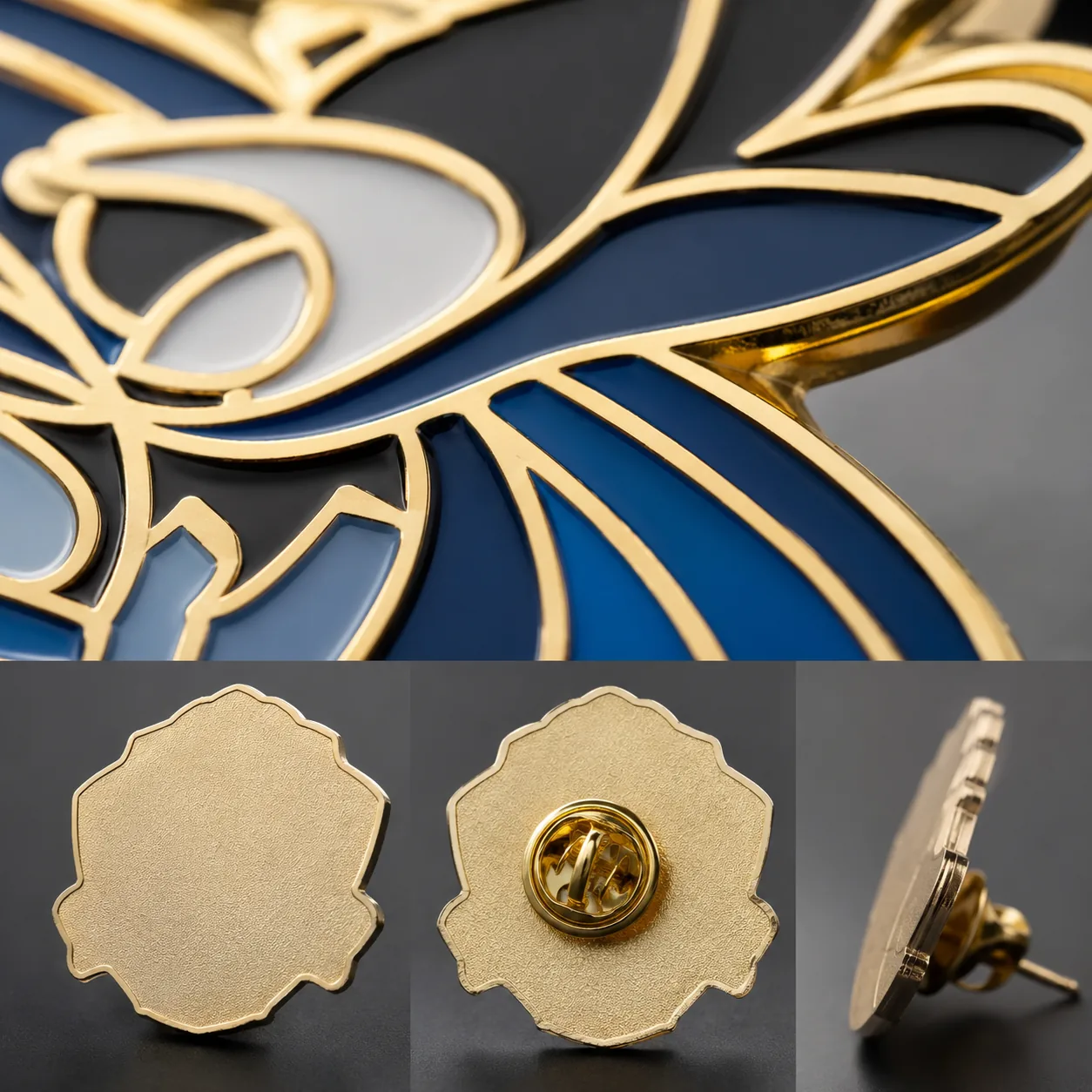
Why Screen-Perfect Artwork Fails in Metal
Most enamel pin and badge defects start before the factory opens a mold. Artwork is often drawn for a monitor, catalog page or website header, then scaled down to a 22-35 mm metal product. A 0.15 mm divider line may look crisp in Illustrator, but after die striking, polishing and plating it can become a broken ridge, a blocked enamel cell or a rough plating edge. The issue is not usually poor workmanship; it is artwork below process capability.
For B2B buyers, the commercial risk is timing. A manufacturability revision normally adds 1-3 working days before tooling. If a mold is already cut, remake time is usually 3-6 working days, with tooling charges of about USD 45-180 for most small and medium badges and up to USD 220 for large, deep or double-sided molds. On a retail launch, conference deadline or licensed merchandise program, the lost days matter more than the mold cost.
This guide gives practical production limits for custom enamel pins, badges, brooches, keychains and small magnets. The figures are based on common die-struck brass or iron, zinc alloy casting, photo etching, decorative plating and enamel filling. They are not design preferences. They are the dimensions that help a supplier quote accurately, cut tooling once and hold consistent quality in bulk production.
Core Dimensions to Specify in the RFQ
A useful RFQ does not stop at overall size. A buyer should state the finished badge size, base metal, enamel type, plating finish, attachment, packaging, quantity and the smallest manufacturable features in millimeters. The four dimensions that control detail survival are raised metal line width, recessed enamel cell width, clear gap between raised elements and text height.
For die-struck soft enamel, a raised metal divider should be at least 0.25 mm after plating. Lines from 0.18-0.24 mm are possible only in low-risk areas and may round off after polishing. For hard enamel, use 0.30 mm or more because the enamel is overfilled and polished flush; narrow dividers lose height and definition during grinding. If a line is part of a brand mark, do not leave it in the risk zone.
Enamel gaps need similar control. A recessed color cell below 0.30 mm is difficult to fill cleanly with standard soft enamel. Transparent enamel, glitter, pearl and glow pigment are thicker and less forgiving, so 0.40 mm is safer. Clear spacing between two raised metal details should stay at 0.25 mm or above; below that, plating buildup can visually bridge the gap.
| Feature to Control | Preferred Minimum | Risk Zone | Likely Failure |
|---|---|---|---|
| Raised metal line, soft enamel | 0.25 mm | 0.18-0.24 mm | Broken ridges, rounded edges or color bleed |
| Raised metal line, hard enamel | 0.30 mm | 0.22-0.29 mm | Polishing removes definition |
| Recessed enamel cell | 0.30 mm | 0.20-0.29 mm | Incomplete fill, bubbles or uneven color |
| Glitter, pearl or glow enamel cell | 0.40 mm | 0.30-0.39 mm | Poor flow and patchy pigment |
| Clear gap between raised details | 0.25 mm | 0.15-0.24 mm | Plating closes the gap |
| Raised metal text height | 1.2 mm | 0.8-1.1 mm | Counters close in letters such as A, e and R |
| Printed text height | 0.7 mm | 0.5-0.6 mm | Readable only at very close distance |
Process Choice Changes the Safe Line Width
Soft enamel is the most forgiving process for typical corporate pins and event badges. The metal is die struck or cast, plating is applied, and enamel is filled into recessed cells below the raised metal surface. Because the surface is not polished flush after filling, soft enamel can hold 0.25 mm dividers more reliably than hard enamel. The trade-off is a textured surface and slightly lower resistance to abrasion unless epoxy is added.
Hard enamel gives a smoother, premium finish for retail pins, awards and executive gifts. The enamel is filled above the metal line, baked, then polished until metal and color are level. This process improves surface feel but is less tolerant of tiny dividers, small text and dense internal lines. A design that works as soft enamel at 30 mm may need simplification before it can be made as hard enamel.
Zinc alloy casting is useful for 3D brooches, thick keychains and sculpted shapes, but it should not be selected for 0.25 mm dividers. Molten metal flow, mold release and polishing usually require 0.35-0.45 mm lines. Photo etching can hold finer surface graphics on brass or stainless steel, sometimes around 0.18 mm, but the relief is shallow and less suitable for deep enamel pools. Printed metal with epoxy is often the best answer for gradients, portraits, micro text and sponsor walls.
| Process | Best Use | Safe Metal Line | Typical Thickness | Typical FOB at 500 pcs |
|---|---|---|---|---|
| Die-struck soft enamel | Logo pins, event badges, club pins | 0.25 mm+ | 1.2-2.0 mm | USD 0.55-1.35 |
| Die-struck hard enamel | Retail pins, premium corporate gifts | 0.30 mm+ | 1.2-2.0 mm | USD 0.75-1.80 |
| Zinc alloy casting | 3D brooches, thick keychains, sculpted relief | 0.40 mm+ | 2.0-4.0 mm | USD 0.90-2.40 |
| Photo etched brass | Fine surface graphics and thin badges | 0.18 mm+ | 0.6-1.0 mm | USD 0.60-1.50 |
| Printed metal with epoxy | Photos, gradients, QR codes, tiny text | No divider required | 0.8-1.5 mm | USD 0.50-1.30 |
Text, Logos and QR Codes Need Separate Rules
Text fails differently from decorative lines. A slogan may be readable in a PDF, but on a 28 mm badge the open spaces inside letters can close after plating. For raised metal text, use simple sans-serif fonts at 1.2 mm letter height or larger. For serif, condensed or all-cap text, 1.5-1.8 mm is more realistic. Avoid thin strokes below 0.20 mm inside the font itself.
Recessed enamel text is harder than raised metal text because enamel must flow into narrow cavities. Below 1.5 mm letter height, printing is usually cleaner. Screen printing works for one or two solid colors on flat enamel or metal. Pad printing helps on slightly curved surfaces. If the product will be handled frequently, specify epoxy, clear lacquer or a printed wear test expectation rather than assuming the print will last like metal.
QR codes should be treated as functional data, not decoration. A scannable printed QR area should normally be at least 12 x 12 mm on a flat, light background, with a quiet zone of 1 mm or more. On a 25 mm pin, that consumes nearly half the face. If scanning is required, place the code on the backing card, reverse side, hang tag or separate label instead of shrinking it into an enamel layout.
- Use sans-serif fonts for raised metal text below 2.0 mm high.
- Keep printed disclaimers at 0.7 mm letter height or larger.
- Avoid all-cap serif text below 1.8 mm high.
- Move legal lines, URLs and long sponsor names to the backing card when possible.
- Do not place QR codes across domed epoxy, curved casting or textured relief.
- Request a 1:1 production proof before mold cutting.
- Rank priorities: brand outline first, color accuracy second, secondary texture last.
Plating, Polishing and Enamel Shift the Final Detail
A 0.25 mm line in the vector file is not guaranteed to measure 0.25 mm on the finished pin. Tool cutting, die striking, polishing and plating all change edges. Standard decorative plating on pins is commonly 3-8 microns. Heavier anti-tarnish or premium plating may be 8-12 microns, depending on finish, base metal and cost target. That buildup occurs on exposed metal edges and can make small gaps appear narrower.
Bright nickel and imitation gold need cleaner polishing, so very fine raised lines may soften. Black nickel gives strong contrast, but it also makes small gaps look darker and heavier. Antique brass, antique silver and antique copper highlight relief and hide handling marks, but they can make modern logo artwork look crowded. Matte finishes reduce glare but also reduce contrast on micro detail.
Enamel type changes perception as well. Opaque enamel hides the base and gives strong color blocks. Transparent enamel shows the metal texture underneath and needs wider cells for a clean effect. Glitter, pearl and glow pigments need larger areas because particles can collect unevenly in narrow cavities. For dense artwork, soft enamel with standard nickel or gold plating is often safer than hard enamel with high-polish gold.
| Finish or Fill | Typical Specification | Effect on Fine Detail | Avoid When |
|---|---|---|---|
| Bright nickel | 3-8 microns | Clean contrast with moderate edge buildup | Brand palette needs warm metal |
| Imitation gold | 3-8 microns | Premium look but shows polishing marks | Artwork has dense hairlines |
| Black nickel | 3-8 microns | Strong contrast but visually thickens gaps | Small logos already look heavy |
| Antique brass or silver | 5-10 microns plus antiquing | Highlights relief and hides scratches | Design requires a clean modern finish |
| Heavy premium plating | 8-12 microns | Improves durability but increases edge buildup | Gaps are under 0.25 mm |
| Glitter or pearl enamel | Cell width 0.40 mm+ | Needs room for pigment distribution | Artwork relies on narrow color strips |
Sizing Artwork Without Losing Critical Detail
Scaling a master logo down is not production artwork. If a mascot has 0.35 mm eye details at 45 mm wide, those details become about 0.19 mm when reduced to 25 mm. The production process does not scale down with the artwork. The line has moved from safe to high-risk even though the design still looks acceptable on screen.
Pins under 25 mm should use bold silhouettes, 2-4 color zones and little or no text. Products from 25-32 mm can carry a logo and limited internal detail if line widths are controlled. At 33-45 mm, mascot designs, short slogans and multi-color retail artwork become more practical. Above 45 mm, fine detail is easier, but weight, pin post strength, magnet pull, packaging depth and shipping cost become more important.
For product families, create separate production files for each size. A 20 mm staff recognition pin, a 35 mm retail pin and a 55 mm souvenir magnet should not share one scaled file. Thicken weak dividers, remove secondary texture and enlarge text for the smaller version. This protects brand appearance better than asking the factory to “keep details as much as possible.”
| Finished Size | Recommended Artwork Style | Text Guidance | Typical Application |
|---|---|---|---|
| 18-24 mm | Simple icon, 2-4 colors | Avoid text unless printed | Staff recognition, small lapel pins |
| 25-32 mm | Logo with limited internal detail | Raised text 1.2 mm+ | Corporate pins, event badges |
| 33-45 mm | Mascot, multi-color logo or short slogan | Short text and dates possible | Retail pins, club badges |
| 46-60 mm | Complex badge, medallion or magnet layout | Text rings can work if spaced well | Awards, souvenirs, large brooches |
| 60 mm+ | Coin-style relief or casting may be better | Use separate text zones | Presentation gifts, large magnets |
Inspection Standards to Put in the Purchase Order
Minimum line rules are useful only when they become order specifications. The purchase order should name the approved artwork revision, finished size, base metal, plating finish, enamel type, attachment and defect standard. Without this, a supplier may treat small line changes, minor polishing marks or color overflow as normal variation while the buyer sees a brand problem.
For small die-struck items under 40 mm, a finished size tolerance of ±0.2 mm is realistic. For larger badges, cast items or thick 3D pieces, ±0.3 mm is more practical. Metal thickness tolerance is commonly ±0.1 mm for flat die-struck badges and ±0.2 mm for cast items. Enamel should stay inside raised borders with no obvious spillover at a normal viewing distance of about 30 cm under neutral light.
AQL should match the sales channel. Promotional giveaways commonly use AQL 2.5 for major defects and AQL 4.0 for minor cosmetic defects. Retail pins, licensed merchandise and awards should use AQL 1.5 major and AQL 2.5 minor. If the buyer requires near-zero cosmetic defects, the order needs 100% inspection, extra sorting time and a higher reject allowance. That requirement should be priced before mass production, not argued after delivery.
- State the approved artwork file name, revision date and finished size.
- Specify minimum raised metal line, enamel cell and clear gap in millimeters.
- Define plating finish and target thickness range in microns.
- Set size tolerance, usually ±0.2 mm for small die-struck pins.
- Require a pre-production sample before bulk production.
- Use AQL 2.5 major and 4.0 minor for standard promotional orders.
- Use AQL 1.5 major and 2.5 minor for retail or licensed orders.
- Classify dust, pinholes, plating pits, scratches and color overflow as major or minor defects.
Cost, MOQ and Lead-Time Trade-Offs
Fine detail does not always increase the unit price, but it often changes labor time and rejection risk. A simple 30 mm soft enamel pin with 4 colors, standard butterfly clutch and individual polybag may cost about USD 0.55-1.20 FOB at 500 pieces. The same size with 8-10 colors, tight separations, back stamping and two posts may move to USD 0.90-1.80 because filling, baking, polishing and sorting take longer.
MOQ is usually flexible, but economics improve quickly. Custom enamel pins can often start at 100 pieces, while 300, 500 and 1,000 pieces give better unit costs because tooling, setup and color mixing are spread across more units. Special plating, epoxy, laser numbering, backing cards or printed micro text may still be possible at 100-300 pieces, but color consistency and setup waste are easier to control at 500 pieces or more.
Normal sampling is 5-8 working days after artwork approval for standard enamel pins. Dense fine lines, hard enamel polishing, epoxy, special plating or revised molds can push sampling to 8-12 working days. Bulk production after sample approval is commonly 10-18 working days for standard orders and 16-28 working days for complex designs. Add transit time separately; air courier and sea freight should not be hidden inside production lead time.
| Design Type | Practical MOQ | Sample Lead Time | Bulk Lead Time After Approval | Cost Impact |
|---|---|---|---|---|
| Simple 2-4 color soft enamel | 100-300 pcs | 5-7 working days | 10-16 working days | Lowest filling and sorting cost |
| Moderate corporate logo detail | 300-500 pcs | 6-8 working days | 12-18 working days | Normal commercial range |
| Dense lines or 8+ enamel colors | 500 pcs+ | 8-12 working days | 16-24 working days | Higher fill labor and QC rejects |
| Printed micro text with epoxy | 300-500 pcs | 7-10 working days | 14-22 working days | Extra printing, coating and curing |
| 3D cast badge with enamel | 300-500 pcs | 8-12 working days | 18-28 working days | Higher tooling and polishing cost |
Approval Checklist Before Tooling
Before approving artwork, print it at actual size and view it from 30 cm. If text cannot be read on paper, metal production will not improve it. Then measure the smallest metal divider, enamel cell, clear gap and letter height in the vector file. Do not rely on zoomed screen views; they hide manufacturing risk.
If the design is near the minimums, decide what can be enlarged, printed or removed. A clear instruction such as “preserve the outer logo shape and brand colors; simplify texture below 0.25 mm” is much more useful than “keep all details if possible.” Ask the supplier to mark unsafe areas on the proof and quote both the original and adjusted version when the difference affects cost or lead time.
For a low-risk order, send the vector artwork, target size, process preference, plating finish, attachment, packaging, quantity tiers and required delivery date before quotation is finalized. A proper manufacturability review at this stage prevents weak lines, mold remakes and rushed sample revisions. It also gives procurement, design and marketing teams a shared basis for choosing between visual detail, price and schedule.
Have a project? Send your artwork and target quantity and we’ll reply with a detailed quotation within 12 working hours.
Ready to get this made?
Send your sketch, target quantity and ship-date. Detailed quotation in 12 hours.



