Minimum Line Thickness for Enamel Pins: An Artwork Approval Guide
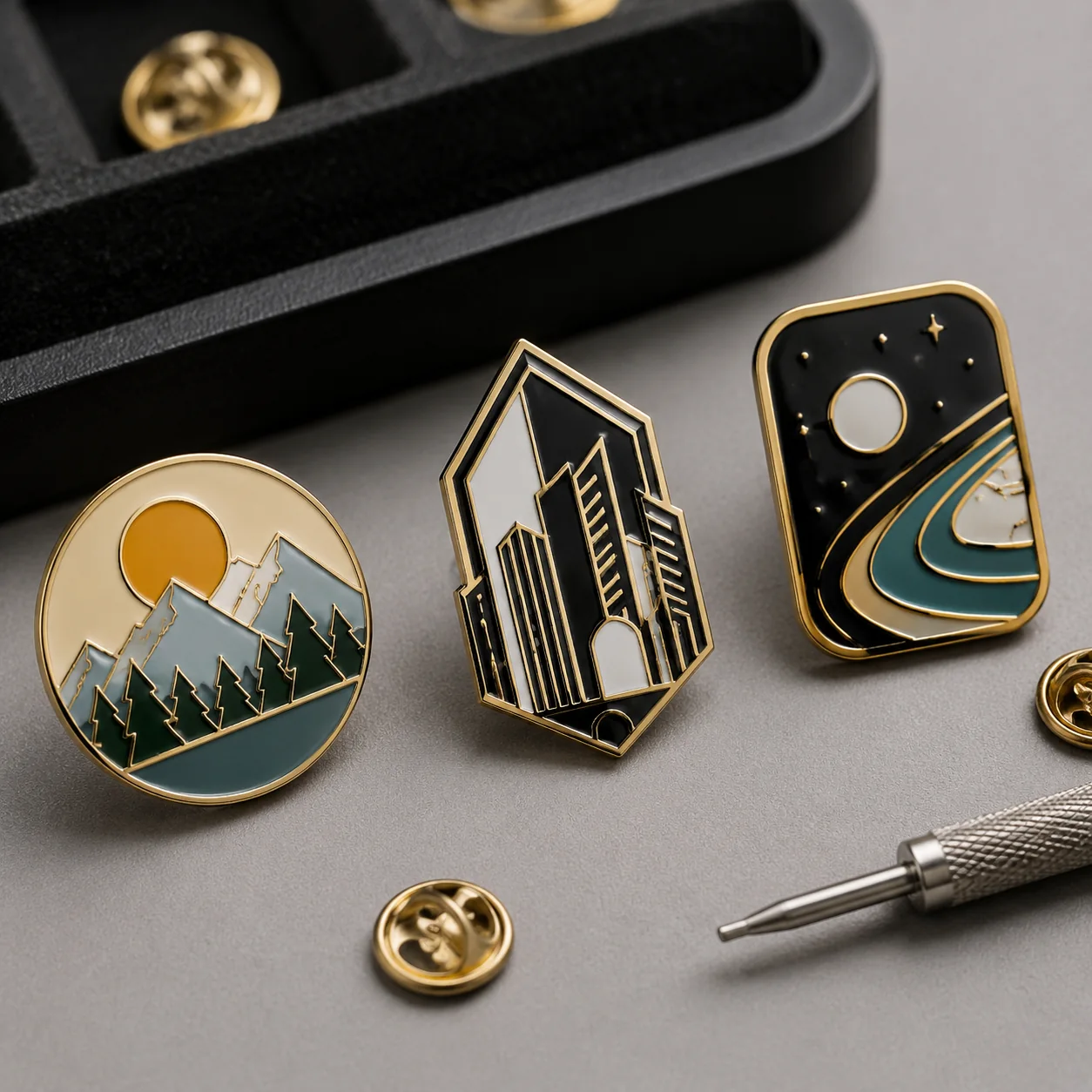
The supplied enamel-pin specifications do not define a universal numerical minimum line thickness. Do not approve artwork against an assumed millimeter rule. Instead, review every metal line, color separation, and negative-space detail in the mold-ready artwork at the ordered pin size. Soft enamel is described as suitable for detailed designs with thin metal lines, while hard enamel provides a premium flush-polished surface; final artwork review is the production approval point.
Start With the Decision, Not an Assumed Minimum
For an enamel pin minimum line thickness request, the defensible answer is that the available product facts do not provide a numeric minimum. A brief that states an unsupported number can create an approval standard that neither the artwork nor the final pin was evaluated against. The practical decision is to preserve small artwork details by reviewing the design as a pin at its final ordered size, rather than treating an enlarged screen image as production-ready evidence.
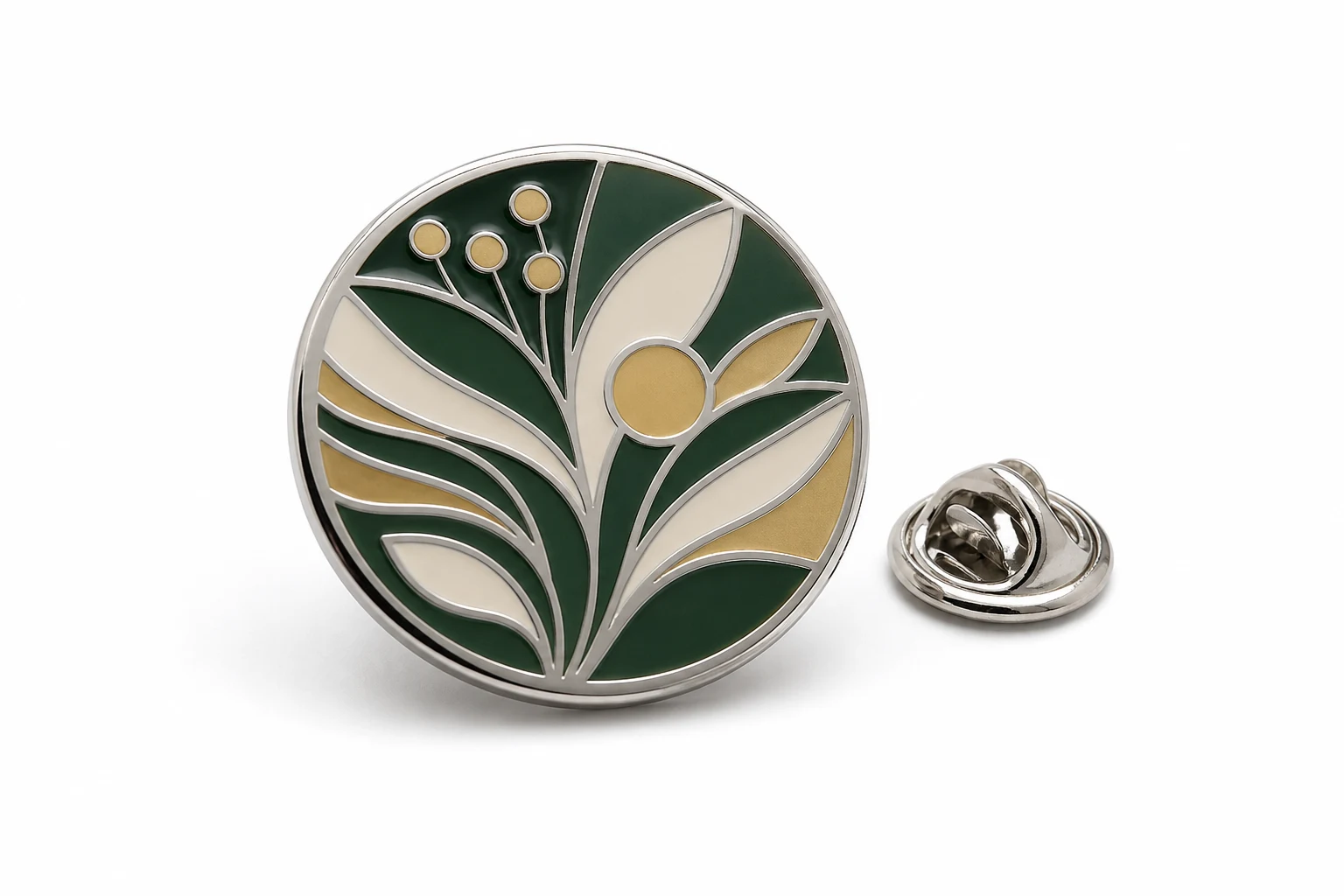
Enamel pins use recessed metal channels filled with jewel-tone color paste, then baked, plated, and polished. In that construction, the visible metal structure does more than outline the design: it separates enamel colors and defines open areas. A line that looks adequate in an enlarged logo can have a different visual result once it becomes a metal channel on a 0.75 inch to 2 inch pin. Likewise, a narrow gap between colored areas may not read as intentional negative space at final product size.
The right buyer instruction is specific without inventing a tolerance: ask for the design to be converted into a mold-ready file with Pantone color callouts, then review the smallest intended details at final size before approving the artwork. The supplied product information states that this conversion can be completed within 24 hours after sending a logo or design. Use that step to determine whether small lines, enclosed spaces, and color boundaries remain clear enough for the selected finish.
Separate Metal Lines, Color Boundaries, and Negative Space
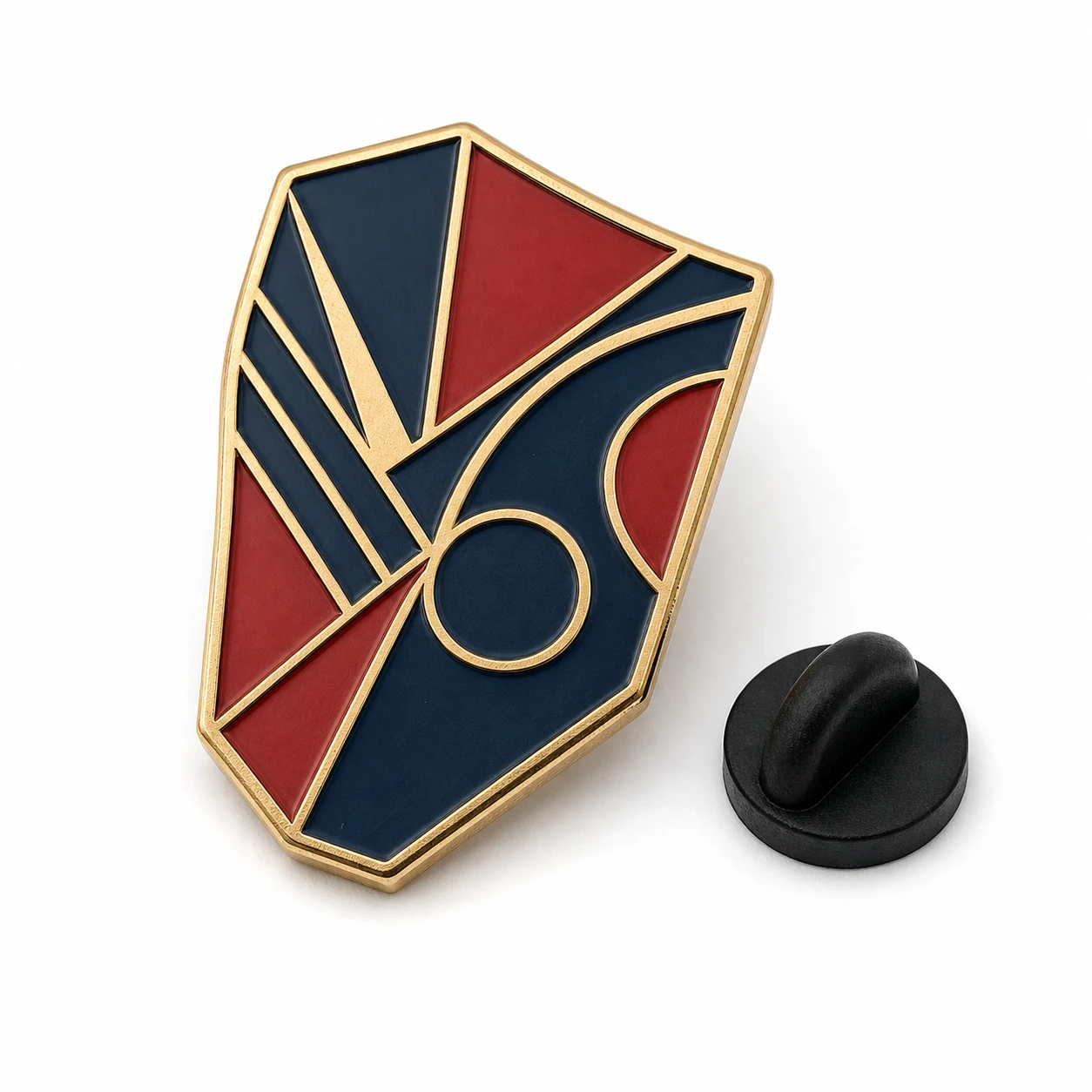
Teams often describe all small details as line thickness, but the approval task has three separate parts. Metal lines are the exposed plated divisions between enamel areas. Color separations are the boundaries that keep one enamel color distinct from another. Negative space is an area intended to remain visually open rather than become part of a filled color. Inspect each separately in the artwork because a design can succeed in one area and still lose clarity in another.
- Check the thinnest exposed metal lines, including interior outlines and small details, not only the outside shape.
- Check every boundary between adjacent Pantone colors. The product specification allows up to 8 Pantone colors per design.
- Check enclosed openings and narrow gaps that are meant to read as negative space.
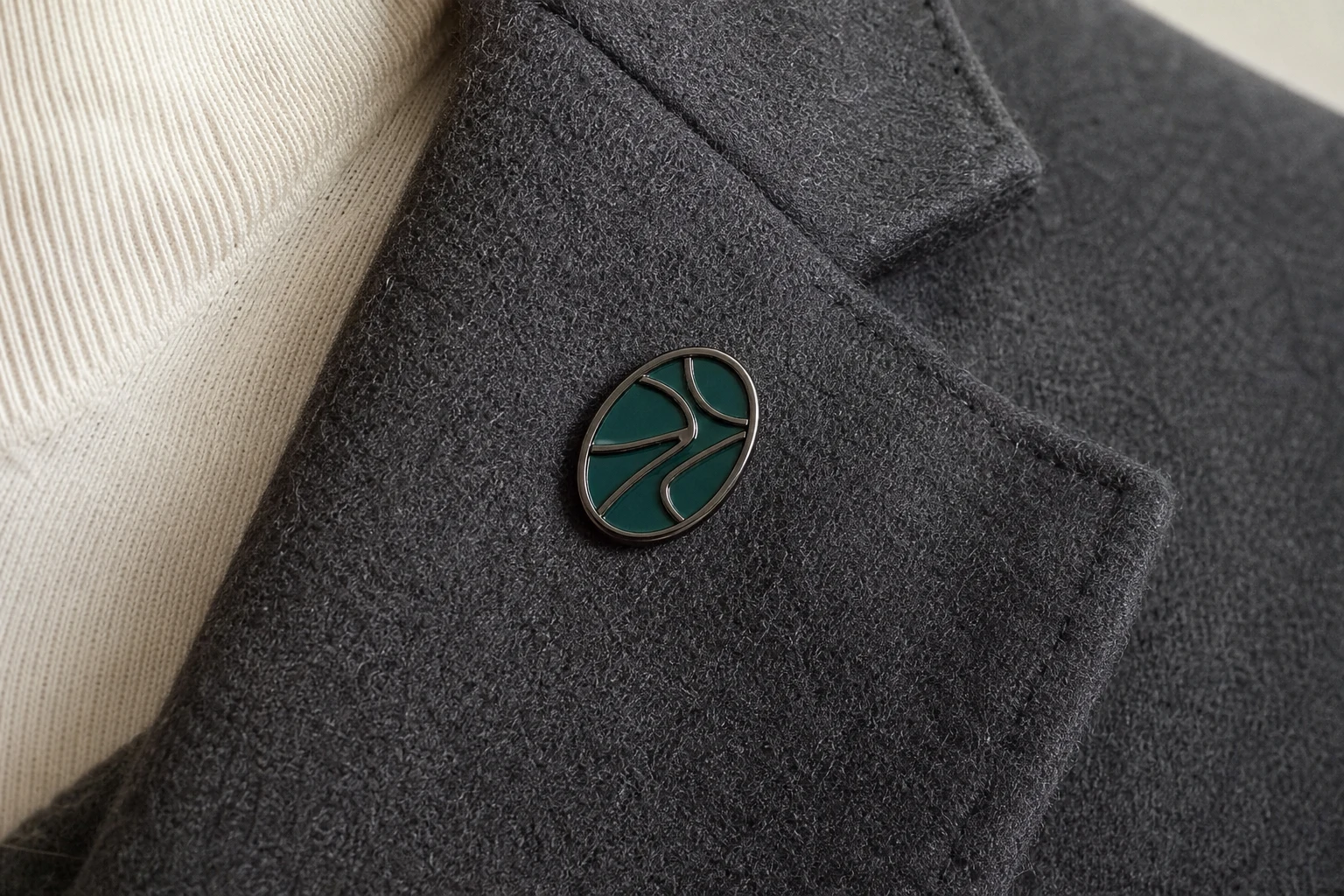
- Check fine features at the actual ordered size, not only in enlarged artwork.
- Check whether small details still make sense after the selected plating is applied to the visible metal structure.
This distinction matters for brand marks with fine lettering, facial details, small icons, borders, and closely spaced color regions. The artwork review should show the visual hierarchy that matters most: which features must remain clearly recognizable, which may be simplified, and which should be removed if the final size does not support them. That is a design decision to make before production is authorized.
Use Final Pin Size to Set the Detail Budget
The offered enamel-pin size range is 0.75 inch (20mm) to 2 inch (50mm). This is the most important concrete dimension available for artwork review. The same logo does not have the same physical area for detail at 0.75 inch and at 2 inch. When artwork contains thin outlines, tightly spaced colors, or small negative spaces, choose the final pin size before approving the design. Do not approve a generalized artwork file and defer the size decision, because the smallest features must be judged against the physical dimensions of the selected pin.
| Final-size choice | Artwork implication | Approval focus |
|---|---|---|
| 0.75 inch (20mm) | The smallest available pin size gives the least physical area for fine elements. | Review the smallest metal lines, narrowest color separations, and smallest negative spaces first. |
| Mid-range size within the offered range | Artwork has more area than the smallest option, but still requires review at the selected dimensions. | Confirm the full logo remains legible and that no minor feature changes the intended visual hierarchy. |
| 2 inch (50mm) | The largest available pin size offers the most area for small details within this product range. | Review whether added detail is actually needed, and confirm it remains consistent with the approved color and plating choices. |
This table is a decision guide, not a source of numerical line-thickness limits. It does not establish that a particular line will produce successfully at a particular size. The final mold-ready artwork review remains the approval point. Where a small element is central to brand recognition, give it priority in the review. Where an element is decorative and does not change the identity of the mark, a simpler treatment may be the better production decision.
Choose Soft or Hard Enamel With Detail in Mind
Soft and hard enamel create different surface finishes, so select the enamel type before the final detail review. Soft enamel has recessed enamel with metal lines slightly raised above the color wells. The supplied product description identifies it as lower cost, faster in lead time, and suitable for detailed designs with thin metal lines. Its listed thickness is 1.2mm, and its price range is $0.30 to $1.20 per piece.
Hard enamel is filled, baked, refilled, baked again, and polished flush. The result is described as mirror-smooth, with deeper-feeling colors and a higher perceived value. It is recommended for premium gifting and jewelry-adjacent brands. Its listed thickness is 1.5mm, and its price range is $0.55 to $1.80 per piece. A flush-polished surface can be the stronger choice when the intended product position calls for that finish, but it does not replace the need to inspect fine lines and separations in the artwork.
| Option | Surface and stated strengths | Detail-approval focus |
|---|---|---|
| Soft enamel | Raised metal lines with glossy recessed color wells; described as suitable for detailed designs with thin metal lines. | Choose it when the raised-line texture and lower cost fit the brief, then inspect thin metal elements in the mold-ready artwork. |
| Hard enamel | Flush, mirror-polished surface with deeper-feeling colors and a more premium perceived value. | Choose it for the required premium presentation, then approve small elements in the final artwork rather than assuming the finish preserves every detail automatically. |
Do not confuse the listed product thicknesses of 1.2mm for soft enamel and 1.5mm for hard enamel with a minimum metal-line measurement. Product thickness describes pin construction, while line thickness concerns the smallest artwork divisions. Both belong in the buying specification, but they answer different questions.
Control Color, Plating, and Effects Before Approval
An enamel-pin design can use up to 8 Pantone colors per design. Include all required color callouts in the mold-ready artwork review and confirm that every color boundary is intentional. When a design has many adjacent colors, the separation lines become a central part of the visual result. Review color count and line detail together rather than treating Pantone selection as a separate administrative task.
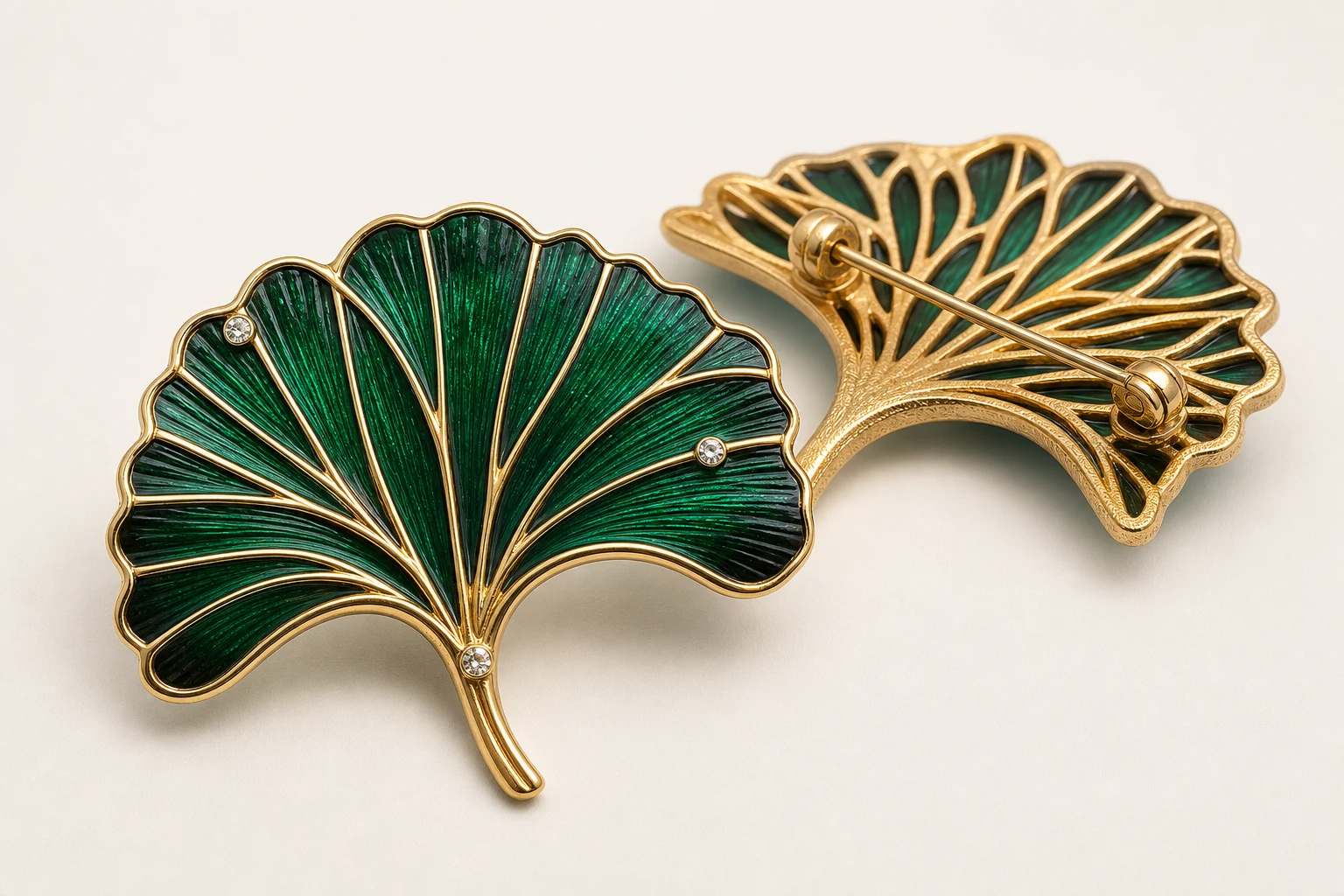
The standard base metal is brass, with copper also available. There are 12 standard plating finishes, with gold and silver identified as the most popular. The plating frames every visible metal line, so it is an artwork decision as well as a finish decision. Select plating before final artwork approval, especially where thin lines are prominent in the design.
Available special effects include glitter enamel, glow-in-dark, transparent enamel, metallic enamel, and sandblasted texture. Call out these choices before approval because they change the intended appearance of filled or textured areas. The supplied facts do not state how any effect changes a numerical line-thickness limit. Treat special effects as a reason for careful visual review, not as evidence that a detail will work at an unverified size.
Use This Artwork Approval Checklist
The checklist below converts the enamel pin line thickness question into an approval workflow that procurement, design, and the supplier can use. It focuses on facts available for this enamel-pin product and avoids unsupported production tolerances.
- Lock the final pin size within the available 0.75 inch (20mm) to 2 inch (50mm) range before approving artwork.
- Send the logo or design for conversion to a mold-ready file with Pantone color callouts.
- Review the artwork at final size and identify the smallest exposed metal line in the entire design.
- Review every narrow color separation and every enclosed negative-space opening at final size.
- Confirm the design uses no more than 8 Pantone colors.
- Choose soft enamel or hard enamel before approving fine details, and check the selected surface treatment in the artwork.
- Confirm brass or copper, the selected plating finish, and any special enamel or texture effect.
- Confirm the attachment: butterfly clutch is standard; rubber, magnetic, and safety-pin attachments are also available.
- Record the approved quantity by design. The stated MOQ is 100 pieces per design.
- Use the stated sample lead time of 5 to 7 days and bulk lead time of 18 to 25 days when planning the order.
For designs with multiple stakeholders, retain the approved artwork together with the chosen size, enamel type, Pantone callouts, plating, attachment, and quantity. That record gives the purchasing team a single reference for the sample and production order. It also avoids a common failure mode in which design approval is based on an early image while commercial decisions such as size and finish are finalized later.
Turn the Artwork Review Into a Purchase Decision
For brand merch, hospitality uniforms, conference lanyards, anniversary gifts, and subscription-box add-ons, enamel pins offer a defined combination of material, finish, and size choices. The buyer does not need an invented universal minimum-line number to make a controlled decision. The buyer needs final-size artwork that shows the selected pin construction and makes the smallest meaningful details visible enough for the brand's use.
Start by choosing the final size, then select soft enamel when the raised metal-line texture and stated suitability for detailed thin-line designs fit the brief, or select hard enamel when the flush, premium surface is the priority. Confirm the up-to-8-color design, plating, attachment, and any special effect in the mold-ready artwork. Once those items are approved, place the order at or above the 100-piece MOQ and plan around the stated 5 to 7 day sample window and 18 to 25 day bulk lead time.
Ready to get this made?
Send your sketch, target quantity and ship-date. Detailed quotation in 12 hours.