Lower-Impact Custom Giveaways: RFQ-to-Bulk Specs for 2026
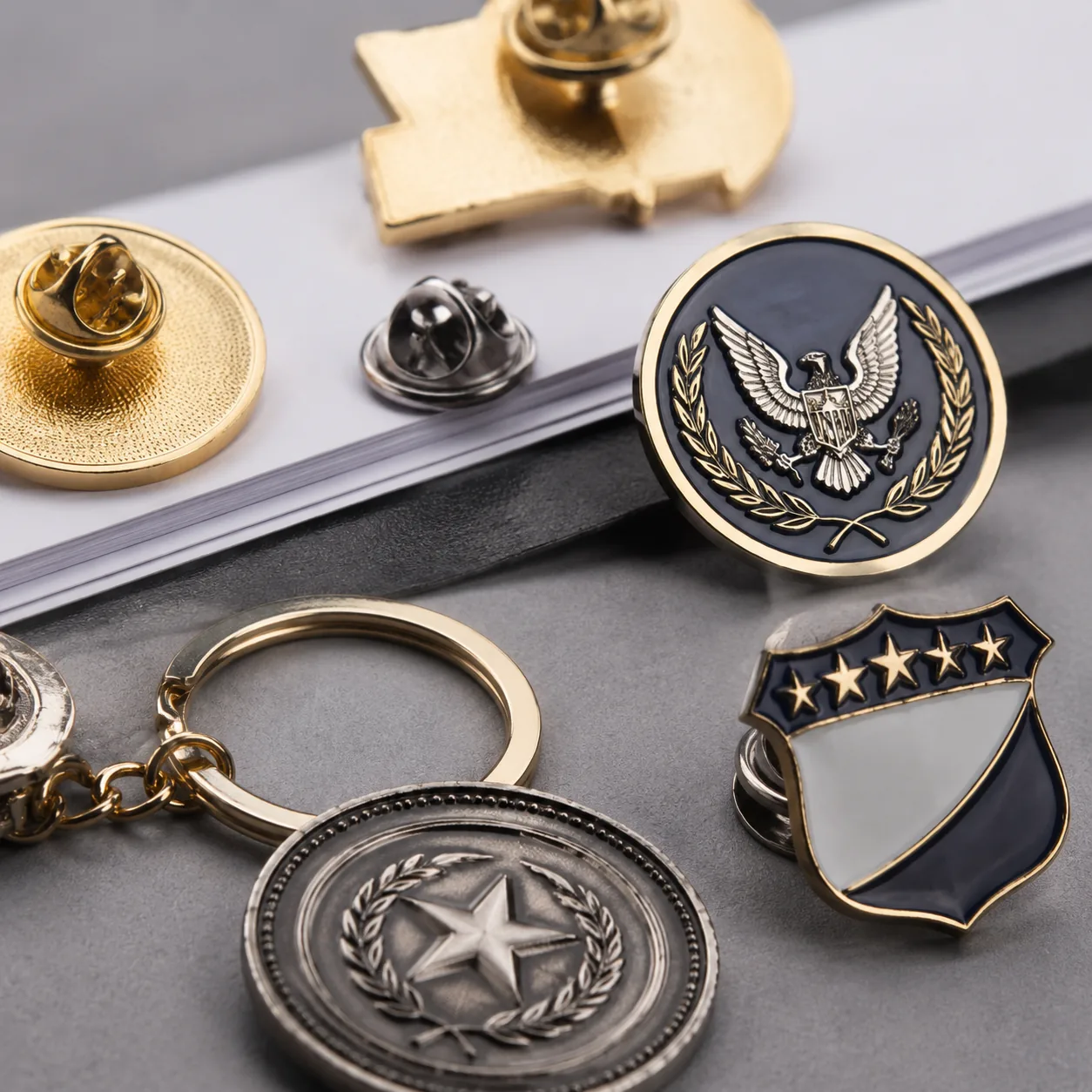
Define lower-impact by manufacturable specs, not label claims
In custom giveaways, lower-impact sourcing fails when the environmental claim is specified loosely but the production build is not. Factories can quote recycled, eco-friendly, or sustainable versions of almost any pin, keychain, patch, magnet, or lanyard. The real sourcing problem is holding that claim together through sampling, mass production, packing, and shipment without drifting into weak hardware, dull print, plating defects, high reject rates, or freight-heavy packaging.
For 2026 buying programs, define lower-impact as a controlled reduction in mixed materials, unnecessary coating, excess packaging, and avoidable scrap while preserving function and approval quality. In practice, that means fixing the event date, Incoterm, size, thickness, finish, attachment, packaging method, carton limits, target FOB, inspection level, and tolerance band before asking suppliers to optimize. If those boundaries are vague, many factories will quote the cheapest technically possible version, not the version most likely to pass sample approval and run cleanly in bulk.
This matters because each category has specific trade-offs. Recycled PET lanyard webbing usually prints well, but white areas often appear about 5-8 percent duller than virgin polyester and very fine reverse text can soften. Zinc-alloy die-cast keychains simplify assembly versus acrylic-plus-metal builds, but recessed lines below about 0.25-0.30 mm may lose edge sharpness. Removing individual polybags cuts plastic, yet black nickel or polished gold-tone surfaces can scuff in transit if tray loading, interleaf paper, or sleeve design is not upgraded at the same time.
The cleanest RFQs break the item into five locked control points: base material, decoration method, attachment hardware, packaging, and inspection standard. That forces trade-offs into the open before sampling and reduces a common failure mode in promo sourcing: the sample looks acceptable, but bulk drifts because plating type, ring gauge, webbing weight, backing card gsm, or pack-out was never frozen in writing.
Build RFQs around non-negotiables and controlled substitutions
A workable RFQ starts with the fixed build, then lists allowed substitutions. Example: 35 mm hard-enamel lapel pin, 1.5 mm thickness plus or minus 0.10 mm, black nickel plating, two black rubber clutches, 350 gsm recycled SBS backing card, no retail polybag, FOB Ningbo target USD 0.58-0.76 at 3,000 pcs, ex-factory 22-28 calendar days after sample approval. After that, specify what can vary: brass or zinc alloy acceptable if the supplier meets approved line definition; recycled white SBS may replace virgin SBS at equal gsm; epoxy dome prohibited unless there are printed surface areas needing abrasion protection.
Do the same across categories. For lanyards, state whether rPET is required or preferred, whether safety breakaway is mandatory, and whether the metal hook must be nickel-free, shiny nickel, or black finish. For magnets, define ferrite thickness, adhesive coverage, and whether rubber magnet is prohibited. For patches, identify woven, embroidered, or printed construction, backing type, and whether merrow border or laser-cut edge is required. For keychains, lock split-ring gauge, jump-ring closure type, plating finish, and pack-out method. Low quotations often hide thinner metal, lighter paperboard, smaller hooks, weaker rings, or simplified carton packing that only become visible after the first sample round.
MOQ should reflect how these factories actually run. Custom die-struck or die-cast metal goods can sometimes be made at 100 pcs, but tooling amortization and plating setup make those orders poor pricing references. In practice, 300 pcs is the minimum for a useful quote, 500 pcs is where plating and color consistency usually stabilize, and 1,000-3,000 pcs is where unit FOB becomes commercially competitive. rPET sublimation lanyards commonly start at 500 pcs per design. Woven patches, woven labels, and assorted patch programs often start at 1,000 pcs because loom setup, yarn scheduling, and backing conversion are less flexible than simple embroidery.
- Specify finished size in mm, thickness, and target unit weight where relevant, not just appearance
- Classify materials as required, acceptable, preferred, and prohibited instead of using broad terms like sustainable
- Quote aligned quantity ladders such as 300, 500, 1,000, and 3,000 pcs for all suppliers
- Freeze decoration details up front: Pantone references, number of colors, plating, print sides, epoxy allowed or prohibited
- Define QC in the RFQ, such as ANSI/ASQ Z1.4 General Inspection Level II, AQL 2.5 major / 4.0 minor
- Request a line-by-line breakdown for tooling, pre-production sample, unit FOB, hardware, packaging, and special assembly
Choose material changes that cut impact without damaging function
The safest lower-impact improvement is usually simplification, not a dramatic material swap. On metal pins, coins, and keychains, removing epoxy, acrylic windows, PVC inserts, or rigid gift boxes often reduces mixed materials and assembly labor immediately. Buyers usually have limited visibility into upstream recycled metal content, but they can control remake rate, reject rate, assembly complexity, and packaging weight. Those are direct cost and waste levers.
On textile items, the material change is more visible and easier to document. For conference and campus programs, 20 mm rPET sublimation lanyards are already standard. A typical usable specification is 20 x 900 mm finished size, folded length 450 mm, webbing weight about 110-130 gsm, width tolerance plus or minus 1.0 mm, length tolerance plus or minus 5 mm, and print registration tolerance plus or minus 1.5 mm over the repeat. The trade-off is normally modest: slightly lower white brightness, some lot-to-lot shade shift, and softer detail on reverse text below roughly 1.5-2.0 mm cap height.
Patch selection should match artwork detail. For lettering under 2.0 mm cap height, woven patches or woven labels typically outperform embroidery on recycled felt or coarse twill because the yarn structure holds finer detail. Embroidered patches remain suitable for bolder logos, simpler shapes, and raised texture, but thread coverage can distort small counters and thin strokes. For magnets, ferrite remains the standard lower-cost and lower-complexity option; specify 1.5-2.0 mm thickness for light paper-face magnets and up to 3.0 mm where stronger hold is required, accepting the weight and thickness penalty versus rare-earth options.
Do not force lower-impact substitutions into designs that require jewelry-grade appearance. If the design depends on mirror-polish fields, imitation gold finish, or recessed lines below 0.25 mm, a softer alloy or rougher substrate can push rejects high enough to erase any environmental or cost gain. In those cases, the cleaner move is often to keep the core item stable and strip out excess packaging, inserts, or multi-material assembly around it.
| Product | Lower-impact build | Typical trade-off | MOQ guide | FOB guide |
|---|---|---|---|---|
| Hard enamel pin, 35 mm | 1.5 mm brass or zinc alloy, hard enamel, no epoxy, 350 gsm recycled SBS card, no retail polybag | No epoxy means less abrasion protection; dark plating shows handling rub sooner | 300 / 500 / 1,000 / 3,000 pcs | USD 0.52-0.88 FOB |
| Metal keychain, 50 mm | 2D die-cast zinc alloy, 2.0 mm split ring, paper sleeve or card mount instead of rigid box | Fine recessed details under 0.30 mm are less sharp than brass die-struck parts | 300 / 500 / 1,000 / 3,000 pcs | USD 0.68-1.45 FOB |
| Fridge magnet, 60 mm | Tinplate or paper-laminated face with 1.5-2.0 mm ferrite magnet, kraft card pack-out | Ferrite is thicker and heavier than rare-earth systems, raising carton weight | 500 / 1,000 / 3,000 pcs | USD 0.34-0.82 FOB |
| Patch, 70 mm | Woven or embroidered patch on recycled backing card, no PVC pouch | Recycled base cloth can mute color and reduce edge crispness on fine detail | 500 / 1,000 / 3,000 pcs | USD 0.26-0.78 FOB |
| Lanyard, 20 x 900 mm | rPET sublimation webbing with swivel hook and optional safety breakaway | White base prints slightly duller; edge consistency depends on webbing mill quality | 500 / 1,000 / 3,000 / 5,000 pcs | USD 0.36-0.84 FOB |
Price the whole build: tooling, hardware, decoration, and pack-out
Unit price alone is a poor comparison because many quote gaps sit outside the bare item. A pin packed loose in export trays is not commercially equivalent to the same pin mounted on a printed card inside a kraft sleeve. The second build changes labor minutes, scuff risk, inner pack count, and carton cube. On metal goods, plating and hardware also need to be quoted explicitly. Shiny nickel, black nickel, imitation gold, matte silver, and antique brass have different visual tolerance windows and different sensitivity to contact marks.
A usable quote sheet should separate tooling, pre-production sample, unit FOB by quantity, attachment hardware, printed card or sleeve, and any hand-assembly fee. For many standard custom pins and keychains, 2D tooling runs about USD 50-120. Multi-level 3D coins, spinner parts, cut-outs, and more complex molds are commonly USD 150-250 or more. Pre-production sample charges often range from USD 30-80 for simple builds, sometimes credited back against bulk orders. Sample lead time is usually 5-8 working days after artwork approval. Mass production is typically 10-18 working days for metal goods, 7-12 working days for simple sublimation lanyards, and 12-20 working days for woven patches or mixed patch assortments. Add 2-5 working days for custom cards, sleeves, or hand packing.
Hardware specifications should be measurable. Typical requirements include split-ring wire diameter 1.8-2.0 mm, jump-ring visible gap under 0.30 mm when closed, pin-post pull resistance at least 3 kgf, ferrite magnet bonded with full-surface adhesive, lanyard hook spring closure returning fully after repeated actuation, and breakaway buckle release force aligned with the market standard or buyer requirement. If finish durability matters, ask for plating thickness guidance where available, acceptable contact-mark zones, and realistic corrosion expectations such as 24-hour neutral salt spray on decorative hardware if the factory can support that check.
Approve samples against numeric tolerances, not general comments
The purpose of a pre-production sample is to clear failure points before bulk starts. For rPET lanyards, review saturation, edge fray, webbing handfeel, clasp finish, stitch density at the fold, breakaway operation, and actual pack-out. For metal keychains, inspect burr level, edge smoothness, plating adhesion, print registration, ring closure, and whether the selected paper sleeve or tray prevents rubbing in transit. If lower-impact packaging is part of the project, the sample must include that exact card, sleeve, tray, or inner carton arrangement.
Use numeric approval criteria wherever possible. For small metal items, finished dimensions can often be held to plus or minus 0.20 mm, thickness to plus or minus 0.10 mm, and attachment location to plus or minus 1.0 mm. For lanyards, width tolerance of plus or minus 1.0 mm is standard on 15 mm, 20 mm, and 25 mm webbing; registration tolerance of plus or minus 1.5 mm is realistic on sublimation repeats. For woven or embroidered patches above 50 mm, trim or merrow tolerance of plus or minus 1.0 mm is generally workable. Color should be checked against Pantone references where applicable, but cross-material matching between enamel, ink, thread, and dyed webbing should be documented as visual match only, not exact instrument match.
Packaging also needs measurable approval. State paperboard grade and finish directly: for example, 300-350 gsm kraft or white SBS, matte aqueous coating, no plastic lamination, score lines without visible fiber cracking, and sleeve fit that does not abrade plated faces. Without that, a supplier can present a strong item sample and later downgrade the card stock or simplify sleeve construction in bulk packing.
Set QC standards that fit recycled textiles and lighter packaging
Lower-impact materials do not justify looser inspection. In many cases they require tighter process control because recycled textile lots may show more shade variation, paper-heavy pack-out may crush faster in humidity, and reduced inner protection can expose polished or dark-plated surfaces to rubbing. The build can still work well, but the QC plan has to reflect those actual risks.
For most promotional goods, ANSI/ASQ Z1.4 General Inspection Level II with AQL 2.5 major and 4.0 minor is a practical baseline. Critical defects should be listed separately rather than folded into major counts. Typical critical defects include sharp exposed points, detached hardware, wrong attachment type, magnet separation, missing breakaway where specified, unreadable mandatory data, plating flake on the logo face, and contamination that obscures branding. Major defects include dimensions outside tolerance, obvious print misregistration, severe color deviation beyond approved visual standard, cracked enamel fill, weak solder, backing card below specified gsm, or functional clasp failure. Minor defects include light reverse-side scratches, slight trim inconsistency, minor kraft shade variation, or limited contact marks on non-display surfaces.
Add a few low-cost process checks that match real failure modes. For metal items, use tape test on printed areas, ring-pull checks on keychain hardware, and 24-hour hang tests on glued magnet assemblies. For lanyards, check clasp function, stitch integrity, and random width verification by lot. For cartons, confirm inner pack count, desiccant use when shipping by sea in humid months, and gross weight preferably below about 12-15 kg for mixed promo orders so inners are less likely to crush during handling.
Reduce packaging with freight, humidity, and scuff risk in mind
A frequent sourcing mistake is removing too much packaging and then paying the difference back through damage or rework. Pins without individual protection can arrive with plating rub, especially in black nickel, shiny nickel, or polished gold-tone finishes. Magnets in paper-only pack-out may survive domestic truck delivery but still absorb humidity or show edge wear on long ocean routes if inner carton structure is not upgraded.
The practical question is not whether plastic can be removed in theory. It is what the lightest pack-out is that still protects the item on the actual route. Often the answer is no retail polybag but some combination of interleaf paper, paper sleeves, tray loading, or a poly-lined export carton with paper-based retail presentation. That can remove a substantial amount of plastic while keeping the finish off abrasive carton surfaces and reducing moisture exposure. Export-carton specs should still be written down: single-wall or double-wall board, burst strength or edge crush standard where relevant, units per carton, maximum carton dimensions, and palletization limits if applicable.
Freight can erase a good material decision. A rigid boxed coin set or an extra-thick ferrite magnet may read as more recyclable on paper, but if carton volume rises by 30-40 percent, both landed cost and transport emissions usually increase. Some of the strongest 2026 improvements are geometry changes instead: thinner sleeves, tighter card dimensions, more efficient tray nesting, and carton counts that raise units per cubic meter without raising defect rates.
Freeze the approved sample into a one-page production control sheet
Before releasing the bulk deposit, convert the approved sample into a one-page production control sheet that purchasing, production, and QC can all use. Include item photo, artwork revision, dimensions, thickness, finish, decoration method, attachment hardware, approved colors, packaging method, units per inner and master carton, AQL level, and every lower-impact requirement such as rPET webbing only, no virgin plastic insert, or no epoxy unless specified on printed zones. Repeat orders fail when the build exists only across emails, chat screenshots, and old quotations.
The control sheet should also list forbidden substitutions. Examples: no change from ferrite to rubber magnet, no reduction from 350 gsm card to 250 gsm, no split-ring gauge reduction below 1.8 mm, no switch from merrow border to heat-cut edge, no plating change from matte nickel to shiny nickel, and no added polybag unless approved for transit protection. Record any accepted limits from sampling too, such as slight lot shade shift on recycled webbing, reverse-side contact marks only, or natural kraft tone variation within the approved sample range.
For a first 2026 pilot, a moderate order size remains the most useful test. Run one metal item and one textile item at 500-1,000 pcs each. Request side-by-side quotations for the standard build and the lower-impact build, with differences shown in materials, tooling, sample charge, unit FOB, lead time, and pack-out. Then approve against pass-fail criteria, not comments like looks good. That is the fastest way to identify which changes genuinely reduce waste without creating a bulk-production problem, which is the metric that matters.
Have a project? Send your artwork and target quantity and we’ll reply with a detailed quotation within 12 working hours.
Ready to get this made?
Send your sketch, target quantity and ship-date. Detailed quotation in 12 hours.



