Lead, Cadmium and Phthalate Specs for Custom Metal Giveaways
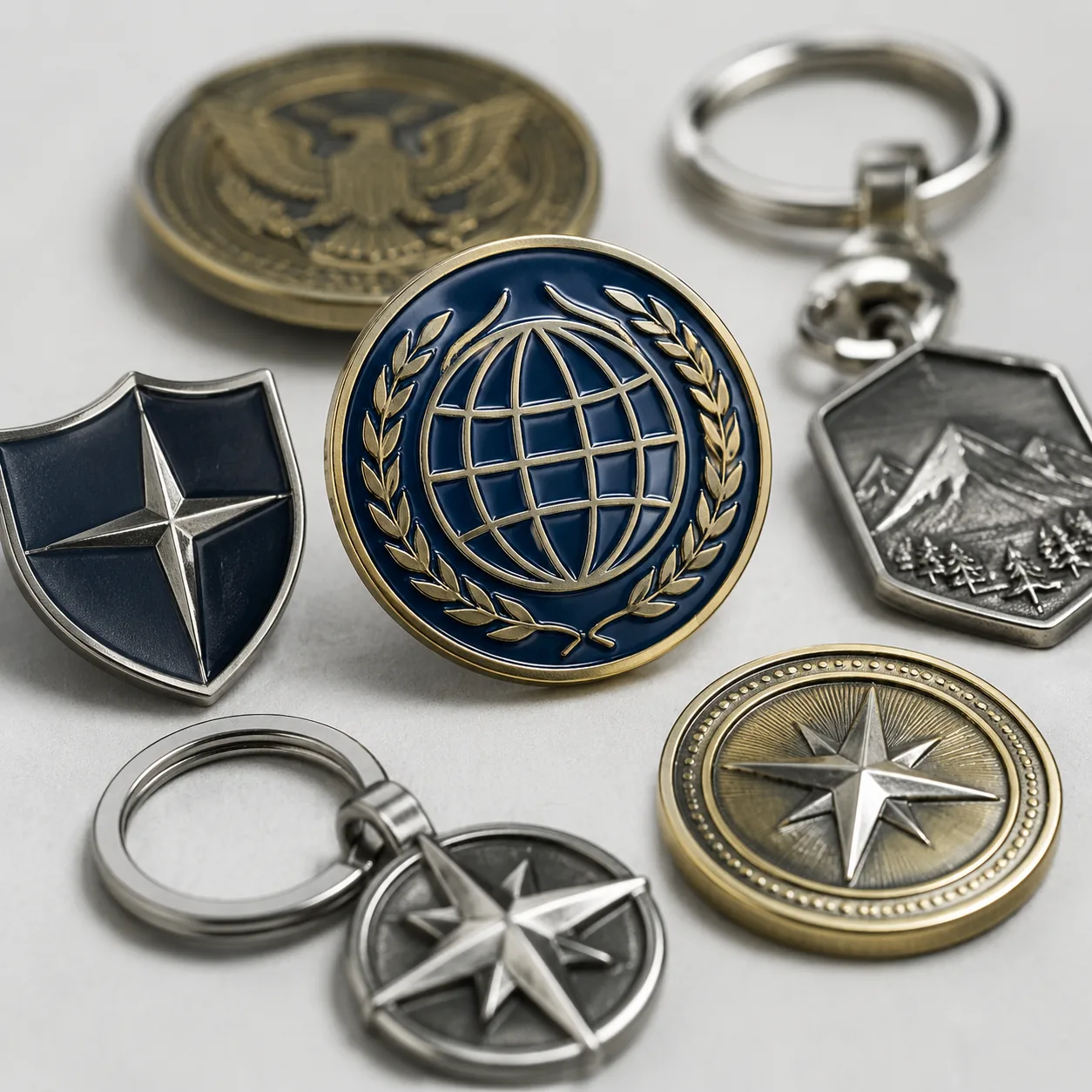
The Real Risk: Finished Goods That Cannot Ship
A buyer approves a clean enamel pin sample, pays a 30% deposit, and receives 20,000 pieces for a museum shop, school fundraiser or retail promotion. The Pantone colors match, plating looks even, and the cartons are labeled correctly. Then the importer asks for a lead and cadmium report, or a retailer requests proof that a PVC keychain is free of restricted phthalates. If the supplier did not control alloy, pigment, plasticizer and plating inputs before production, the order can become blocked inventory instead of saleable stock.
Chemical compliance is not the same as visual quality. A pin can pass AQL 2.5 for appearance, hold plating at 3 to 5 microns, and still fail because the zinc alloy contains lead, a red enamel pigment contains cadmium, a PVC charm uses a restricted plasticizer, or a soldered post introduces a different metal. Rework is rarely practical because the risk sits inside the material system, not just on the visible surface.
For B2B buyers, the control point is the RFQ, sample approval and purchase order. ZheCraft produces custom enamel pins, brooches, keychains, magnets, coins, patches and lanyards in Yiwu, and the same problem appears across mixed promo sets: buyers define size, logo, Pantone colors and packing, but write only “eco-friendly material” for compliance. That wording is too vague for factory purchasing and too weak for an importer audit.
Map the Components With Real Compliance Risk
Not every part of a promotional product carries the same risk. Controlled iron, brass and zinc alloy are usually manageable, but low-grade recycled alloy can vary by lot. Bright enamel colors, soft PVC, rubberized labels, imitation leather, low-cost paint and printed inks need tighter control because pigments, stabilizers and plasticizers may contain restricted substances if the upstream supplier is not qualified.
For pins and coins, the main risk points are the base metal, enamel fill, plating chemistry, epoxy dome and any soldered post or attachment. For keychains, add split rings, chains, lobster clasps, jump rings, PVC charms and printed labels. For patches and lanyards, metal eyelets, clips, inks, heat-transfer logos and plastic buckles matter when the product is used by schools, youth programs or retail channels with vendor manuals.
| Component | Typical Material | Main Compliance Risk | Practical Buyer Spec |
|---|---|---|---|
| Enamel pin body | Zinc alloy, iron or brass | Lead or cadmium in alloy, pigment or epoxy | Use controlled alloy and low-heavy-metal enamel; test finished item for retail or child-facing orders |
| Challenge coin | Zinc alloy, brass or iron | Lead in substrate; cadmium contamination in plating | Specify total lead and cadmium limits for accessible metal and coating |
| Soft PVC keychain | PVC with plasticizer | Restricted phthalates, cadmium pigment, lead stabilizer | Require non-phthalate PVC, controlled color masterbatch and phthalate test by material group |
| Metal keychain hardware | Iron, zinc alloy or stainless steel | Nickel release, lead in alloy, weak plating | Define alloy, plating thickness and restricted substance test when required |
| Lanyard clip or buckle | Zinc alloy, iron, POM or ABS | Lead in metal; restricted additives in plastic | Test the complete lanyard for school, youth, event badge or retail programs |
| Printed backing card | Paperboard with ink | Usually lower risk; ink migration may be questioned | Use standard ink and board; include packaging testing only when retailer manual requires it |
Write Numeric Limits, Not Marketing Claims
Terms such as “non-toxic,” “safe,” “green” and “eco-friendly” do not tell a factory what to buy or a lab what to test. Use numeric limits, identify the destination market and name the regulation or customer standard. If a retailer has a restricted substance manual, send the relevant pages before quotation, not after the pre-production sample is approved.
Common specifications include lead below 90 ppm in paint or surface coating for U.S. children’s products, total lead below 100 ppm in accessible substrate for applicable U.S. children’s products, and soluble element limits under EN 71-3 for toy or toy-adjacent items in the EU and UK. Cadmium requirements vary by market and product type; where no stricter customer rule exists, many buyers use an internal limit such as total cadmium below 75 ppm in accessible components. For PVC and other plasticized materials, regulated phthalates are often controlled at each phthalate below 0.1% by weight, depending on the market and use case.
Do not copy a toy standard onto every adult corporate item without reason. A 45 mm coin for an internal sales award has a different exposure profile from a 25 mm pin sold in a children’s museum shop. Over-specifying can add 3 to 7 working days and USD 120 to 400 per lab group without improving practical safety. Under-specifying creates higher risk when the product enters retail, schools, licensed merchandise or charity fundraising.
- State the destination market, such as United States, EU, UK, Canada or Australia.
- State the user group: adult corporate gift, retail merchandise, school event, children 3 plus or children under 14.
- List restricted substances with numeric limits instead of writing “eco-friendly” only.
- Confirm whether testing covers finished goods, raw materials, coating, packaging or all accessible components.
- Name who pays for third-party testing and whether the cost is included in the FOB unit price.
- Require written approval before changing alloy, enamel, PVC, ink, adhesive, plating bath or attachment supplier.
Choose the Test Stage Before Production Starts
Finished-goods testing gives the most representative result, but it leaves the least time to correct a failure. For higher-risk orders, test a pre-production sample or key materials first. A practical plan for a 10,000-piece retail pin order is to test the approved pre-production sample, then reserve the right to re-test finished goods if the factory changes a material lot or supplier.
For low-risk adult giveaways, many buyers use controlled materials and a supplier declaration, especially when the item is not for children, not worn in the mouth area and not sold through retail. For schools, museums, licensed characters, children’s charities, toy-adjacent items and PVC products, a third-party report is usually worth the added time. The report should identify the actual artwork, model number, material breakdown and report date. A generic report from another design is weak evidence.
At ZheCraft, visual sample approval and compliance testing are managed as separate gates. A custom metal pin sample normally takes 7 to 10 days. Third-party chemical testing usually adds 3 to 7 working days after the lab receives samples. For soft PVC keychains or mixed gift sets requiring phthalate, lead, cadmium and migration testing, allow 10 to 14 days before mass production so the result can be reviewed before materials are cut or molded.
| Testing Stage | Best For | Typical Added Time | Typical Lab Cost Range | Trade-Off |
|---|---|---|---|---|
| Raw material test | Repeat programs using the same alloy, PVC, ink or enamel | 3 to 6 working days | USD 80 to 220 per material group | Fast for reorders, but may not prove finished-item compliance |
| Pre-production sample test | Retail pins, school keychains, licensed merchandise | 5 to 10 working days | USD 120 to 350 per item or material group | Catches problems early, but delays production start |
| Finished goods test | Strict importer or retailer requirement | 3 to 7 working days after goods are ready | USD 120 to 400 per product group | Most representative, but a failure is expensive |
| Annual supplier material file | Large distributors with repeat SKUs | 7 to 14 working days for setup | Varies by material range and lab scope | Efficient for repeat programs, but substitutions must be locked |
Build Compliance Into MOQ, Price and Lead Time
Compliance changes sourcing, not just paperwork. Controlled zinc alloy, low-heavy-metal enamel pigments, non-phthalate PVC and stable plating chemistry can cost more than open-market material. For a 30 mm soft enamel pin with 4 colors, 1.5 to 1.8 mm thickness, butterfly clutch and individual polybag, a planning FOB Yiwu price is often USD 0.42 to 0.85 at 1,000 pieces. At 500 pieces, the same item may sit closer to USD 0.58 to 1.10 because mold, setup and color-mixing costs spread over fewer units. Lab testing is usually quoted separately unless the buyer asks to amortize it into unit price.
For soft PVC keychains, non-phthalate compound can add roughly USD 0.03 to 0.12 per piece compared with very low-cost PVC at 1,000 to 5,000 pieces, depending on size, thickness and color count. A 60 mm PVC keychain with 2D front, 3 to 5 colors and a 25 mm split ring may quote around USD 0.55 to 1.25 FOB at 1,000 pieces before lab testing. For zinc alloy metal keychains with 4 to 6 micron plating and a standard split ring, common FOB planning ranges are USD 0.75 to 1.60 at 1,000 pieces, excluding premium gift boxes.
MOQ also changes when compliance is meaningful. A simple custom pin can sometimes run at 100 to 300 pieces, but controlled material procurement and testing usually make better commercial sense at 500 to 1,000 pieces and above. For PVC colors compounded to order, upstream suppliers may have minimum compound batches, so 200 pieces in 8 custom colors with full phthalate testing creates a poor cost structure. It is better to simplify colors, increase quantity or group repeat orders under the same material file.
- Ask whether lab test cost is quoted separately or amortized into the FOB unit price.
- Request the plating system, such as nickel-free black nickel at 3 to 5 microns or gold flash over nickel barrier at 2 to 4 microns where allowed.
- Specify acceptable material changes, such as zinc alloy to iron only with written approval and a new sample if magnetism or dimensions change.
- Set a document deadline, such as test report due before balance payment, shipment booking or retailer portal upload.
- Avoid approving cheaper alternate material unless the compliance effect and test scope are checked.
Keep AQL and Physical Specs Separate From Lab Tests
A passing chemical report does not mean the shipment is good. You still need normal inspection for appearance, function, dimensions and packing. For pins, coins and keychains, common inspection settings are AQL 2.5 for major defects and AQL 4.0 for minor defects, with critical defects at 0 acceptance. Critical defects include sharp burrs, loose posts, broken attachments, incorrect logo, missing warning label, mixed SKUs or visible contamination.
AQL inspection and chemical testing answer different questions. AQL sampling checks production consistency across cartons. Chemical testing analyzes selected samples and material groups. If the supplier changes enamel, PVC compound or plating subcontractor during production, the earlier report may no longer represent the shipment. The purchase order should prohibit unapproved substitution and require lot traceability for high-risk materials.
Define physical tolerances with the same precision as compliance limits. A 30 mm pin can normally hold width and height within ±0.3 mm, thickness within ±0.2 mm, and soft enamel fill 0.05 to 0.20 mm below the metal line. Promotional pins often use 2 to 5 micron plating; keychain hardware that sees more abrasion may need 5 to 8 microns. These specs do not replace chemical limits, but they prevent the compliance discussion from masking basic product quality.
| Inspection Item | Suggested Control | Reject If |
|---|---|---|
| Artwork and color | Pantone target with approved sample under D65 or daylight booth | Wrong logo, missing color area or obvious shift beyond approved sample |
| Dimensions | ±0.3 mm for most small pins and badges; ±0.2 mm thickness where functional | Part does not fit backing card, recess, paired set or retail display |
| Attachment strength | Post, chain, ring, magnet or clasp pull checked by product type | Post bends easily, ring opens, magnet detaches or clasp fails |
| Plating | Visual check plus agreed micron range | Peeling, pitting, tarnish, wrong finish or exposed base metal |
| Restricted substances | Lab test against stated limits where required | Report fails, omits a required material group or does not match the actual item |
| Packing | Carton count, labels, warnings, inner bags and SKU separation checked | Mixed SKUs, missing labels, crushed retail packs or wrong carton marks |
Avoid Over-Testing Low-Risk Adult Giveaways
Adding every possible test to every product wastes budget and slows campaigns. A one-time internal award coin for adult employees does not normally need the same package as a PVC keychain sold to children. If the item is not intended for children, not mouthed, not worn against skin for long periods, not sold through retail and not imported under a strict category, a supplier material declaration plus controlled sourcing may be sufficient.
Avoid testing many nearly identical samples separately unless the lab, importer or retailer requires it. Five enamel pin designs made from the same alloy, same plating, same enamel system and similar size may sometimes be tested as a product group. If one design adds transparent red enamel, glitter, glow pigment, epoxy dome, PVC charm or different plating, treat it as a separate risk because the material system changed.
The strongest approach is risk-based. Spend testing budget on children’s products, PVC, painted coatings, items with possible mouth contact, licensed retail goods and large shipments where a failure would be expensive. Use supplier declarations and material controls for low-risk adult promotional products, but keep the option to test if the importer, retailer or customs broker requests formal evidence.
RFQ Wording That Prevents Rework
Before sending an RFQ, classify the item by market, user age and sales channel. Then write compliance requirements in the same document as artwork, dimensions, plating, attachment and packing. This prevents a common re-quote problem: the factory prices standard material first, then must change alloy, pigment, PVC compound or testing scope after the buyer asks for compliance documents.
A practical RFQ line could read: “Product for EU retail sale, suitable for age 6 plus, not intended for children under 3. Finished item must meet applicable EN 71-3 soluble element limits and phthalate limits where PVC is used. No material substitution after approved sample without written approval. Third-party test report must identify artwork code, material groups and report date before mass production.”
For a mixed gift box, such as an enamel pin, PVC keychain, woven patch and lanyard, list each component separately. ZheCraft can review the structure, identify which parts need controlled materials, and quote testing as a separate line so procurement can compare factories fairly. The goal is not to buy the most expensive test package; it is to match the compliance plan to real market risk before metal, enamel, PVC or fabric is purchased.
- Classify the product by market, user age and sales channel.
- Send any retailer or importer restricted substance manual with the RFQ.
- Ask for numeric limits, test stage, lab cost and added lead time in writing.
- Approve a physical pre-production sample before mass production, not only a digital proof.
- Lock material suppliers for alloy, enamel, PVC, ink, plating, adhesive and attachments.
- Keep the final test report, approved sample, carton labels and purchase order together for reorder control.
Have a project? Send your artwork and target quantity and we’ll reply with a detailed quotation within 12 working hours.
Ready to get this made?
Send your sketch, target quantity and ship-date. Detailed quotation in 12 hours.



