Launching a 300-Piece Pin Order Without Paying 1,000-Piece Prices
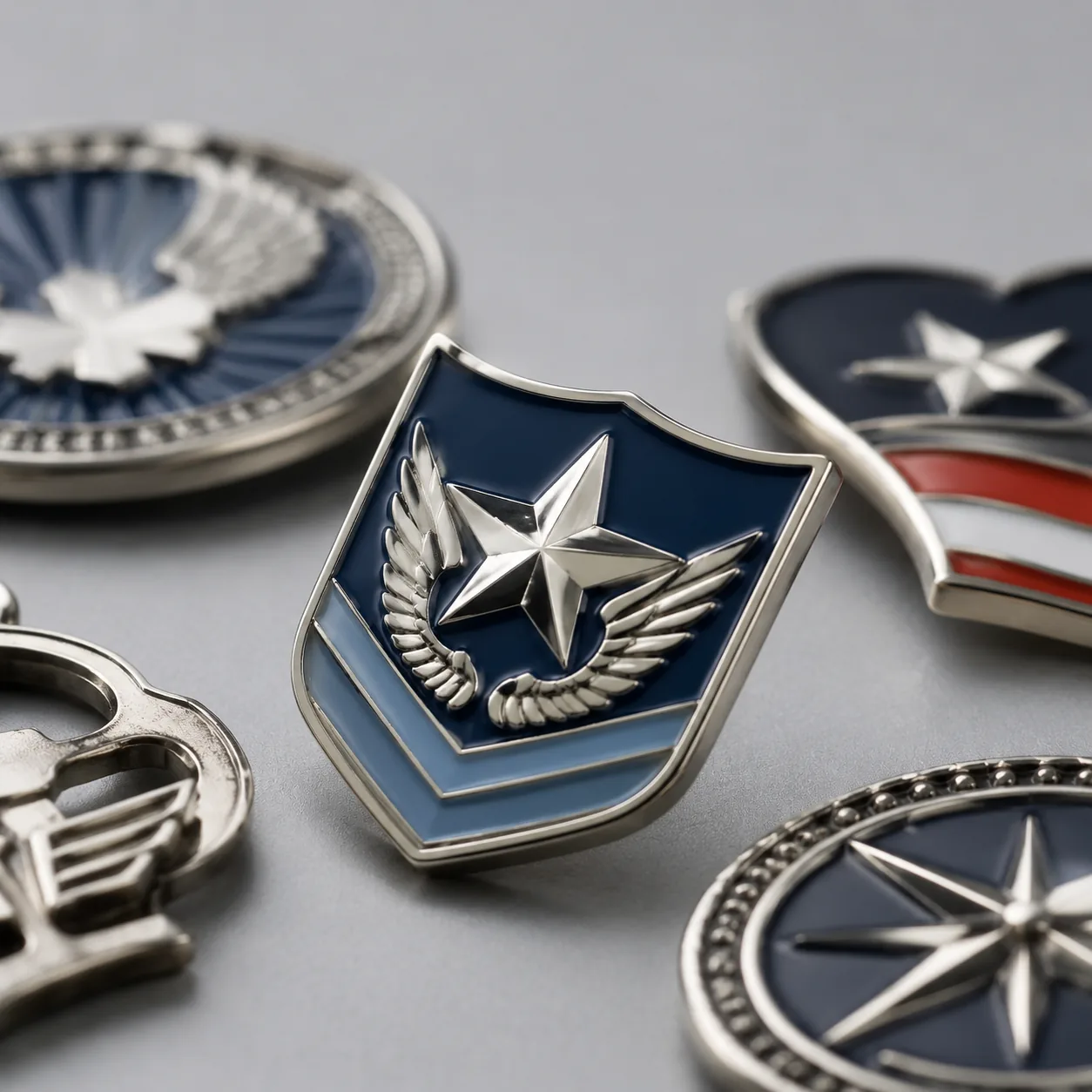
Why 300-piece pin orders get overpriced
A 300-piece custom pin order is large enough to require full production controls but too small to dilute setup cost the way a 1,000-piece run does. Factories still have to open artwork, engineer the mold, make a pre-production sample, set up plating and enamel filling, prepare packaging, and inspect the lot. At this quantity, those fixed steps can add 20% to 45% to unit economics if the specification is vague or includes unnecessary variants.
A realistic 2026 benchmark is a 35 mm custom-outline soft enamel pin in zinc alloy, 1.8 to 2.0 mm finished thickness, black nickel plating, 5 to 6 Pantone-matched fills, two butterfly clutches, and individual OPP bags. Competitive FOB Yiwu, Zhongshan, or Wenzhou pricing is typically USD 0.84 to 1.16 per piece at 300 pcs, plus USD 70 to 110 tooling. If the design has interior cutouts, a detailed backstamp, or fine recessed areas below roughly 0.30 mm metal line width, tooling usually moves to USD 110 to 150. Typical lead time is 5 to 7 calendar days for a sample after artwork approval, then 10 to 14 days for mass production after sample sign-off.
Budget creep rarely comes from the base pin alone. It usually comes from stacking upgrades that sound minor in isolation: increasing size from 35 mm to 45 mm, changing from one plating finish to two, specifying imitation hard enamel for segmented art, adding a printed backing card plus rigid box, or dividing 300 pcs into two 150-piece variants. A workable USD 0.95 to 1.10 build can quickly become USD 1.55 to 1.90 without adding much functional value.
Lock the specifications that actually move cost
For low-MOQ pins, cost control comes from freezing the variables that affect metal consumption, setup time, scrap rate, and manual handling. The main drivers are finished size, base metal, nominal thickness, number of enamel fills, plating finish, attachment count, packaging type, and whether the design needs openwork or raised-relief sculpting. Everything else should stay optional until the base quote is clear.
Size is one of the largest cost levers. At 300 pcs, increasing from 30 mm to 35 mm often adds only USD 0.04 to 0.08 per piece. Moving from 35 mm to 45 mm more often adds USD 0.12 to 0.22 because of higher metal weight, larger polishing area, and more plating exposure. Thickness has a similar effect. Stamped iron commonly runs 1.5 to 1.8 mm finished thickness; die-cast zinc alloy is usually 1.8 to 2.0 mm. Pushing a 35 mm pin to 2.5 mm can add USD 0.06 to 0.12 per piece and may also reduce yield if the design includes thin sections.
Artwork complexity matters because small runs cannot absorb much scrap. For soft enamel, minimum metal wall width should generally be held at 0.30 mm or above; below that, underfill and color bleed become much more likely. Recessed text below about 0.8 mm cap height is unreliable on dark or antique plating. If the artwork requires 0.20 to 0.25 mm strokes, tiny legal text, gradients, or photographic elements, offset print with epoxy dome is usually the technically correct construction. Trying to force micro-detail into enamel often produces both a worse result and a higher effective cost.
- Keep finished size in the 25 to 35 mm band unless the pin is meant for retail sale or collectors.
- Use 1.5 to 1.8 mm for stamped iron and 1.8 to 2.0 mm for zinc alloy unless weight is part of the value proposition.
- Hold soft enamel to 4 to 6 fills where possible; beyond that, filling and cleaning time rises noticeably.
- Standardize one plating finish, one clutch type, and one package format across the whole run.
- Avoid splitting 300 pcs into multiple SKUs unless you can justify duplicate setup and packing controls.
- Treat gift boxes, barcode labels, and insert cards as separate cost decisions, not defaults.
Pick the construction that fits the artwork and volume
Soft enamel remains the safest commercial choice for most 300-piece runs. It gives dimensional metal borders, accepts normal brand artwork, and has a wider process window than imitation hard enamel. For employee recognition, associations, events, campus programs, and limited merchandise, it usually offers the best balance of appearance, cost, and lead time.
Stamped iron is usually the lowest-cost route when the design is flat, the perimeter is simple, and there are no interior cutouts. Die-cast zinc alloy becomes the better choice when the outline is irregular, openwork is required, or the design uses sculpted depth and rounded contours. Imitation hard enamel gives a flatter, polished retail look, but it has tighter polishing and color-fill tolerances and generally costs more in cycle time and rework. Brass or copper can feel more premium, but at 300 pcs they typically only make sense for high-margin resale, awards, or executive gifting.
| Build option | Typical 300 pcs FOB | Typical tooling/setup | Normal lead time after art approval | Best use case | Avoid when |
|---|---|---|---|---|---|
| Stamped iron, soft enamel, 30-35 mm | USD 0.72-0.96 each | USD 60-90 | 5-7 days sample + 10-12 days bulk | Flat corporate pins, simple silhouettes, recognition programs | Artwork needs open cutouts, deep relief, or rounded sculpted edges |
| Die-cast zinc alloy, soft enamel, 30-35 mm | USD 0.84-1.16 each | USD 70-110 | 5-7 days sample + 10-14 days bulk | Custom outlines, openwork, layered feel, event merch | Design is simple enough for cheaper stamped iron |
| Imitation hard enamel, polished, 30-35 mm | USD 1.00-1.40 each | USD 80-120 | 6-8 days sample + 12-16 days bulk | Retail-style finish, smooth face, premium giveaway | Budget is tight, lead time is short, or artwork has many narrow cells |
| Offset or silk print with epoxy dome, 30-35 mm | USD 0.68-1.00 each | USD 40-80 setup | 4-6 days sample + 8-12 days bulk | Gradients, micro text, photo detail, QR-like art | High-abrasion use, exposed-metal aesthetic, or luxury positioning |
Printed pins with epoxy are not simply a budget fallback. They are often the right manufacturing choice for gradients, thin typography, maps, or highly detailed brand graphics. The trade-off is market perception: buyers usually read epoxy-domed pins as cleaner and more graphic, but with less perceived metal value than enamel. For campaigns where artwork fidelity matters more than perceived heft, that trade-off is often acceptable.
Use finish and plating choices that stay stable at low MOQ
At 300 pcs, plating choices should prioritize consistency and contrast rather than novelty. Decorative finishes such as bright gold, bright nickel, black nickel, and antique silver are generally applied in a light decorative range, commonly around 0.03 to 0.08 microns depending on finish and supplier line. That is enough for appearance, but it is not a wear coating. Buyers should treat decorative plating as presentation-oriented, especially for pins that will contact zippers, bags, or other metal hardware.
Black nickel remains popular because it gives strong contrast with modern palettes, but it tends to show edge wear and front-face scratching faster than bright nickel or antique silver. Bright gold has strong shelf appeal but can reduce contrast with yellow, orange, beige, and some skin-tone fills. Antique finishes often hide small polishing variation better and make relief more readable, which can improve the visual yield on textured designs.
One plating finish across the full order is usually the right commercial choice. Splitting a 300-piece run into bright gold and black nickel can trigger separate rack setup, duplicate counting, and more sorting and packing errors. If the brand team wants multiple visual versions, it is usually cheaper to keep the metal finish fixed and vary the backing card, insert message, or retail sleeve.
Color expectations also need to be realistic. Standard soft enamel can usually achieve a close Pantone approximation, but exact instrument-matched color is uncommon at this product level. A practical control is to approve the sample under neutral light, ideally D50 to D65, and define variation against the approved sample rather than against a digital mockup. That matters most for blacks, navies, red-oranges, low-opacity pastels, and skin tones.
Specify measurable QC standards before production starts
For a 300-piece run, quality control must focus on defects that actually create returns: underfilled enamel, color bleed, visible pits, rough edges, weak post attachment, plating inconsistency, and packing mismatch. Long generic checklists are less useful than a short set of pass-fail criteria tied to the approved sample.
A practical plan is to approve one physical pre-production sample and freeze it as the visual standard. For final random inspection, ANSI/ASQ Z1.4, General Inspection Level II is a reasonable framework. On a lot size of 300 pcs, the sample size code letter is typically H, with a sample size of 50 units. Using AQL 2.5 for major defects and AQL 4.0 for minor defects keeps inspection proportional without overengineering a small lot.
Useful tolerances should also be written into the PO or approved artwork file. For most custom pins, overall size tolerance of +/-0.20 mm is workable; finished thickness tolerance of +/-0.15 mm away from raised borders is realistic; and post location tolerance within +/-1.0 mm from approved centerline is normally achievable. For manufacturable art, specify minimum metal wall width of 0.30 mm for enamel cells, minimum backstamp text height of 0.8 mm, and minimum backstamp stroke width of 0.25 mm where possible.
For pins above about 10 to 12 g, or any pin using two posts, require an in-line retention check for post security and parallelism. Also state that clutches must fit securely without excessive looseness, burrs on the back edge are not acceptable, and the plating tone and enamel gloss must match the approved sample within normal decorative tolerance. On small orders, the most common commercial failure is not catastrophic scrap; it is receiving a lot that is subtly different from the sample because no visual standard was formally frozen.
Keep packaging proportional to the value of the pin
Packaging is one of the fastest ways to lose margin on a 300-piece order. A plain OPP bag is typically USD 0.02 to 0.04 each. A printed backing card usually adds USD 0.06 to 0.16 depending on size, board grade, print coverage, and finish. A rigid gift box with foam insert often adds USD 0.35 to 0.90 each before freight. On a low-cost pin, the box can easily cost more than the difference between stamped iron and zinc alloy, which is rarely justified for events, onboarding kits, or internal recognition.
For most promotional uses, one pin mounted on a printed backing card inside a clear bag is the best middle ground. Common card sizes are 85 x 55 mm or 90 x 55 mm, printed CMYK on 300 to 350 gsm coated board, often with matte lamination for a cleaner presentation. A typical die-cut tolerance of +/-1.0 mm is sufficient. The important operational point is to confirm actual post spacing from the sample before approving card print, because low-volume jobs often fail on card alignment rather than on the pin itself.
For e-commerce or resale, ask how the export pack is built. Inner packs of 25 or 50 pcs are easier to recount, relabel, and split across channels than one large mixed bag. Keep export cartons under roughly 10 to 12 kg gross where possible to reduce handling damage. If the finish is polished gold or black nickel, request packing that prevents the butterfly clutch from rubbing the face; a simple fix is separate clutch packing or using a small protective film or tissue layer between facing surfaces.
Build the purchase around lead time tiers and versioned quotes
The real bottleneck on a first 300-piece order is often approval time, not factory production time. A realistic schedule is 1 to 2 days for final artwork confirmation, 5 to 7 days for the sample, 3 to 5 days for courier transit, 1 to 3 days for internal review, and 10 to 14 days for bulk production. That puts the first order at roughly 20 to 31 calendar days before final international shipping begins.
Door-to-door air courier typically adds 4 to 8 days depending on destination and customs clearance. Sea freight is usually uneconomic unless the pins move inside a larger consolidated shipment. A useful planning rule is to work backward from the in-hand date and leave at least 7 calendar days of buffer. Repeat orders can compress to 7 to 9 production days if tooling is already proven and packaging is unchanged, but first orders should never be planned on rush assumptions.
When requesting pricing, ask for controlled quote versions instead of one open-ended number. For example: Version A, soft enamel with OPP bag; Version B, soft enamel with backing card and bag; Version C, imitation hard enamel with backing card and bag. Keep quantity, size, plating, and clutch count fixed. That forces cost visibility and stops suppliers from hiding setup or packaging charges inside a blended rate.
- Request pricing at 300, 500, and 1,000 pcs even if you expect to place only 300.
- Ask for tooling as a separate line item and confirm whether the mold is stored for repeat orders and for how long.
- State exact size, thickness, metal, plating, color count, attachment, and packaging in the RFQ.
- Confirm sample lead time, bulk lead time, and whether any sample charge is credited back on order placement.
- Request estimated unit net weight, carton size, and carton gross weight if shipping by air.
- Specify QC terms upfront: approved physical sample, ANSI/ASQ Z1.4 Level II, AQL 2.5 major, AQL 4.0 minor.
- Confirm whether FOB price includes standard export carton, inner packing, desiccant if used, and basic moisture protection.
A commercial 300-piece specification that usually works
If the goal is a reliable custom pin rather than a collector-grade item, the most cost-stable specification band is usually 30 to 35 mm finished size, soft enamel, one plating color, 1.5 to 2.0 mm finished thickness, two standard butterfly clutches for pieces above about 30 mm, and either individual OPP bags or one printed backing card per piece. That combination keeps tooling, plating, packaging, and inspection inside a range that still makes economic sense at 300 pcs.
For 2026, a realistic FOB target for that band is USD 0.72 to 0.96 each for stamped iron soft enamel and USD 0.84 to 1.16 each for zinc alloy soft enamel, plus tooling around USD 60 to 110 depending on outline complexity, cutouts, and backstamp detail. As a rough tier guide, 500 pcs often reduces unit price by about USD 0.07 to 0.14, while 1,000 pcs may reduce it by USD 0.15 to 0.28 versus the 300-piece level, assuming the same mold and packaging. That means paying a true 1,000-piece price at 300 pcs is unrealistic, but paying an oversized prototype premium is avoidable.
If a quote is materially below these bands, check what has been removed: thinner metal, fewer QC controls, lighter clutch hardware, simplified plating, or omitted packaging. If it is materially above them, ask the supplier to break out size, construction, plating, and packaging deltas line by line. At this quantity, disciplined specification work usually saves more than aggressive unit-price negotiation. A tight RFQ, three controlled quote versions, and a frozen physical sample are what keep a 300-piece order behaving like a small production run instead of an overpriced prototype.
Have a project? Send your artwork and target quantity and we’ll reply with a detailed quotation within 12 working hours.
Ready to get this made?
Send your sketch, target quantity and ship-date. Detailed quotation in 12 hours.



