Launching a 150-Piece Merch Run Without MOQ Waste
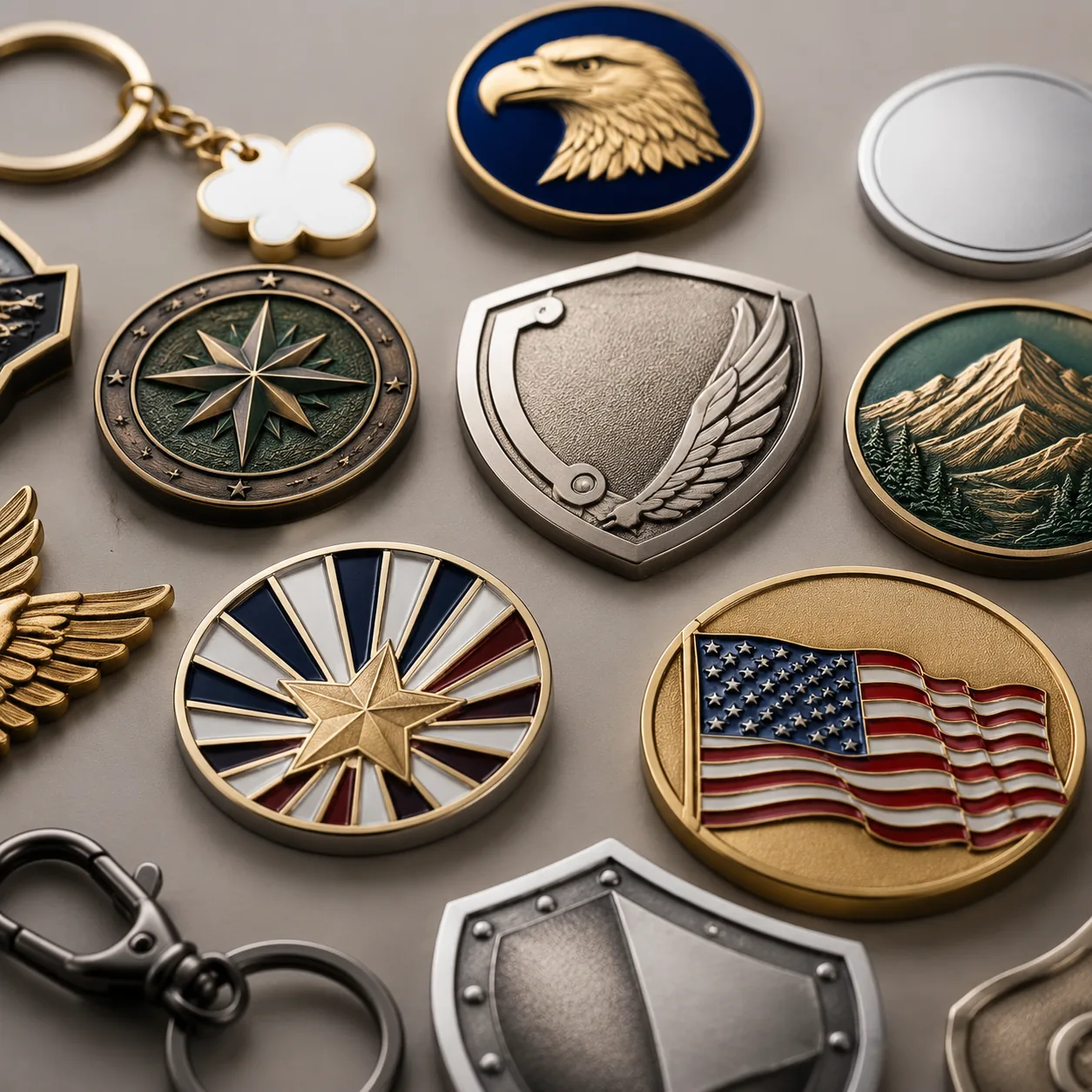
Why 150 pieces is a tooling-and-handling problem, not a material problem
A 150-piece custom merch order looks small on paper, but the economics behave very differently from a 1,000-piece run. For event merch, distributor meetings, sales kickoffs, creator drops, and VIP gifting, the real constraint is usually a fixed in-hands date plus a hard cap on leftovers. At that quantity, the project is rarely limited by the cost of iron, zinc alloy, thread, PVC, or paperboard. It is limited by non-recurring and low-volume handling costs: die setup, proof revisions, attachment changes, hand assembly, carding, sorting, and inspection time.
That is why buyers often overspend without noticing it in the unit quote. A factory can produce 150 pieces of a straightforward SKU efficiently. It struggles when the same 150 pieces are split into multiple platings, several card versions, mixed hardware, or separate pack-outs for VIP, staff, and channel partners. Each variation creates extra setup, extra counting risk, and more opportunities for quality drift. On a 5,000-piece order those costs dilute. On 150 pieces they remain visible in every finished unit.
For 2026 planning, a realistic end-to-end timeline for a custom small run shipped by air is 24 to 32 calendar days from RFQ alignment to delivery. A practical breakdown is 1 to 2 days for commercial clarification, 1 to 3 days for proof approval, 8 to 15 production days for most pins, patches, or basic keychains, 1 to 2 days for final packing, and 5 to 7 days for air transit plus destination handling. If the shipment must clear through a distributor, 3PL, or venue receiving team, add a 2-day buffer. Buyers who want 150 pieces without MOQ waste need to optimize for simplicity, not for maximum customization.
Choose the SKU that keeps fixed cost proportional to value
At 150 pieces, the best product is usually the one that delivers perceived value without excessive tooling, polishing, or assembly burden. In most cases, soft enamel pins, woven patches, and standard die-cast zinc alloy keychains perform better than large challenge coins because the non-recurring cost stays within reason. Coins can still work, but once the brief shifts to 45 to 50 mm diameter, 3.0 mm thickness, two-sided relief, edge text, antique finish, or presentation box packing, the setup and finishing labor start to dominate the budget.
Soft enamel pins remain the safest default when the artwork is logo-led, high contrast, and below 40 mm. A 35 mm pin in stamped iron at 1.2 to 1.5 mm thickness with one butterfly clutch usually gives the best balance of clean appearance, manageable tooling, and stable lead time. Woven patches often deliver the best pure value if the design contains dense linework, small typography, maps, or multi-zone crests. A woven construction reproduces detail more reliably than low-cost metal filling and avoids plating variables entirely. Keychains support a higher perceived value because they are functional, but they also add weight, thicker metal sections, and extra hardware such as a jump ring and split ring.
PVC magnets work when mailability and low breakage matter, but the specification should stay realistic. A 2.5 to 3.0 mm soft PVC magnet with ferrite backing is suitable for decorative fridge use or light office boards. It is not a document-holding magnet for heavy stacks. Challenge coins are strongest when the recipient expects a ceremonial object or collectible, but they become expensive quickly in short runs because the buyer is paying for mass, finishing time, and a tighter cosmetic expectation.
| Product type | MOQ sweet spot | Typical size/spec | Lead time after art approval | Typical FOB at 150 pcs | Best use case | Main limitation |
|---|---|---|---|---|---|---|
| Soft enamel pin | 100-300 pcs | 32-38 mm, 1.2-1.5 mm thick, stamped iron or zinc alloy, 1 clutch | 8-12 production days | USD 1.00-1.85 | Launches, staff kits, logo merch | Fine text under 2.0 mm letter height is risky |
| Die-cast zinc alloy keychain | 100-300 pcs | 45-60 mm, 3.0-4.0 mm thick, jump ring + 25 mm split ring | 10-14 production days | USD 1.90-3.40 | Premium giveaway with real utility | Freight and packed weight rise quickly |
| Woven patch | 100-500 pcs | 60-80 mm, 0.8-1.2 mm body, merrowed or laser-cut edge | 7-10 production days | USD 0.40-1.05 | Dense detail, crests, slogan-heavy art | Lower gift value if metal is expected |
| PVC magnet | 100-300 pcs | 50-70 mm, 2.5-3.0 mm soft PVC with 0.5-0.7 mm ferrite backing | 9-13 production days | USD 0.75-1.55 | Tourism, family brands, light direct mail | Limited pull strength and less formal feel |
| Challenge coin | 100-300 pcs | 44-50 mm, 3.0 mm thick, iron or zinc alloy, 1-2 sides | 12-18 production days | USD 2.80-5.60 | Awards, collector-style recognition | Highest setup and finishing burden at this volume |
Lock the four specifications that control cost fastest
Before requesting a final quote, freeze the four variables that create most small-run cost movement: size, finish, attachment, and pack-out. A 35 mm soft enamel pin, 1.5 mm thick, black nickel plated, with one butterfly clutch, one 55 x 85 mm printed card, and one clear polybag is easy to quote, easy to inspect, and easy to manufacture consistently. The same art with two platings, mixed clutches, two card sizes, and selective bagging becomes a handling project disguised as a product order.
For low-volume merch, the best upgrades are visible ones. That can mean moving from stamped iron to die-cast zinc alloy when the design needs interior cutouts or deeper relief, choosing black nickel or imitation gold plating at a decorative thickness of roughly 0.03 to 0.05 microns, or upgrading from a plain card to a custom-shape 350 gsm coated backing card. The weakest upgrades are the ones the recipient never sees: extra carton partitions, multiple language cards for the same audience, or separate shipping marks for subsets that could be sorted later.
Always request tiered FOB pricing on the same frozen spec at 150, 300, and 500 pieces. That exposes whether a larger order creates real savings or only lower apparent unit cost. A common 2026 pattern on small metal items is a drop of only USD 0.20 to 0.45 per unit when moving from 150 to 300 pieces because tooling is already amortized and the job is still a short lot. For example, a pin quoted at USD 1.38 FOB at 150 pieces may price at USD 1.12 at 300 and USD 0.95 at 500, but the total FOB still rises from USD 207 to USD 336 to USD 475 before tooling, sample, and freight. If the audience is 150, the extra 150 to 350 units are often not savings. They are dead inventory.
Design to manufacturing limits instead of screen-level detail
Small runs have almost no schedule tolerance for artwork that fails manufacturability review. For soft enamel pins and metal keychains, keep raised metal lines at a practical minimum of 0.30 to 0.35 mm. Recessed color areas narrower than about 0.40 mm are risky because enamel fill and post-polish consistency drop sharply. Floating micro-islands, hairline gaps, and unsupported negative spaces may survive in vector art but disappear during die engraving, stamping, casting, polishing, or color filling.
Typography is the other predictable failure point. On stamped or die-cast metal, capital letters below about 1.8 to 2.0 mm height are risky unless the font is simple, open, and heavy enough to survive plating and polish. Thin script, serif fonts with fine terminals, and reverse text inside narrow borders usually cause approval delays. Woven patches handle small type better and can often reproduce 1.5 to 2.0 mm capitals if contrast is high and the weave density is appropriate. That makes woven patches the better option for slogan-driven designs, campus crests, route maps, or artwork with dense annotation.
PVC and magnet products should be drawn with bolder geometry than metal. Thin projections, unsupported corners, and narrow appendages are more likely to deform during molding or demolding. Whatever the product, require a production proof that lists final dimensions in millimeters, base material, thickness, finish or thread callout, attachment position, backing method, and Pantone references for all visible colors. Many disputes begin because the proof shows the shape but omits the construction method, and the buyer assumes zinc alloy while the supplier quotes stamped iron. The proof must remove that ambiguity before tooling is released.
Compare total usable spend, not just the unit FOB
The cheapest unit price is often the most expensive 150-piece project. Evaluate at least six cost buckets: tooling, unit FOB, sample cost, packaging, freight, and destination handling. A quote at USD 1.18 can be worse than one at USD 1.44 if the lower number excludes the die charge, printed backing card, polybagging, or master carton packing. At 150 pieces, every omitted fixed cost lands on too few units to stay hidden.
For 2026 sourcing, a normal die charge for a basic custom pin or keychain is usually USD 50 to 110 for a standard outline with one relief level. Complex contours, multiple cutouts, oversized shapes, or multi-level relief can push tooling into the USD 120 to 180 range. A pre-production physical sample usually costs USD 35 to 80 plus courier. If the item is date-sensitive and based on a proven spec from a qualified supplier, a detailed digital proof often saves 3 to 5 calendar days. If the item has moving parts, unusual cutouts, a new finish, or a new supplier, a physical sample is generally worth the extra cost.
| Cost element | Lean 150-piece pin run | Complex 150-piece pin run |
|---|---|---|
| Tooling charge | USD 60-90 | USD 95-145 |
| Unit FOB | USD 1.05-1.50 | USD 1.70-2.40 |
| Backing card | USD 0.06-0.12 standard rectangle, 300-350 gsm | USD 0.20-0.35 die-cut, multi-version, or special finish |
| Polybag / individual pack | USD 0.03-0.05 | USD 0.08-0.18 with inserts, labels, or hand sorting |
| Physical pre-production sample | Optional USD 35-60 | Usually USD 50-80 plus courier |
| Typical packed air weight | 8-11 kg per 150 pcs | 12-17 kg per 150 pcs |
| Main cost driver | Single stable specification | Variant complexity and hand assembly |
Freight deserves the same scrutiny as the product quote. One consolidated air shipment is usually safer and cheaper than split deliveries because every split adds documentation, terminal handling, and customs touchpoints. Ask for estimated packed weight and master carton dimensions before approving thick zinc alloy bodies, oversized split rings, or retail-style boxes. On a small run, a heavier hardware choice can erase the savings from a lower FOB in a single freight line item.
Write quality standards that match the application
A 150-piece order still needs an inspection standard, but it should reflect the intended use. Define critical, major, and minor defects before production starts. Critical defects typically include wrong item, wrong material family, detached or missing hardware, sharp burrs, exposed points that create a safety issue, magnet backing separation, or any defect that makes the item unsafe or unusable. Major defects include size outside agreed tolerance, severe enamel underfill, obvious plating mismatch against the approved finish, attachment placement outside position tolerance, woven misregistration that affects the design, or print shift beyond the accepted limit. Minor defects include light backside scratches, small plating flow marks in hidden areas, or short thread tails on the back of a patch that do not affect appearance from the front.
For most custom merch programs, AQL 2.5 for major defects and AQL 4.0 for minor defects is a practical benchmark, with zero tolerance for critical defects. Put dimensional tolerances in the purchase order instead of assuming them. A workable reference is plus or minus 0.20 mm on principal metal outline dimensions, plus or minus 0.10 mm on thickness, plus or minus 0.50 mm on attachment placement, and up to plus or minus 1.0 mm on printed card trim where the card is not a precision-fit component. For woven patches, edge alignment and overlock or laser-cut quality usually matter more than exact sub-millimeter body thickness.
Plating should be approved against a physical finish chip, retained sample, or supplier swatch when possible. Pantone standards are useful for enamel and print colors, but they do not define the visual character of shiny silver, black nickel, imitation gold, antique brass, or matte black. The key commercial point is to separate functional quality from luxury cosmetic expectations. A collector-grade hard enamel coin with mirror polish and near-zero face marks is a valid specification, but it is usually the wrong standard for a fast-turn event giveaway. For most 150-piece programs, a clean soft enamel pin with even fill, consistent finish, secure hardware, and acceptable backside appearance delivers better value than chasing jewelry-grade cosmetics on a compressed schedule.
Keep packaging simple enough to protect margin
Packaging is where many low-volume jobs lose money quietly. At 150 pieces, every manual step matters: extra cards, barcode labels, insert notes, or sorting by audience segment all add labor time, counting risk, and repack exposure. Unless the item is going to retail shelves, the most efficient pack-out is usually one card version, optional polybag or glassine sleeve for surface protection, and master cartons packed in inner counts of 25 or 50 pieces.
For pins and brooches, a 300 to 350 gsm coated paper card is usually sufficient. Standard card sizes such as 55 x 85 mm or 70 x 90 mm reduce print waste and speed assembly because suppliers already work with efficient dielines around those formats. If the item has exposed posts, polished plating, or a face finish that can rub, specify a clear polybag or glassine separator so plated surfaces do not mark one another during transit. For woven patches, counted bulk bundles are normally adequate unless the buyer is building full event kits with lanyards, literature, or credential packs.
Origin kitting can make economic sense, but only when the set stays standardized. One pin, one lanyard, and one patch packed into 150 identical event kits may add only USD 0.18 to 0.45 per set at origin and can save meaningful local labor at destination. The economics deteriorate when the supplier must hand-build staff, VIP, sponsor, and distributor variants in the same run. Every version needs separate counting, labeling, and carton control, which is exactly the kind of low-volume complexity that makes 150-piece orders expensive.
- Freeze one backing card version unless legal or market requirements make multiple versions unavoidable
- Use inner bundle counts of 25 or 50 for faster receiving, counting, and event distribution
- Delete retail barcodes unless a reseller, 3PL, or marketplace compliance rule actually requires them
- Add scratch protection when plated metal faces can rub during transit or storage
- Confirm final packed weight before approving oversized keychain rings, thick zinc bodies, or presentation boxes
- Compare origin kitting cost to destination labor instead of assuming local repacking is cheaper
Build the schedule backward from the in-hands date
Small-volume orders do not automatically move faster. A 150-piece project still needs proof approval, tooling release, production, finishing, packing, export handoff, and final delivery. The practical schedule is usually 1 to 2 days for RFQ alignment, 1 to 3 days for artwork and proof approval, 8 to 15 production days depending on the process, 1 to 2 days for final packing, and 5 to 7 days for air transit and delivery. Add at least 2 buffer days if the shipment will pass through a distributor warehouse, event contractor, or venue receiving desk with restricted intake windows.
The biggest avoidable delay is fragmented approval authority. If marketing, procurement, and regional sales approve sequentially instead of in parallel, the project can lose 4 to 7 days before the die is even cut. Assign one final approver and make sure the released document includes size, material, thickness, finish, attachment, card spec, pack-out, carton mark, and ship-to details in one place. If the date is truly fixed, define a fallback path before production begins: remove the die-cut card, change individual bagging to counted bulk, or shift from metal to woven patch if the art fails manufacturability review.
The strongest RFQ at this quantity is short and specific. State quantity, exact dimensions in millimeters, base material, thickness, finish, attachment, color count, packaging, inspection standard, tooling policy, destination, and required in-hands date. Ask for FOB pricing at 150 pieces and an alternate at 300 pieces on the identical specification. That side-by-side comparison shows whether a higher quantity creates meaningful savings or simply more inventory. That is how a 150-piece merch run avoids MOQ waste: fewer variables, earlier approvals, realistic tolerances, and no decorative complexity the recipient will never notice.
Have a project? Send your artwork and target quantity and we’ll reply with a detailed quotation within 12 working hours.
Ready to get this made?
Send your sketch, target quantity and ship-date. Detailed quotation in 12 hours.



