Keychain Split Ring Pull Test: Rings, Connectors, and Pull Checks
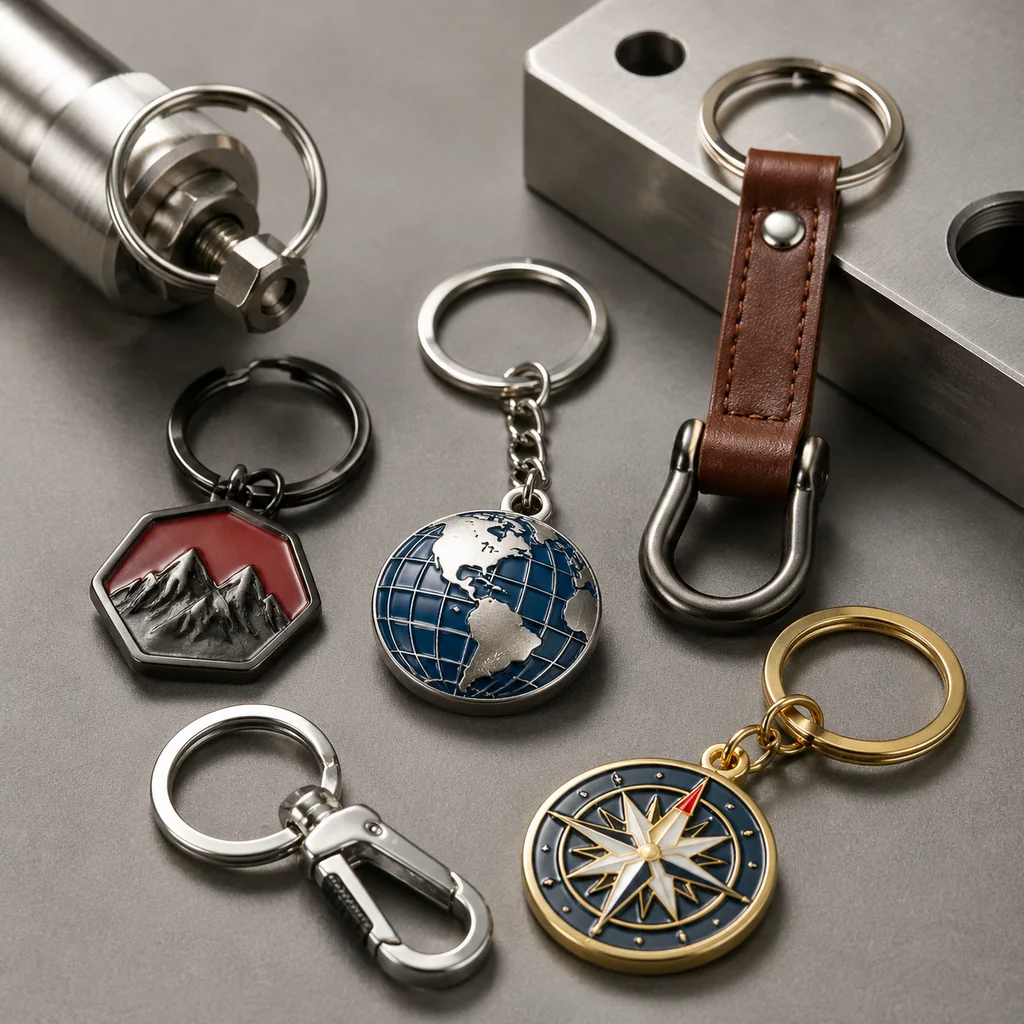
A keychain split ring pull test should show that the attachment is not the first component to fail under agreed handling conditions. For custom bottle opener keychains, specify the hardware type, connector geometry, pull directions, rotation check, repeated-use check, and pack-out method before bulk production. Confirm the actual test load, method, sample quantity, and pass condition with the supplier during sample approval.
What the Pull Test Must Decide
For merchandise and souvenir buyers, a keychain split ring pull test is a sourcing control, not simply a lab exercise. It establishes whether the ring, clip, chain, and connector remain usable during the handling expected for the finished item. A well-decorated bottle opener, acrylic charm, PVC figure, leather tab, or metal pendant is still a poor outcome if its attachment opens, deforms, detaches, or damages the decorated body during normal use.
The stated keychain range includes zinc-alloy, brass, copper, clear acrylic, soft PVC, embossed leather, bamboo, and stainless steel bodies. It also includes split-rings as the default hardware, plus lobster clasps, swivel-clips, beaded chains, and ball-chains. These combinations should not receive the same approval by default. The buyer decision is whether the selected attachment suits the body material, body size, expected handling, decoration location, and retail pack-out.
Before approving a sample, ask the supplier to identify the selected hardware, show the connector layout, and state how the attachment will be checked. The product facts do not provide a universal pull-force requirement or a certified test method. A responsible RFQ should therefore require the supplier to confirm the project-specific load target, directions of pull, sample quantity, equipment or manual method, and pass condition rather than assuming a numeric threshold.
Select Hardware Before Finalizing Artwork
Hardware should be selected alongside the artwork because it affects the use experience and the available attachment area. The supplied product facts state that hardware is included in the quoted keychain price. Split-rings are the default option; lobster clasps, swivel-clips, beaded chains, and ball-chains are also available. Matched-plating hardware, such as a gold-finish body with a gold ring, is offered at no extra cost according to the supplied facts, although the final quote should confirm the selected build.
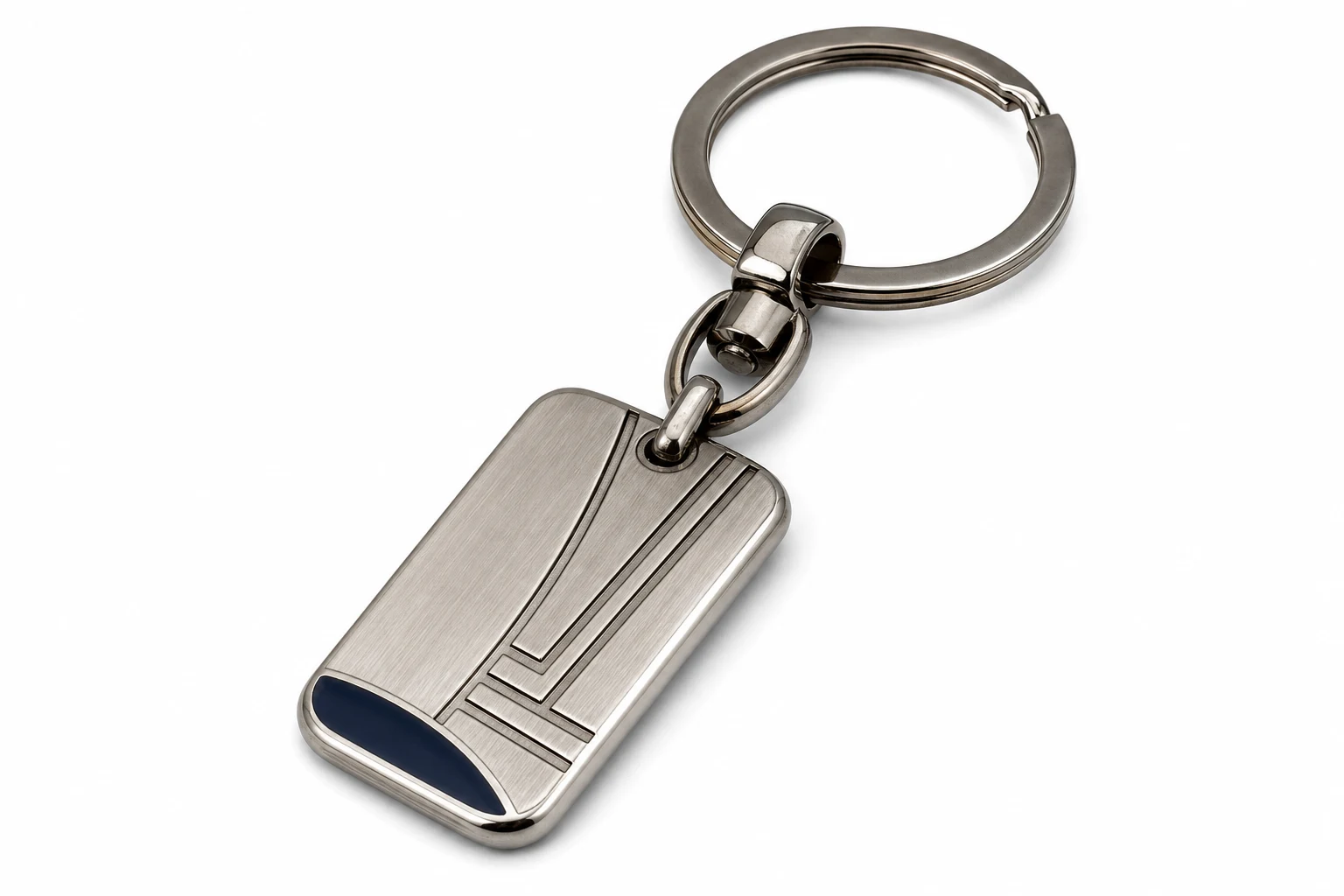
A split-ring is a familiar choice for conventional key carrying, provided the body loop or hole is robust and the ring can move without catching the finish. A lobster clasp changes the intended behavior toward clipping onto a bag, zipper, belt loop, or another attachment point. A swivel-clip may suit shapes that need rotation during use, but it introduces an additional moving joint that must be inspected. Beaded chains and ball-chains should be chosen only after the expected pull and handling conditions have been defined.
| Hardware choice | Potential fit | Buyer trade-off | QC focus |
|---|---|---|---|
| Split-ring | General key-carrying programs | Compact and familiar, with ring closure and connector fit requiring review | Pull from ring to body, inspect ring closure, and confirm the connector has no damaging edge |
| Lobster clasp | Bag, zipper, event, or clip-on merchandise | The moving clasp becomes part of the functional check | Check clasp closure, connector condition, and operation after repeated cycles |
| Swivel-clip | Pieces that need rotation while hanging | Rotation may reduce twisting at the body, but adds a moving joint | Rotate through the expected handling path, then inspect and pull through the joint |
| Beaded chain | Use-case-specific hanging or tag applications | Its closure and seating must match the expected handling | Check connector seating, closure fit, and pack-out tangling |
| Ball-chain | Simple hanging or tag applications | Do not assume it suits pull-heavy use without approval evidence | Confirm closure fit and assess it against the intended use |
Match the Attachment to the Body Material
The supplied product information describes metal as heavy and premium, acrylic as light and modern, PVC as colorful and playful, and leather as classic and durable. Those differences also affect attachment review. A heavier zinc-alloy, brass, copper, or stainless steel piece can place more demand on the connector during swinging and pulling. Clear acrylic needs review for visible scratching or pressure marks. Soft PVC may flex near an integrated attachment feature, while bamboo and embossed leather need the actual hole, loop, or connector edge reviewed on a production-intent sample.
For a custom bottle opener keychain, treat the attachment as part of the load path. Users may grip the body, rotate it, pull it from a pocket, or use it while it remains attached to keys. The review should cover pull from the ring, pull from the body, angled handling, rotation, and visual inspection afterward. This does not establish a universal performance guarantee; it provides evidence that the selected build has been evaluated against the use case the buyer has specified.
Typical keychain sizes are stated as 30mm to 80mm. Review the approved sample at actual size rather than relying only on a digital mock-up. A ring that looks proportionate in artwork may sit too close to a printed surface, create an awkward pull angle, or make a small body difficult to handle once physical hardware is installed.
Define Connector Geometry Clearly
Connector geometry is the transition between the decorated body and the hardware. Depending on the material and design, it may be a punched hole, cast loop, molded tab, jump ring, chain link, or clasp connection. The product facts do not state one standard connector dimension or construction. Do not add one to the specification without supplier confirmation. Instead, require the supplier to show the proposed connector on the artwork approval, technical drawing, sample photographs, or sample report.
The buyer should be able to answer four questions from that evidence. Does the selected hardware rotate freely without scraping the decoration? Is the contact area smooth enough for the material and finish? Does the connector align with realistic pull directions instead of forcing the body sideways? Can the item be packed without loose hardware pressing into the decorated face? These questions are more useful than a generic statement that the keychain is durable.
A simple split-ring through a well-positioned, robust attachment feature may be easier to inspect than a multi-part chain assembly. Conversely, a swivel arrangement may be justified where the shape and handling pattern create repeated twisting. The objective is not to select the most complex hardware. It is to select the configuration that is appropriate for the intended user behavior and can be verified consistently during sampling and production inspection.
Build a Practical Pull and Rotation Check
A useful pull check is directional. A straight pull through the ring may not represent pocket removal, bag handling, key rotation, or a sideways snag. The agreed inspection plan should combine a straight pull, one or more relevant angled pulls, rotation through the normal movement path, and a post-test visual inspection. The supplier should document the agreed conditions before the buyer approves the bulk order.
Repeated-use checks should reflect the selected hardware. For a clasp or clip, cycle the moving mechanism and confirm that it still closes and operates as intended. For a split-ring, inspect closure alignment and the interface between the ring and connector after handling. For any chain option, check its closure, links, and seating. Confirm the cycle count, pull load, duration, and acceptance criteria with the supplier because none of these values is provided in the product facts.
- Confirm the selected hardware: split-ring, lobster clasp, swivel-clip, beaded chain, or ball-chain.
- Confirm the body material and the actual finished size.
- Pull from the ring toward the body and from the body toward the ring.
- Include the angled pull directions expected in real handling.
- Rotate the hardware and check for binding, scraping, or an unfavorable pull angle.
- Cycle any moving clasp or clip mechanism selected for the order.
- Inspect the connector and decoration after testing for opening, deformation, marks, or damage.
Review Decoration Risk Near the Attachment
The stated decoration options include engraving, soft enamel, hard enamel, offset print, epoxy dome, sublimation, embroidery, and 3D mold. The attachment area should be reviewed using the intended body material and finish, not only on a blank sample. Hardware movement that is acceptable beside an engraved metal area may leave visible marks beside a printed acrylic surface, an epoxy dome, enamel, or plating.
Place the attachment feature far enough from vulnerable artwork where the approved design permits it, and review whether the ring can reach the decorated face during normal movement. For soft PVC, check the response of any molded attachment feature after the agreed handling check. For embossed leather, inspect the edge and hole area for wear or distortion. For metal bodies, inspect the connector, finish, and adjacent decoration after pull and rotation checks.
| Body or finish | Attachment concern | Buyer question |
|---|---|---|
| Zinc-alloy, brass, copper, stainless steel | Body mass and use may place demand on the connector | Does the selected attachment remain closed and usable after the agreed pull and rotation checks? |
| Clear acrylic | Hardware contact can create visible marks | Can the ring or connector touch printed or clear viewing areas during handling or packing? |
| Soft PVC | An integrated attachment area may flex during handling | Does the production-intent attachment feature retain its intended shape after the agreed check? |
| Embossed leather | Hole and edge condition can affect appearance over use | Is the connector smooth and aligned with the expected pull direction? |
| Offset print or epoxy dome | Loose hardware can mark printed or raised surfaces | Does the pack-out keep hardware away from the decorated face? |
Use Samples to Approve the Actual Build
The supplied facts state that buyers can receive a free 3D mock-up in each material to compare the feel before committing, while sample fees are stated as $30 to $50 per material variant. Use the mock-up to review layout and proportion, then use the physical sample to review attachment behavior. A digital rendering cannot demonstrate ring closure, connector movement, surface contact, or the effect of pack-out.
Request production-intent hardware, connector geometry, finish, and packaging wherever possible. An approval sample fitted with a split-ring should not leave the bulk hardware unspecified. A sample intended to show matched-plating hardware should show the hardware and body together. Record the selected construction in the signed sample approval or purchase documentation so the bulk order has a clear reference.
MOQ can affect the order of decisions. The supplied facts list a 100-piece MOQ for metal and acrylic keychains and a 300-piece MOQ for PVC injection-molded keychains. Resolve material and attachment questions before committing to the higher-volume PVC route when the connector design is uncertain.
Include Pack-Out in the Inspection
Pack-out is part of attachment quality because the hardware remains a loose component around the decorated body. The stated default packaging is poly-bag plus hangtag, with velvet pouch and gift box available as options. Review a packed sample after handling, not only a loose sample on a desk. Check whether rings, clasps, or chains rub against enamel, print, epoxy, clear acrylic, or plated surfaces.
A pouch or gift box may improve presentation for a premium program, but it does not correct an unsuitable connector or hardware choice. First confirm the attachment construction. Then confirm surface protection. Finally, confirm the retail presentation and bulk-packing orientation. The approved pack-out should match the quotation and sales channel.
- Confirm whether the order uses poly-bag plus hangtag, velvet pouch, or gift box packaging.
- Check that loose hardware does not press into vulnerable decoration.
- Confirm that the hangtag does not hold the item in a stressed connector position.
- Review packing orientation for chains and swivel hardware.
- Inspect packed samples after movement and handling.
- Record the approved pack-out with the hardware and sample approval.
Commercial Decision for Buyers
For custom bottle opener keychains, specify the attachment as a functional component rather than leaving it as an implied accessory. The supplied category facts list a $0.15 to $2.80 per-piece FOB range, 10 to 25 days lead time depending on material and finish, typical sizes of 30mm to 80mm, and several hardware choices. These are category-level planning details, not proof that every hardware and material combination meets the same handling requirement.
Choose a split-ring when the body, connector, and intended key-carrying use have been reviewed together. Consider a lobster clasp for clip-on behavior and a swivel-clip where rotation is relevant to the body shape or use. Select beaded chains and ball-chains only after the supplier confirms that the agreed test conditions match the intended application.
Add a short clause to the RFQ for custom bottle opener keychains at /products/custom-keychains.html: identify the material, decoration, finished size, hardware type, connector layout, packaging, and agreed pull, rotation, and repeated-use checks. Require the supplier to state the test method, target, sample quantity, and pass condition on the sample approval. Approve bulk production only after the decorated body, attachment, and packed sample have been reviewed together.
Ready to get this made?
Send your sketch, target quantity and ship-date. Detailed quotation in 12 hours.