How to Write a Promo Product RFQ That Gets Usable Quotes
Why do some RFQs get clean quotes and others get vague numbers?
The difference is usually not supplier quality; it is quote quality. If five factories receive different assumptions on material, dimensions, finish, packaging, and sampling, they will return five numbers that cannot be compared. A vague RFQ forces the factory to guess at tooling, setup time, reject risk, and whether the item is even manufacturable at the requested spec. For promo products such as enamel pins, coins, keychains, patches, lanyards, badges, and magnets, the quote is only useful when the buyer defines the exact build, not just the logo and a target price.
A useful RFQ answers one core question: what exact product should the factory cost? A 35 mm soft-enamel pin with 1.2 mm thickness, nickel plating, butterfly clutch, and printed backing card is a different job from the same pin in hard enamel, 1.5 mm thickness, rubber clutch, and bulk pack. The cleanest quotes come when the buyer states the product family, finished size, artwork status, target quantity, destination port, and approval path up front. That lets the supplier lock the process route, estimate yield, and price rework risk instead of padding the quote to cover unknowns.
What minimum information should every RFQ include?
A factory needs enough detail to choose the process route, estimate tooling, and price defect risk. If any of these items are missing, the supplier will either pad the quote or leave assumptions unstated. Both outcomes create trouble later when samples arrive or the first shipment is due.
- Product family and intended use: pin, coin, badge, keychain, magnet, patch, or lanyard
- Finished size in mm or inches, plus shape if non-standard
- Thickness or construction target, such as 1.0 mm etched metal or 2.0 mm die-struck metal
- Artwork status: final vector, traced sketch, or reference image
- Finish preference: plating color, texture, color fill, coating, or print type
- Order quantity and expected reorder pattern
- Packaging requirement: bulk, OPP bag, backing card, gift box, or retail set
- Destination country and Incoterm: FOB, EXW, or DDP
- Sampling requirement: digital proof, physical pre-production sample, or both
State what is flexible as clearly as what is fixed. If the logo must remain exact but the plating can be yellow gold or nickel, say that. If a lanyard can move from 20 mm to 25 mm width to lower cost, say that too. Clear flexibility helps the factory propose the cheapest workable route instead of pricing a dead end. It also reduces avoidable sampling rounds because the supplier knows which deviations are acceptable before quoting.
How should you structure a quote request so factories answer the same way?
A good RFQ forces line-by-line comparison. If one supplier includes packaging, another excludes tooling, and a third omits sample charges, the lowest unit price is usually meaningless. Ask every supplier to separate product price, tooling or mold cost, sample fee, packaging add-on, and freight assumption so you can compare the same scope.
For metal promo products, structure the request in three layers. Base construction covers die-struck, stamped, cast, woven, embroidered, or printed build. Surface finish covers plating, antique effect, soft enamel, hard enamel, epoxy dome, or texture. Extras cover attachments, rings, chains, magnet backs, backing cards, and retail boxes. This keeps a multi-item promo set from hiding a weak quote inside an oversized packaging allowance or an ambiguous finish choice. For example, a 50 mm coin with antique brass plating, 3D relief, and velvet box packaging should never be quoted as if it were a flat stamped coin in a polybag.
| RFQ item | What to specify | Why it matters |
|---|---|---|
| Base spec | Product type, size, thickness, quantity | Determines tooling, material use, and labor |
| Finish spec | Plating, color fill, coating, print method | Affects process route and cost |
| Tolerance spec | Critical dimensions and allowable deviation | Prevents sample disputes and fit issues |
| Packaging spec | Bulk, retail pack, card size, insert | Avoids surprise packing charges |
| Logistics spec | FOB port, destination, deadline | Clarifies lead time and freight assumptions |
Which specs usually cause the most quote errors?
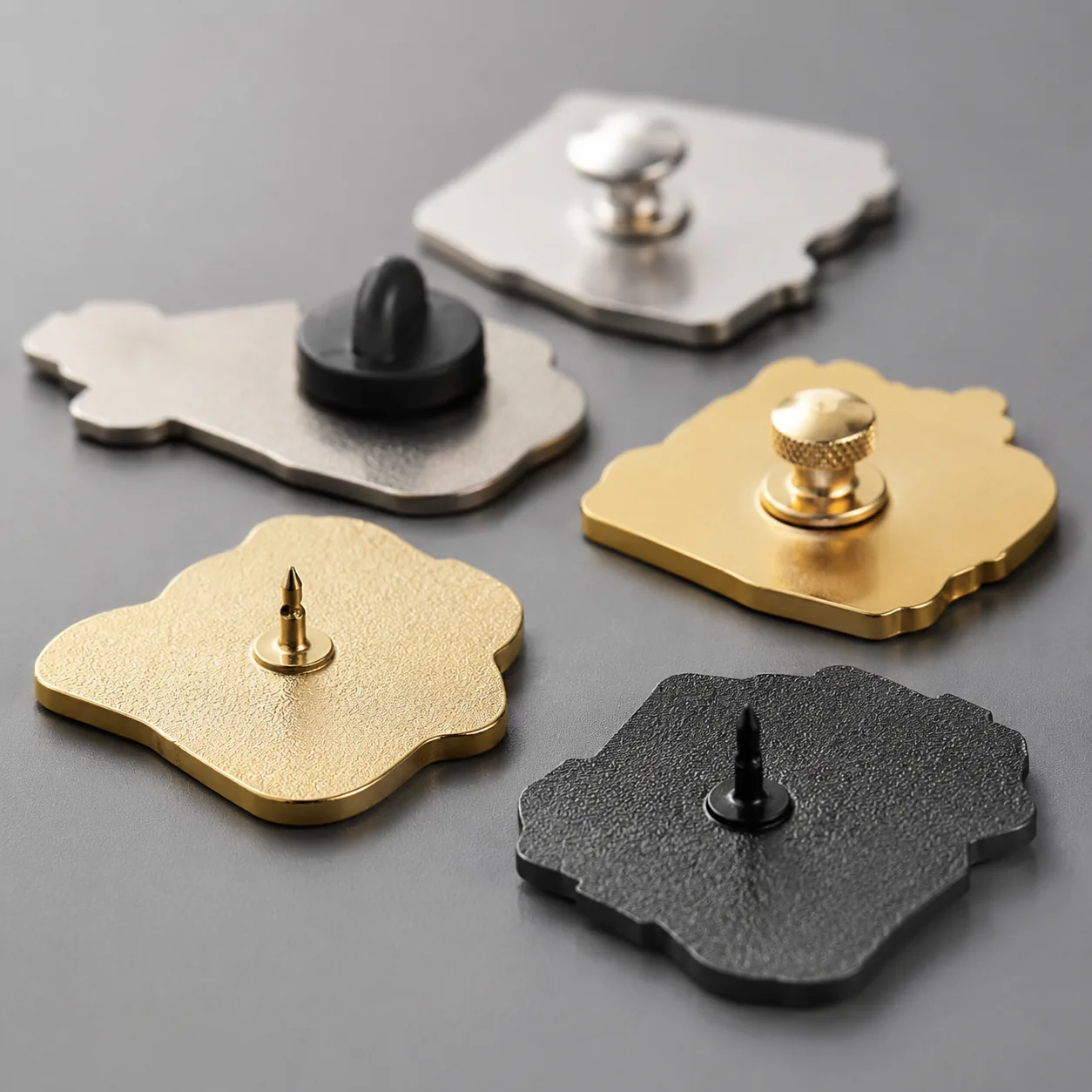
Quote errors usually come from details buyers assume are obvious. Thickness is a common one: a 1.2 mm pin and a 2.0 mm pin can look similar in a mockup but require different tooling depth, plating time, and feel in hand. Attachment choice is another frequent miss: butterfly clutch, rubber clutch, magnetic backing, safety pin, or split ring changes both hardware cost and user experience. For a 1-inch lapel pin, switching from a single butterfly clutch to two rubber clutches can add about USD 0.03-0.08 per piece at volume, which matters on a 5,000-piece order.
Color and finish are also common failure points. If color matters, give Pantone references and state whether visual match, print match, or exact enamel match is required. For plating, specify shiny nickel, matte nickel, gold, antique gold, antique brass, black nickel, or two-tone treatment. If a product needs clear enamel over a printed layer or an epoxy dome over UV print, say that explicitly; factories price those routes differently and the wrong assumption can change the whole process. A soft-enamel pin with 5 colors and epoxy is not the same job as a hard-enamel pin with the same artwork, because the polishing, fill, and surface-flatness targets differ.
- Thickness: state exact mm, not vague terms like thin or substantial
- Plating: specify color family and whether antique, matte, or polished
- Attachment: define back type, count per piece, and hardware finish
- Colors: give Pantone references and acceptable variation
- Openwork/cutouts: note minimum bridge width and sharp-corner limits
- Packaging: state whether retail presentation or bulk pack is required
Use tolerances where the function depends on fit. For metal items, a practical request is often ±0.2 mm on overall size, ±0.1 mm on critical slots or holes, and color match to the submitted Pantone within normal batch variation. For enamel fills, say whether tiny pinholes, minor surface waviness, or visible mold lines are acceptable. Without those limits, a factory may quote one standard while you inspect to another.
How do you compare two quotes without being misled by price?
The lowest quote is often the quote that excludes the most. A low number that omits tooling, sample fees, or replacement policy can become expensive after approval. The real comparison is landed manufacturing cost at the quality level you actually need, not just the ex-factory unit price.
When two quotes differ sharply, the cause is usually one of four things: material grade, finish complexity, packaging scope, or quality control standard. Ask each factory to name its inspection method and AQL level. For promo products, many buyers use AQL 2.5 for major defects and AQL 4.0 for minor defects on a final inspection, though small cosmetic gifts may be checked by visual sample agreement rather than a full statistical plan. If a supplier cannot state how it inspects, the price gap is hard to trust. If the supplier does use an AQL plan, ask whether the lot size, sample size, and accept/reject limits follow ANSI/ASQ Z1.4 or an internal equivalent.
| Comparison point | What a low quote may hide | What to ask next |
|---|---|---|
| Tooling | Mold or die cost excluded | Is tooling one-time or reusable? |
| Sample | Proof sample charged separately | How many sample rounds are included? |
| QC | No stated inspection standard | What AQL or inspection method is used? |
| Packing | Bulk price only | What is the cost for retail packaging? |
| Lead time | Quoted from artwork only | What starts the clock: approval or PO? |
A good comparison sheet should also separate commercial terms. Ask whether the FOB price includes inland trucking to port, export carton labels, and standard master cartons. For example, a quote from Shenzhen FOB usually assumes factory-to-port handling but not destination customs or DDP service. If one factory quotes EXW and another FOB, the lower number is not actually lower until you add freight and export handling.
What should a procurement checklist look like before sending the RFQ?
Before sending an RFQ, resolve the questions your own team can answer. This avoids back-and-forth with the factory and stops marketing, design, and procurement from using different definitions of final. It also helps you catch budget inflation early, before a sample is already in motion.
- Confirm the exact product category and use case
- Lock the target size, thickness, and attachment method
- Approve final artwork format and color references
- Decide which features are mandatory versus optional
- Set a budget range and target order quantity
- Choose sample path: digital proof only or physical pre-production sample
- Define packaging, labeling, and carton-marking requirements
- Agree on delivery deadline and destination terms
If one item is not decided, do not guess. Mark it open and ask the factory to quote both options. A two-option quote is easier to compare than an order that has to be reworked after sampling, especially when packaging, attachments, or plating are still under review. For example, ask for both a bulk-pack price and a backing-card price, or both nickel plating and antique brass plating, instead of leaving the factory to choose.
When should you ask for a sample, and what should be checked first?
Ask for a sample whenever the order introduces a new shape, unusual finish, mixed materials, retail packaging, or tight fit requirements. A digital proof is useful for artwork approval, but it cannot confirm weight, feel, magnet strength, hinge performance, or whether a carded pack fits the final carton. For mixed promo sets, sample the highest-risk item first, not the cheapest one.
The sample review should focus on things that are expensive to change later. Check dimensions against the drawing, color against the stated reference, edge quality, finish consistency, and whether the product sits and functions correctly in the hand. For pins and badges, test clutch hold and pin alignment. For keychains and coins, check ring strength, rotation, plating coverage, and whether moving parts rub or scratch. If the item ships retail-ready, also confirm the card stock, print quality, and pack seal integrity.
| Sample check | Acceptable question | Common failure |
|---|---|---|
| Size | Does it match the drawing within tolerance? | Artwork scaled by eye |
| Color | Does it match the target reference? | Pantone listed but not actually matched |
| Hardware | Does it hold under normal use? | Clutch or ring too loose |
| Surface | Is the finish even and clean? | Scratches, pits, or dull spots |
| Packaging | Does it ship as intended? | Wrong insert, card, or bag size |
For functional items, define the acceptance test before the sample is made. A keychain ring can be visually correct but fail if it opens too easily; a magnet badge can look fine but lose retention on a 1.0 mm shirt placket. If the item includes epoxy or doming, confirm cure clarity, yellowing risk, and edge overflow. If the product is printed, request a high-resolution proof plus a physical color chip match where possible.
What lead times, MOQ tiers, and FOB prices should you expect?
Lead time depends on build complexity, queue length, and whether tooling or sampling is needed. New custom shapes take longer than repeat orders, and packaging changes can add days even when artwork is unchanged. A strong RFQ asks the supplier to separate sample lead time from mass-production lead time and to state the start point clearly: artwork approval, sample approval, or purchase order date.
MOQ varies by product family and finish complexity. Simple metal promo items often start at 100 to 300 pcs, while textile items and packaging-heavy sets may begin higher because of setup efficiency. In practice, many factories quote three pricing tiers: 100-299 pcs for pilot runs, 300-999 pcs for standard custom orders, and 1,000+ pcs for best unit pricing. At 1,000 pcs, unit cost can drop 20-40 percent versus a 100-piece run on the same item, mainly because setup, tooling amortization, and packing labor spread out.
For price guidance, FOB China pricing in 2025 commonly falls into these broad ranges: enamel pins at about USD 0.35-1.80 per piece at 100-1,000 pcs depending on size and plating; challenge coins at about USD 0.80-3.50; keychains at about USD 0.45-2.20; woven or embroidered patches at about USD 0.20-1.10; and lanyards at about USD 0.18-0.75. Tooling or mold charges, when applicable, can add USD 20-120 for simple items and more for complex multi-level dies or soft-PVC molds.
| Item type | Typical MOQ range | Typical lead time range | Typical FOB price range |
|---|---|---|---|
| Custom enamel pins | 100-300 pcs | 10-20 days after sample approval | USD 0.35-1.80 each |
| Custom keychains | 100-300 pcs | 12-22 days after approval | USD 0.45-2.20 each |
| Custom challenge coins | 100-300 pcs | 12-25 days after approval | USD 0.80-3.50 each |
| Patches | 100-500 pcs | 7-18 days after approval | USD 0.20-1.10 each |
| Lanyards | 100-500 pcs | 7-15 days after approval | USD 0.18-0.75 each |
These are working ranges, not promises. Size, color count, plating, packaging, and inspection standard can move a quote materially. A 1.25-inch hard-enamel pin with epoxy, carding, and AQL 2.5 inspection will price above a 1.0-inch soft-enamel pin in bulk pack, even if both are “custom pins.” A 25 mm embroidered patch with merrowed edge and iron-on backing will also price differently from a flat-cut woven patch with no backing.
What should you do next if you want a quote that is actually usable?
Turn the RFQ into a one-page spec sheet and use it across every supplier. Keep the format consistent so all factories price the same scope, separate unit price from tooling and packaging, and confirm sample and mass-production lead times independently. If a supplier answers in a different structure, that is often a warning sign about how the order will be managed later.
The most practical next step is to build one master RFQ template for pins, coins, badges, keychains, patches, and lanyards. Keep it short enough that buyers will actually use it, but specific enough that the factory does not need to invent missing assumptions. A good template usually includes product type, exact size, thickness, plating or print method, color references, attachment, packaging, quantity tier, tolerance, inspection level, sample path, lead time, FOB port, and delivery deadline. If your team needs to turn a rough concept into a production-ready spec sheet before quoting, it is usually worth doing that once, then reusing the template on every sourcing round.
Have a project? Send your artwork and target quantity and we’ll reply with a detailed quotation within 12 working hours.
Ready to get this made?
Send your sketch, target quantity and ship-date. Detailed quotation in 12 hours.



