How to Specify Thickness and Weight for Custom Metal Giveaways
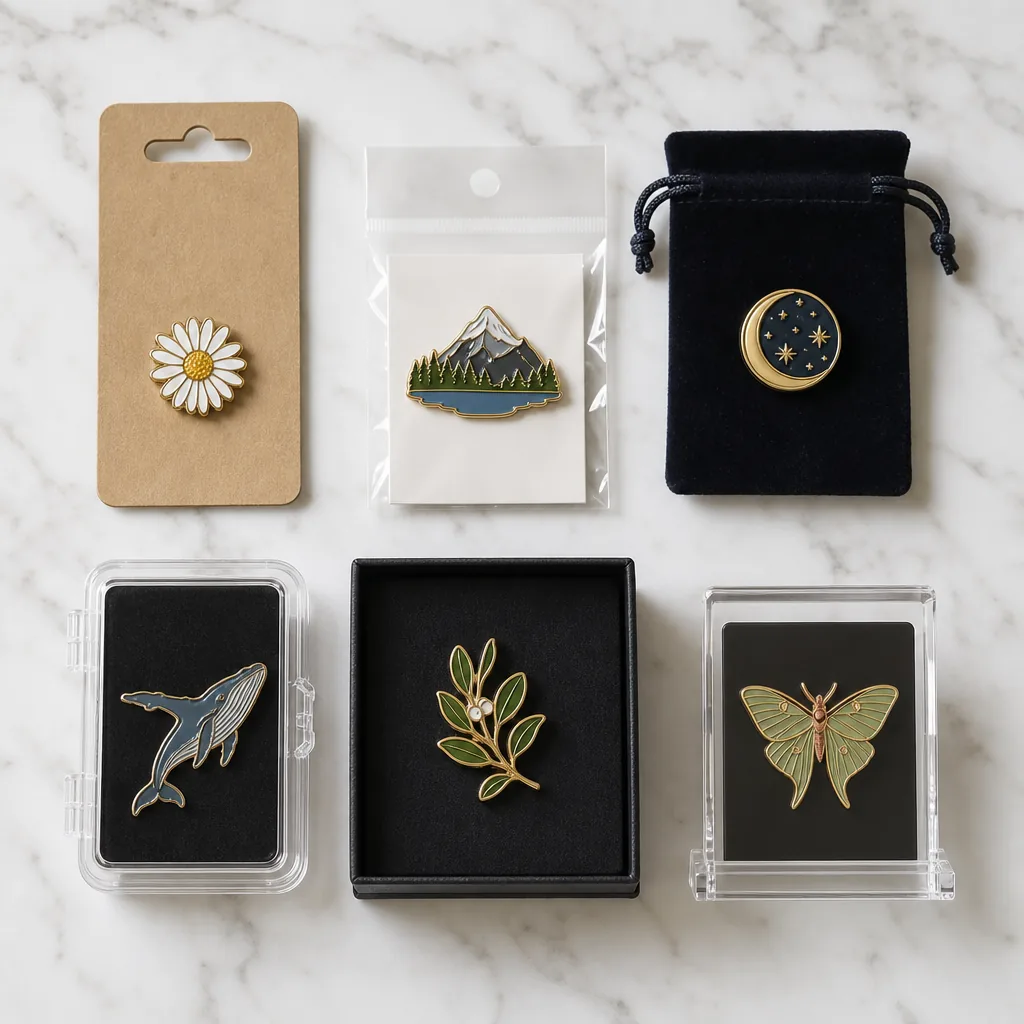
Start With the Use Case, Not the Artwork
Most quote problems on metal giveaways start with an incomplete brief. Buyers send artwork, size, and quantity, but skip the physical target: how heavy should it feel, how thick can it be, and where will it be used. A 30 mm lapel pin for conference staff, a 50 mm retail coin, and a fridge magnet mailed in quantity should not be built to the same mass target. The right spec is the one that survives the use case without adding postage, bending in transit, or looking cheap in the hand.
At ZheCraft, we usually separate orders into four buckets: wearables, handouts, retail souvenirs, and desk gifts. Wearables should stay light, typically under 15 g for lapel pins and badges. Handouts need to be mail-friendly and low risk, often under 25 g with compact cartons. Retail souvenirs can tolerate more mass if the finish and edge quality support it. Desk gifts can be heavier still, but only if the extra material is visible in the form, not hidden inside a bulky back plate.
Thickness Changes Feel, Rigidity, and Quote
Thickness is not just a visual spec. It determines whether the part stays flat, whether a pin post can be anchored without warping, and how much cleanup the factory needs after stamping or die-casting. For stamped brass or iron pins, 1.0 to 1.5 mm is the practical window; 1.2 mm is a safe default for most badges. Hard enamel pins usually work best at 1.2 to 1.8 mm because the cell walls need enough depth for polishing. Zinc alloy keychains and coins usually start at 2.0 mm, and 3.0 to 4.5 mm is common for a coin that must feel substantial in the hand.
The wrong thickness creates hidden cost. Too thin and you get bend risk, exposed edges after polishing, and weak joints around rings, posts, or magnet cavities. Too thick and the quote rises from metal weight, mold fill time, and polishing labor. If the artwork includes cutouts, keep narrow bridges at least 0.8 mm in stamped brass and 1.2 mm in die-cast zinc alloy; thinner bridges tend to deform after plating. In small pilot runs, that one number often matters more than the difference between brass and iron.
Use Weight as a Proxy for Value and Logistics
Weight is the most practical proxy for perceived value, but it also drives freight and handling. A 25 mm lapel pin around 6 to 8 g feels solid without pulling on fabric. A 35 mm pin usually lands in the 10 to 14 g range. Keychains often sit at 20 to 35 g, and a 50 mm challenge coin can run 30 to 45 g depending on relief height and rim thickness. Scale matters: an order of 5,000 units at 10 g weighs 50 kg before cartons, while the same quantity at 30 g adds another 100 kg of cargo.
That matters more than many buyers expect. A heavy keyring may look premium in a sample box, but if the item is mailing into a campaign, the freight and fulfillment cost can erase the benefit. For high-volume promotions, set a maximum finished weight first, then let the factory optimize the internal structure to hit it. If you need a premium feel but a lower shipping weight, use broader outlines, thinner back plates, and a controlled amount of 3D relief instead of simply adding thickness everywhere.
Choose Finish for Wear, Not Just Appearance
Finish should be specified as both appearance and durability. Decorative nickel plating is usually about 0.1 to 0.3 microns, gold flash 0.05 to 0.1 microns, and black nickel around 0.1 to 0.2 microns; those numbers are enough for visual coverage, not abrasion resistance. Antique brass and antique silver rely more on patina and top cleaning than on heavy plating build. For items handled daily, ask for a clear lacquer or e-coat on exposed metal, especially on keychains and coins that will rub against other objects.
Choose the finish for the environment, not for the catalog photo. Polished gold reads premium, but on a loose keyring it shows fingerprints and fine scratches quickly. Matte black looks sharp for corporate gifts, but thin edges can wear through and expose the base metal. Antique brass hides scuffs better and usually ages more gracefully, but it can make a modern brand look older than intended. If the item carries brand colors, keep plated areas and color-filled areas distinct in the spec so the supplier does not guess at the visual priority.
A Practical Baseline by Product Type
The table below is a working baseline, not a universal rule. It is useful when you need a first quote that is realistic for common promotional items, before you start tuning the design for premium feel, mailability, or retail shelf presence.
| Product | Recommended thickness | Typical finished weight | MOQ / lead time / FOB | When not to choose |
|---|---|---|---|---|
| Soft enamel pin | 1.2 to 1.5 mm | 6 to 12 g | 100 to 300 pcs / 12 to 18 days / USD 0.35 to 1.10 | Avoid if you need very fine text or a glossy premium surface |
| Hard enamel pin | 1.2 to 1.8 mm | 7 to 15 g | 100 to 300 pcs / 14 to 20 days / USD 0.45 to 1.30 | Avoid if the artwork relies on deep cutouts or very sharp 3D relief |
| Zinc alloy keychain | 2.0 to 3.5 mm | 20 to 45 g | 300 to 500 pcs / 18 to 25 days / USD 0.90 to 2.80 | Avoid for mass mailers where postage is tight |
| Fridge magnet | 1.0 to 2.0 mm face / 1.5 to 2.0 mm magnet | 15 to 35 g | 300 to 500 pcs / 15 to 22 days / USD 0.60 to 1.80 | Avoid if you need very high pull force on thick steel doors |
| Challenge coin | 3.0 to 4.5 mm | 25 to 60 g | 100 to 300 pcs / 18 to 30 days / USD 1.20 to 3.80 | Avoid if the design must stay under 30 g or ship cheaply |
These are normal factory ranges for straightforward shapes. Adding cutouts, dual plating, sandblast backgrounds, epoxy doming, or serialized numbering will push both MOQ and lead time upward. A one-color pin or coin can often move in 12 to 18 days after sample approval; complex die-cast parts with multiple finishes are more likely to land in the 20 to 30 day range. If you need a rush order, the safest place to save time is on packaging complexity, not on structural spec.
Write Tolerances and Inspection Limits That Can Be Measured
If the supplier cannot tell you what to measure, the quote is incomplete. For flat stamped parts, ask for overall dimension tolerance of plus or minus 0.2 mm up to 50 mm and plus or minus 0.3 mm above that, thickness tolerance of plus or minus 0.1 mm, and visible burrs under 0.05 mm. For die-cast zinc alloy, plus or minus 0.2 to 0.3 mm is more realistic because mold shrinkage, polishing, and plating all move the final size. Pin post position or magnet cavity position should usually stay within plus or minus 0.15 to 0.3 mm depending on the hardware.
For acceptance, write the inspection rule in defect language, not in vague terms like good finish. A practical production standard is AQL 2.5 for major defects, AQL 4.0 for minor defects, and zero tolerance for functional failures such as missing backs, loose rings, weak magnets, or cracked enamel. If you need 100 percent sorting, say so before the order starts because that is a labor cost, not a free factory courtesy. For launch programs and gift sets, ZheCraft often recommends a first article sample plus a pre-shipment visual check, then a final carton count before booking freight.
What to Do Next
Before asking for quotes, send one brief with the target use, size, finish, weight band, quantity, and pack-out method. If you only provide artwork, suppliers will make assumptions and quote different products. The cleanest RFQ is one that states the physical target and the inspection rule in the same document.
What to do Next
Have a project? Send your artwork and target quantity and we’ll reply with a detailed quotation within 12 working hours.
Ready to get this made?
Send your sketch, target quantity and ship-date. Detailed quotation in 12 hours.



