How to Specify Corrosion Resistance for Custom Metal Giveaways
Why corrosion specs matter before you approve artwork
A lot of metal promo orders fail for a simple reason: the buyer approved the front artwork, but never defined how the product should survive humidity, sweat, salt air, storage, or warehouse aging. A pin can look perfect on day one and still return as tarnished, spotted, or dull three months later if the base metal, plating stack, and post-treatment are not specified. For buyers shipping to coastal markets, outdoor events, or long-retail-cycle programs, corrosion resistance is not a premium extra; it is part of the functional spec.
The right way to write this requirement is to separate appearance from durability. Appearance is color, gloss, and texture. Durability is what happens when that finish sees moisture, friction, body oils, cleaning agents, and time. In practice, corrosion control starts at the alloy choice, continues through plating thickness and sealing, and ends with storage and packaging conditions. If you leave any of those undefined, factories will quote to their default standard, which may be fine for short-life giveaways but risky for retail or executive gifts.
Start with the right base metal and plating stack
Corrosion performance begins under the visible finish. Brass generally gives better cosmetic stability than low-grade zinc alloy for thin details, while iron is the least forgiving when the plating is breached. Zinc alloy is cost-effective for thicker 3D shapes and large volume orders, but it needs disciplined plating control because porosity and edge wear can expose the substrate more easily. If the item is meant for outdoor use, premium gifting, or long storage, do not choose the base metal by price alone.
Plating stack is usually where buyers get the most leverage. For decorative items, a common decorative nickel or gold layer may be around 0.03 to 0.05 microns in appearance layers, but corrosion resistance improves when the functional underlayer is specified more seriously, such as 0.8 to 1.2 microns of nickel or similar barrier plating depending on the finish system. Clear lacquer or e-coating can add another layer of protection, especially on high-contact edges. ZheCraft typically recommends matching the finish system to the use case rather than using one standard stack for everything, because a trade-show pin and a seaside souvenir should not share the same durability assumption.
Which finish system fits which use case
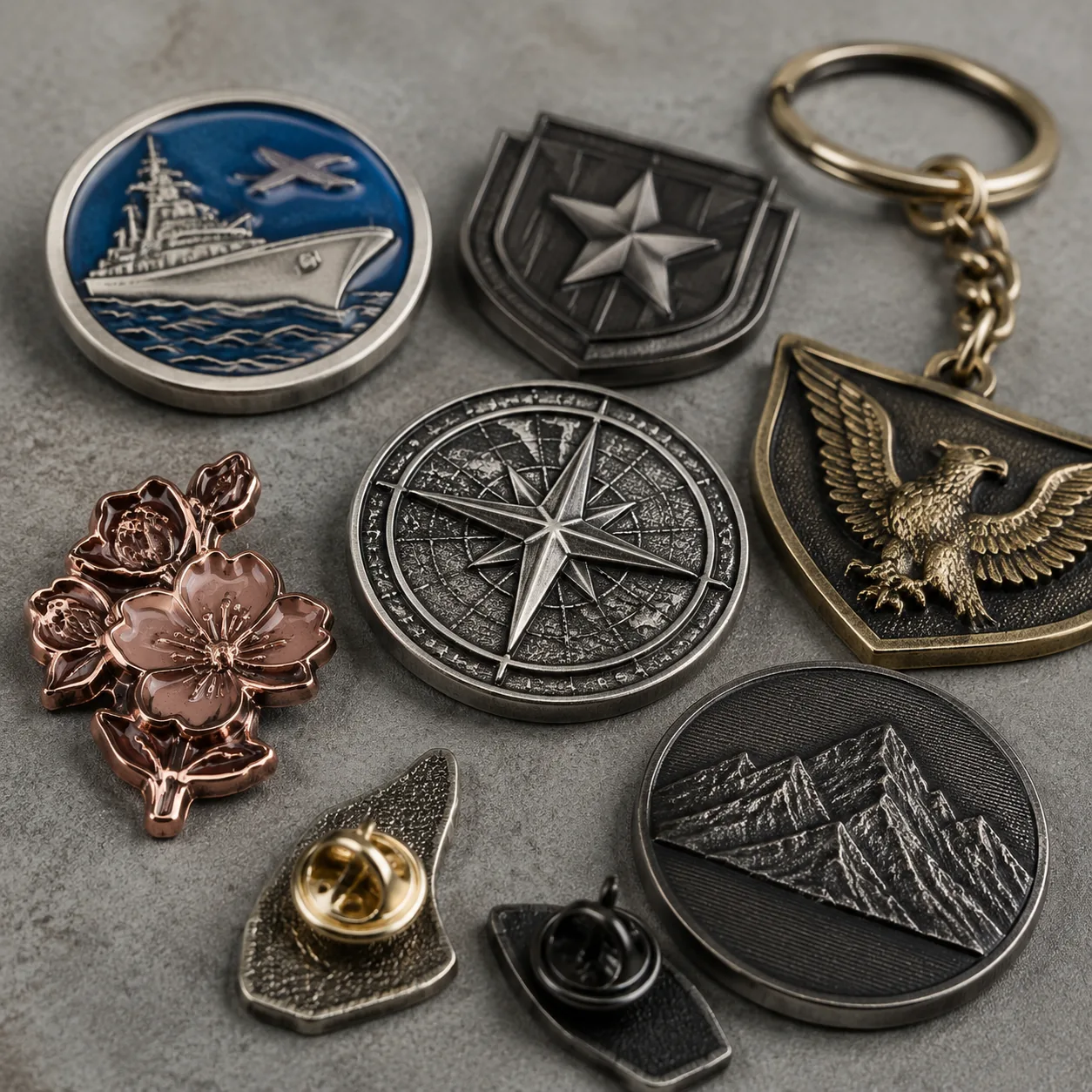
Not every finish needs the same level of corrosion resistance, and over-specifying can raise cost without real benefit. A soft enamel pin for an indoor conference badge may only need standard decorative plating and normal packaging desiccation. A keychain that rides in pockets, handbags, and glove boxes usually needs a tougher barrier layer because it sees repeated abrasion and sweat exposure. Challenge coins, medallions, and metal badges meant for display can also benefit from anti-tarnish lacquer if they will be handled often.
The practical question is whether the failure mode is visible discoloration, pitting, or edge wear. If the client is sensitive to color shift, choose a sealed finish and low-reactivity alloy. If the product is going to be exposed to salt air, perspiration, or cleaning wipes, insist on a corrosion test requirement rather than just a plating name. For many international buyers, the cost difference between a basic decorative finish and a more robust sealed finish is modest compared with the cost of replacements and customer complaints.
| Use case | Recommended spec direction | Typical FOB impact USD/pc |
|---|---|---|
| Indoor event pin | Standard plated brass or zinc alloy, no seal coat | 0.08 to 0.25 |
| Retail keychain | Barrier plating plus clear coat or epoxy protection | 0.20 to 0.60 |
| Outdoor badge or coin | Thicker barrier plating, seal coat, stricter test requirement | 0.35 to 1.20 |
| Premium long-life gift | Higher-grade base metal, controlled plating, anti-tarnish packaging | 0.60 to 2.00 |
Corrosion tests buyers can actually request
A good test spec is specific enough for the factory to measure, but not so rigid that it forces a lab-level process on a simple promotional item. For most buyers, the most useful requests are neutral salt spray time, visual inspection criteria, and packaging protection. A common practical benchmark is 24 to 48 hours salt spray for basic promotional items, 48 to 96 hours for stronger retail-grade finishes, and longer only when the product genuinely needs it. Always tie the test to a pass/fail rule such as no base-metal exposure, no blistering, and no visible rust points larger than a defined tolerance.
If you are buying for humid regions, add a storage-aging requirement. Even when a finish passes salt spray, poor carton packing can cause condensation staining or black spots during transit. Ask the supplier to confirm desiccant use, bag material, and carton dryness for sea freight. A well-made part can still fail if it is packed wet, sealed without ventilation, or stored in a damp warehouse before dispatch.
What to write in your RFQ
The best RFQ language is short, measurable, and tied to the final use. For example, you can ask for a brass or zinc alloy body with nickel barrier plating, clear protective lacquer, and salt spray resistance suitable for 48 hours minimum, with no visible rust, discoloration, or peeling after testing. If you need a premium black nickel, antique brass, or matte finish, define whether the protective requirement is cosmetic only or functional. That distinction matters because some antique finishes are intentionally oxidized-looking but still need a seal coat to prevent uncontrolled tarnish.
Also define the inspection level. For visible corrosion defects, many buyers use AQL 2.5 for major defects and 4.0 for minor defects, but your own tolerance may be tighter if the product is retail-facing. Ask the factory to confirm sample approval against the exact plating batch, because a first sample made from a cleaner bath can look better than mass production. ZheCraft often advises buyers to lock both the finish reference and the inspection criteria before tooling release, since rework after plating is expensive and slow.
Cost, MOQ, and lead time trade-offs
Stronger corrosion protection usually adds cost in three places: material grade, plating time, and rejection risk. Basic promotional pieces can often stay in the 500 to 1,000 piece MOQ range with 12 to 18 days lead time after sample approval, while more controlled finishes and custom seal coats may push lead time to 15 to 25 days. FOB pricing for simple decorative metal items might sit around USD 0.08 to 0.35 per piece, but a more durable corrosion-controlled build can move into USD 0.30 to 1.20 or higher depending on size, relief, and accessories. Buyers should expect this spread instead of treating it as supplier markup.
Where not to overspend: if the item is an event-only pin handed out for a single show, you probably do not need heavy sealing or long salt spray requirements. Where to spend more: products that will be worn weekly, stored for years, mailed internationally, or sold through retail channels with returns risk. A good factory quote should make the trade-off visible, not hide it in a lump sum. If the supplier cannot explain what protects the finish, you do not yet have a production-ready quote.
| Decision | Low-risk choice | Higher-durability choice |
|---|---|---|
| Base metal | Standard zinc alloy | Brass or controlled zinc alloy |
| Protection | Decorative plating only | Barrier plating plus seal coat |
| Test target | Visual inspection only | Salt spray plus visual criteria |
| Packaging | Basic polybag | Dry bag, desiccant, sealed carton |
| Best for | Short-life giveaways | Retail, outdoor, long-storage orders |
Common failure modes and how to prevent them
Most corrosion complaints are predictable. Fingerprints left on unfinished parts can leave permanent marks if the plating bath or post-cleaning is weak. Sharp edges can plate thinly and expose substrate first, so edge thickness should be checked on the highest-wear points. Mixed-metal assemblies can also corrode at contact interfaces if the hardware and body metal are not compatible or if the coating misses the joint.
The easiest prevention step is to require a first-article visual check under good lighting with the actual finish sample, not just the CAD file. Then confirm that the mass-production plating lot matches the approved sample in color, gloss, and surface cleanliness. If the product includes moving parts, clasps, or chains, inspect those separately, since accessories often corrode faster than the main body. The goal is not perfection; it is controlled risk with clear acceptance limits.
What to do next
Before you send the next RFQ, decide the product’s real environment: indoor, handled often, outdoor, humid, coastal, or long-storage. Then write one finish spec, one protection spec, one test spec, and one packaging spec. Keep them short enough for the factory to quote accurately, but specific enough to stop guesswork. If you want, ZheCraft can help translate your use case into a production-ready corrosion spec for pins, coins, badges, or keychains.
Have a project? Send your artwork and target quantity and we’ll reply with a detailed quotation within 12 working hours.
Ready to get this made?
Send your sketch, target quantity and ship-date. Detailed quotation in 12 hours.



