How to Specify a Production-Ready Backing Card
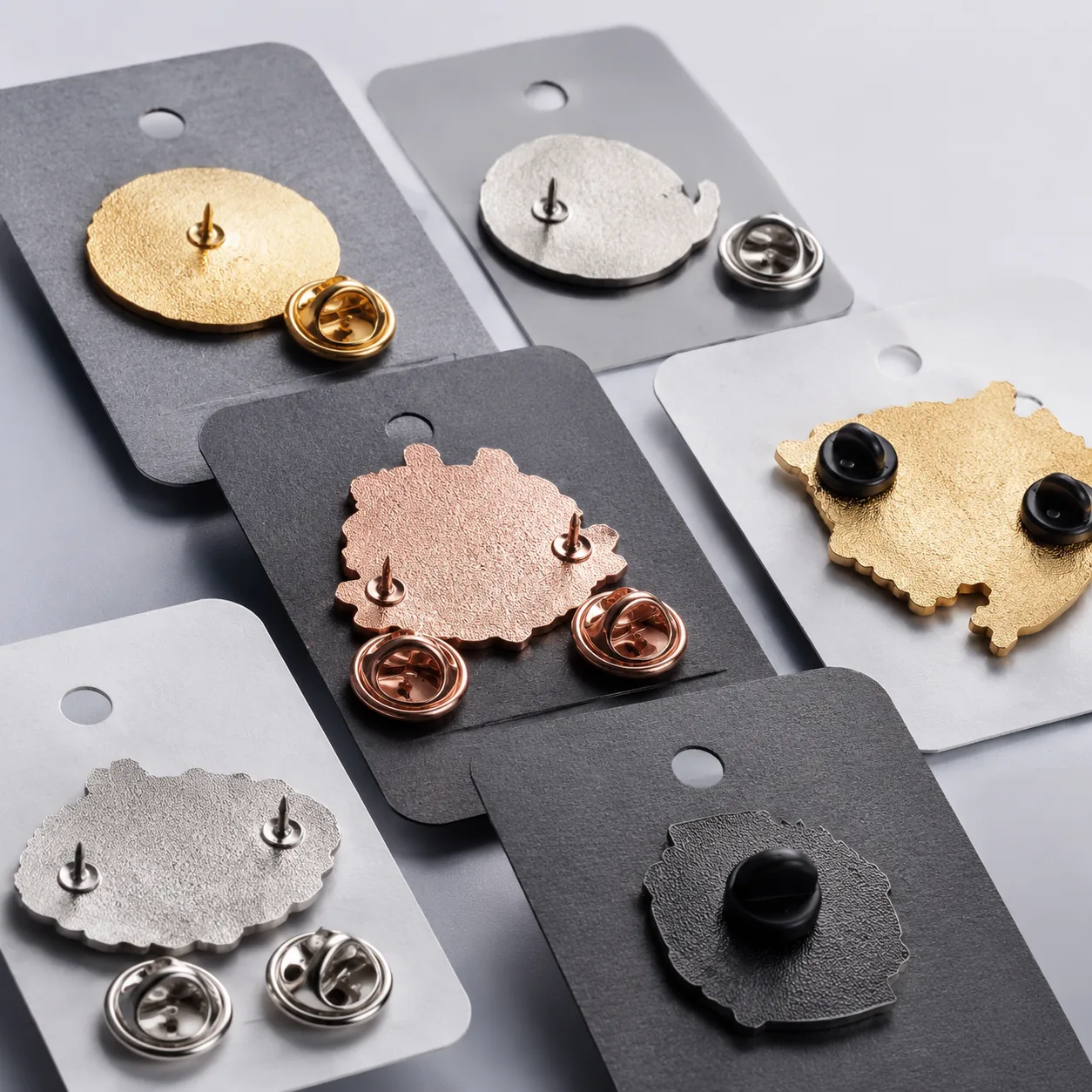
Why backing cards fail in production
A backing card is inexpensive, but a poor specification can disrupt the entire order. The most common failures are not creative problems; they are dimensional and handling problems. A card may print correctly but be 3 mm too wide for the polybag, too thin to support a 35 g metal badge, or punched in the wrong location for a retail peg. Once 10,000 to 50,000 cards are printed and die-cut, those errors become rework, repacking, carton changes, or delayed shipment.
For custom enamel pins, challenge coins, badges, zipper pulls, and keychains, the card must do several jobs at once. It presents the brand, holds the product in a fixed position, protects the finish from scuffing, leaves room for barcodes or compliance copy, and fits the final pouch, blister, carton, or retail display. Treat it as part of the product engineering file, not as a late-stage artwork upload.
A production-ready spec balances fit, material strength, print control, and packing speed. If the card is oversized, carton utilization drops and freight cost rises. If the card is undersized, the product shifts, scratches, or blocks the barcode. If the stock is wrong, the card bows on display or jams during insertion. The safest approach is to define the backing card after the metal item, attachments, and final sales channel are known, but before artwork is finalized.
Start with size, clearance, and pack method
Card size should follow the product envelope and final pack method. A single 25 to 30 mm enamel pin with one butterfly clutch usually fits a 50 x 70 mm or 55 x 85 mm card. A 40 mm brooch, two-pin set, or coin-and-pin combination often needs 70 x 100 mm. Keychains and badges with split rings, chains, or clasps commonly need 80 x 120 mm or larger because the hardware must lie flat without pushing through the bag.
Leave functional clearance, not just visual white space. For most metal items, allow 5 to 8 mm between the product edge and trim line, 8 to 12 mm below a euro-slot, and at least 3 mm bleed outside the finished trim for printed artwork. If the card goes into a self-seal OPP bag, confirm the external packed size, not only the bare card size. A 70 x 100 mm card may require an 80 x 120 mm bag once the product thickness and seal flap are included.
Thickness affects both presentation and packing speed. A 300 gsm card is economical but can curl under a 20 g pin during hang display. A 350 to 400 gsm coated card is a practical default for light pins and small badges. A 500 to 700 gsm laminated card or 0.8 to 1.0 mm board is safer for heavier items. For keychains above 45 g or multi-piece sets, 1.0 to 1.5 mm grayboard with a printed wrap or reinforced slot reduces bending but increases labor and carton volume.
| Product type | Typical product weight | Practical card size | Recommended stock | Key tolerance |
|---|---|---|---|---|
| Single enamel pin | 8 to 18 g | 50 x 70 mm or 55 x 85 mm | 350 to 400 gsm coated art card | Hole or clutch position ±0.5 mm |
| Large pin or brooch | 18 to 35 g | 55 x 85 mm or 70 x 100 mm | 400 to 500 gsm laminated card | Slot width ±0.3 mm |
| Two-pin set | 20 to 45 g | 70 x 100 mm | 600 gsm duplex or 0.8 mm board | Spacing between pins ±1.0 mm |
| Coin or medallion | 25 to 60 g | 70 x 100 mm or 80 x 120 mm | 0.8 to 1.2 mm board | Cavity or adhesive location ±0.5 mm |
| Keychain or badge | 30 to 80 g | 80 x 120 mm or custom | 1.0 to 1.5 mm board | Hang hole center ±0.5 to 1.0 mm |
For mixed SKU programs, a shared card size can reduce cost and simplify packing, even if it is not perfect for every item. One universal 70 x 100 mm format may be cheaper than maintaining four die lines, four bag sizes, and separate carton counts. Use separate cards only when the product weight, retail channel, or barcode layout truly requires it.
Choose stock and finish by sales channel
Retail display, e-commerce fulfillment, event giveaways, and collector releases have different requirements. Retail cards need stiffness, clean color, reinforced hanging areas, and scuff-resistant finishing. E-commerce cards need enough rigidity to survive bulk packing and parcel handling, but glare may be less important. Event giveaway cards can use simpler stock, provided the print does not rub off and the card does not crease during transport.
Coated art card in 350 to 400 gsm is the lowest-risk material for most promotional pins because it prints sharply, die-cuts cleanly, and stays flat when packed in bundles. Kraft board is useful for a natural or recycled look, but it lowers color saturation and can make 6 pt text, QR codes, and light brand colors less reliable. Duplex board and grayboard-faced structures provide more stiffness, but exposed edges can look rough unless wrapped or laminated.
Finishes should be selected for function first. Matte lamination, typically 18 to 25 microns, reduces glare and improves rub resistance. Gloss lamination gives stronger color but can interfere with barcode scanning under bright retail light. Soft-touch film feels premium but marks easily and adds cost. Spot UV, foil stamping, and embossing can work well on collector cards, but they require tighter registration and usually add 3 to 7 days to sampling or mass production.
For sustainability claims, be precise. “Eco-friendly” is too vague for a production spec. State recycled content percentage, FSC-certified paper requirement, soy-based ink if required, and whether plastic lamination is allowed. A recyclable unlaminated 400 gsm card may be a better fit for some retail buyers than a premium laminated board that cannot enter their preferred recycling stream.
Define print and artwork specs the factory can hold
A complete print spec should include size, stock, print method, color standard, surface finish, bleed, safe zone, barcode location, and approval requirement. Offset printing is normally preferred above 2,000 to 3,000 cards because color is more stable and unit cost drops. Digital printing is useful for short runs, variable SKUs, or pre-launch samples, but batch-to-batch color variation is usually wider. For brand-critical work, specify Pantone spot colors or approved CMYK values and require a physical proof on the actual stock.
Use production-safe artwork rules. Standard bleed should be 3 mm on all sides. Keep logos, compliance marks, QR codes, and readable text at least 2 to 3 mm inside the trim line and 5 mm away from folds or slots. Avoid text below 5 pt on coated white stock and below 6 pt on kraft or textured stock. Reverse-out text should be bolder than normal because ink spread and lamination can close small counters.
Barcode and QR code areas need special control. A retail UPC-A barcode should usually be at least 80 percent magnification with a quiet zone left clear on both sides. QR codes should be tested after lamination, varnish, and final insertion, not only from a PDF. On small cards, a 15 x 15 mm QR code is a practical minimum; 18 x 18 mm is safer when the card may curve around a bulky product.
Die-cutting tolerances should be written into the RFQ. For standard paperboard cards, trim tolerance of ±0.5 to ±1.0 mm is realistic. Slot width can often be held within ±0.3 to ±0.5 mm, while hang-hole center position should be controlled within ±0.5 to ±1.0 mm depending on board thickness and die condition. If the attachment point must align with pin posts, request a fit sample using finished metal goods, not a blank paper mock-up.
Compare cost, MOQ, and lead time options
Backing card pricing depends on size, paper weight, print coverage, finish, die complexity, and whether insertion is included. FOB card-only cost is usually low, but the wrong card can add more cost through slower packing, larger cartons, or higher reject rates. Always compare total packed-unit cost, not only the card price.
| Card build | Typical MOQ | FOB card range | Sample lead time | Mass production lead time | Best use case |
|---|---|---|---|---|---|
| 350 gsm coated card, CMYK | 500 to 1,000 pcs | USD 0.025 to 0.06 | 3 to 5 days | 7 to 10 days | Promo pins and simple giveaway packs |
| 400 gsm card with matte lamination | 1,000 pcs | USD 0.04 to 0.09 | 5 to 7 days | 10 to 14 days | Retail pins, badges, and branded drops |
| 600 gsm duplex card, laminated | 1,000 to 2,000 pcs | USD 0.07 to 0.14 | 6 to 8 days | 12 to 18 days | Two-pin sets and heavier badges |
| 1.0 mm grayboard with printed wrap | 2,000 pcs | USD 0.12 to 0.28 | 7 to 10 days | 15 to 22 days | Premium coins, gift packs, and collector products |
| Kraft board, one or two colors | 1,000 pcs | USD 0.04 to 0.10 | 5 to 7 days | 10 to 15 days | Natural-look campaigns with simple artwork |
| Foil, embossing, or spot UV added | 2,000 pcs | Add USD 0.03 to 0.12 | 7 to 12 days | 15 to 25 days | Limited editions and higher shelf impact |
These ranges assume common card sizes below 90 x 130 mm, normal ink coverage, and standard export packing. Oversized cards, unusual shapes, double-sided lamination, multiple holes, blister gluing, or hand assembly can push both price and lead time higher. For seasonal programs, build in at least 3 to 5 days for artwork correction and proof approval; most delays come from unresolved files, missing barcode data, or late changes to product placement.
MOQ can also vary by print method. Digital short runs may start at 100 to 300 cards, but unit cost is higher and color repeatability is weaker. Offset printing becomes more efficient around 1,000 to 2,000 pieces. If a buyer has many SKUs with the same structure, ganging artwork on one print sheet can reduce setup cost, but only if the card size, stock, finish, and die line are identical.
Engineer the hanger and attachment method
The hanging and attachment method must match both the product and the sales environment. A round hang hole is simple and cheap, but it can tear under heavy items if the hole is too close to the edge. A euro-slot gives better retail compatibility and lets the card sit straighter on pegs. For heavier metal goods, use a reinforced slot area, thicker board, or a blister-style support so the product weight is not carried by a weak paper bridge.
Typical round hang holes are 5 to 8 mm diameter. Euro-slots are often 32 x 6 mm or 35 x 8 mm, with rounded ends to reduce tearing. Keep the top of the slot at least 8 to 12 mm from the card edge on light cards and 12 to 15 mm on heavier cards. If the item weighs more than 50 g, test the loaded card on a peg for at least 24 hours; short handling checks do not reveal slow tearing.
Attachment method drives labor cost and defect risk. Pin posts through punched holes are clean and secure, but post spacing must match the die-cut holes. Adhesive dots are fast for light items, but they can fail in heat, humidity, or long storage. Thread, twist ties, and elastic loops work for irregular shapes but slow packing. Clear blister or film pockets improve protection, but tooling and assembly costs are higher.
- Confirm final product weight, including clutches, chains, rings, and accessories
- State hanger type, hole diameter or euro-slot dimensions, and edge distance
- Define attachment method: post holes, slot, adhesive dot, thread, elastic, blister, or pocket
- Require a fit test using finished metal samples with plating, backs, and accessories installed
- Check that the packed card fits the selected OPP bag, blister, carton, or retail tray
- Test barcode or QR scanning after lamination and after the item is attached
- Approve carton count only after the card, product, bag, and insert method are finalized
For pin cards, hole spacing is a common source of rejects. If a pin has two posts, the card hole spacing should be based on the measured finished part, not the design drawing alone. Casting, polishing, and soldering can shift post position by 0.3 to 0.8 mm. A slightly elongated slot may be better than two tight round holes when production variation is expected.
Set inspection criteria before mass production
Backing cards need their own QC plan because their defects differ from metal-product defects. Common issues include trim drift, dirty edges, hole misalignment, lamination bubbles, corner crush, ink scuffing, color shift, incorrect barcode placement, and mixed SKU packing. These defects may be minor on a desk sample but serious in retail if they affect hanging, scanning, or brand presentation.
Define AQL levels and measurable limits in the purchase order. AQL 2.5 is common for general appearance defects on packaging. AQL 1.5 is more appropriate for critical branded print, barcode readability, hanger position, or premium retail cards. Critical defects, such as wrong artwork, unreadable barcode, wrong SKU, or a hole that prevents hanging, should normally be set at zero tolerance.
Practical tolerances should be realistic for paper conversion. Use finished size ±0.5 to ±1.0 mm, hole or slot position ±0.5 to ±1.0 mm, slot width ±0.3 to ±0.5 mm, color checked against an approved hard proof, and lamination adhesion with no peeling at corners after normal handling. For laminated cards, film thickness should be specified, commonly 18 to 25 microns per side, so the factory does not substitute a thinner film that scuffs or lifts more easily.
Functional tests are as important as visual inspection. For loaded retail cards, hang a packed sample for 24 to 48 hours at room temperature and check slot tearing, card bowing, and product movement. For e-commerce packs, perform a simple 80 to 100 cm drop test on the packed carton or mailer and inspect whether the item scratches the print or breaks through the bag. For humid markets, request a short conditioning check at 40°C and 70 percent relative humidity when adhesive dots or soft-touch films are used.
Issue a complete RFQ package
The fastest way to avoid rework is to send the factory a complete packaging target with the product RFQ. Include finished card size, stock, thickness or gsm, print method, finish, hanger format, attachment method, tolerance requirements, barcode files, bag size, carton target, and sample approval steps. If any of those items are unknown, mark them as open points instead of letting the supplier assume.
A strong RFQ also states commercial expectations. Include order quantity by SKU, reorder forecast, acceptable MOQ tier, target FOB price range, required sample date, required ship date, and whether the card must be quoted separately or as part of a packed product. For example, a 5,000-piece enamel pin order might specify a 55 x 85 mm, 400 gsm matte-laminated CMYK card, euro-slot 32 x 6 mm, two post holes matched to production pins, OPP bag 65 x 100 mm, AQL 2.5 general and AQL 1.5 for barcode and hanger position.
Before mass production, approve one complete packed sample: finished metal item, backing card, attachment, bag or blister, barcode, carton count, and export packing. That single approval point prevents the most expensive packaging mistakes. A card that fits, hangs, scans, and packs correctly is no longer just artwork; it is a controlled component of the product.
For ZheCraft projects, the best results come when backing card decisions are made during product sampling, not after the metal goods are finished. Sharing the product weight, attachment layout, retail channel, and target carton count early allows the card structure to be engineered once and repeated reliably across reorders.
Have a project? Send your artwork and target quantity and we’ll reply with a detailed quotation within 12 working hours.
Ready to get this made?
Send your sketch, target quantity and ship-date. Detailed quotation in 12 hours.



