How to Specify a Custom Gift Set Without Rework
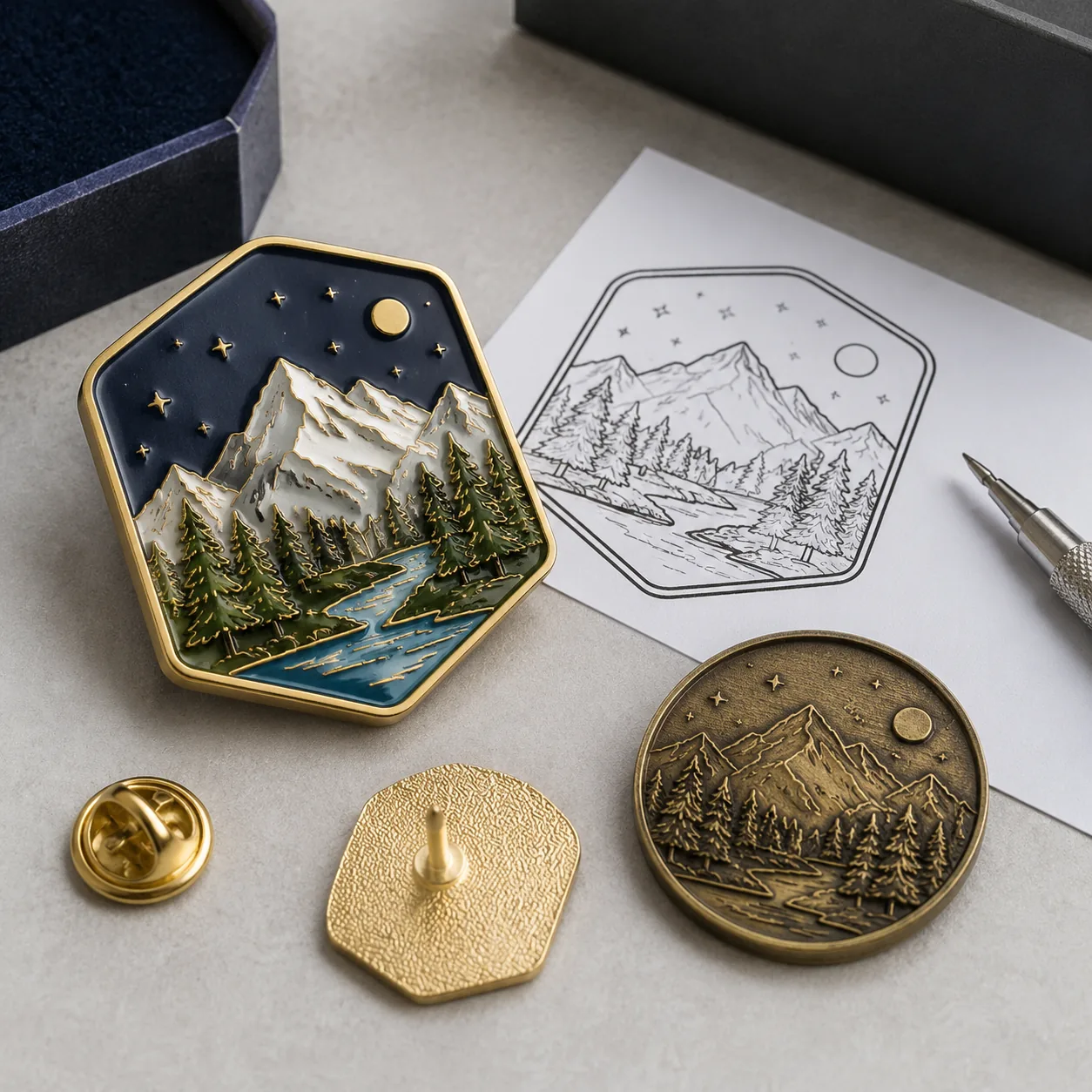
Why gift sets fail even when every item is correct
A promo set can pass inspection on each individual item and still fail as a kit. The pin is within tolerance, the lanyard print is clean, and the box matches the artwork, but the assembled set does not fit, does not present well, or arrives with one component shifted in transit. In practice, most failures come from interface problems: a backing card that is 1.5 mm too narrow, a foam insert that compresses too much, or a color that looks acceptable alone but clashes beside the other components under the same light source.
The safest approach is to spec the set as one system. For small metal items, a realistic manufacturing tolerance is ±0.2 mm on critical dimensions and ±0.3 mm on non-critical edges. For carded or boxed sets, ±0.5 mm is usually acceptable on outer pack dimensions, but the insert cavity and locating features should be tighter, typically ±0.2 to ±0.3 mm. Visual tolerances need to be stricter than single-item orders because the buyer is judging the whole presentation, not one component in isolation. Most rework comes from weak coordination between product, packaging, and artwork files, not from difficult engineering.
- Define the set as one deliverable, not a pile of separate SKUs
- Lock the shared visual standard before artwork starts
- Approve one complete mockup, not isolated item renders
- Assign one owner for revisions and sign-off
Start with the use case, not the product list
The correct specification depends on how the set will be used. A conference welcome kit is optimized for speed, low cost, and transit resistance. A retail gift box needs shelf appeal and tighter consistency. An executive award set may justify heavier plating, a rigid box, and a more formal presentation. If you skip the use case, factories will optimize for the wrong priority and the quote will drift away from the real target.
A useful brief should name the audience, handoff moment, shipping route, and target budget. Example: 500 staff welcome sets, handed out at registration, must fit a 220 x 160 x 35 mm carton, survive courier transit, and stay under USD 6.50 to 9.80 FOB per set depending on metal content, print count, and insert type. That single paragraph tells the factory whether to use stock components, what packaging format is viable, and whether the order can be packed manually or needs an insert tool. It also prevents the common mistake of approving a premium finish on one item and discovering the box can no longer close cleanly.
| Set type | Typical risk | Best default spec |
|---|---|---|
| Conference kit | Transit damage and speed | Lightweight items, paper insert, 0.2 mm artwork tolerance |
| Retail gift set | Presentation and shelf consistency | Matched finishes, rigid box, tighter color approval |
| VIP award set | Perceived value and keepsake quality | Higher plating weight, foam cavity, individual protection |
| Staff onboarding set | Cost control and reorder ease | Modular packaging, stock components where possible |
Choose components that fit together physically
Mixed promo sets usually fail on packaging geometry before they fail on decoration. A 30 mm enamel pin can seem compatible with a carded presentation, but the clutch, pin post, epoxy dome, and protective sleeve may push the real envelope beyond the insert cavity. The same issue appears with keychains, magnets, patches, and bottle openers when hardware protrusions or stitched borders are ignored. Always spec the assembled size, not just the nominal part size.
For metal items, check finished dimensions after plating and before packaging. Decorative electroplating commonly adds about 0.03 to 0.05 mm per side for flash finishes and 0.08 to 0.15 mm per side for standard finishes; heavier antique or textured plating can add slightly more at raised edges. That does not sound large, but it matters when multiple components stack inside a tight insert. If the set uses rigid packaging, keep at least 1.5 to 2.0 mm clearance on each side for manual packing, and 2.5 mm or more if the item has moving parts, a magnetic closure, or a protective sleeve.
The practical rule is simple: the item, insert, and carton must be approved together. A factory can often make each piece to spec, but still fail the kit if the assembled profile is not measured. Ask for the final packed thickness with all accessories installed, including clutches, rings, chains, hook-and-loop tabs, or backer cards.
- Measure assembled size, not CAD size
- Include clutches, pins, rings, chains, and backings in the envelope
- Reserve extra clearance for plated edges and epoxy domes
- Confirm the box cavity with an actual sample before bulk print
Lock visual consistency across mixed materials
The most visible failure in a gift set is usually visual mismatch rather than dimensional error. A gold-plated metal item can read warmer than gold foil on paper. A Pantone blue thread can appear darker than the same number on coated paper. Even when the supplier uses the same reference code, enamel, embroidery, offset print, and webbing do not reflect light the same way, so the spec has to define what “match” means in production terms.
For color-critical sets, use one master Pantone reference and define each surface by method. Hard enamel usually holds color the most consistently; soft enamel introduces texture and a deeper shadow in the recesses; embroidery depends on thread sheen and stitch density; paper print depends on stock, coating, and ink absorption. A practical approval sequence is: physical metal standard for plated parts, printed proof for paper, and stitched strike-off for textile. Accept method-based variation within a controlled range instead of trying to force identical appearance across different substrates.
| Surface | Typical color behavior | Buyer note |
|---|---|---|
| Hard enamel | Stable, glossy, tighter color read | Best for small brand marks and clean color blocks |
| Soft enamel | More texture, visible recesses | Good for tactile contrast, but color reads differently under light |
| Embroidery | Thread sheen and stitch density affect tone | Approve on actual stitch sample, not screen render |
| Paper print | Ink and stock absorbance change appearance | Specify stock weight and coating before color approval |
Specify packaging as part of the product
Packaging is not an afterthought in a multi-item set; it is part of the fit, protection, and cost structure. The wrong carton spec can force a new insert, a different item orientation, or a complete reprint of the outer box. Buyers often budget packaging as a flat line item, then discover that the dieline needs to change because one component is 3 mm taller than planned. If the set will ship by courier or mailer, the outer carton and internal fit should be designed together from the start.
For small promo sets, a folding carton with a custom paperboard insert is usually the lowest-cost option. A rigid box with EVA foam or flocked tray is better when presentation matters or when the items have sharp edges. Common MOQ tiers are 300 to 500 sets for stock box plus custom insert, 1,000 sets for fully custom printed cartons, and 3,000 sets for special finishes such as foil stamping, embossing, debossing, or magnetic closure. Typical FOB pricing for packaging alone is about USD 0.35 to 0.90 per set for simple cartons, USD 0.80 to 1.80 for rigid boxes with foam or EVA, and USD 1.50 to 3.50 when special finishes and higher-grade boards are involved.
Lead time depends on packaging complexity. Stock boxes with a custom insert can often ship in 12 to 18 days after sample approval. Fully custom printed cartons usually need 18 to 28 days. Rigid boxes with special finishes may require 25 to 35 days, especially if the supplier must source specialty paper or run multiple finishing steps. If the budget is tight, it is usually better to spend on protection and simplify the print finish than to do the reverse.
- Spec the insert material: paperboard, EVA, sponge, flocked tray, or thermoformed plastic
- Confirm closure type: tuck, sleeve, magnetic, ribbon, or seal
- Set print finish early: matte lamination, gloss, foil, emboss, or spot UV
- Require a packed drop test if the set will ship direct to users
Use one approval chain for samples and revisions
Gift sets go wrong when each component is approved in isolation. Marketing approves the pin, procurement approves the box, and a local office approves the insert, but nobody checks whether all three fit the same final carton or whether the order of packing creates damage. The fix is a single approval chain with one combined golden sample that includes every component, the full packing method, and reference photos of the finished kit from the front, back, and side.
The approval sequence should be explicit: concept proof, component sample, combined sample, pre-production sample, then bulk production. If an artwork file, plating color, box stock, or insert thickness changes after approval, treat it as a new revision. Do not rely on verbal confirmation. For brand-sensitive programs, ask the supplier to keep one sealed golden sample and one unpacked reference sample so later production can be checked against both presentation and component integrity.
For quality control, AQL 2.5 is a practical default for major defects and AQL 4.0 for minor defects on mixed gift sets. If the order is high-value or highly branded, buyers often tighten the standard to AQL 1.5 for critical presentation defects, especially for retail-facing packaging. Insist that inspection covers the assembled set, not just loose parts, and include checks for fit, orientation, quantity, color, closure, and carton labeling.
| Approval point | What must be checked | Common miss |
|---|---|---|
| Individual item sample | Size, finish, color, hardware | Approved item does not fit the final insert |
| Combined golden sample | Assembly, orientation, full presentation | Each piece is right but the kit looks inconsistent |
| Pre-shipment sample | Packed quantity and carton labeling | Correct goods packed in the wrong box |
Build the RFQ around risk, not just quantity
A strong RFQ tells the supplier where the risk sits. Quantity alone does not reveal whether the order is metal-heavy, print-heavy, or packaging-heavy. Include a component list, the intended packed size, artwork files, color references, target FOB range, and the approval sequence. If you expect a reorder, say so early; factories may choose different tooling, packing, and stock component strategies when repeat production matters.
Example: a 1,000-set order with one enamel pin, one soft PVC patch, one woven lanyard, and one printed backing card looks simple, but the actual risk split is different for each item. The pin depends on plating, color registration, and clutch fit. The patch depends on edge quality and backing thickness. The lanyard depends on print alignment and tape width. The card depends on stock weight and die-cut tolerance. That order may land around USD 4.20 to 7.90 FOB per set depending on enamel type, lanyard width, card stock, and packing method, with sample lead time of 7 to 12 days and bulk lead time of 15 to 25 days after approval.
If the supplier only receives a list of items without set-level constraints, they will quote component costs and miss the hidden work of assembly, packing, and verification. A better RFQ uses one control document with drawings, color refs, packing dimensions, and acceptance rules for the whole kit. For higher-volume programs, it also helps to name a target reorder MOQ up front, such as 500, 1,000, or 3,000 sets, so the factory can optimize the initial tooling and packaging route.
- List each component with material, size, and finish
- State the packed size and shipping method
- Include one approved reference for color and layout
- Declare whether tooling must be reusable for reorders
What to do next
If you are building a custom gift set, start by writing the set-level spec before requesting prices. Lock the use case, packed dimensions, shared color references, approval order, and the tolerance on every item that touches the carton or insert. Then ask for one combined sample or 3D mockup that shows the finished kit, not just loose components. That sequence gives you a quote you can trust and reduces late redesigns.
A simple control sheet is usually enough to keep a first-order program on track: item list, target carton size, artwork files, packing method, acceptance criteria, and required lead time. If the order is complicated, ask the factory to confirm packaging compatibility in writing before production starts. For most buyers, that one step is the difference between a clean bulk run and a costly repack.
Use this checklist before you approve any set:
- Confirm the final packed size and all component dimensions
- Approve one master color standard for metal, print, and textile
- Lock the insert material, cavity size, and closure type
- Require a combined golden sample before bulk
- Set AQL levels and inspection scope in the PO
- State MOQ, lead time, and FOB target in the RFQ
Have a project? Send your artwork and target quantity and we’ll reply with a detailed quotation within 12 working hours.
Ready to get this made?
Send your sketch, target quantity and ship-date. Detailed quotation in 12 hours.



