How to Run a Pilot Batch for Custom Promo Products
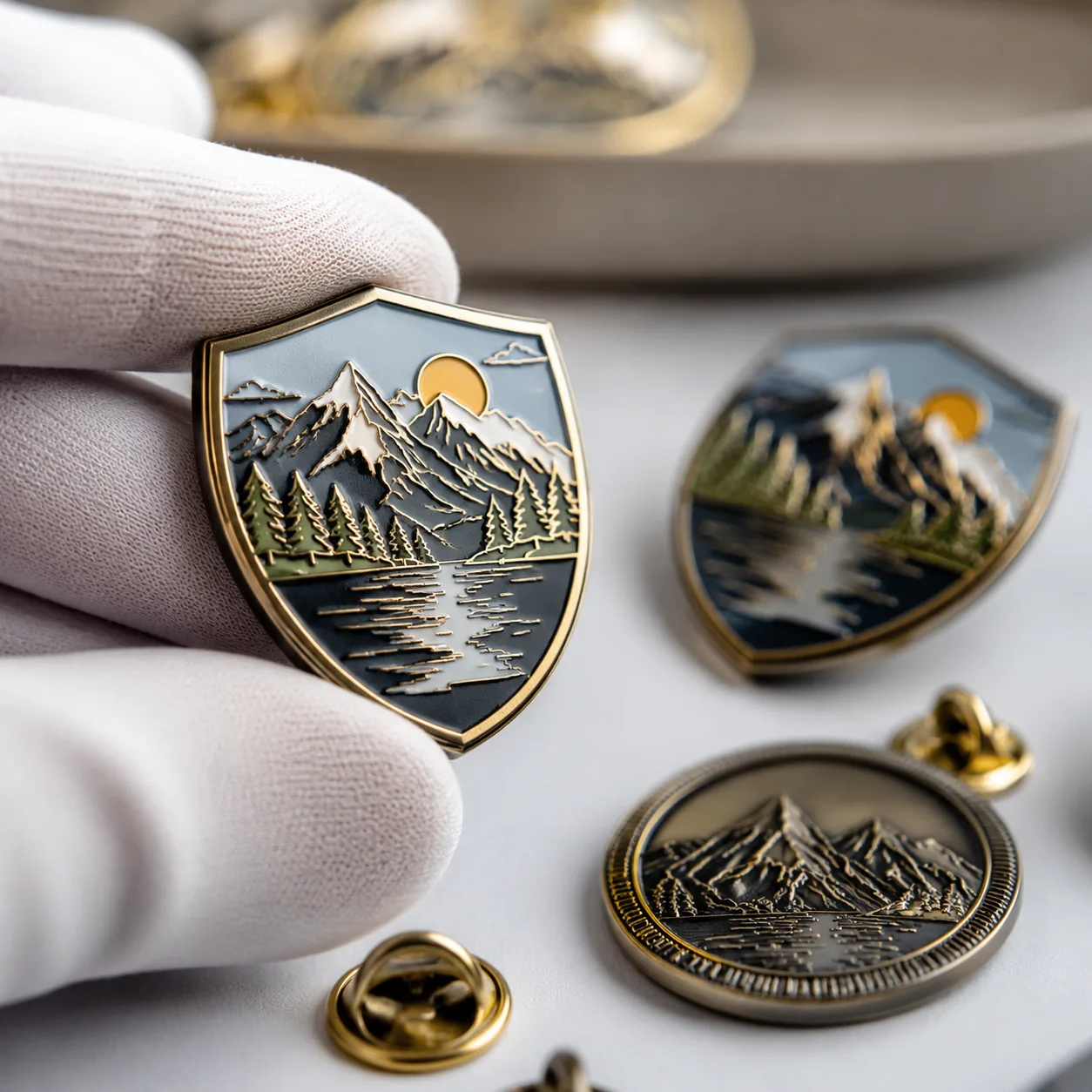
Use a Pilot Batch Only When It Answers a Launch Question
A pilot batch is a short production lot made with final tooling, production materials, normal operators, and the same finishing route planned for the release order. It is not a hand-built sales sample and not a reduced-MOQ mass run. The purpose is to prove whether the product, packaging, and process are ready to scale before you commit to 500, 1,000, or 5,000 pieces.
The best pilot candidates are seasonal merchandise, licensed collectibles, distributor catalog items, retail test packs, and event giveaways where demand or approval risk is still uncertain. For metal promo products, a pilot can expose defects that a PDF proof cannot show: soft die lines after polishing, weak pin posts, uneven antique finish, enamel bleed, dull plating, or split rings that open too easily. For textile items, it can reveal print registration drift, fraying edges, backing stiffness, adhesive bleed, or stitching density that distorts small lettering.
A pilot is the wrong tool if artwork is still changing. Once a die is cut, a mold is opened, or a woven pattern is programmed, every design change adds cost and days. If the buyer still needs to decide the shape, slogan, finish, or colorway, start with digital proofs, flat artwork revisions, or one pre-production sample. Use the pilot only after the commercial question is clear: launch as-is, revise with specific changes, or stop before volume production.
Lock the Specification Before You Ask for Price
A useful pilot starts with a frozen specification. The factory can price a 50-piece or 200-piece lot accurately only when the design, material, decoration process, attachment, and packout are fixed. Vague quote requests such as “gold pin, about 1 inch, nice backing card” cause re-quotes, mismatched samples, and slow approvals. A better RFQ states: 30 mm soft enamel pin, 1.5 mm iron, shiny gold plating, 4 enamel colors by Pantone reference, black rubber clutch, individual polybag, 350 gsm printed backing card, barcode label, 100 pieces FOB Shenzhen.
For metal items, lock outer size, thickness, base metal, plating finish, enamel type, relief height, minimum line width, cutouts, attachment, and edge profile. Common small pin tolerances are ±0.20 mm on profiles under 50 mm and ±0.20 mm on thickness. Challenge coins typically allow ±0.30 mm on diameter and ±0.20 mm on thickness if the rim and relief are not highly irregular. For lanyards, specify width tolerance, usually ±1 mm on 15–25 mm webbing, print position tolerance of ±1.5 mm, and finished length tolerance of ±10 mm.
- Final vector artwork supplied as AI, EPS, PDF, or SVG with all text outlined
- Pantone Solid Coated, TCX, or LAB targets listed for every visible color
- Size, thickness, edge, relief height, and minimum line width approved before tooling
- Plating, enamel, fabric, backing, clasp, clutch, hook, or ring specified by part code
- Packaging, barcode, insertion order, carton marks, and master carton quantity written down
- Inspection method, AQL level, defect definitions, and sign-off owner agreed before production
Set Pilot Quantity, MOQ Tier, and Timing by Product Type
Pilot quantity should be large enough to show process variation but small enough to limit exposure. Ten pieces rarely prove anything beyond basic appearance. Fifty to 300 pieces is more practical for most custom promo items, especially when the lot includes multiple colorways or retail packaging. If the normal MOQ is 500 or 1,000 pieces, many factories will still accept a paid pilot at 50–200 pieces because the tooling and setup fees are covered separately.
The figures below are realistic planning ranges for standard promotional products produced in China or Southeast Asia, quoted FOB and excluding international freight, import duty, rush surcharges, laboratory testing, and complex retail displays. Actual pricing changes with metal thickness, plating, fabric weight, color count, packaging labor, and exchange rate.
| Product | Pilot qty and MOQ tier | Typical FOB unit range USD | Production lead time | Technical watchpoints |
|---|---|---|---|---|
| Soft enamel pins | 50–100 pcs pilot; 300–500 pcs standard MOQ | 0.85–2.40 | 18–30 days after proof approval | 25–40 mm size, 1.2–1.8 mm iron or zinc alloy, minimum raised metal line 0.25–0.30 mm, enamel fill below metal rim |
| Hard enamel pins | 50–100 pcs pilot; 300–500 pcs standard MOQ | 1.20–3.20 | 22–35 days after proof approval | Polished flush surface, color bleed risk on fine lines, plating scratches more visible after polishing |
| Challenge coins | 100 pcs pilot; 300 pcs standard MOQ | 2.20–6.80 | 25–40 days after artwork lock | 38–50 mm diameter, 2.5–4.0 mm thickness, 2D or 3D relief, edge engraving alignment and antique fill consistency |
| Metal keychains | 100–200 pcs pilot; 300–500 pcs standard MOQ | 0.70–3.20 | 18–32 days after proof approval | Split ring hardness, swivel joint pull strength, epoxy dome bubbles, laser engraving registration |
| Embroidered patches | 50–100 pcs pilot; 300 pcs standard MOQ | 0.45–2.10 | 12–25 days after stitch file approval | 75D or 120D thread, 65–85% stitch coverage, merrow border shape, heat-seal or hook backing adhesion |
| Woven patches | 50–100 pcs pilot; 300 pcs standard MOQ | 0.55–2.40 | 15–28 days after artwork lock | Fine lettering, border fray, 0.15–0.25 mm yarn detail limits, backing stiffness |
| Printed lanyards | 100–300 pcs pilot; 500 pcs standard MOQ | 0.28–1.10 | 10–22 days after proof approval | 15–25 mm polyester, dye sublimation or silkscreen registration, breakaway safety fit, clip plating and stitching strength |
Expect pilot unit prices to be 20–70% higher than a 1,000-piece release because setup, die polishing, color mixing, line changeover, and QC are spread across fewer units. Tooling is often separate. A simple enamel pin die may cost 30–90 USD; a zinc alloy keychain mold may cost 60–150 USD; a double-sided coin die set may run 80–220 USD depending on diameter and 3D relief. Ask whether tooling is owned by the buyer, stored for repeat orders, and reused without charge on the release order.
Inspect the Pilot More Strictly Than a Normal Shipment
A pilot batch should be inspected more closely than a mature repeat order because every defect is a process signal. For lots under 100 pieces, use 100% inspection. For 100–300 pieces, use either 100% inspection or ANSI/ASQ Z1.4 general inspection level II with tightened judgment. A practical acceptance plan is AQL 0.65 or 1.0 for critical defects, 2.5 for major defects, and 4.0 for minor defects. Critical defects should usually be zero-acceptance: sharp burrs, broken attachments, unsafe loose parts, unreadable compliance marking, mold contamination, or incorrect licensed artwork.
Inspection should combine measurement, cosmetic review, and function testing. Use digital calipers for size and thickness, a 10x loupe for plating and fill defects, a light box or D65 daylight lamp for color comparison, and a simple pull gauge for attachments. For pins, check post perpendicularity, clutch retention, enamel underfill or overfill, plating pits, and whether the logo remains readable after polishing. For coins, check rim crispness, edge text alignment, antique wash trapped in low areas, and wobble on a flat surface. For lanyards, check length, width, print repeat, clip action, breakaway fit, stitch count, and whether the logo remains centered after sewing.
Set numeric limits before inspection. For small metal items, cosmetic plating is often a flash layer around 0.03–0.10 micron for gold, nickel, black nickel, or antique finishes; it is decorative, not jewelry-grade wear protection. If the item will be handled daily, request heavier plating or a clear epoxy dome where appropriate, and price it as a durability requirement. For printed textiles, require no visible misregistration beyond 1.5 mm on logos under 50 mm wide and no ink bleeding that closes letters under 2 mm stroke width. For patches, reject loose threads over 3 mm on the front face and heat-seal backing that peels under a moderate hand pull.
Control Cost Drivers That Hide Behind the Unit Price
The lowest pilot unit price is not always the lowest program cost. Setup-heavy items carry expenses that do not shrink just because the lot is small: metal dies, CNC mold work, die polishing, color mixing, plating rack setup, embroidery digitizing, woven loom programming, print screen setup, retail pack assembly, carton allocation, and inspection labor. A quote that looks unusually cheap may exclude tooling ownership, reduce packaging, skip approval samples, or change the finishing route.
Packaging is the most common pilot cost surprise. Bulk polybagging may add only 0.03–0.08 USD per piece. An individual OPP bag with suffocation warning, printed backing card, barcode label, and manual insertion can add 0.10–0.35 USD. A rigid gift box, foam insert, or small retail carton can add 0.40–1.20 USD before freight impact. If the pilot is testing sell-through or distributor presentation, include the actual retail pack. If the pilot is only validating production, use simpler packaging but document that the packout is not yet approved.
Freight also changes the decision. A 100-piece pilot of metal coins may weigh 12–18 kg after packaging, while a lanyard pilot of 300 pieces may still ship in one small carton. Express freight can make a cheap pilot look expensive, but waiting for sea freight may add 25–40 days and defeat the approval schedule. For time-sensitive launches, quote pilot freight and release-order freight separately so the buyer does not compare a courier pilot against an ocean shipment MOQ.
Decide When to Skip the Pilot
A pilot batch is not mandatory for every promo product. If the artwork is final, the item is standard, the supplier has made the same construction many times, and the event date is fixed, a pilot may add one extra factory cycle without reducing much risk. In that case, spend the budget on a correct pre-production sample, a signed golden sample, and an inspection plan on the full order.
Skip or reduce the pilot when the design has few variables: a one-color 20 mm woven label, a standard 20 mm polyester lanyard with one-color silkscreen print, or a simple 25 mm soft enamel pin using common gold plating and one clutch. Consider a pilot when variables stack: dual plating, translucent enamel, 3D coin relief, rotating keychain parts, glow pigment, epoxy dome, retail barcode sequence, multiple language inserts, or strict brand color matching.
Do not use a pilot to test five variables at once. A batch with five colorways, three attachments, and two packaging styles creates 30 combinations, which makes defects hard to interpret. Pilot the highest-risk variant first, usually the smallest text, most complex plating, tightest cutout, or most labor-heavy pack. Once that variant passes, roll the approved construction across the simpler SKUs.
Convert the Approved Pilot Into a Release Package
When the pilot passes, do not rely on email comments such as “approved” or “looks good.” Convert the exact approved version into a release package. It should include the final artwork file, factory proof, measured dimensions, material grade, thickness, plating or fabric code, Pantone or LAB color reference, attachment code, packaging drawing, carton quantity, inspection checklist, approved defect limits, and dated photos of the accepted unit. Keep one physical golden sample with both buyer and factory if timing allows.
The release order should also state what may not change without written approval. That list normally includes base metal, plating bath, enamel type, yarn type, webbing width, backing adhesive, clasp model, card stock, barcode position, and carton pack count. These controls prevent drift when the factory moves from a 100-piece pilot to a 2,000-piece run or when a repeat order is placed months later.
For campaigns that combine pins, coins, keychains, patches, and lanyards, use the pilot to lock the shared visual system: logo size, color targets, finish tone, packaging hierarchy, and barcode format. The practical sequence is simple: define the decision, freeze the spec, pilot the riskiest SKU, inspect against numeric criteria, document the approved unit, and release volume only after the pilot record is complete.
Have a project? Send your artwork and target quantity and we’ll reply with a detailed quotation within 12 working hours.
Ready to get this made?
Send your sketch, target quantity and ship-date. Detailed quotation in 12 hours.



