How to Request a Factory DFM Review for Custom Promo Products
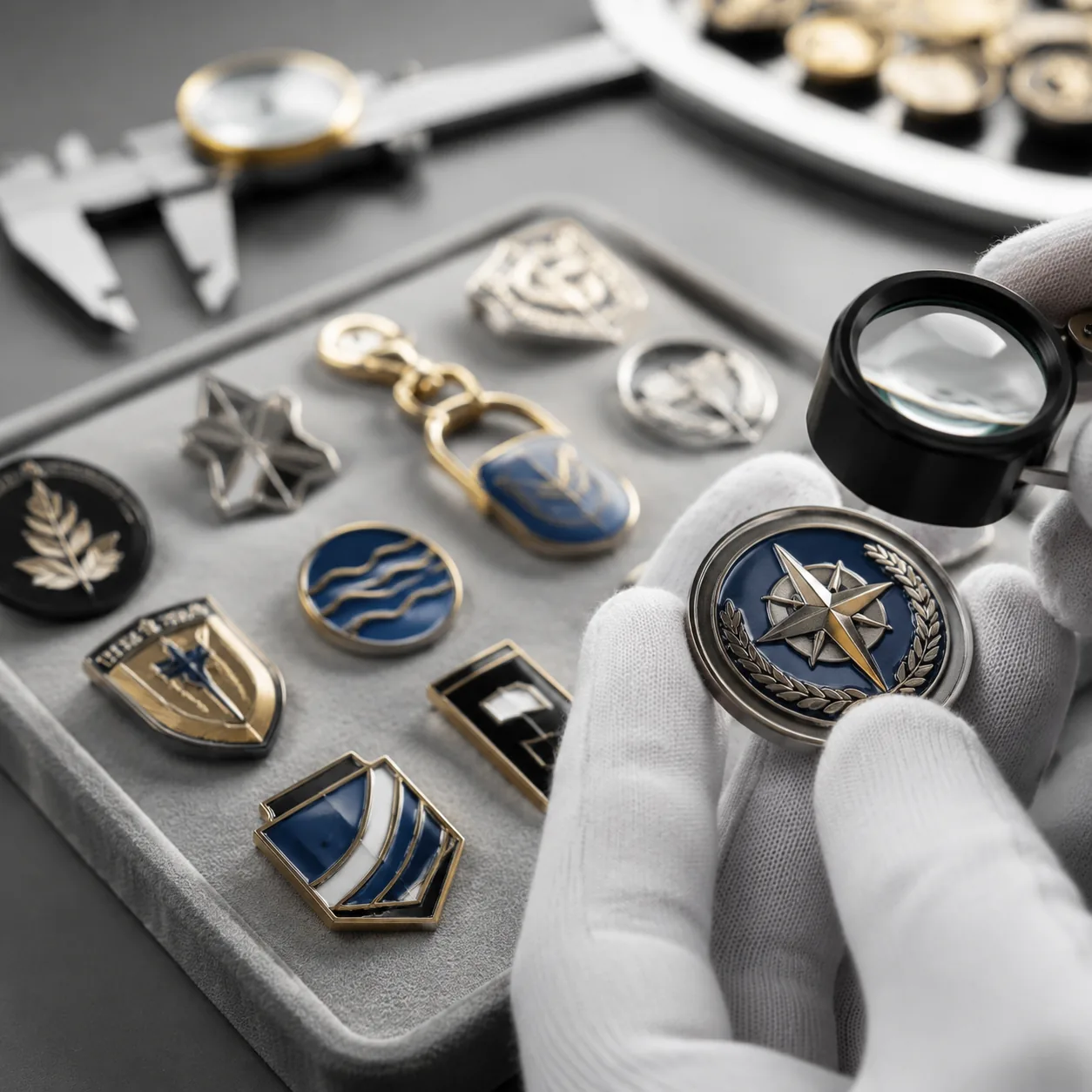
What a factory DFM review should catch
A design-for-manufacturing (DFM) review is the point where a factory checks whether your custom promo product can be made at the target size, material, finish, and cost without hidden rework. It is most valuable before tooling, because a drawing change at that stage may cost nothing, while the same change after a die, mold, or embroidery file is approved can force a new sample cycle and delay mass production by 1 to 3 weeks. For pins, coins, keychains, patches, magnets, and lanyards, DFM is where process limits become visible before money is spent on the wrong version.
A real DFM review should identify constraints that affect yield, not just whether the artwork looks attractive. On metal goods, that usually means minimum line width, recessed channel depth, cutout span, wall thickness, plating coverage, and attachment geometry. On textile and printed items, it means stitch density, print registration, fabric weight, seam allowance, backing type, and color tolerance. A supplier that cannot quantify those limits is usually estimating, not engineering.
The earlier the review happens, the cheaper the correction. A note such as “increase border to 0.3 mm” is useful; a sample rejection after polishing or plating has started is expensive. As a rule, if the factory gives only a generic approval, treat it as a sales answer, not a manufacturing sign-off.
When to request DFM feedback
Ask for DFM feedback before sample payment, and ideally before final quote approval. The best time is when you already have vector artwork, a target size, a quantity range, and a clear use case such as retail sale, event giveaway, outdoor wear, or VIP gifting. At that point the supplier can still change line work, thickness, attachment method, or packaging without forcing a fresh quotation cycle.
Request it especially when the design includes small text, deep cutouts, mixed materials, moving parts, or a tight target price. Those features often look fine on screen but fail in tooling or finishing. A 28 mm hard-enamel pin with 0.12 mm hairlines may be drawable in Illustrator and still be unstable in stamping. A 60 mm acrylic keychain with a 1.0 mm hole edge may print cleanly but crack too easily in use.
Use DFM to decide whether to split a line into standard and premium versions. A 1,000-piece event run may work with basic packaging and a simpler clasp, while a retail version may need woven labels, upgraded hooks, and individual polybags. That split often lowers risk more than trying to force one spec across every channel.
What to include in the first request
The factory cannot review what it cannot measure. Send the artwork file, target dimensions, quantity, target FOB budget, intended use, and fixed brand details such as Pantone references, logo proportions, or legal markings. If the product includes a back attachment, magnet grade, closure type, or packaging requirement, include that too. The more complete the brief, the fewer assumptions the factory has to make.
Also state what is flexible. For example, say whether the supplier may widen a border by 0.2 to 0.3 mm, reduce the number of cutouts, change plating from matte gold to antique brass, or increase lanyard width from 15 mm to 20 mm. Flexibility often determines whether the supplier can keep cost and lead time on target. A request that lists demands but no tradeoffs usually gets slower, less useful feedback.
Include volume by SKU and finish, because MOQ and pricing often change by variant. One 3,000-piece run is usually simpler than three 1,000-piece color splits, even if the total quantity is the same. Typical promo-item MOQs are 100 to 300 pcs for hard-enamel pins, 200 to 500 pcs for soft-enamel pins or coins, 100 to 300 pcs for woven patches, 500 to 1,000 pcs for printed lanyards, and 500 to 2,000 pcs for molded PVC or acrylic items depending on size and complexity.
- Target size in mm and acceptable tolerance
- Vector artwork with text outlined and Pantone callouts
- Quantity split by SKU, color, and finish
- Intended use: indoor, outdoor, retail, event, or VIP gift
- Required attachment, packaging, and safety notes
- Target FOB budget and preferred lead time
- Any non-negotiable brand colors, logos, or markings
What a useful DFM reply should say
A useful DFM reply is specific. It identifies the risky feature, explains why it is risky, and gives a measurable alternative. If the supplier says a logo line is too thin, it should also say what thickness will work. If the attachment is weak, it should name the clasp, ring size, or stitch pattern that solves the issue. A one-word answer such as “possible” or “okay” does not reduce risk.
The best replies separate tooling risk from sampling risk and mass-production risk. A design may be easy to sample once but unstable in a 5,000-piece run. For example, a coin can accept a sharp rim in one sample, but if the rim is too thin the striking pressure may distort edges across the batch. Likewise, a patch may look acceptable in photo approval but fray at the border if stitch density is too low.
A strong DFM note should mention process constraints in plain language: die-cutting limits, stamping pressure, mold release, plating adhesion, ink fill behavior, thread density, or heat-transfer registration. It should also state whether the issue is structural or cosmetic. Structural issues usually deserve a redesign before sampling; cosmetic issues may be acceptable if the buyer understands the risk and the final use is low wear.
| DFM topic | What a strong reply includes | Weak reply to avoid |
|---|---|---|
| Line width | Minimum workable width with a number, such as 0.20-0.30 mm for stamped metal detail | Looks okay |
| Thickness | Usable range in mm with a reason, such as rigidity or mold fill | Depends on artwork |
| Plating | Finish option plus wear risk, such as 2-5 μm decorative plating or 5-10 μm where higher wear resistance is requested | Standard finish |
| Attachment | Pull or rotation concern and the matching hardware size | No issue |
| Packaging | Insert size, clearance, and fit tolerance | We can adjust later |
Which specs matter most
Not every dimension has equal impact. The most important specs are the ones that affect tooling strength, visual clarity, assembly reliability, and inspection yield. For metal products, that usually means line width, wall thickness, cutout span, edge detail, and plating choice. For textile and printed products, the focus shifts to fabric weight, stitch density, color matching, and registration tolerance.
These are practical starting points for common promo products. They are not universal limits, but they are useful reference numbers for a DFM conversation. If a supplier gives materially different values, ask whether the difference comes from material grade, process type, or finishing method.
| Spec | Practical starting range | Why it matters |
|---|---|---|
| Minimum line width | 0.20-0.30 mm for stamped metal detail | Prevents fill loss and broken edges |
| Minimum cutout bridge | 0.8-1.2 mm | Keeps openwork from snapping |
| Product thickness | 1.0-1.5 mm for pins, 2.0-3.5 mm for coins | Affects rigidity, weight, and perceived quality |
| Plating thickness | 0.03-0.05 μm decorative flash; 2-5 μm for more durable decorative plating; 5-10 μm when wear resistance is requested | Impacts wear, color stability, and cost |
| Registration tolerance | About ±0.2-0.5 mm depending on process | Keeps print and stitch aligned |
| Attachment spacing | Matched to the back type and piece size | Prevents rotation and sagging |
MOQ and lead time should be discussed in the same DFM conversation, because complexity changes both. A straightforward soft-enamel pin often takes 10 to 18 days after sample approval; a more complex coin, molded PVC item, or multi-step patch can take 15 to 30 days. Adding plating layers, special packaging, or mixed SKUs usually adds 3 to 7 days. Asking for DFM without asking how it changes schedule leaves half the risk unpriced.
How to compare supplier feedback
Compare DFM responses by precision, not by friendliness. The best factory answers show that the supplier understands the process, the failure mode, and the tradeoff. If one supplier says a 35 mm challenge coin should be 3.0 to 3.5 mm thick for edge strength and hand feel, that is useful engineering guidance. If another repeats your artwork back to you, it is not reducing uncertainty.
The same design can produce quote differences of 10 to 25 percent because factories are not pricing the same risk. Lower pricing may reflect thinner base metal, lighter plating, looser QC, simpler packaging, or a lower-yield process. A standard soft-enamel pin FOB commonly falls around USD 0.35 to 0.90 per piece at 500 to 5,000 pcs, while a harder-finish or multi-plating version can rise to USD 0.80 to 1.80. A custom metal coin commonly sits around USD 1.20 to 4.50 depending on size, thickness, and finish. If the gap is large, ask which process assumption changed.
Use product-specific language to test whether the supplier truly makes the item. A pin factory should be able to discuss enamel fill depth, recessed line width, and pin-back alignment. A patch supplier should mention stitch density, twill weight, border stability, and heat resistance. A lanyard supplier should be able to speak about webbing width, print registration, safety breakaway options, and hook load. Generic answers across categories often indicate a trading company or a factory that is not deeply involved in production control.
What procurement should ask next
DFM is only useful if the buyer asks questions that force measurable commitments. The goal is not to hear that a product is “fine,” but to hear what the factory can hold at production scale and what must change to get there. Ask whether the design can pass mass-production QC at the target quantity, not just whether one sample can be made. Sample approval can hide weak plating adhesion, poor alignment, or inconsistent fill that only appears in a larger run.
Ask for the smallest acceptable change. A good factory should be able to tell you whether widening a border by 0.2 mm, increasing a seam allowance by 1 mm, reducing one color, or changing a clasp will lower defect risk without changing the core look. Those edits often save more time than extra inspection at the end of the line. They also reduce scrap, which matters when the buyer is trying to stay inside a tight FOB target.
It also helps to ask for the inspection standard in writing. For many promo products, buyers should ask whether the factory uses AQL 2.5 for major defects and AQL 4.0 for minor defects, or whether a different sampling plan applies. If the supplier cannot state the QC standard, the rest of the DFM feedback is harder to trust.
- What is the minimum acceptable line width for this artwork?
- Which dimensions will change after tooling, polishing, or plating?
- Will this attachment hold the expected load without rotation or pull-out?
- What sampling risk remains even if the drawing is approved?
- Which finish or material reduces cost without changing the look too much?
- What inspection standard will be used during mass production?
A simple decision tree for buyers
Use the DFM response to decide whether to proceed, revise, or split the order. If the factory flags only cosmetic risk, you can usually continue to sampling with a note in the file. If it flags structural or tooling risk, revise the artwork before paying for a sample. If the risk is tied to budget, simplify the design or reduce the SKU count before release. That sequence protects both schedule and margin.
A practical rule is this: if the issue can be fixed by changing width, spacing, or color count, it is usually a low-cost revision. If it involves changing metal thickness, mold structure, or attachment method, it is a medium-cost revision. If it changes product architecture, tooling type, or packaging format, stop and redesign first. Buyers save the most when they treat DFM as a gate, not a formality.
Concrete examples help. A 25 mm pin with ultra-fine text can often be salvaged by increasing stroke width from 0.15 mm to 0.25 mm and raising the outer border by 0.2 mm. A woven patch with a dense logo may need the stitch count simplified to protect legibility. A lanyard with a heavy badge holder may need a wider webbing spec or a metal hook with a higher load rating. In each case the DFM review should point to a measurable revision, not a vague aesthetic preference.
What to do before you release the order
Send one complete RFQ package to each supplier: artwork, size, quantity, target budget, use case, and any fixed specs. Ask for a written DFM review and require the factory to label each point as mandatory, optional, or risky. Then compare the quote, the engineering detail, and the clarity of the proposed revisions. The supplier that gives the most specific and measurable feedback is usually the safest production partner.
If a design is almost ready, do not push it straight into sampling. Get the DFM check first, revise once, and lock the revised version as the production reference. That is the easiest way to reduce rework, keep lead time under control, and avoid a sample that looks right but cannot scale. For multi-item promo sets, this is also the time to align thickness, finish, packaging, and branding across pins, coins, patches, keychains, magnets, and lanyards so the shipment feels consistent.
Have a project? Send your artwork and target quantity and we’ll reply with a detailed quotation within 12 working hours.
Ready to get this made?
Send your sketch, target quantity and ship-date. Detailed quotation in 12 hours.



