How to Prevent Mixed-Spec Promo Orders at Scale
Why do mixed-spec promo orders fail?
Mixed-spec failures usually start before production, not on the factory floor. A buyer approves a pin, coin, keychain, patch, and lanyard as if each item were independent, then assumes the set will still read as one campaign. By the time tooling starts or printing is released, the order may already have drifted in size, plating, finish, artwork version, and pack-out logic.
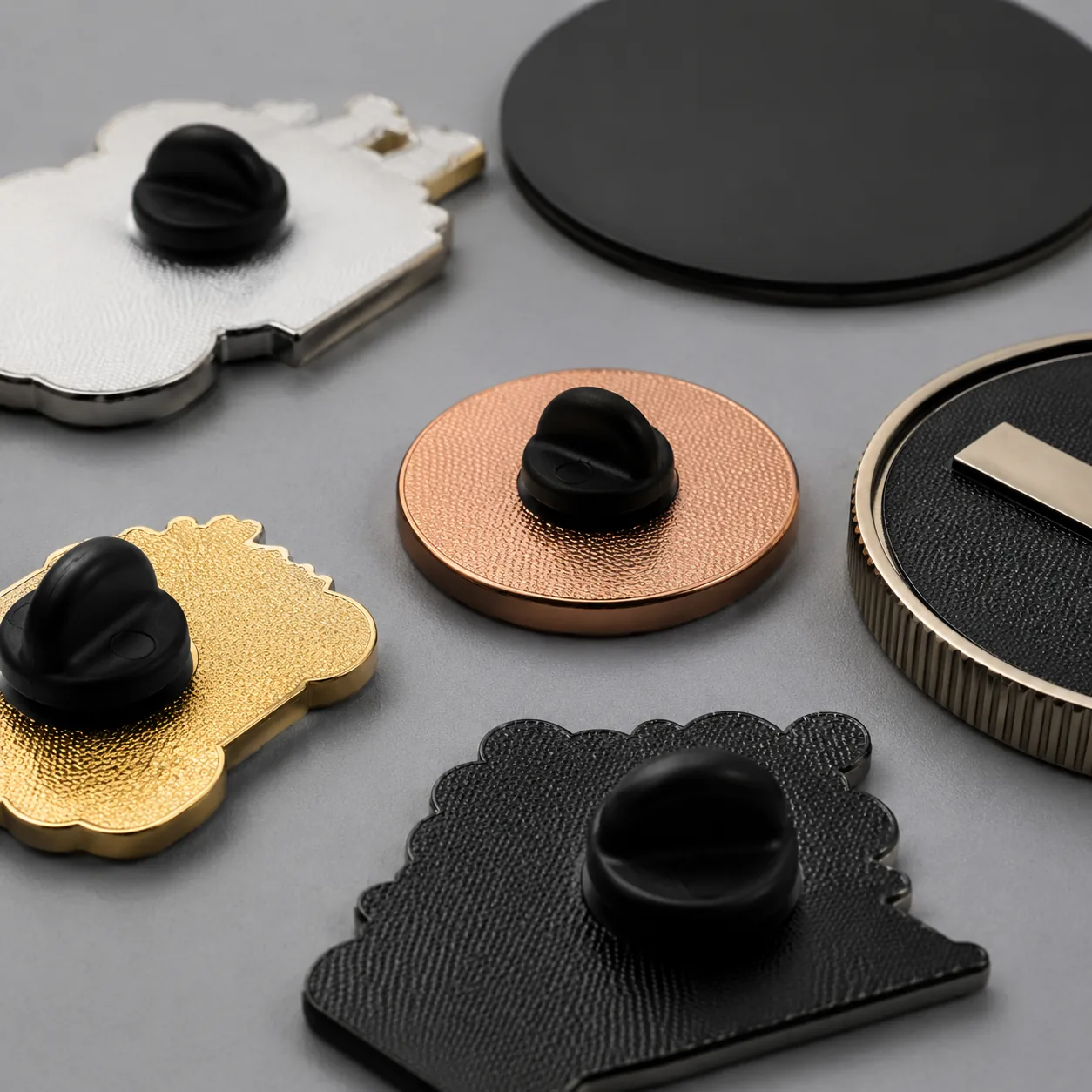
The problem is often small in isolation and expensive in aggregate. A 1 mm height change on a lapel pin, a 0.3 mm border shift on a coin, or a single item switching from polished nickel to antique silver can make a bundled set look mismatched in retail lighting. For campaign orders, the question is not whether each SKU is manufacturable. It is whether every SKU is controlled against one master spec, one revision record, and one approved pack map.
In procurement terms, the failure mode is category thinking. Teams optimize pins, coins, and textiles separately, but the customer receives one program. That means control has to happen at campaign level: one approval chain, one specification source of truth, and one inspection logic for the whole shipment.
What must be locked before quoting?
Freeze the variables that drive cost and appearance before requesting pricing. At minimum, lock final artwork scale, PMS references, finish family, size ladder, backing or attachment style, packaging, and the revision code for every file. If those elements are still moving, the quote is not a quote; it is a provisional estimate on an unfinished brief.
The correct order is appearance first, structure second, packaging third. Buyers often do the reverse and ask for pricing before deciding whether the full campaign should use polished nickel, antique silver, black nickel, or soft enamel with black plating. That is a mistake because finish choices affect polishing time, plating chemistry, rework risk, and even the visual match between different materials under the same light source.
A useful master spec sheet should separate shared campaign rules from item-level details. Use millimeters for every dimension, state whether tolerances are bilateral or unilateral, and identify the approval reference as either a physical swatch, PMS guide, or digital proof. If you allow one item to reference a screen image and another to reference a swatch, the set will drift.
- Freeze one artwork file with a revision code and date.
- Define one PMS list for all printed, dyed, woven, or filled elements.
- Confirm one plating family, or explicitly approve a mixed-finish campaign.
- Specify pack-out by SKU, including insert card, polybag, backing card, and carton label.
- Write all dimensions in mm and publish the tolerance for each item.
- Name the approval reference: physical swatch, PMS guide, or digital proof.
How should quotes be compared across mixed items?
Compare quotes on identical assumptions, line by line. A low pin price may hide thinner base metal or a looser plating spec, while a slightly higher coin price may already include polishing, edge finishing, and a tighter inspection plan. In a mixed campaign, the only fair comparison is the complete landed cost, not isolated item prices pulled from different spec sets.
Ask suppliers to separate tooling, unit price, sampling, packaging, and reorder pricing. The upfront structure is different by product type. A simple zinc-alloy pin or coin die typically starts around USD 40 to 120 per design at low-to-mid volumes, depending on size and relief complexity. PVC molds, multi-part keychains, or woven patch looms often run USD 80 to 250, with multi-cavity or highly detailed tools sitting at the upper end. Physical pre-production samples are commonly USD 25 to 80 per style, while digital proofs are often free; expedited courier is usually extra.
Lead time should be stated in calendar days from final approval, not in vague language such as “about two weeks.” Typical ranges are 7 to 12 days for simple pins or coins after approval, 10 to 18 days for keychains and hard-enamel styles, 12 to 20 days for woven patches, and 15 to 25 days for printed lanyard sets when accessories and packaging are included. Reorders can be 20% to 40% faster if tooling and artwork remain unchanged.
Minimum order quantity matters because it changes both unit cost and supplier attention. Common MOQs are 100 to 300 pcs for basic pins and coins, 100 to 500 pcs for keychains and patches, and 300 to 1,000 pcs for printed lanyards, with premium finishes and custom packaging often pushing the practical MOQ upward. If one SKU in the campaign is far below the supplier’s normal MOQ, expect a price premium or longer lead time.
| Quote line | What to verify | Typical buyer risk |
|---|---|---|
| Tooling | One-time fee, tool ownership, and storage terms | Repeat charges or tool-release disputes |
| Unit price | Same size, plating, color count, and attachment | Cheap quote with downgraded spec |
| MOQ | Minimum by SKU and any color-subdivision rule | Unexpected setup surcharge |
| Packaging | Insert card, polybag, header card, box, and label | Mixed pack-out and missing branding |
| Sampling | Digital proof versus physical sample stage | Approval based on the wrong stage |
| Lead time | Calendar days from final approval | Rush surcharge after late changes |
| Inspection | AQL level and defect definitions | Different pass/fail standards by supplier |
Which specs must match across the whole set?
A promo set does not need identical construction, but it does need consistent intent. If the pin is polished nickel, the coin should not silently switch to antique silver unless the contrast is deliberate. If the lanyard uses a cool blue print, the insert card should not drift warmer under retail lighting and make the set feel like it came from two different campaigns.
Dimensional logic is the most common mismatch. A 40 mm coin, a 42 x 30 mm badge, and a 45 mm keychain may each be acceptable on their own, yet still look unbalanced unless the campaign defines a size ladder. Buyers should decide which item is the hero piece, which item supports it, and which item is the low-cost accessory. That hierarchy should appear in the dimensions, not only in the brief.
Tolerance should be written into the PO, not assumed. For metal promo goods, a practical working tolerance is ±0.3 mm on small dimensions under 50 mm and ±0.5 mm on larger outlines, with tighter control on hole placement, edge symmetry, and enamel fill depth. For printed textile items, placement tolerance is usually ±2 mm, while woven patch border width may vary by about ±0.5 mm depending on stitch density. If the campaign includes magnet closures, key rings, or swivel snaps, add functional tolerances such as closure gap, ring opening, or pull-force target.
AQL should also be campaign-wide, not left to each supplier’s preference. For standard promo orders, AQL 2.5 for major defects and AQL 4.0 for minor defects is a common baseline. For premium or VIP work, many buyers tighten to AQL 1.5 major and 2.5 minor. Defect definitions must be explicit: visible plating voids over 0.5 mm, color mismatch beyond one approved PMS step, bent posts, cracked enamel, missing stitches, or carton count errors are not the same defect class and should not be blended together.
| Shared spec | Recommended control | Why it matters |
|---|---|---|
| Color | One master PMS set with physical approval | Prevents visual drift across materials |
| Finish | One plating family per campaign | Keeps the set coherent under the same lighting |
| Size | Shared size ladder and item-by-item tolerances | Maintains visual balance |
| Attachments | Approved by use case and pull-force need | Reduces returns and breakage |
| Packaging | One pack-out map by SKU | Avoids mixed SKU and label errors |
| Inspection | One AQL and one defect taxonomy | Stops different pass/fail rules by item |
What checklist should procurement use before approval?
Use a checklist that catches what photos cannot show. A sample image can look perfect while the actual item has a loose clutch, weak magnet, rough burr, bent pin post, or a bad fold on the lanyard. Approval should function as a gate, not a formality.
- Confirm the final artwork file name, revision, and scale before sampling.
- Match all colors to the approved PMS list or physical swatch.
- Measure overall size, thickness, hole position, and border width with a caliper.
- Check attachment strength, closure fit, and rotation resistance on moving parts.
- Inspect plating coverage, edge cleanliness, enamel fill, and burr removal.
- Verify carton count, barcode placement, and label readability at pack-out.
- Approve one golden sample only after all items in the campaign align.
- Record every allowed variance in writing before mass production starts.
For metal goods, a practical inspection target is often AQL 2.5 major and AQL 4.0 minor on standard promo orders. For premium retail or executive gifting, buyers often tighten to AQL 1.5 major and 2.5 minor, especially when multiple SKUs share one shipment. The defect taxonomy should be written in plain language: a plating void over 0.5 mm, a post that fails pull testing, or a carton count off by one unit are different issues and should not be lumped together.
If the order is high-volume and low-value, the best control is usually targeted inspection on appearance-critical items plus stronger pack-out verification, not a blanket increase in scrutiny everywhere. That approach reduces risk without slowing every line item equally.
When should you split an order instead of bundling it?
Bundle only when the items share the same launch date, the same artwork logic, and the same approval owner. If one item is still in design review while the others are production-ready, the bundle will slow the whole program. In that case, split by maturity, not by category.
There is also a manufacturing reason to split. A hard enamel pin, a woven patch, and a sublimated lanyard do not share the same bottleneck or defect profile. Pins and coins usually fail on polish, plating, or fill accuracy; patches fail on stitch registration and border trim; lanyards fail on print alignment, heat transfer consistency, and accessory assembly. If the critical-path item is still moving, keeping the other items tied to it only burns calendar days.
A clear rule set helps procurement decide quickly. If the order needs one pack-out, one ship date, and one approval signature, bundle it. If the items have different tooling lead times, different compliance requirements, different MOQs, or different customer channels, split them and manage them as linked but separate releases.
- Split when one artwork family is still changing.
- Split when one item has a longer tooling or sampling lead time.
- Split when shipping windows differ by region, channel, or event date.
- Split when one item needs special compliance or packaging review.
- Split when MOQ or color-batch rules force an outlier cost.
- Keep bundled only when one pack-out, one ship date, and one approver are mandatory.
How should samples be approved without creating confusion?
The safest sample process is layered approval. First approve the master design intent, then the item-by-item structural sample, then the combined presentation sample if packaging matters. A strong pin sample does not guarantee a coordinated coin, keychain, patch, and lanyard set unless the control points are written down and checked in sequence.
Request a pre-production sample of each distinct construction type, not only the hero item. If the order includes metal, embroidery, and printed fabric, each item should be sampled against the risks that matter for that process. For example, a metal sample should prove plating coverage and post strength, while a woven patch sample should prove stitch density and edge trimming. If specs are frozen, these stages can usually run in parallel, which shortens the approval cycle without weakening control.
Define what each sample stage is allowed to prove. An artwork proof covers layout, spelling, and scale; a structure sample covers size, form, and attachment; a golden sample becomes the final production reference; and a packed sample proves pack-out, labeling, and assortment logic. Do not approve a stage based on expectations that belong to another stage.
| Sample stage | What it proves | Do not approve on |
|---|---|---|
| Artwork proof | Layout, spelling, scale, and copy accuracy | Color accuracy or surface finish |
| Structure sample | Size, form, attachment, and fit | Packaging appearance |
| Golden sample | Final reference for mass production | Unwritten expectations |
| Packed sample | Pack-out, count, and labeling | Loose-item inspection only |
What does a clean procurement process look like?
Start with one master spec sheet for the entire campaign. Put every item side by side and list dimensions, colors, finish, attachments, packaging, tolerance, AQL, MOQ, lead time, and reorder rules in the same document. That single step removes most of the ambiguity that causes rework later.
Then quote only against the frozen spec, not against a mood board or an earlier draft. If the supplier is asked to price a moving target, price becomes the wrong metric and the buyer ends up comparing incompatible offers. Once the quote is accepted, release samples by construction type, sign off in writing, and hold the supplier to the same revision across all SKUs.
For mixed promo orders, the goal is not only to receive acceptable individual products. It is to receive one coherent program that looks intentional on a conference table, in a retail tray, and in a warehouse carton. If you are sourcing pins, coins, keychains, patches, or lanyards together, the control points above are what keep the set from becoming five unrelated purchases in one shipment.
- Create one master spec sheet for the entire campaign.
- Lock colors, finishes, tolerances, MOQ, and pack-out before re-quoting.
- Approve one sample per construction type, not one sample for the whole campaign.
- Write AQL targets, defect definitions, and reorder rules in advance.
- Release mass production only after the full set matches the approved master spec.
Have a project? Send your artwork and target quantity and we’ll reply with a detailed quotation within 12 working hours.
Ready to get this made?
Send your sketch, target quantity and ship-date. Detailed quotation in 12 hours.



