How to Order 5,000 Event Pins Without Rework
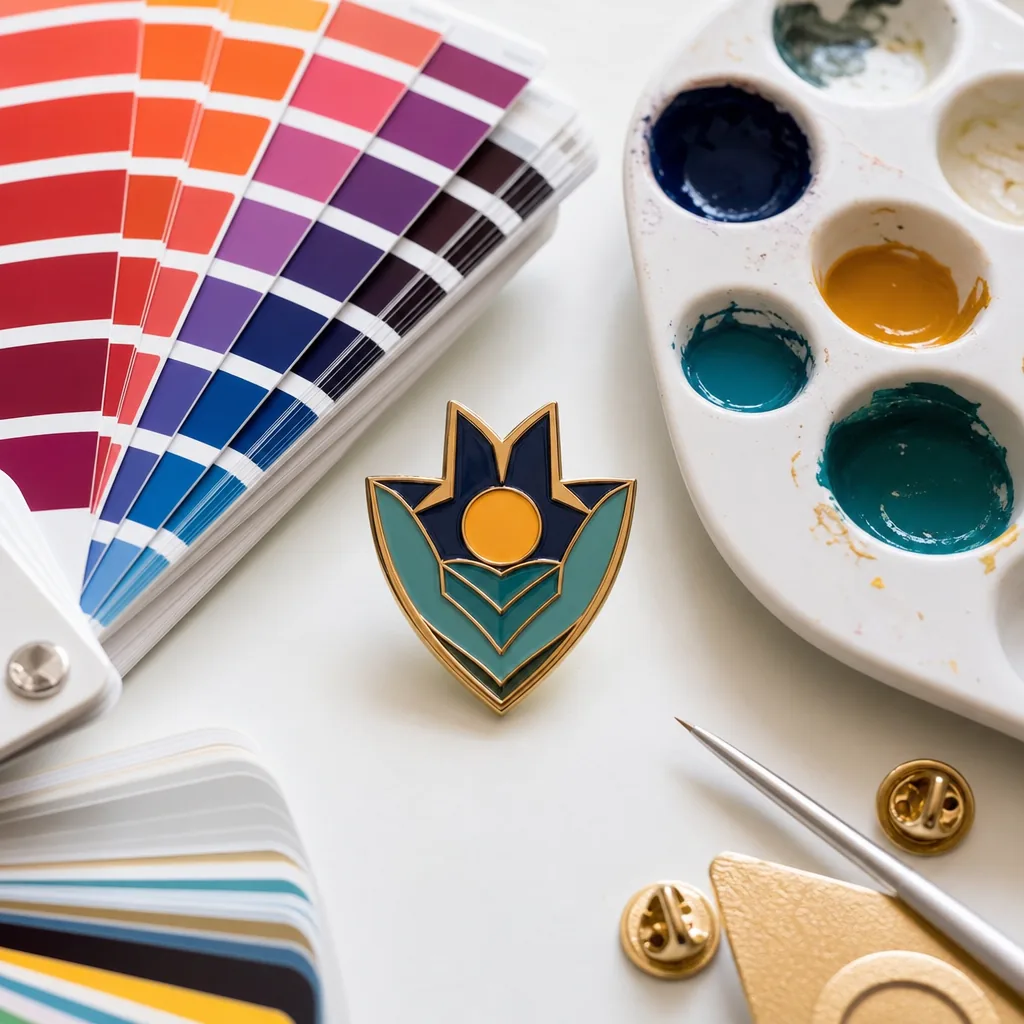
The order lands in your inbox
A conference team needs 5,000 event pins delivered to three venues in six weeks. The artwork has two Pantone colors, a small logo mark, and a deadline that cannot move. At this size, rework is usually caused by slow spec decisions, not by the factory itself: the buyer thinks they are ordering one simple item, while production has to lock tooling, plating, fill depth, packing, inspection, and shipment timing at the same time.
The safest way to handle the order is to treat it like a controlled production run, not a casual quote request. For a standard zinc-alloy soft enamel pin, a realistic production window is 12-20 days after sample approval, plus 5-10 days for air or sea transit depending on route. A clean spec typically lands at 25-35 mm wide, 1.2-1.5 mm thick, with 0.8-1.0 mm enamel recess depth and 0.25-0.30 mm minimum metal line width. Those numbers matter because they determine whether the design can be made cleanly at 5,000 pieces without blurred edges, flooded enamel, or broken detail.
What the buyer must decide first
Before requesting quotes, lock the choices that change tooling, inspection, and unit price. The main variables are process type, plating color, backing style, and packing format. If those are still open when the mold is already being cut, the factory either pauses the job for clarification or ships a compromise that nobody intended.
- Choose soft enamel if you want lower cost, sharper raised metal lines, and faster production.
- Choose hard enamel only if you need a fully flat polished face and can absorb longer polishing time.
- Use butterfly clutches for standard handout pins; use rubber clutches when the pin will touch thin fabric or be carded.
- Confirm whether packing is bulk, individual polybag, or carded retail pack before freight is quoted.
- Lock one vector artwork file with Pantone references, finished size, and final copy before sample approval.
For 5,000 units, the biggest mistake is leaving one more revision open after sampling. A change in outline, metal finish, or back attachment can force a new mold tweak, and a tweak that would be invisible on screen can become visible in a metal line at this scale. The right process is to decide what is fixed, what is optional, and what must never change after approval.
A workable spec for 5,000 pieces
A short, structured spec sheet is better than a long email chain. It gives the factory one source of truth for quoting and reduces assumptions about finish, packing, and destination. For this scenario, the buyer should send artwork, dimensions, process type, plating, color count, backing, quantity split, packing style, ship-to addresses, and approval deadline in one file or one message.
A practical spec for a 5,000-piece event pin order would be a 30 mm custom-shape zinc-alloy soft enamel pin, 1.2 mm thick, black nickel plating, two enamel colors matched to Pantone, one post with butterfly clutch, no epoxy dome, and individual polybag packing. If the pin will be handled heavily at registration, carded packing with a 350 gsm backer card is usually a better choice than loose bulk cartons because it protects the plating and speeds distribution on site. For most promotional work, a size tolerance of ±0.3 mm on overall dimensions, and a visual color acceptance standard tied to approved samples rather than lab-level perfection, is the right balance between quality and lead time.
| Spec item | Recommended range for 5,000 event pins | Buyer note |
|---|---|---|
| Finished size | 25-35 mm | Large enough for branding; smaller sizes reduce cost and weight |
| Thickness | 1.2-1.5 mm | Thinner can feel flimsy; thicker raises postage and metal cost |
| Enamel recess depth | 0.8-1.0 mm | Enough fill volume to prevent overflow and voids |
| Metal line width | 0.25-0.30 mm minimum | Below this, fine details often blur or break during fill |
| Overall tolerance | ±0.3 mm | Reasonable for event-grade pins |
| Plating visible layer | 0.1-0.2 micron | Cosmetic plating spec; finish consistency matters more than thickness alone |
| QC level | AQL 2.5 major, 4.0 minor | Common acceptance level for promotional metal goods |
| Back attachment | Butterfly or rubber clutch | Choose by fabric type and handling method |
If the artwork includes text, keep the smallest letter height at 2.0 mm or larger on a 30 mm pin, and keep stroke weight above 0.25 mm. Below that, the factory may be able to cut the mold, but the enamel fill and polishing stage can wash out the detail. For enclosed spaces such as letters O, A, or P, ask the supplier to confirm the actual metal bridge size in the proof instead of assuming the art will scale cleanly.
How the quote should be compared
A bad quote comparison looks only at unit price. A useful comparison breaks out mold cost, plating, enamel labor, packaging, inspection, and shipping terms. Two suppliers can both quote $0.48 per piece, but one may be pricing loose bulk pins while the other includes carding, individual bags, carton reinforcement, and a tighter inspection standard.
For 5,000 soft enamel pins, a realistic FOB China range is about $0.35-$0.95 per piece depending on size, number of colors, plating choice, attachment type, and packing. Simple shapes with one or two colors sit near the low end; complex outlines, dual plating, extra polishing, or carded packing push the price up. Mold cost commonly runs $40-$120 for straightforward designs and can rise to $150-$220 for intricate cutouts, double-side detailing, or unusually fine line work. Standard lead time is 12-20 days after sample approval; if the shop is busy, if packing is elaborate, or if the art requires extra hand-cleanup, 18-28 days is more realistic.
- Compare quotes against the same finished spec, not just the same artwork.
- Ask whether the price includes mold, plating, enamel fill, polishing, inspection, and packing.
- Check whether the quote is FOB, EXW, or DDP; freight comparisons are meaningless if terms differ.
- Confirm whether sample charges are refundable against bulk production.
- Ask for the overrun/underrun policy; ±3% to ±5% is common for promo orders.
The freight term matters because it changes the real landed cost. FOB tells you where the supplier’s responsibility ends; EXW excludes outbound handling; DDP folds more risk into the quote. If the supplier will split shipments to three venues, ask for carton counts, label format, and destination mapping before the order is released so the team does not pay twice for repacking.
The sample that actually protects the deadline
A pre-production sample is not a design contest. Its job is to prove the factory can repeat the build at scale without hidden defects. The buyer should inspect edge sharpness, plating coverage, enamel level, back post position, and clutch fit, because those are the issues most likely to drift when production moves faster than sampling.
Micro-details should be judged at actual size, not on a zoomed-in monitor. On a 30 mm pin, text below about 2.0 mm in height can become marginal once the metal is raised and the enamel is filled. Thin strokes, small counters, and tiny date lines often need simplification before tooling. If the logo depends on those details, it is better to revise the art early than to ask for manual cleanup later; hand correction across thousands of pieces is inconsistent and slows the line.
The sample approval should be written, not implied. One approved sample with marked-up photos and a short sign-off note is more useful than multiple chat replies saying the pin looks good. State the accepted plating color, the approved fill appearance, and whether minor edge marks are acceptable on the reverse side, since those details often trigger unnecessary disputes during mass production.
For this kind of order, ask for three sample checkpoints if time allows: digital proof, plated pre-production sample, and final photo approval before bulk packing. The digital proof confirms outline and copy; the physical sample confirms color, metal width, and clutch fit; the final photo set confirms that the packed goods match the approved sample before cartons leave the factory.
Packing for handout, not for storage
Event pins are usually damaged in transit or during on-site handling, not while sitting in inventory. That makes packing a functional decision, not a cosmetic one. If staff will hand out the pins at registration, an individual polybag is usually enough. If the pins must go into VIP kits or sponsorship boxes, a backer card or small insert helps prevent scratches, bent posts, and loose clutches.
Packing also changes labor and freight. Loose bulk cartons are cheapest to ship but require more labor at the destination. Individual bags add factory labor and a little weight, but they reduce sorting time at the event. For 5,000 pieces, the extra cost of carded packing is often worth it if the team is short on staff or if the pins must arrive presentation-ready.
A useful rule is to pack for the person opening the carton, not for the warehouse. If the receiving team needs to sort by venue, make sure the carton labels show design, quantity, and destination in large print. If the order is split across three locations, ask for separate carton sets and a packing list per destination before the cartons are sealed.
Card stock is usually specified at 250-350 gsm for simple event inserts, with 300 gsm being a practical middle ground. If a pin will be mounted on a backer card, keep the card size close to the pin footprint so the package stays compact; oversized cards look premium but drive up freight and can bend more easily in transit.
What should be checked at final inspection?
The most common complaint on promotional pins is inconsistency, not total failure. Buyers should ask the factory to check plating coverage, fill level, post placement, sharp edges, and visible color mismatch before cartons are closed. A sensible inspection plan for this category is AQL 2.5 for major defects and AQL 4.0 for minor defects, with special attention to bent posts, missing clutches, underfilled enamel, and scratched faces.
A practical final-check list should include the following before release to shipment: confirm that the approved sample sits next to the production lot, confirm one pin per carton edge is not rubbing against the box wall, and confirm the first and last cartons from each lot match the same finish shade. If the job includes mixed venues, verify that carton labels match the packing list line by line before pallet wrap is applied.
| Inspection point | Acceptable target | Why it matters |
|---|---|---|
| Clutch fit | Firm, no wobble | Loose backs create field losses |
| Post alignment | Centered within visual tolerance | Prevents crooked wear on clothing |
| Plating coverage | No bare spots or burn marks | Visible quality issue under light |
| Enamel fill | Level with recessed area | Avoids pitting, shrinkage, or overflow |
| Carton labels | Design and destination matched | Prevents venue sorting mistakes |
If the design includes a dark plating finish, inspect under strong light because scratches and polish marks show faster on black nickel and antique coatings than on bright nickel. If the order is being shipped by air to meet a hard event date, ask for protective carton corners and a dry inner pack; that small detail reduces scuffing during cross-dock handling. For batch acceptance, request photos of at least the first, middle, and last cartons from the production run so you can catch drift before the truck leaves.
The order path that avoids rework
If you are ordering 5,000 event pins, send one locked artwork file, one finished spec sheet, and one packing instruction sheet together. Ask the supplier to quote mold, unit price, sample timing, production timing, packing method, and freight terms separately so you can compare like for like. If the deadline is tight, approve a simplified sample path and avoid changing the plating or attachment after mold cutting starts.
The fastest route is usually: confirm size and backing, approve one pre-production sample, release full production, and keep one person responsible for sign-off. That prevents the common failure mode where marketing wants a finish change, procurement wants a lower price, and events wants faster packing after the factory has already started. ZheCraft can help buyers lock the spec early and keep the order moving without unnecessary revisions.
Have a project? Send your artwork and target quantity and we’ll reply with a detailed quotation within 12 working hours.
Ready to get this made?
Send your sketch, target quantity and ship-date. Detailed quotation in 12 hours.



