How to Approve a Promo Product Sample Without Rework
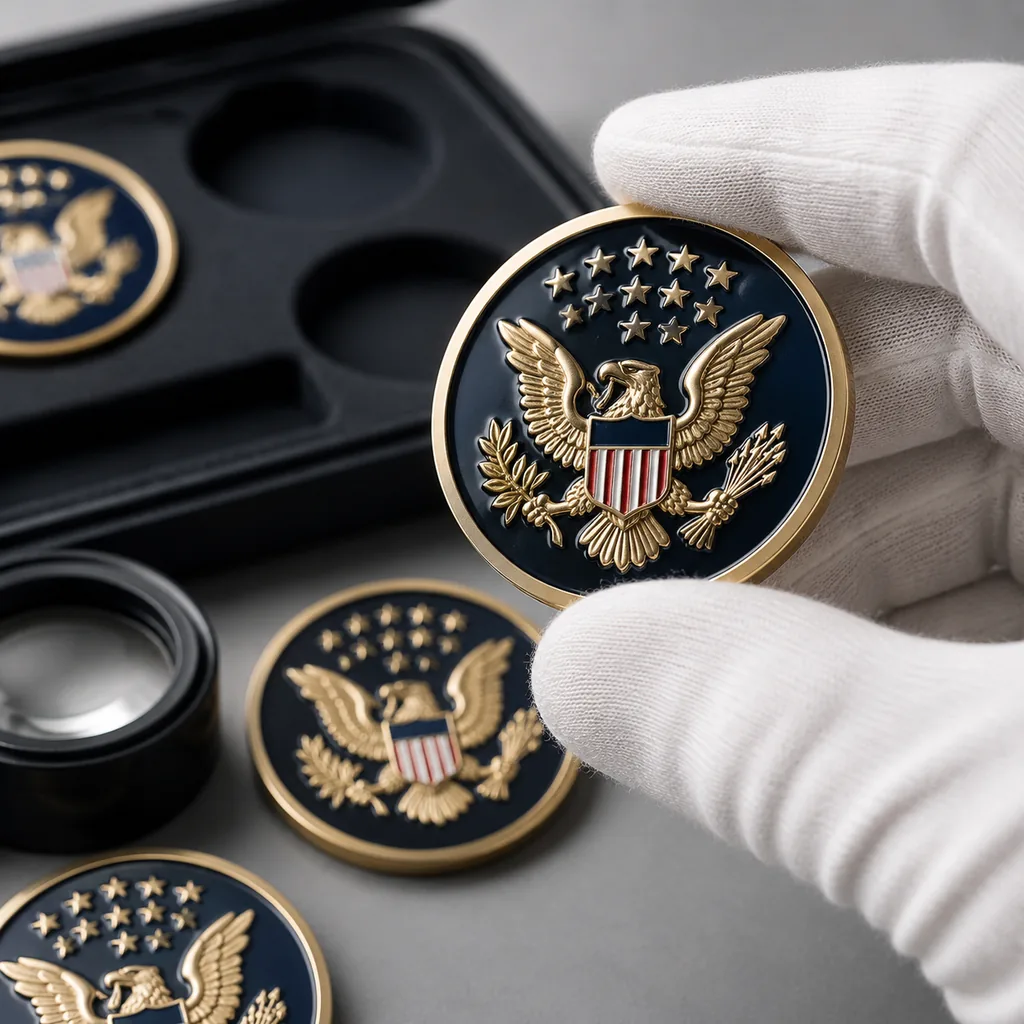
Why sample approvals fail even when the sample looks good
Most sample approvals fail because the buyer approves appearance without freezing the production spec. A lapel pin, coin, keychain, or lanyard can look right on a desk and still miss the repeatable limits for size, plating, color, hardware, or packaging. The question is not whether one sample looks acceptable; it is whether the factory can reproduce it at 500, 5,000, or 50,000 pieces without drift.
For China sourcing, sample approval should be treated as a control gate, not a courtesy step. The golden sample, artwork file, and written spec sheet must agree on dimensions, finish, attachment, packing, and any allowed deviation. If those inputs conflict, the factory will follow the easiest interpretation and you will pay for the correction later. The cleanest approval package is one signed physical master sample plus one spec sheet that lists measurable acceptance criteria.
Typical promo-product MOQs and lead times vary by process, but planning ranges are useful. Stamped soft enamel pins often start at 100 to 300 pcs per design with 10 to 18 days lead time after sample approval. Woven patches often start at 100 pcs with 7 to 12 days. Silicone or PVC items often start at 300 to 500 pcs with 12 to 20 days. FOB pricing also depends on size, tooling, plating, and packing, but common ranges are about USD 0.25 to 1.20 for simple lanyards, USD 0.35 to 2.50 for standard keychains, USD 0.20 to 1.80 for soft enamel pins, and USD 0.80 to 4.50 for small custom coins. These are directional, not quoted, but they show why weak approvals become expensive fast.
What should be frozen before you approve the sample
Freeze the geometry first, then the appearance. For metal items, specify overall length or diameter, thickness, rim width, relief depth, cutout width, and any debossed or embossed feature. A 38 mm soft enamel pin should not be described as "about 40 mm"; it should state 38.0 mm target with ±0.3 mm tolerance if that is the acceptable band. For die-cast parts, a practical tolerance is often ±0.2 to ±0.4 mm on critical dimensions and ±0.5 mm on noncritical features, depending on tooling quality and finish.
Plating must be defined as more than a finish name. For decorative nickel, a common spec is 0.1 to 0.2 μm for low-wear items, while better abrasion resistance usually calls for 0.3 to 0.5 μm or a layered system over the base metal. If the product is handled daily, define whether the surface is glossy, satin, antique, or matte, and whether edge burn or slight recess darkening is acceptable. For coins and badges, specify edge style, reeding, sandblast, mirror field, and whether high points may polish faster in use.
Color must be frozen separately from shape. Use Pantone codes, not general color names, and state whether the match must be exact or within a practical production tolerance. On enamel and printed surfaces, a reasonable production target is often ΔE 2.0 to 3.0 under controlled lighting; if the brand is strict, require a physical master and a tighter band. For textile items, specify yarn or thread color, backing type, and finish. On lanyards and patches, width tolerance of ±1 mm is common, but weave density, stitch count, and print repeat should be stated when the design uses fine detail.
Packaging needs the same discipline as the product. A pin approved loose in a tray may fail once it is mounted on a backing card with a butterfly clutch, magnetic backing, or retail blister. If the item is sold as a set, specify carton count, polybag size, insert-card stock, barcode location, and whether mixed SKUs are allowed. For gift or retail programs, include scuff limits and whether packaging must survive a 1 m transit drop test without opening, crushing, or print transfer. If the buyer does not define the package, the factory will optimize for speed, not shelf presentation.
- Freeze artwork, dimensions, and tolerance in one signed document.
- Confirm plating finish and minimum thickness, not just the finish name.
- Approve the backing, clasp, magnet, or fastener in the exact production version.
- Lock packaging format, insert copy, carton count, and barcode placement.
- Record any acceptable variation before mass production starts.
Which measurements need a yes-or-no answer
The best checklist forces pass/fail decisions on anything that would trigger a complaint if it drifted. That includes badge diameter, pin length, keyring inner diameter, webbing width, print alignment, patch border width, and hole placement. As a working guide, decorative metal parts are often held to ±0.3 to ±0.5 mm, molded PVC or silicone parts to about ±0.5 to ±1.0 mm, and textile widths to about ±1 mm unless the design is unusually tight. If the tolerance is not written down, the supplier will assume its normal factory standard, which may not match the end use.
Do not ignore small features. A 0.2 mm shift in a cutout, a 1 mm change in lanyard hang length, or a slightly loose clasp can change how the item wears, displays, or ships. Measure critical points with calipers, a small scale, and a photo record that labels each checkpoint. For multi-piece promo kits, also test fit between components: a coin that does not sit flush in a tray, a pin that tears a card, or a keychain ring that rubs the print can all pass a casual visual check and still fail in production.
| Control point | Typical buyer spec to lock |
|---|---|
| Overall size | Diameter, length, or width with target and tolerance, often ±0.3 to ±0.5 mm for metal parts |
| Thickness | Body, back plate, or webbing thickness stated in mm |
| Plating | Finish name plus minimum thickness in microns where relevant |
| Color | Pantone code, gloss level, and acceptable shade variation |
| Hardware | Back type, clasp strength, ring size, magnet grade, or pin safety type |
| Packaging | Card stock, print position, bag type, barcode location, and carton count |
How should you check finish, color, and surface quality
A visual check matters, but it has to be structured. Inspect the sample under neutral daylight or a controlled 5000K light source, then compare it against the artwork, the golden sample, and any approved print proof. For enamel products, confirm whether the fill is intended to be flush, slightly recessed, or domed; that choice affects cost, appearance, and how the edge catches light. For plated products, look for pitting, cloudiness, edge burn, thin coverage on corners, and inconsistent polish in recessed areas.
Color should be judged separately from geometry. If brand consistency matters, write whether the target is an exact Pantone match or a practical production match within a defined tolerance. A reasonable acceptance rule for many promo orders is one approved physical reference plus a visible shade band under the same lighting; for repeat orders, keep the prior batch as the comparison master. On metal and enamel, sheen often creates more visible variation than hue, so specify gloss, satin, antique, or matte instead of relying on a color name alone.
Surface quality should also be tied to use case. A keychain intended for daily carry needs better scratch resistance than a trade-show giveaway. If the product is handled frequently, ask for a rub test or abrasion note in the quote; if the supplier cannot provide a formal test, require a sample that does not show visible scuffing after normal fingertip handling. For retail-facing items, reject small nicks, plating haze, dust in enamel cavities, and print banding before production is released.
What hardware issues should be rejected immediately
Hardware defects are expensive because they become returns, not just cosmetic complaints. On lapel pins, check that the clasp closes securely, the needle is straight, and the backing does not rotate under light pressure. On keychains, test split rings, jump rings, swivel joints, and lobster clasps for opening force, rotation smoothness, and alignment. On coins and badges, inspect edges for burrs, sharp points, and deformation around drilled holes or attachment points.
The sample should show the final hardware grade, not a placeholder. If the product uses a magnetic backing, the pull should feel intentional and consistent, not weak or so strong that it damages fabric or front-facing decoration. If the item will contact clothing, make sure the backing will not distort the front face or scratch adjacent surfaces. For child-safe, event-safe, or school-use products, reject exposed sharp points, loose small parts, and any breakaway feature that was not explicitly approved in the spec.
Hardware choices also affect price and lead time. Standard butterfly clutches and split rings are usually the fastest and cheapest, while epoxy-coated magnets, custom rubber backs, and heavy-duty swivel clips can add 2 to 5 days to production and raise FOB cost by USD 0.05 to 0.40 per unit depending on size and plating. That is another reason the approval sample must reflect the final build, not a temporary substitute that only looks similar.
- Reject loose clasps, bent pins, and open jump rings.
- Reject burrs, sharp edges, and cracked enamel around holes.
- Reject magnets that slide, spin, or detach too easily.
- Reject hardware substitutions unless they were pre-approved.
- Reject any sample that hides a cheaper attachment under the same appearance.
How should you compare the sample against the production quote
The sample must match the quotation line by line. If the quote was based on stamped metal with soft enamel and nickel plating, then a die-cast, epoxy-coated, or polished substitute is not equivalent even if the front image looks close. The same rule applies to patches, lanyards, and keychains: woven is not embroidered; sublimated is not jacquard; PVC is not acrylic or metal. The buyer’s job is to confirm that the sample is a direct translation of the quote, not a quiet factory upgrade or downgrade.
A simple spec table prevents most disputes. Compare each quote line with the sample and mark it as matched, acceptable within tolerance, or rejected. Keep the review tight enough for procurement, artwork, and quality teams to sign off together. When approval is based on one shared document instead of scattered email comments, the production team has far less room to reinterpret the order.
| Quote line | Sample check |
|---|---|
| Build method | Stamped, cast, embroidered, woven, PVC, or printed exactly as quoted |
| Finish | Plating, print, or coating matches the approved finish |
| Thickness | Actual thickness aligns with quoted target and tolerance |
| Attachment | Same backing, clasp, ring, or fastening method |
| Packing | Same card, bag, insert, and carton specification |
What belongs on the approval checklist before mass production
The checklist should be short enough to use and strict enough to matter. It must capture the decisions that are expensive to reverse, especially for multi-SKU promo sets and repeat orders. A signed sample without a checklist is only a visual note; a signed sample with a checklist becomes a production control document that can be attached to the PO and artwork file. That makes it much easier for the factory to quote, build, inspect, and pack against the same standard.
- Sample matches approved artwork, dimensions, and material.
- Color, finish, and texture are accepted against the reference.
- Hardware, attachment, and safety points are tested.
- Packaging, labeling, and insert copy are correct.
- Tolerance, quantity, and lead time are confirmed in writing.
- Any exceptions are listed with a clear owner and deadline.
If one item in a set is uncertain, do not approve the whole set casually. Approve the confirmed parts and hold the uncertain point until the factory revises it. For promotional sets, one weak component can make the entire pack unusable or unsellable. A disciplined checklist prevents the common mistake of accepting a beautiful sample that still cannot be produced consistently at scale.
What should you do next if the sample is not right
Do not ask for a vague remake. Send one correction note that lists each defect, the exact required spec, and the acceptance condition for the next sample. Use photos with arrows or circles, and label each issue as cosmetic, dimensional, functional, or packaging-related. If the problem comes from a spec gap, update the written specification before asking for another sample so the same mistake does not repeat. That single step often saves one extra sample round, which can save 7 to 14 days.
If the project is still early, request a revised pre-production sample rather than forcing a weak piece into mass production. If the order is urgent and the deviation is minor, you can sometimes approve with a written exception, but only when procurement and the end user both accept the risk. The safest next step is always the same: document the exact standard, recheck the sample against it, and release production only after the factory confirms it can hold that standard across the full order quantity. That is the fastest way to prevent rework, protect margin, and keep the supplier accountable.
Have a project? Send your artwork and target quantity and we’ll reply with a detailed quotation within 12 working hours.
Ready to get this made?
Send your sketch, target quantity and ship-date. Detailed quotation in 12 hours.



