How to Approve a Custom Promo Product Sample Without Rework
What problem does sample approval actually solve?
Most rework in custom promo products does not come from the factory “forgetting” the order; it comes from buyers approving a sample that is visually close but technically incomplete. A good sample approval process locks down the details that create repeatability: dimensions, plating tone, line width, fill level, attachment, packaging, and the exact acceptable tolerance band. If those items are not written down before mass production, the first batch can still look fine in photos and fail in the warehouse, at event handout, or after a few weeks of use.
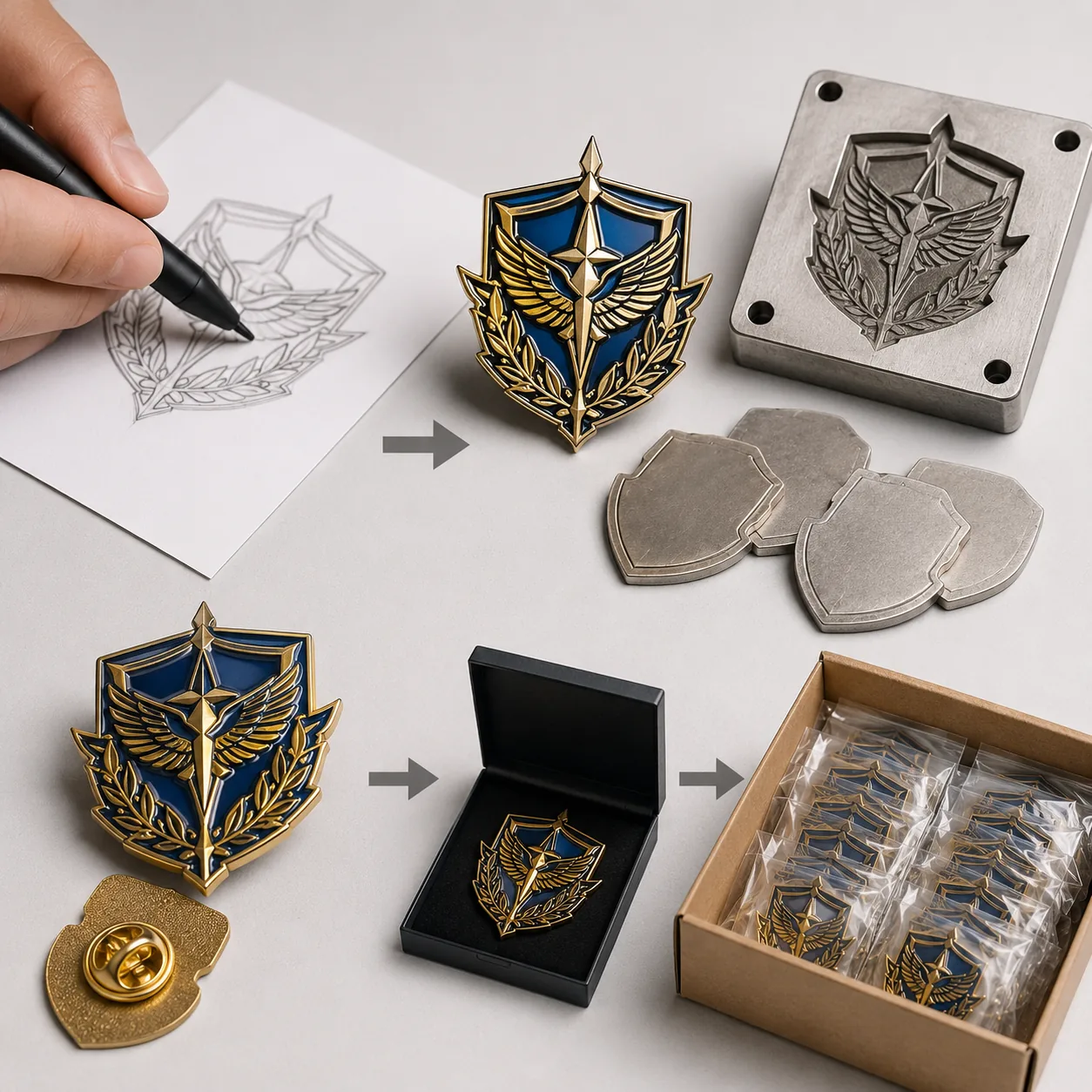
For pins, coins, keychains, badges, patches, and lanyards, the sample is not just a preview. It is the reference for tooling, plating, printing, stitching, packaging, and inspection. At ZheCraft, we treat the approved sample as the control point for production records, because small gaps at approval stage usually cost more than a simple delay: they create sorting, rework, or customer complaints after delivery.
What should be confirmed before you even ask for a sample?
The best sample approval starts before anything is made. Ask the supplier to confirm the build method, base material, finish, and measurable specs in writing first, then make the sample against that confirmation. A common failure mode is requesting “same as artwork” without defining minimum stroke width, enamel recess depth, or plating thickness, which leaves too much room for interpretation.
If you are buying promotional goods for a campaign, approval should also confirm practical use conditions. A fridge magnet may need a pull force target, a brooch may need anti-rotation backing, and a lanyard may need print registration and clasp load expectations. The sample is the place to resolve these questions, not the mass production stage.
Which sample specs should be checked first?
Start with the specs that are hardest to change later. For metal items, that usually means dimensions, thickness, edge quality, line width, and plating. For soft goods, it means artwork registration, thread density, backing, and trim shape. If those are right, cosmetic tweaks are much easier to manage.
A practical rule is to ask for the measurable items in priority order: first the geometry, then the surface, then the accessory parts. For example, on a lapel pin, confirm width and height within about plus or minus 0.3 mm on small pins and plus or minus 0.5 mm on larger items, then check plating tone and fill level. On a coin, confirm rim height, diameter, and relief depth before discussing antique effect or polishing level.
| Item | Sample check | Typical buyer target |
|---|---|---|
| Enamel pin | Size, line width, fill level, plating | ±0.3-0.5 mm size; 0.8-1.2 mm line width |
| Challenge coin | Diameter, rim, relief, finish | ±0.2-0.4 mm diameter; 1.5-3.0 mm relief |
| Keychain | Ring, clasp, thickness, coating | Hardware match to approved spec; coating evenness |
| Lanyard | Print register, clip, stitch, width | Width within ±1-2 mm; print centered |
| Patch | Border, stitch density, backing | Edge shape consistent; backing matches use |
How many sample rounds should you expect?
One sample round is ideal but not guaranteed. For straightforward reorders with a stable design, one pre-production sample can be enough if the factory already has the tooling and the artwork is simple. For new artwork, complex relief, mixed materials, or any order with strict color matching, plan for two rounds: a first sample to correct structural issues and a second to lock the final reference.
Do not assume more sample rounds always mean better control. Too many rounds can hide a weak RFQ and delay the project without improving certainty. The real goal is to separate “must fix” items from “acceptable variance,” then freeze the agreed version with dated photos, measured notes, and a signed or stamped approval record.
What exactly should be in the approval checklist?
A strong checklist forces the buyer and supplier to look at the same failure points. It should be short enough to use and detailed enough to stop arguments later. The checklist should cover appearance, measurement, function, packaging, and traceability, because a sample that passes visually can still fail in handling or shipping.
When should you reject a sample outright?
Reject the sample if the defect changes the customer-facing identity of the product or creates functional risk. Examples include wrong size, wrong logo placement, severe color mismatch, weak magnet pull, cracked enamel, bent pin posts, loose clips, or packaging that cannot survive transit. If the sample is visually close but technically off in a way that will repeat across production, that is still a reject.
A softer issue can sometimes be accepted with written deviation, but only if you know the commercial impact. For example, a plating shade that is slightly warmer than the reference may be acceptable for a premium antique finish, but not for a brand program that requires exact metal tone consistency. The key is to write “approved as deviation” only when the risk is understood and accepted by the commercial owner.
How do specs vary by product type?
Different products fail in different ways, so the approval method should match the build. Metal products need measurement, finish, and hardware checks. Textile items need print and stitch inspection. Magnets and badges need usability testing, especially if they will be handled at events or worn on clothing. The table below shows the practical approval focus by product type.
| Product | Primary approval risk | Best sample focus |
|---|---|---|
| Pins | Plating, enamel fill, attachment | Size, line width, back type, surface finish |
| Coins | Rim consistency, relief, edge detail | Diameter, weight, texture, antique tone |
| Keychains | Hardware failure, coating wear | Ring strength, clasp action, edge polish |
| Patches | Stitch distortion, border fray | Thread density, backing, edge shape |
| Lanyards | Print alignment, clip strength | Width, color match, stitch quality |
For low-value giveaways, buyers often inspect only appearance and skip the function test. That is risky because a cheap-looking but strong item often performs better than a pretty one with weak hardware. If the product will be mailed, dropped, or worn all day, the sample must be treated as a use-case test, not just a showroom sample.
What records should you keep after approval?
Keep a simple approval pack: the approved sample photos, the measurement sheet, the deviation list if any, the date, and the name of the approver. If the product has several versions, label the approved version clearly with SKU, plating code, backing type, and packaging configuration. This avoids the classic problem where a factory references the right artwork but the wrong hardware or packaging on the reorder.
If you plan a repeat order, store the sample against the production spec, not just in a drawer. Many procurement teams lose control because the “golden sample” exists physically but not as a usable record. A good approval pack lets a new buyer, new factory contact, or backup supplier reproduce the same item without guessing.
What should you do next?
Before approving anything, send the supplier a short written checklist and ask them to mark each point on the sample photo set. Then compare the physical sample against the approved drawing under the same lighting, with a ruler, caliper, and simple function test where relevant. If the item passes, freeze the spec, date it, and keep the record with the PO and carton list.
If you want fewer surprises on your next order, start by tightening the approval stage rather than chasing problems after mass production begins. ZheCraft can help buyers build approval packs for pins, coins, keychains, patches, magnets, badges, and lanyards so the sample becomes a real production control document, not just a preview.
Have a project? Send your artwork and target quantity and we’ll reply with a detailed quotation within 12 working hours.
Ready to get this made?
Send your sketch, target quantity and ship-date. Detailed quotation in 12 hours.



