How Tariffs Change Custom Pin Buying Decisions in 2026
Why a 10-cent spec change matters more in 2026
In 2026, buyers of custom pins and other metal promo goods are no longer managing only factory FOB. They are managing tariff-loaded landed cost: FOB value, duty, customs clearance, freight, domestic receiving, and fulfillment labor. On products that may cost only USD 0.40 to 1.80 FOB, a seemingly minor USD 0.08 to 0.15 specification upgrade can raise final unit cost by 12% to 30% once that change also increases dutiable value, carton cube, packing time, and the chance of moving from sea to air.
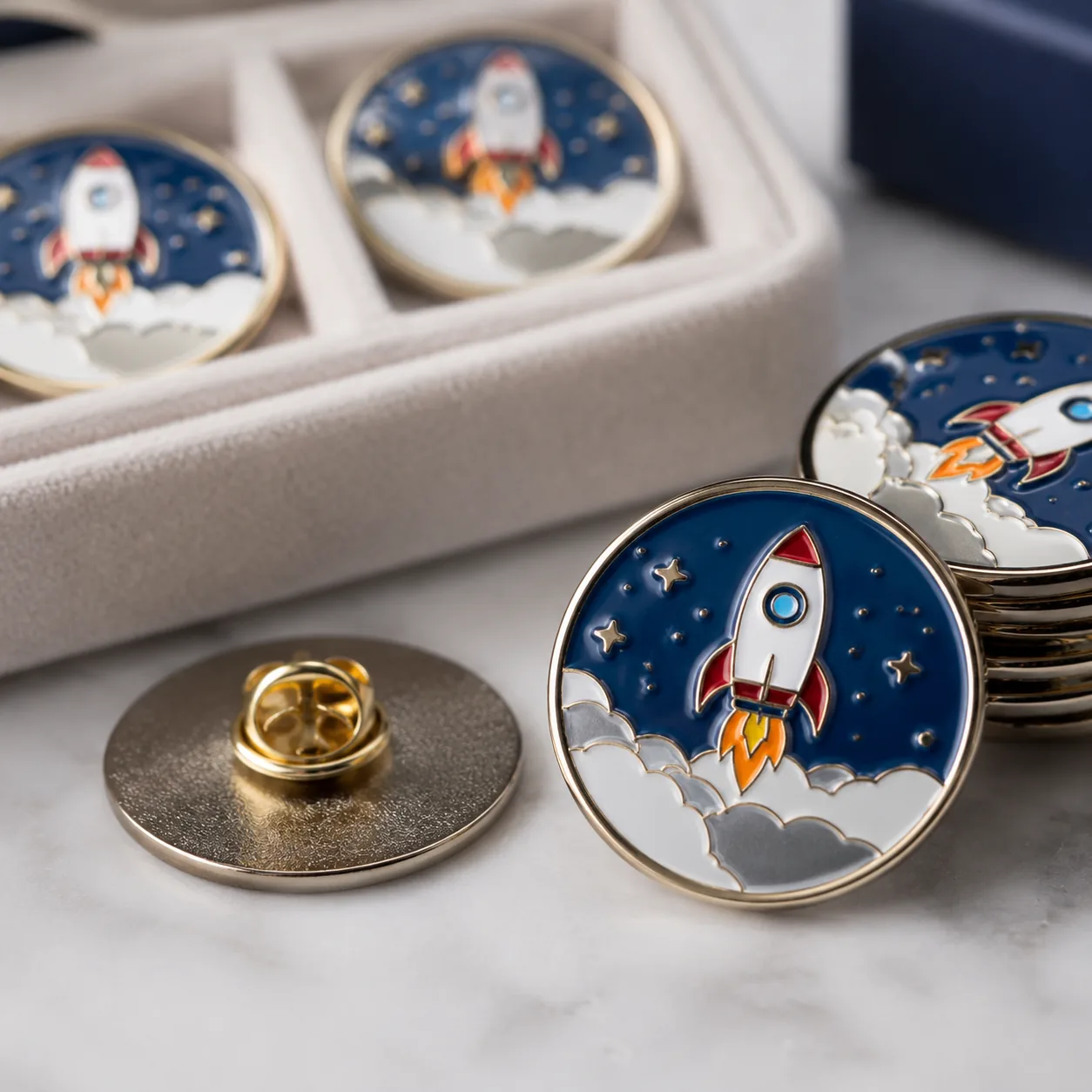
A realistic example is a 30 mm soft-enamel pin in stamped iron, 1.2 to 1.5 mm thick, with one butterfly clutch. At 1,000 pieces, FOB might be USD 0.48 to 0.66 each, plus USD 50 to 90 die charge. Add a 350 gsm printed backing card, individual OPP bag, barcode label, and a tight delivery window that forces express air, and landed cost can move to roughly USD 0.84 to 1.02 per piece before domestic pick-and-pack fees of another USD 0.12 to 0.35. That delta is often larger than the supplier negotiation range.
This is why experienced buyers now compare cost stacks instead of chasing the lowest quoted unit price. The useful question is not What is your best price; it is Which inputs are driving the cost and which ones are legacy assumptions from the last order. In many programs, the bigger savings come from simplifying construction, standardizing hardware and pack-out, and protecting the production calendar so the shipment can move by ocean rather than by air.
For pins, badges, keychains, coins, magnets, and mixed merchandise kits, the discipline is the same: lock non-negotiable requirements first, then challenge everything else. Until size, thickness, process, attachment, plating, packaging, and inspection level are fixed, two suppliers may be quoting very different products under the same item name.
Which specifications move landed cost the most
The biggest cost drivers are process, metal weight, size, plating, color count, attachment hardware, packaging format, and shipping mode. A 30 mm stamped-iron pin at 1.2 mm thickness with one post is fundamentally a different cost structure from a 30 mm cast-zinc pin with cutouts, two posts, epoxy dome, and retail card assembly. Tariffs magnify the difference because higher FOB and bulkier freight usually move together rather than offsetting each other.
Typical 2026 FOB ranges make the spread clear. A 30 mm stamped iron soft-enamel pin, 1.2 to 1.5 mm thick, 4 to 6 spot colors, shiny nickel or shiny gold plating, typically runs USD 0.42 to 0.72 FOB at 500 pieces and USD 0.31 to 0.55 at 3,000 pieces, with tooling around USD 45 to 90 for a simple die. A 30 mm imitation hard enamel pin is more often USD 0.58 to 0.95 at 500 pieces because polishing, filling, and surface-flatness expectations are higher. A 50 mm zinc-alloy keychain at 2.5 to 3.0 mm with jump ring, split ring, backside texture, and optional epoxy is commonly USD 1.15 to 2.10 FOB at 500 pieces, with mold cost around USD 80 to 150. Challenge coins at 44 to 50 mm diameter and 3.0 mm thickness often land at USD 1.60 to 3.40 FOB at 300 pieces depending on edge detail, relief depth, and whether one or both sides use color fill.
Freight can outweigh small FOB improvements. For a 500-piece order under roughly 15 kg chargeable weight, express air often adds USD 0.18 to 0.45 per piece depending on route and season. For a 5,000-piece replenishment with efficient carton loading, ocean freight may fall below USD 0.05 to 0.12 per piece, but transit usually requires 25 to 40 calendar days port to port plus customs and inland delivery. Production timing matters just as much: standard metal pin production is often 10 to 18 working days after approval, while a rush job may add overtime, reduce cure time margins, and increase cosmetic reject risk.
| Spec choice | Typical 2026 FOB effect | Best use case | When to avoid |
|---|---|---|---|
| Stamped iron, 1.2-1.5 mm | Usually saves USD 0.08-0.30 per unit versus cast zinc on small flat items | Soft-enamel lapel pins, flat badges, simple logos | Deep relief, heavy sculpting, wide openwork, thick 3D profiles |
| Zinc alloy cast, 2.0-4.0 mm | Higher tooling and unit cost, but supports complex geometry and thicker sections | Irregular shapes, openwork, thick keychains, 3D medallions | Entry-level pins where flat stamped construction is sufficient |
| Standard plating: shiny gold, nickel, black nickel | Baseline cost; decorative plating layer often about 0.03-0.08 microns | Most corporate, event, school, and promotional designs | Projects needing highly controlled antique tone or premium retail finish matching |
| Special finish: antique, dual plating, dyed black | Adds about USD 0.03-0.20 per unit depending on masking and extra process steps | Premium coins, heritage designs, high-contrast artwork | High-volume promo runs with limited visual payoff |
| Epoxy dome | Adds about USD 0.04-0.12 per unit plus curing time | Printed inserts, detailed surfaces, scratch protection | Pieces where glare, yellowing risk, or lower cost matter more |
| OPP bag only | Lowest packaging cost and lowest cube | Bulk event distribution, internal use, giveaway stock | Retail shelves, gift presentation, barcode-driven programs |
| Printed backing card plus polybag | Adds about USD 0.05-0.18 per unit depending on card size, paper weight, and hand assembly | Brand story, instructions, peg display, barcode scanning | Programs where postage weight, packing speed, or carton cube are critical |
| Air shipment | Fastest option; highest landed cost per piece | Deadlines under about 14 total days to in-hands | Forecastable repeat orders |
| Sea shipment | Lowest freight per unit at scale; longest transit | 5,000+ units, mixed SKUs, replenishment buys | Event dates with no schedule buffer or late artwork approval |
Cut specs, or redesign the product
Value engineering works best when it removes process steps rather than merely shaving material. Moving a 30 mm pin from 1.5 mm to 1.2 mm iron may save a few cents with little functional change, but removing a second soldered post, eliminating a cut-through window, or converting a two-layer construction into a single stamped piece usually saves more and also improves yield. Every additional solder joint, assembly step, or finish operation is another place for rework, delay, or cosmetic defects.
The most effective redesign choices are measurable. Reducing color count from 8 fills to 5 where adjacent shades are visually redundant can cut filling time and inspection touches. Switching from full backside artwork to a sandblasted texture plus a small backstamp often trims cost without affecting the front-facing presentation. Standardizing a backing card to a rectangular 90 x 55 mm format instead of a custom die-cut shape reduces print waste, makeready cost, and hand-packing time. Replacing rigid gift boxes with bulk inner packs such as 25 or 50 pieces per polybag can materially reduce both packaging spend and freight cube on event programs.
What should not be cut are features tied to function in use. A long badge or brooch may still need two posts for anti-rotation. A keychain should use split-ring and jump-ring gauges matched to product weight; for a 50 mm zinc keychain, buyers often specify split ring wire around 1.6 to 2.0 mm and jump ring around 1.4 to 1.8 mm to avoid field failures. Coins and medallions also need enough section thickness to resist edge bending and plating inconsistency. In a tariff-sensitive market, a cheap failure is still expensive once replacements, complaints, and expedited remakes are included.
Checklist: what to challenge before approving a quote
Most avoidable cost and quality problems appear before sampling starts. Review the quotation line by line instead of approving a blended total, and make the supplier confirm assumptions in writing.
- Is the process matched to the geometry: stamped for flatter parts, cast for deeper relief, thicker sections, or complex openwork
- Is the finished size justified by the use case, especially coins above 45 mm and keychains above 55 mm where metal weight and freight rise quickly
- Is thickness higher than needed: 1.2-1.5 mm works for many pins, while 2.0-3.5 mm is more typical for keychains and challenge coins
- Are attachment counts functional rather than habitual: one post for many small pins, two posts only when weight or anti-rotation requires it
- Is plating specified clearly, including finish type and decorative thickness target, commonly about 0.03-0.08 microns for standard finishes
- Are enamel colors limited to the brand-critical palette instead of every shade shown in concept art
- Is packaging solving a real need such as retail display, gifting, compliance, or barcode scanning rather than repeating a legacy format
- Is the inspection plan stated, such as AQL 2.5 major and 4.0 minor for promo-grade goods, or AQL 1.5 for tighter retail programs
- Is the carton plan defined with target outer-carton weight, often 12-15 kg, to reduce handling damage and oversize charges
- Is shipping mode chosen from the in-hands date backward instead of being decided only after production finishes
How MOQs, reorders, and lead times shift under tariff pressure
Tariff pressure pushes buyers in two directions. Some consolidate into larger buys to spread duty, customs handling, and internal purchasing cost across more units. Others keep quantities lean because demand is uncertain and excess inventory is more expensive than a slightly higher reorder price. The right choice depends less on MOQ alone and more on design life, forecast reliability, and the commercial cost of missing a launch or event date.
Typical 2026 MOQs remain workable. Custom enamel pins commonly start at 100 pieces per design. Simple metal keychains often start at 100 to 300 pieces depending on size and construction. Challenge coins commonly start at 50 to 100 pieces. Magnets, PVC patches, woven patches, and lanyards frequently start around 100 pieces. Price breaks usually appear at 300, 500, 1,000, and 3,000 units because tooling amortization, plating batches, and packing labor become more efficient. For example, a pin quoted at USD 0.61 FOB for 300 pieces may fall to USD 0.44 at 1,000 pieces, but the buyer should also compare packed-carton dimensions and total freight because poor packaging choices can erase part of the gain.
Lead times should always be expressed in working days and tied to a clear trigger. Preproduction samples for standard metal products are often 5 to 9 working days after artwork approval. Mass production usually takes 10 to 18 working days after sample approval or deposit receipt, depending on quantity and process. Printed backing cards typically add 2 to 4 working days. Dual plating, antique finish control, rigid gift boxes, or kitted multi-item assembly may add another 2 to 5 working days. After that, express air can move goods in roughly 3 to 7 days, while ocean transit generally needs 25 to 40 calendar days plus customs clearance.
For repeat programs, the best cost-control move is to lock first-order standards: tooling number, approved Pantone references, plating finish, clutch or ring specification, card dimensions, carton pack, and acceptance criteria. That does not remove tariff exposure, but it does remove hidden reorder cost from re-engineering, repeated approvals, and preventable assumptions changing from one PO to the next.
Which quality specifications cannot stay vague
When budgets tighten, vague quality language becomes expensive because the buyer and factory start filling gaps differently. Every purchase order should state base material, process, finished size, thickness, attachment type, plating finish, color references, packaging method, and inspection standard. If those points are left open, the lowest-cost interpretation usually wins, and that interpretation may not match the intended use or selling channel.
Useful tolerances for metal promo products are practical, not theoretical. Finished size tolerance is commonly plus or minus 0.2 mm to 0.5 mm depending on geometry and overall dimensions. Thickness tolerance on stamped items is often plus or minus 0.10 mm to 0.15 mm, while cast parts may vary more across uneven sections. Soft-enamel items should have clean metal lines with no obvious color spill outside the recess. Imitation hard enamel should specify whether the buyer expects a near-flat polished face or accepts minor surface undulation. For backing cards, die-cut tolerance of about plus or minus 1.0 mm is typical, which matters when peg holes, slots, or hang tabs must align consistently.
Inspection language also needs detail. AQL 2.5 major and 4.0 minor is common for promotional-grade goods; premium retail programs may require AQL 1.5 or tighter on appearance. If plating quality matters, define rejectable defects plainly: exposed base metal, pits, blistering, sharp burrs, bent posts, weak solder joints, or color outside the metal line visible at about 30 cm under neutral light. If pull strength, magnet hold, or split-ring closure matters, require a functional check on a defined sample size rather than relying only on visual inspection. For example, buyers may request clutch retention checks on 20 samples per lot or ring closure checks on 32 pieces under normal hand force.
When China still makes sense, and when it does not
China still makes strong commercial sense when the order needs process flexibility, broad decoration capability, multi-SKU consolidation, and repeatable quality across pins, keychains, coins, magnets, patches, and lanyards. That is particularly useful for launch kits, museum assortments, distributor programs, and event bundles where one supplier can coordinate metal production, printed inserts, packing, and export documentation. A factory or trading partner with integrated metal, print, and assembly management usually handles schedule risk better on mixed orders than a fragmented vendor stack.
It makes less sense when delivery is so urgent that domestic turnaround outweighs unit economics, when quantity is so low that freight and customs charges erase the offshore advantage, or when artwork is still changing too often for efficient sampling. Overseas suppliers can move fast, but repeated revision cycles consume die time, sample approvals, and packing plans. For very low quantities, next-week delivery, or design concepts that are still unstable, a local supplier can be commercially smarter even at a higher ex-works or delivered price.
A capable supplier should answer direct operational questions instead of hiding behind an all-in quote: what can be simplified without hurting function, what tolerance is realistic, whether one post instead of two is acceptable, which packaging format wastes cube, and how much of the quoted total sits in tooling, unit FOB, pack-out, and freight assumptions. Buyers should be cautious whenever quotes are being compared across different processes, thicknesses, or packaging assumptions under the same product description.
What to do next if you need pricing this quarter
Start by separating requirements into three buckets: functional must-have, brand must-have, and negotiable. Then issue two RFQ versions for the same design: a target specification and a value-engineered alternative that removes only noncritical cost layers. That forces suppliers to price controlled options instead of making their own assumptions about what can be changed.
Before placing the order, confirm six points in writing: process, finished dimensions, thickness, hardware specification, plating finish, and pack-out method. Also confirm lead time in working days and define exactly when the clock starts, whether from artwork approval, sample approval, or deposit receipt. If there is a fixed event date, choose shipping mode before mass production begins and build backward from the in-hands date with at least a 5 to 7 day buffer for customs, delivery, or rework risk.
If the order is event merchandise, protect the deadline first and simplify packaging. If it is a repeat corporate program, spend more effort locking carton efficiency, reorder documentation, and approved standards. If it is a market test, keep MOQ modest, stay with standard plating, and avoid premium boxes, dual plating, oversized formats, or nonessential add-ons until demand is proven. In a tariff-sensitive 2026 market, the strongest buyers are usually not the ones who appear to buy the cheapest item. They are the ones who remove preventable cost before the factory starts production.
Have a project? Send your artwork and target quantity and we’ll reply with a detailed quotation within 12 working hours.
Ready to get this made?
Send your sketch, target quantity and ship-date. Detailed quotation in 12 hours.



