Hook-and-Loop Patch Backing Specs for Uniform and Event Orders
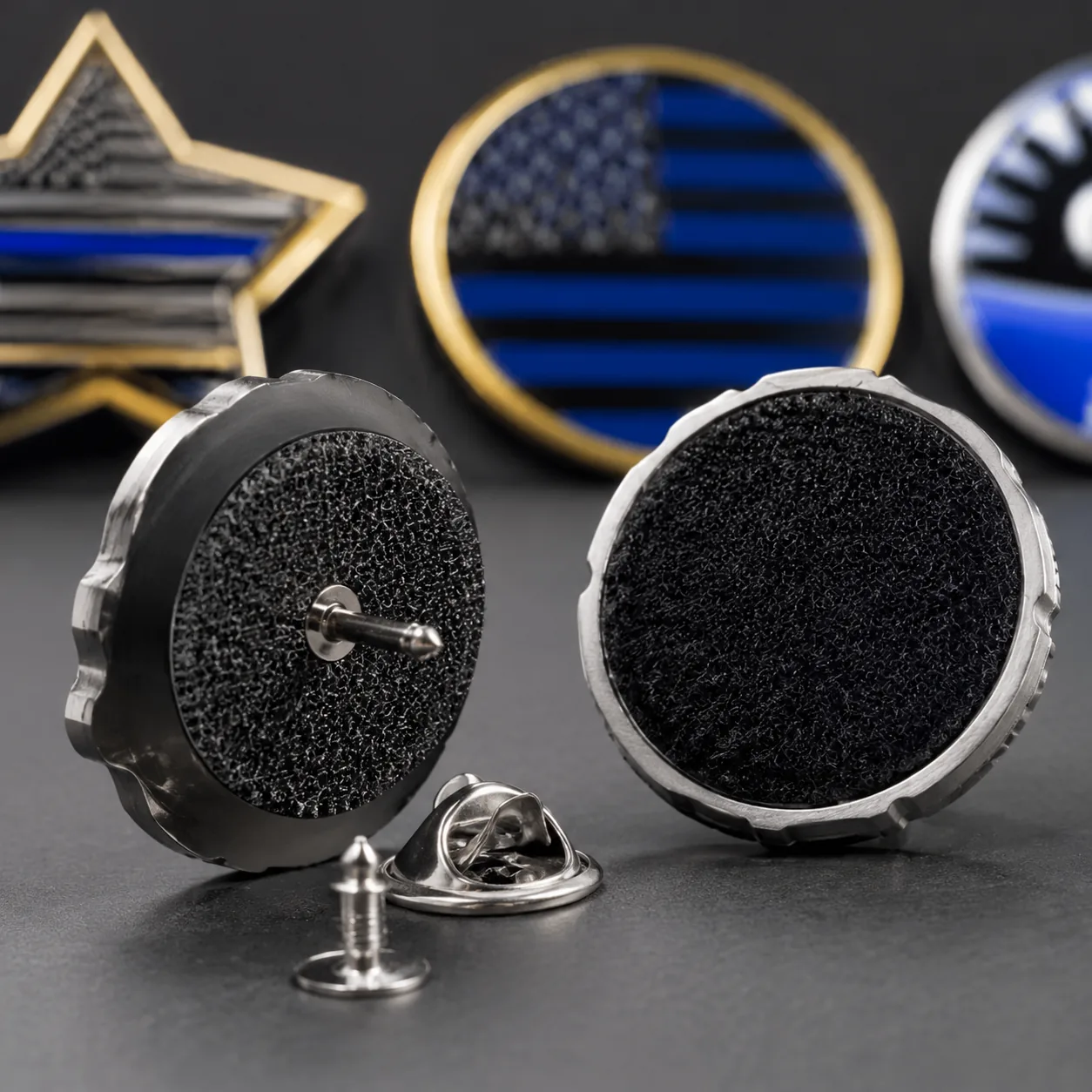
Define the Wear Case Before Choosing Backing
Many patch failures are not caused by poor embroidery or weak artwork conversion. They come from an under-specified attachment system. An RFQ that says only “Velcro backing” leaves the supplier to choose hook grade, hook coverage, stitch position, loop compatibility and packing method. The front sample may look correct, while the finished order curls at the corners, peels during laundering or damages lightweight event apparel.
Start the specification with the wear case: daily removable uniform patch, tactical shoulder patch, airport or security ID patch, temporary event credential, morale patch, retail cap patch or children’s garment patch. Each use has a different balance between grip strength, hand feel, wash durability and fabric protection. A patch removed every shift needs stronger edge control than a patch removed twice a year. A cap patch on thin cotton needs a softer hand than a shoulder patch on a tactical vest.
For B2B uniform programs, common finished widths are 50 to 110 mm. Chest, sleeve and cap patches most often fall between 70 and 90 mm. Use finished-size tolerances of ±1.0 mm for woven patches, ±1.5 mm for embroidered patches and ±2.0 mm for PVC patches because molded PVC has more dimensional recovery after cooling. If the loop receiver is supplied separately, specify that the loop outline must be equal to or up to 1.0 mm larger than the hook-backed patch, never smaller.
Also define the garment surface. A polyester tactical vest, woven workwear jacket, fleece sleeve, cotton cap and thin promotional polo will not react the same way. If the apparel supplier is separate from the patch supplier, send a 200 by 200 mm swatch of the actual loop panel or garment fabric before sampling. Compatibility testing on generic loop tape is useful, but it is not enough for a controlled uniform order.
Specify Hook Side, Loop Side or Matched Sets
Most removable patches carry hook tape on the back, while the garment carries the softer loop receiver. Hook-only supply is the fastest and lowest-cost option when uniforms, bags or caps already have loop panels sewn in place. The risk is mismatch: the buyer’s loop may be too small, too soft, too worn or made from a grade that does not engage well with the hook selected by the patch supplier.
Matched hook-and-loop sets reduce that risk. They are common for events, retail bundles, emergency response kits and multi-supplier apparel programs where the garment factory is not controlling the patch. The patch ships with its own loop receiver, giving the buyer a known engagement pair. The trade-off is higher cost, more packing volume and extra sewing labor if the loop panel is not already attached to the garment.
Loop-only pieces are not patches; they are receiver pads or replacement panels. Use them when the buyer needs spare garment-side panels or wants to retrofit existing apparel. Sew-on patches without hook-and-loop still make sense for permanent badges, very low-cost giveaways and children’s products where removability is less important than softness and wash simplicity.
| Backing scope | Best use | Typical added FOB cost | Control point |
|---|---|---|---|
| Hook backing only | Uniforms, bags or caps with existing loop panels | USD 0.05 to 0.16 per 70–90 mm patch | Confirm buyer loop grade, panel size and position |
| Loop backing only | Replacement receiver pads or garment-side panels | USD 0.04 to 0.14 per piece | Specify loop outline, edge finish and sewing allowance |
| Matched hook-and-loop set | Events, retail bundles and multi-supplier uniform programs | USD 0.09 to 0.28 per set | Pack as attached pairs or clearly counted loose components |
| Sew-on only | Permanent badges, giveaways and children’s garments | No hook-loop add-on cost | Allow longer installation time and no removability |
Select Material Grade, Thickness and Hand Feel
Hook-and-loop tape is normally nylon or polyester. Nylon usually gives a softer hand and strong initial engagement, making it suitable for many uniform and morale patches. Polyester is more dimensionally stable in wet, outdoor and UV-exposed conditions, but low-grade polyester hook can feel harsh and may snag fleece or knit garments during handling. Do not specify only the fiber name; specify the intended performance and approve a physical backing sample.
For standard uniform patches, a practical hook thickness before sewing is 1.6 to 2.0 mm, with loop tape at 1.8 to 2.5 mm. Lightweight event patches, cap patches and thin polo patches can use 1.2 to 1.5 mm hook to reduce stiffness. Large patches above 90 mm wide should avoid very thin hook unless there is a wide stitched border, because corner lifting becomes more likely after repeated removal.
Total finished thickness matters under straps, armor, cuffs and backpack contact points. Embroidered patches with hook backing commonly finish at 2.5 to 4.5 mm depending on thread coverage and backing layers. Woven patches are often thinner, typically 1.8 to 3.2 mm. PVC patches are usually 2.0 to 4.0 mm before adding any raised details. If the patch must sit flat under equipment, keep the total finished thickness below 4.0 mm and avoid tall raised borders.
Aggressive hook is not always better. A high-grip hook that works on a tactical vest can fuzz a soft fleece sleeve, snag knitwear or make a cap patch feel rigid. For children’s garments, promotional apparel and thin cotton bags, use soft hook, rounded corners and a smaller attachment area. For public safety, outdoor or industrial uniforms, prioritize consistent engagement and edge retention over softness, but still test removal by hand to ensure the user does not pull threads from the loop panel.
Control Coverage, Insets, Corners and Edges
Full-coverage hook is the default for most embroidered, woven and PVC patches from 40 to 100 mm. It supports the corners and the visual center, which reduces sagging. For large patches over 120 mm, partial hook coverage can reduce stiffness and cost, but the pattern must still support the corners and long edges. Avoid narrow hook strips that leave unsupported corners; they are a common cause of curling after washing or repeated handling.
Specify hook backing cut 0.5 to 1.0 mm inside the finished edge for woven and embroidered patches. For PVC patches, use a 1.0 to 1.5 mm inset inside the molded border so stitching or heat bonding does not distort the raised edge. Hook that is flush with the patch perimeter can create a scratchy edge. Hook set back more than 2.0 mm leaves the corners easier to lift.
Corner radius should be written into the drawing, not left to artwork interpretation. Sharp 90-degree corners concentrate peel force and can dig into fabric when the wearer bends an arm or shoulder. For removable uniform patches, use a minimum outside radius of 2.0 mm on small patches and 3.0 to 5.0 mm on patches above 80 mm wide. If the brand shape requires a sharp corner, reinforce the corner with tighter stitching and inspect it during peel and wash testing.
Edge construction must match the patch type. Merrowed embroidered edges are durable but add thickness and may not suit detailed shapes. Laser-cut woven edges give clean geometry but need controlled sealing to avoid fray. PVC edges should include a flat sewing channel when hook backing is sewn on. Trying to sew through thick raised rubber creates skipped stitches, needle damage and uneven backing tension.
Set Sewing, Bonding and Dimensional Tolerances
Hook backing can be sewn, heat-bonded, adhesive-laminated or combined with stitching. For repeat-use uniform orders, perimeter stitching is the safest construction because it mechanically locks the backing to the patch body. Heat bonding alone can work on thin woven promotional patches or low-wash event pieces, but it is not recommended for patches that will be removed frequently or laundered while attached to loop panels.
For embroidered and woven patches, specify stitch distance from the edge at 1.5 to 2.5 mm, with 7 to 10 stitches per 25 mm. Polyester thread is preferred, commonly 75D/2 for thinner woven patches and 150D/2 for thicker embroidered or PVC constructions. The seam must not cut through critical text, QR codes, fine flag elements or narrow logo borders. If the artwork border is under 2.0 mm, widen it before adding hook backing.
Dimensional control should include the patch outline, hook inset, loop panel outline and total thickness. For a 75 mm patch, a useful acceptance range is finished width and height within ±1.5 mm for embroidered goods, hook inset within 0.5 to 1.5 mm and loop panel no smaller than the patch outline. Thickness should be measured at three points with light compression; a single measurement at the thickest embroidery area does not describe how the patch will sit on the garment.
Adhesive overflow and glue seepage are functional issues, not only cosmetic defects. Exposed adhesive can collect lint, stiffen the edge and contaminate loop panels during packing. Heat-pressed constructions should be checked for warping after cooling, especially on thin woven patches. If the patch curls before it is attached to the garment, it will usually perform worse after wash and wear.
Test Peel Strength, Cycling and Washing
A useful backing spec defines how strong is strong enough. Too little engagement allows the patch to fall off during movement. Too much engagement bends the patch during removal or pulls fibers from the garment loop panel. For most uniform patches, a practical 180-degree peel-strength target is 0.8 to 1.5 N/cm after 24 hours of conditioning at 20 to 25°C and 50 to 65% relative humidity. For lightweight event apparel, 0.5 to 1.0 N/cm may be enough. For tactical or outdoor use, 1.2 to 2.0 N/cm can be appropriate if the loop panel is robust.
Cycle testing is more informative than one pull test on a new sample. Event credentials normally need 50 to 100 open-close cycles. Daily-use uniform patches should pass 300 to 500 cycles with no backing delamination, no broken perimeter stitches and no severe grip loss. Tactical programs should use 500 cycles plus a corner-lift check because dirt, sweat and repeated gloved handling reduce engagement.
Wash testing should reflect the garment program. A reasonable baseline is 5 wash cycles at 40°C with the patch attached to a compatible loop panel, followed by air drying and inspection for curling, seam breakage, color bleed, adhesive seepage and backing separation. For workwear programs that specify higher laundering, test 10 cycles at 60°C before approval. Do not demand high-heat tumble drying unless the end users will actually tumble-dry the garments; unrealistic heat requirements can force expensive materials without improving real field performance.
- State peel strength in N/cm; do not use “strong Velcro” as the only requirement.
- Define cycle count: 50–100 for events, 300–500 for daily uniforms and 500+ for tactical use.
- Test with the actual garment loop panel when apparel and patch suppliers are different.
- Inspect corner lift after washing, not only after dry peel testing.
- Reject samples with loose hook fibers, broken perimeter stitches, glue seepage or warped edges.
Apply QC, AQL and Packing Controls
Separate cosmetic defects from functional defects during inspection. A small stitch start-stop overlap on the back may be acceptable if the front appearance and attachment strength are correct. Delaminated backing, missing hook coverage, wrong hook side, severe curling, sharp exposed corners, contaminated loop panels or mismatched loop size should be treated as major defects. A backing material that differs from the approved sample is a major defect even if the front artwork looks correct.
For standard B2B orders, use AQL 2.5 for major defects and AQL 4.0 for minor defects, with critical defects at 0. Critical defects include exposed sharp metal or wire, mold contamination, unsafe components on children’s products, or incorrect safety labeling where required. Dimensional inspection should measure finished width and height, hook inset, loop panel size and total thickness at three points. Functional inspection should include hand peel, corner lift and a quick attachment check to the approved loop material.
Packing matters because hook patches cling to each other, fuzz loop panels and collect thread waste. For matched sets, pack each hook patch attached to its loop receiver when the buyer wants ready-to-sew pairs. If loose components are required, separate hook and loop with release paper or individual bags. For 70 to 90 mm uniform patches, 50 to 100 pieces per inner polybag is practical. Keep export cartons under 12 to 15 kg gross weight to reduce crushed edges and improve warehouse handling.
Labeling should identify design code, backing scope, quantity, colorway, size and PO number. For programs with multiple departments or ranks, add a visible SKU label on each inner bag. Hook-backed patches look similar from the back, so mispacking is easy when several designs share the same size and border color.
Budget MOQ, FOB Price and Lead Time Realistically
Hook-and-loop backing rarely changes the MOQ by itself, but it adds material control and sewing time. For embroidered and woven patches, practical MOQs often start at 100 pieces per design for sampling and small B2B runs. Unit pricing improves at 300, 500 and 1,000 pieces because setup, artwork conversion and backing preparation are spread across more units. PVC patches with custom molds are usually more economical from 300 to 500 pieces because mold cost is a larger part of the unit price.
As a working FOB range, a 70 to 90 mm embroidered patch with hook backing is commonly USD 0.55 to 1.35 at 500 pieces, depending on embroidery coverage, thread count, edge type and packing. Woven patches with hook backing often run USD 0.45 to 1.10 at the same size and quantity. PVC patches with hook backing are usually USD 0.85 to 2.20 at 500 pieces because of mold setup, material weight and sewing-channel handling. Matched loop panels typically add USD 0.04 to 0.14 per piece for standard shapes, more for special colors, complex die cuts or retail packing.
Lead time for a new patch with hook backing is usually 5 to 8 days for artwork proofing and pre-production sampling after artwork approval, then 10 to 18 days for mass production of 500 to 3,000 pieces. Add 2 to 5 days for custom loop colors, unusual shapes, individual retail bags or barcode labeling. Reorders with unchanged materials can often shorten sampling, but do not skip confirmation if the backing supplier grade changes.
Before issuing the PO, add a backing page to the spec sheet. Include finished size, backing scope, hook material, loop requirement, hook inset, corner radius, stitch position, peel-strength target, cycle count, wash test, AQL level and packing method. Approve one physical pre-production sample using final backing materials on the actual garment loop panel. Keep that signed sample as the golden sample for shipment inspection and future reorders.
- Send final artwork with size, border width and intended garment location.
- State hook-only, loop-only, matched set or sew-on construction in the PO.
- Lock peel strength, cycle count, wash cycles, tolerance and AQL before production.
- Approve the sample on the real loop panel, not only on a supplier display card.
- Keep one signed golden sample for reorder comparison and incoming inspection.
Have a project? Send your artwork and target quantity and we’ll reply with a detailed quotation within 12 working hours.
Ready to get this made?
Send your sketch, target quantity and ship-date. Detailed quotation in 12 hours.



