Heat-Seal Patch Failures: Specs That Stop Peeling and Scorching
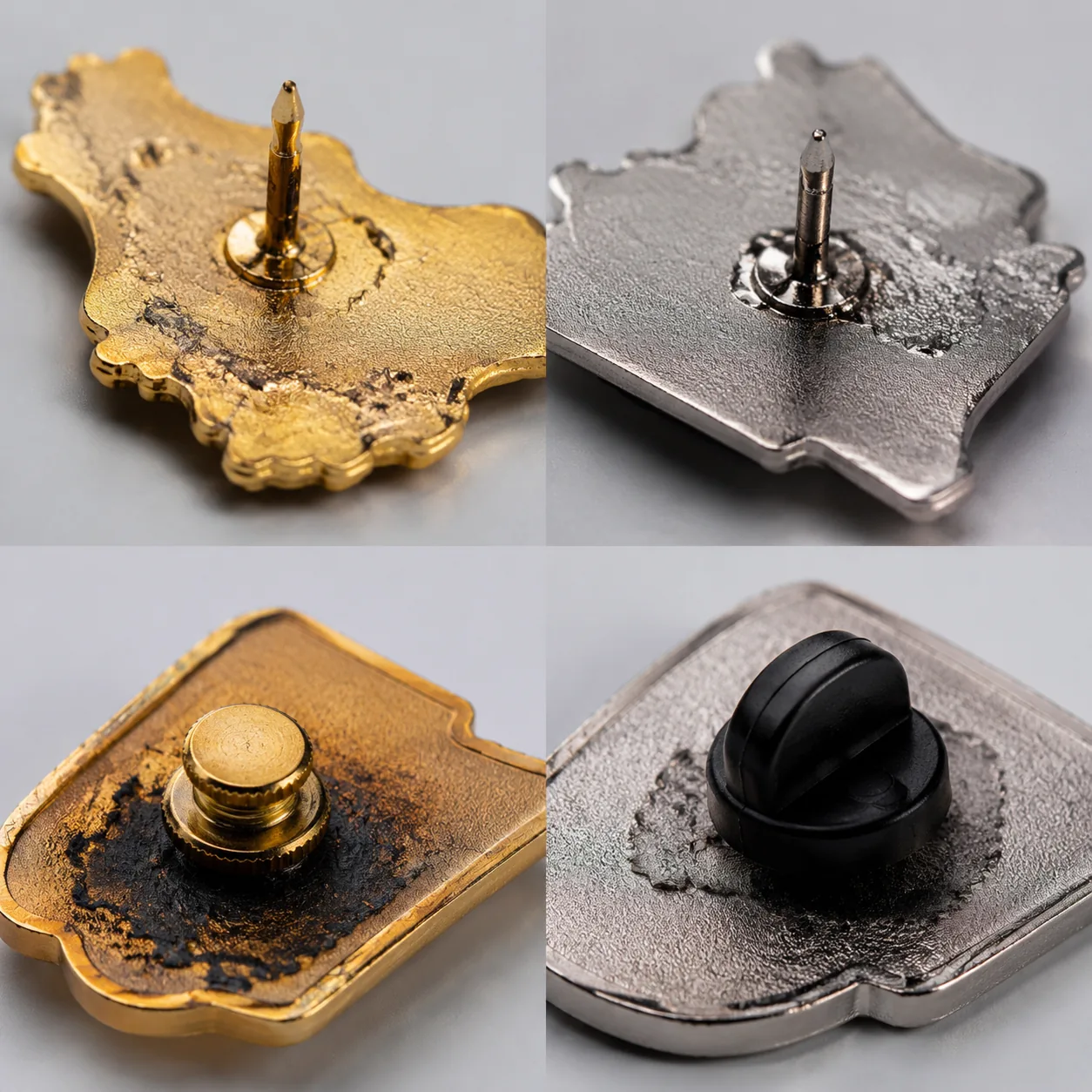
Failure 1: The Patch Looks Approved, Then Peels After One Wash
The most expensive heat-seal patch failure is not visible at sample approval. The embroidery or woven face looks correct, the merrow border is clean, and the backing feels firm. Then the end user applies it to a cotton hoodie, washes it once at 40 C, and a corner lifts because the adhesive film was never specified for the fabric or laundering conditions.
For B2B orders, do not approve a heat-seal backing only by appearance. Specify the film type, film thickness, compatible fabric, press temperature, pressure, dwell time, and minimum peel strength after washing. A practical baseline for polyester embroidered patches is 90 to 120 micron heat-seal film, 150 to 165 C press temperature, 3 to 4 bar pressure, and 12 to 18 seconds dwell time on cotton or cotton-poly garments.
At ZheCraft, we treat heat-seal backing as a functional component, not a packaging add-on. For patches supplied for uniforms, retail apparel, schools, clubs, or event merchandise, we normally ask the buyer to confirm the garment fabric before sample production. If the final garment is unknown, sew-on backing or hook-and-loop is often safer than promising universal heat application.
Failure 2: The Adhesive Was Right, But the Fabric Was Wrong
Heat-seal patches fail quickly when the backing film is matched to the patch, but not to the garment. Smooth cotton accepts adhesive well because the film can flow into the fiber surface. Coated nylon, waterproof polyester, softshell fabrics, and high-stretch sportswear are much less predictable because surface coatings and elasticity reduce bonding area.
A common purchasing mistake is asking for one patch SKU to work on caps, jackets, backpacks, and T-shirts. Those products may include cotton twill, polyester mesh, PU-coated nylon, and ripstop fabric in one campaign. One adhesive specification cannot reliably cover all of them without compromising either bond strength or garment safety.
| Garment or Item Surface | Main Failure Mode | Safer Patch Spec |
|---|---|---|
| Cotton twill, denim, cotton-poly fleece | Usually bonds well, but corners lift if press time is short | 90 to 120 micron heat-seal film, 150 to 165 C, 12 to 18 seconds, 3 to 4 bar |
| Polyester uniforms | Gloss marks or weak bond if temperature is too high or too low | Lower-temperature film, 135 to 150 C, test on actual fabric before bulk |
| PU-coated nylon bags | Adhesive bonds to coating, then coating delaminates | Sew-on patch, Velcro backing, or mechanical stitching after heat positioning |
| Stretch sportswear | Patch edges lift because fabric elongates more than patch | Thin woven patch, rounded corners, low-stretch placement zone, wash test required |
| Caps with curved panels | Incomplete pressure at edge and crown seam | Sew-on backing or heat-seal plus perimeter stitch |
Failure 3: Corners Lift Because the Shape Was Designed Like a Sticker
Patch geometry matters more for heat-seal performance than many artwork teams expect. Sharp 90-degree corners concentrate peel force during washing, rubbing, and garment stretching. Long narrow shapes, small tails on letters, and pointed badge tips are also weak because they have low adhesive area compared with the force applied at the edge.
For heat-seal patches, specify a minimum corner radius of 1.5 mm for small patches and 2.0 to 3.0 mm for patches above 70 mm wide. Avoid protruding details narrower than 2.0 mm on embroidered patches and 1.2 mm on woven patches if those details must be heat bonded. If the brand shape requires sharp points, add a perimeter stitch recommendation to the application instructions instead of relying only on adhesive.
Dimensional tolerances should also be written clearly. For patches under 80 mm, a sensible production tolerance is plus or minus 1.0 mm on overall size; for patches from 80 to 150 mm, plus or minus 1.5 mm is more realistic. Border width should normally be 2.5 to 3.5 mm for merrowed embroidered patches, while laser-cut woven patches can use 1.0 to 2.0 mm borders if the edge is sealed cleanly.
Failure 4: Scorching, Gloss Marks, and Melted Thread
A patch that bonds strongly can still fail commercially if the garment surface is damaged during application. Polyester fabrics can develop shine marks at high temperature. Nylon can deform or ripple. Metallic threads, lurex yarn, and some printed overlays can discolor when pressed too hot or too long.
This is why a heat-seal spec must include an application window, not a single number. For example, 150 to 160 C for 15 seconds gives the distributor room to adjust by fabric and press type. If the buyer writes only heat-seal backing required, the factory can produce the patch correctly, but the downstream decorator may still scorch the garment because no operating limits were defined.
For embroidered patches, common thread is polyester 120D/2 or rayon equivalent; polyester is more stable for repeated washing and heat. For woven patches, 75D or 100D polyester yarn is common, but the thinner structure makes adhesive show-through more likely if the backing film is too thick. When a patch includes metallic thread, PVC layer, printed fabric, or reflective material, request a press test on the full construction before mass production.
Failure 5: Adhesive Bleeds Through the Front Face
Adhesive bleed-through appears as dark spots, glossy patches, or a stiff plastic feel on the front surface. It is most common on light-color woven patches, thin sublimated patches, and designs with large open fabric areas. The usual root cause is excessive film thickness, too much press temperature, or a backing adhesive that flows too aggressively through the textile structure.
For dense embroidered patches, 100 to 120 micron backing film usually gives a strong bond without visible bleed. For thin woven patches, 60 to 90 micron film may be safer, but bond strength must be tested because less adhesive means less grip. For sublimated fabric patches, buyers should consider sew-on backing, thin heat-seal film, or a perimeter stitch because full-surface adhesive can alter hand feel and color depth.
Inspection should include both front and back viewing under consistent light. For bulk QC, use AQL 2.5 for major defects such as visible adhesive bleed, scorched areas, wrong backing, and delaminated film. Use AQL 4.0 for minor cosmetic issues such as slight backing wrinkles that do not affect application.
Failure 6: The Backing Delaminates Before the Buyer Even Uses It
Sometimes the adhesive film separates from the patch during packing, transport, or warehouse storage. This is different from garment peel failure. It usually means the film was laminated to the patch with insufficient temperature, uneven pressure, contaminated fabric, or poor edge bonding.
The factory should check film adhesion to the patch before garment application testing. A simple internal check is a manual corner-pick test after cooling for at least 30 minutes, followed by a 180-degree peel pull on a cut strip where construction allows. For more controlled QC, buyers can request a minimum peel force such as 8 N per 25 mm before wash and 5 N per 25 mm after three wash cycles, tested on the confirmed garment fabric.
Storage also matters. Heat-seal patches should be packed flat, kept dry, and protected from prolonged heat above 35 C. For sea freight or hot inland delivery routes, avoid compressing patches so tightly that borders deform or backing film transfers between pieces. Inner polybags of 50 to 100 pieces, with carton gross weight under 15 kg, are safer than very heavy cartons for large embroidered patches.
Failure 7: QC Passed the Patch, But Not the Application
Patch factories often inspect embroidery density, thread color, border shape, size, and packing. Those checks are necessary, but they do not prove the heat-seal function. If the purchase order does not request application testing, many suppliers will not test against the buyer’s actual garment because they do not have the fabric.
For risk-controlled procurement, separate visual approval from functional approval. A pre-production sample should include at least five loose patches and, if possible, two applied samples on the confirmed fabric. Mass production should not start until the buyer approves both the appearance and the application result after cooling and wash testing.
- Confirm patch type: embroidered, woven, sublimated, chenille, PVC, or mixed construction.
- State backing clearly: heat-seal only, heat-seal plus sew, sew-on, Velcro, adhesive sticker, or no backing.
- Specify film thickness: 60 to 90 micron for thin woven or printed patches, 90 to 120 micron for standard embroidered patches, 120 to 150 micron only when stiffness is acceptable.
- Give press settings: temperature range, dwell time, pressure range, and whether the patch must be pressed from front, back, or both sides.
- Define tests: corner-pick test, 180-degree peel test, three wash cycles at 40 C, and tumble-dry or air-dry condition.
- Set inspection standard: AQL 2.5 for major functional defects and AQL 4.0 for minor cosmetic defects.
Failure 8: The Quote Hid the Backing Risk
Heat-seal backing changes cost, lead time, and sampling requirements, but quotes often show it as a one-word line item. That is not enough for a distributor comparing factories. Two suppliers can both quote heat-seal backing while using different film thicknesses, different lamination controls, and different levels of application testing.
As a working FOB range, standard embroidered patches with heat-seal backing often fall around USD 0.28 to 0.85 per piece at 500 to 5,000 pieces, depending on size, stitch coverage, border type, and backing film. Woven heat-seal patches usually range around USD 0.22 to 0.70 per piece in similar quantities. Complex chenille, metallic thread, reflective, or mixed-material patches can exceed USD 1.00 to 2.50 per piece, especially when custom shapes and retail packing are included.
Normal MOQ for custom patches is usually 100 to 300 pieces for simple designs, but 500 pieces is a more stable tier for color consistency, backing setup, and unit cost. Sample lead time is typically 5 to 8 days after artwork approval, and bulk production is commonly 10 to 18 days for 500 to 5,000 pieces. Add 2 to 4 days if you require applied samples, wash testing, individual retail bags, or mixed SKU sorting.
What To Do Next Before Placing the Order
Before sending an RFQ, decide whether the patch is mainly decorative, washable apparel trim, uniform identification, or bag branding. That use case determines whether heat-seal backing is appropriate. If the item must survive repeated laundering, ask for test patches on the actual fabric rather than approving only a loose patch photo.
A strong heat-seal patch RFQ should include finished size, patch construction, border type, backing type, film thickness target, garment fabric, press settings, wash requirement, packing method, MOQ tier, and inspection level. Also state whether the supplier must provide application instructions for your decorator or end customer. This prevents the common dispute where the factory says the patch was made correctly and the buyer says the patch failed in use.
If you are unsure which backing is safest, send ZheCraft the artwork, target size, fabric type, annual quantity, and how the item will be applied. We can recommend heat-seal, sew-on, hook-and-loop, or combined heat-seal plus stitching based on the actual failure risk. The goal is not to make every patch more expensive; it is to avoid choosing a backing that looks fine at approval and fails after delivery.
Have a project? Send your artwork and target quantity and we’ll reply with a detailed quotation within 12 working hours.
Ready to get this made?
Send your sketch, target quantity and ship-date. Detailed quotation in 12 hours.



