From RFQ to Bulk: A Step-by-Step Custom Pin Sourcing Process
Start With the RFQ You Actually Need
Most custom pin orders go wrong before pricing starts. Buyers send artwork, ask for a quote, and leave out the production details that determine cost, lead time, and defect risk. For a factory, the missing information is usually more important than the logo itself: finished size, thickness, plating, enamel type, attachment, packaging, and target quantity. If you want comparable quotes, the RFQ must describe a manufacturable product, not just a design idea.
A usable RFQ gives every supplier the same production target. For lapel pins, that usually means finished size in mm, metal thickness, plating color, soft or hard enamel, backing type, packaging, sample stage, and delivery city. If you need backing cards, polybags, or printed inserts, state that up front. Packaging changes carton count, carton size, and freight cost, so it is not a side note.
- Vector artwork in AI, EPS, or editable PDF
- Finished size in mm, with no approximation in inches
- Plating finish, such as nickel, gold, black nickel, or antique brass
- Enamel type: soft enamel, hard enamel, or no enamel
- Quantity tiers, for example 100, 300, 500, and 1,000 pcs
- Sample requirement: digital proof, pre-production sample, or full physical sample
- Packaging requirement, including backing card size, insert text, and pack method
A clean RFQ also states what cannot change. If the logo must stay Pantone-matched, if the border line must remain black nickel, or if the finish must be matte rather than polished, write that into the brief. Otherwise, a supplier may return a technically acceptable sample that is not brand-accurate. A better RFQ says, for example: “Pantone 186 C red must not shift more than ΔE 2.0 from approved artwork; border line remains black nickel; no epoxy dome.”
Turn Requirements Into a Quote-Ready Spec Sheet
A quote-ready spec sheet removes guesswork and prevents suppliers from filling gaps with their default process. This matters because a 25 mm soft enamel pin with printed detail is a different job from a 25 mm hard enamel pin with polished recessed areas. If the process is not defined, two factories can quote two very different constructions and both claim they understood the brief. That is how price disputes begin.
For most buyer-side spec sheets, the minimum practical fields are product type, size tolerance, thickness target, finish, attachment, pack method, destination, and required incoterm. For standard flat metal pins, thickness is usually 1.2 to 2.0 mm, with 1.5 mm a common balance of rigidity and cost. Size tolerance is typically +/- 0.3 mm for small pins and +/- 0.5 mm for larger pieces. Fine cutouts, moving parts, or very thin text often need looser tolerance or a revised design because the geometry becomes harder to hold consistently.
| Spec item | Practical buyer standard | Why it matters |
|---|---|---|
| Finished size | Measured in mm with tolerance | +/- 0.3 mm to +/- 0.5 mm avoids fit issues |
| Thickness | 1.2-2.0 mm typical | Affects rigidity, feel, and mold cost |
| Plating | Nickel, gold, black nickel, antique brass | Changes appearance and scratch visibility |
| Enamel type | Soft or hard enamel | Affects surface level and detail retention |
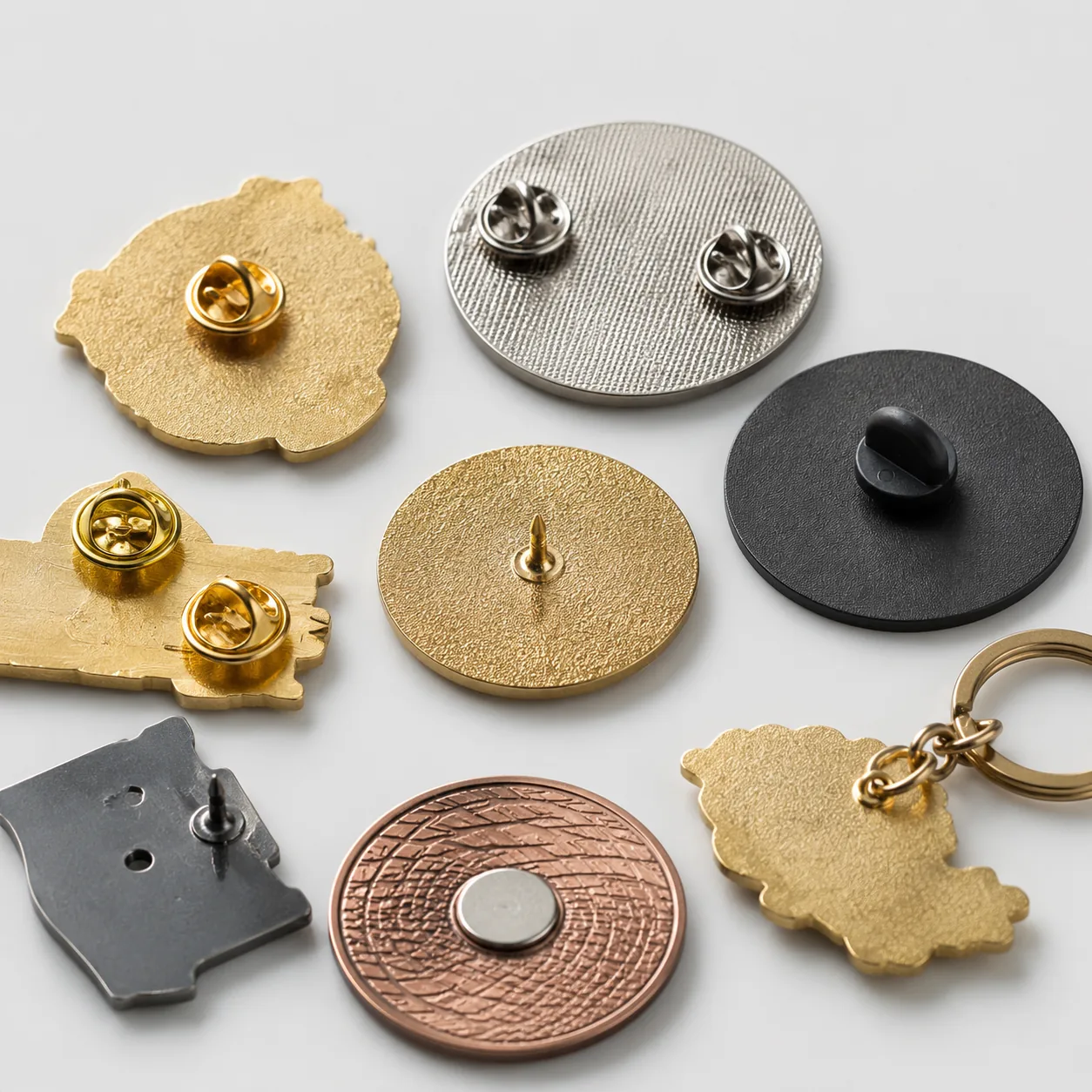
| Attachment | Butterfly clutch, rubber clutch, magnetic | Controls security, comfort, and garment damage |
| MOQ | 100-300 pcs sample-friendly; 500-1,000 pcs common bulk | Impacts unit price and tooling amortization |
The best spec sheets also identify the reference file version, Pantone targets, and any non-negotiable visual features. For example, “border line must stay black nickel, recessed areas must remain filled, and logo text must remain legible at 1.2 mm stroke width.” That level of specificity is useful because it turns a subjective approval into a measurable requirement. If the design uses cutout windows, set a minimum bridge width of 0.8-1.0 mm for cast pieces and 0.6-0.8 mm only when the factory confirms the alloy and tooling can hold it.
Compare Quotes on the Same Construction, Not Just Price
The biggest sourcing mistake is comparing only headline unit prices. A lower quote may hide a thinner plating layer, a smaller backing, a simplified mold, or a different packing assumption. One supplier may quote FOB Shenzhen for bare pins in bulk cartons, while another includes individual polybags and printed backing cards. Those are not equivalent offers, even if the unit price looks close.
Quote comparison should be line by line: material, process, plating thickness, enamel type, accessory, sample policy, and shipping term. Ask what changes move the order from the low end to the high end. Common drivers are logo complexity, number of cutouts, color count, relief depth, double-sided finishing, and whether the design needs epoxy coating, glitter enamel, or printed detail. For standard custom pins, 1,000 pcs often lands in a broad FOB China range of about USD 0.55 to 1.80 per piece for simple to mid-complexity designs. Larger, thicker, or multi-process pins can move to USD 2.00 to 4.50+ FOB depending on size and finish.
Tooling should be separated from the unit price whenever possible. Small-batch orders often carry tooling from about USD 30 to 120 per design, while larger or more detailed dies can run USD 120 to 300+ if the artwork is oversized, deeply reliefed, or includes multiple cut lines. If tooling is hidden inside the unit quote, the price may look low but be hard to audit later. A factory that states tooling separately is usually easier to compare and easier to reorder from.
A practical quote check is to ask for pricing at three or four tiers, such as 100 pcs, 300 pcs, 500 pcs, and 1,000 pcs. That makes the MOQ structure visible and shows how much the tooling is being amortized. If the 300-piece price barely changes from the 500-piece price, the quote may be based on a fixed setup cost rather than true scale savings. That is not wrong, but it should be visible before you commit.
Ask for plating thickness in microns if the supplier offers decorative electroplating. For fashion pins, 0.03-0.05 micron flash plating is common on lower-cost work, while 0.1-0.2 micron is a more defensible target for better wear resistance. If the finish is antique or matte, ask how the factory measures consistency, because cosmetic appearance can be more important than thickness alone. If they cannot state a process number, the quote is too vague to compare.
Judge the Sample Like a Production Inspector
The sample stage is not just about whether the pin looks nice. It is the only chance to confirm the factory can actually reproduce the agreed spec at scale. A good sample should match the drawing on size, plating, enamel fill, edge sharpness, and attachment fit. Evaluate it against measurable requirements, not against a vague idea of quality.
On a typical 25 mm pin, raised metal lines usually need to stay around 0.25 mm or above to survive casting and polishing without breaking. If the sample already shows weak corners, blurry text, uneven fill, or sharp burrs, bulk production will not improve those issues. For hard enamel, check that the surface is polished level across color fields; for soft enamel, check that recessed color depth is even and that the metal borders are not smeared by overfill. If the sample is wrong, request a revised sample instead of hoping the bulk run will be better.
A practical sampling window is 5 to 10 days for a simple sample and 10 to 15 days for a more complex one, depending on mold readiness and finishing steps. For orders with fine text, multiple colors, special cutouts, mixed finishes, or strict brand color targets, a pre-production sample is usually worth the extra time. It costs more than a digital proof, but it protects the bulk order from expensive rework.
If the supplier cannot show the same construction twice, that is a warning sign. Sampling should demonstrate repeatability, not just a single attractive piece. Ask for the sample, the approved artwork file, and the revision history to be tied together before moving on. A strong sample record usually includes photos from front, back, and side angles, plus a measured thickness note and the approved Pantone callout.
Use This Sample Checklist Before You Approve
Treat sample approval as controlled sign-off, not a casual yes in chat. The sample should be measured, photographed, and marked against the RFQ so every stakeholder approves the same version. If that record is missing, bulk production becomes a memory test, and procurement, marketing, and the distributor may each remember a different approval condition.
- Measure finished size and compare it with the approved drawing
- Confirm plating color under consistent lighting, not only daylight
- Check enamel fill for voids, overspill, pinholes, or low spots
- Test the attachment for holding force and garment compatibility
- Inspect edge finishing for burrs, sharp points, or rough cut lines
- Verify backside marks, if any, including logo placement or batch code
- Confirm packaging, label, and backing card text matches the order exactly
- Record any approved deviation in writing before bulk starts
If the sample needs a correction, do not approve it with a verbal note and move on. Request a revised sample or issue a written deviation record that states exactly what may differ and what must remain fixed. The cleaner the approval record, the easier it is to enforce consistency in bulk and defend the order if a later shipment drifts from the approved version.
A useful defect benchmark at this stage is simple: any issue that changes fit, durability, or brand color is a reject; cosmetic noise that is visible only under magnification may be a minor deviation if both sides agree. That distinction avoids endless debate over scratches that are acceptable on a tray sample but not on the final retail piece.
Lock the Bulk Order Before Production Starts
Bulk production should start only after the approved sample, artwork file, and written spec sheet all match. A common mistake is approving a sample in chat while the factory’s production file still reflects an older revision. To prevent that, request a final confirmation sheet listing size, plating, enamel type, attachment, packaging, quantity, and delivery terms. Reviewing one page now is far cheaper than correcting a thousand units later.
Quality terms should be fixed before production begins. For cosmetic products like pins, a common inspection baseline is AQL 2.5 for major defects and AQL 4.0 for minor defects, but the exact acceptance plan should be agreed in advance. Define what counts as a major defect: broken pin posts, severe plating voids, obvious color mismatch, twisted backs, or cracked enamel. Define minor defects too, such as small surface scratches, slight color variation, or small polishing marks. If buyer and supplier use different defect definitions, a passing inspection can still arrive feeling unacceptable.
Lead time for straightforward enamel pins is often 15 to 25 days after sample approval, with more complex orders taking 25 to 35 days or longer. Add time for custom packaging, accessory sourcing, or special finishing. Repeat orders are faster only if the supplier freezes the approved production version. Without that, a reorder can quietly drift in thickness, polish, or backing style even when the artwork appears unchanged.
For pricing, FOB is the most useful basis for comparing factory offers because it isolates the manufacturing and export handoff. DDP or delivered pricing can be helpful for budget planning, but it can also hide freight, duty, and transit differences. If you plan to compare multiple factories, ask every supplier to quote the same incoterm and the same pack structure. For many buyers, a clean comparison set is 300 pcs, 500 pcs, and 1,000 pcs with the same blister, polybag, or backing card assumption across all quotes.
If the design uses magnetic backs, glow enamel, or hard enamel with polished cavities, include a defect photo standard in the PO. That lets the supplier know what “good” looks like before the first carton is packed and keeps the acceptance decision tied to a visible reference instead of a memory.
Manage Production, Inspection, and Shipment as One Chain
Buyers often separate production and shipping into different conversations, but the factory treats them as one linked process. If carton count changes, master carton size changes, and freight cost can shift. If the product weight changes by even a few grams per piece, air freight and parcel pricing can move. That is why the final approved order should include product spec, pack spec, and shipment spec together.
A practical production chain is material preparation, mold or die making, stamping or casting, polishing, plating, color fill, curing, inspection, packing, and carton consolidation. For most pin programs, the key control points are plating quality, enamel leveling, and final packing. Those are the stages where rework is hardest and defects are easiest to hide. If the factory sends in-process photos, ask for the same camera angle each time so you can compare them properly.
Packing should protect both the finish and the count. Pins rubbing against each other in transit can scuff plated edges or mark enamel surfaces, especially if the box is overfilled or the dividers are too soft. A standard export carton may be optimized for cubic efficiency, but the inner pack still needs enough compression resistance to stop movement. For heavier metal items, ask for carton gross weight, carton dimensions, and packing quantity per inner bag or tray before shipment leaves the plant.
If you need a tighter control point, ask for a pre-shipment inspection photo set that includes count verification, carton labels, and random close-ups of the approved finish. That gives procurement a final checkpoint before freight booking and reduces the chance of discovering a spec mismatch after the goods are already in transit. For higher-risk launches, specify a random inspection sample size and reject any carton with mixed versions, missing clutches, or mislabeled packs.
What To Do Next
If you are sourcing a custom pin order now, turn the artwork into a one-page RFQ with size, plating, enamel type, attachment, quantity tiers, packaging, and destination. Send the same sheet to every supplier so you can compare apples to apples. Then request a physical sample before you approve bulk, especially if the design includes fine details, special finishes, or brand-critical colors. That sequence is slower than guessing, but it is much cheaper than fixing a bad bulk run.
If you want a factory to review your RFQ before you send it out, ZheCraft can help sanity-check the spec, flag risky details, and suggest a manufacturable version before sampling starts. The goal is not to simplify the design more than necessary. The goal is to make it specific enough that the first sample is close, the bulk run is repeatable, and the shipment matches what was approved.
Have a project? Send your artwork and target quantity and we’ll reply with a detailed quotation within 12 working hours.
Ready to get this made?
Send your sketch, target quantity and ship-date. Detailed quotation in 12 hours.



