From RFQ to Bulk: A Sourcing Workflow That Cuts Rework
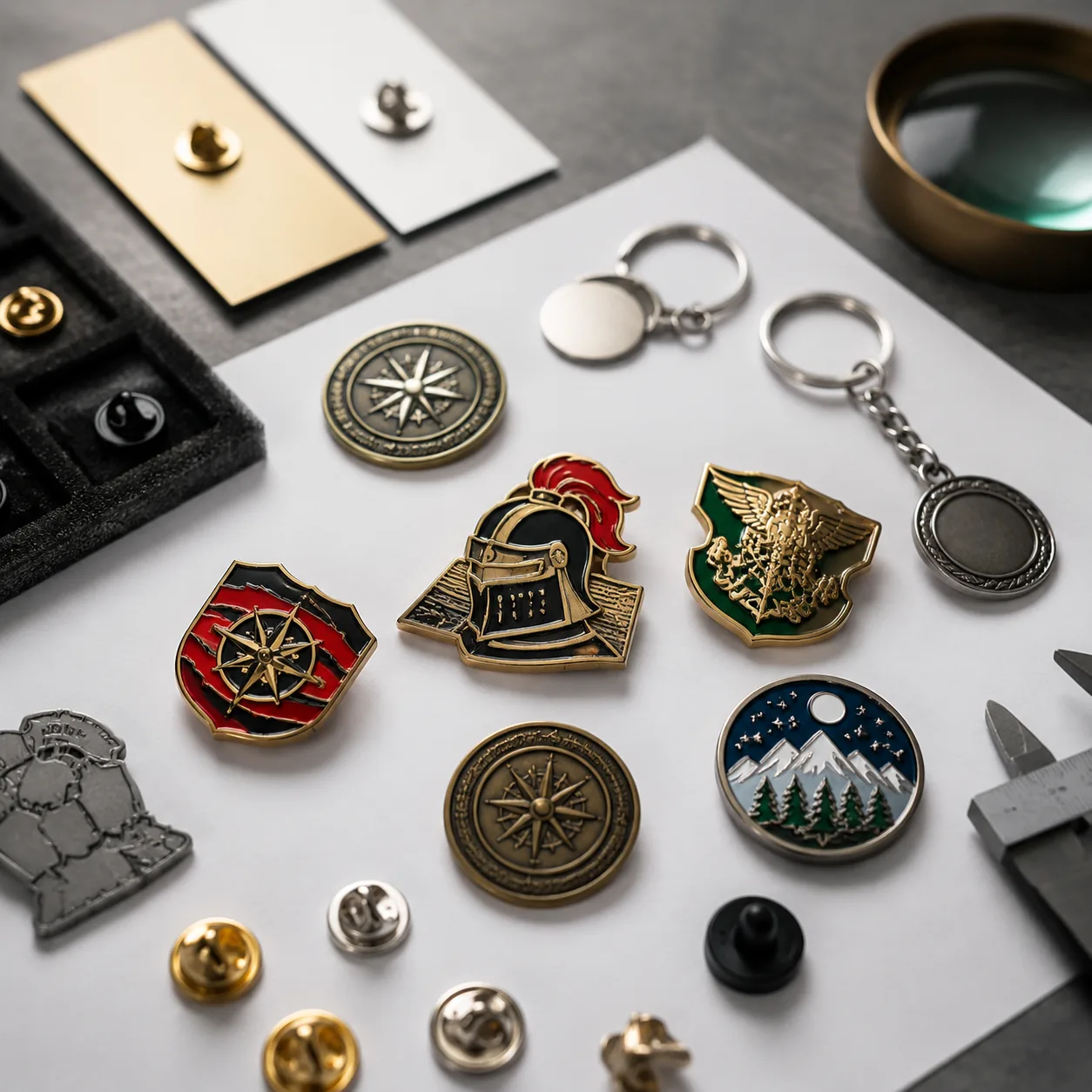
1. Write an RFQ that removes factory guesswork
Most rework starts in the RFQ. If the request only says “gold enamel pin, 1 inch, 1,000 pieces,” the supplier has to choose the metal, process, thickness, plating stack, enamel type, attachment, packing, and inspection level. The first price may be low, but it is often priced around the cheapest feasible construction, not the product the buyer expects. For custom lapel pins, challenge coins, badges, medals, bottle openers, keychains, magnets, and similar promotional metal items, the RFQ should be detailed enough that two capable factories quote the same manufacturing route.
Use millimeters, measurable tolerances, and production terms. A complete soft enamel pin RFQ might read: 30 mm wide, 1.6 mm nominal thickness, iron stamped base, raised polished nickel lines, recessed soft enamel fill, PMS-matched colors, black rubber clutch, individual opp bag, 100 pieces per inner bag, AQL 2.5 major / 4.0 minor, zero critical defects. A challenge coin RFQ might specify 45 mm diameter, 3.0 mm thickness, zinc alloy die cast or brass stamped base, antique silver plating, 2D front and back relief, reeded edge, sequential numbering, clear PVC capsule, and bulk carton packing. These details affect tooling, polishing time, plating rack density, enamel labor, reject rate, carton weight, and unit cost.
Quantity must be stated by design, not only as program volume. A supplier prices 300 pieces very differently from 3,000 pieces because mold setup, color mixing, plating baths, rack loading, inspection, and packing labor are spread across more units. For reference, simple stamped pins often start at 100 to 300 pieces per design; cast coins and zinc alloy keychains usually start at 300 to 500 pieces; multi-piece assemblies with chains, magnets, moving parts, backing cards, or custom boxes often need 500 to 1,000 pieces to be efficient. If repeat orders are likely, state the expected reorder tier so the factory can choose a mold layout and production method that will still make sense later.
- State final size in mm, nominal thickness in mm, and quantity per design, including reorder expectations.
- Attach vector artwork in AI, EPS, PDF, or SVG and flag text, gaps, cutouts, or raised metal lines below 0.30 mm.
- Define base metal, process, plating tone, enamel or print method, attachment, epoxy, backing card, and final packaging.
- Request FOB unit price at 300, 500, 1,000, and 3,000 pieces, plus tooling fee, sample fee, and courier cost.
- Ask for sample lead time, bulk lead time after approval, carton count, carton size, gross weight, and HS code if available.
- Specify inspection targets such as AQL 2.5 for major defects, AQL 4.0 for minor defects, and zero critical defects.
2. Read the quotation as a process map
A quotation is not only a commercial offer; it is the factory’s interpretation of your product. A useful quote separates tooling, sampling, unit price, plating, enamel or print, attachment, packaging, testing, and trade terms. If costs are bundled into one line, it becomes hard to compare suppliers or understand why a small change increases the price. This is especially important when one artwork could be produced as a lapel pin, coin, fridge magnet, keychain, opener, or badge, each using a different tool and finishing route.
FOB China prices vary by design complexity, metal, finish, order size, and packaging, but reference ranges help identify weak quotes. At 1,000 pieces, a 25 to 35 mm soft enamel pin is commonly USD 0.45 to 1.20 FOB, excluding mold, for a straightforward design. A hard enamel pin of the same size is often USD 0.75 to 1.80 because repeated filling, baking, grinding, and polishing add labor. A 40 to 50 mm double-sided coin often falls between USD 1.40 and 3.80 depending on thickness, relief, edge, plating, enamel count, and capsule or box. A zinc alloy keychain with one charm and split ring commonly runs USD 0.80 to 2.50 at 1,000 pieces. A price far below these ranges is not automatically wrong, but it should trigger a check on thickness, attachment quality, plating durability, packing, and defect allowance.
Confirm plating language before approval. In promotional quotations, “gold,” “rose gold,” “silver,” and “24K gold color” usually describe appearance, not precious metal content. A typical decorative plating stack may include a copper strike, nickel barrier, and thin final color layer. Final decorative color layers are often around 0.10 to 0.30 microns, while the nickel layer below may carry more of the wear and corrosion resistance. If the product will be handled often, used on apparel, or exposed to moisture, specify the target finish performance, such as lacquer topcoat, nickel-free plating where required, or 24 to 48 hours neutral salt spray for applicable nickel-plated parts. Antique finishes, recessed paint, and matte areas should be judged separately because their surfaces behave differently from bright polished plating.
| Quote line | What it should show | Risk if missing |
|---|---|---|
| Tooling | Mold fee, ownership, cavity count, expected mold life, and storage period | Duplicate tooling cost, slower reorders, or unexpected remake fees |
| Sample | Sample fee, lead time in days, number of revisions included, and courier charge | Approval delays because every correction is treated as a new sample order |
| Unit price | FOB price by tier, commonly 300, 500, 1,000, and 3,000 pieces per design | A low first price becomes invalid when quantity, thickness, or packing changes |
| Material and process | Iron, brass, zinc alloy, stainless steel, stamping, die casting, photo etching, or printing | Wrong base metal, weak detail, excess weight, or poor edge quality |
| Plating | Tone, plating stack, target micron range, antique wash, lacquer, and nickel-free requirement if needed | Color mismatch, early tarnish, edge rub-through, or compliance failure |
| Packaging | Opp bag, backing card, capsule, velvet pouch, gift box, barcode, inner pack, and master carton count | Landed cost, packing labor, and carton volume are underestimated |
| Inspection | AQL level, critical defect definition, measurement method, and golden sample reference | No shared standard for accepting, sorting, or rejecting bulk goods |
3. Use samples to test production limits
Sampling should prove the manufacturing route, not just the artwork. A render can confirm layout, but it cannot reveal metal flow, enamel shrinkage, polish marks, plating coverage, burrs, weak magnets, or loose hardware. For pins and badges, request a pre-production sample using the same base metal, plating tone, enamel type, attachment, epoxy, and packaging planned for bulk. For coins, keychains, and bottle openers, check rim sharpness, relief height, edge finishing, opener function, ring strength, and whether recessed areas trap buffing compound or dust.
A disciplined sampling sequence can include a bare metal sample, a plated sample, and a fully assembled sample. The bare metal sample confirms stamping or casting detail before polishing and plating hide weak relief. The plated sample shows pits, rack marks, color tone, polish burn, and coverage at high points. The assembled sample confirms clutch fit, magnet seating, split-ring closure, chain length, epoxy spread, capsule fit, and retail presentation. For simple stamped pins, sample lead time is typically 7 to 12 days after artwork approval. For hard enamel, 3D cast coins, spinner keychains, bottle openers, PVC-and-metal combinations, or gift-boxed sets, 12 to 20 days is more realistic.
Measure the sample instead of approving it by photo. For small promotional metal items, overall size tolerance of ±0.5 mm is usually workable; tighter tolerances should be agreed before tooling and may increase cost. Thickness tolerance is commonly ±0.2 mm on stamped or cast parts. Raised metal lines below 0.25 to 0.30 mm can break, disappear during polishing, or fill with enamel. Recessed enamel areas that are too narrow may trap bubbles or leave unfilled corners. Check color against the approved Pantone or physical swatch under consistent lighting, preferably D65 daylight or a defined light box, not only under warm factory office lighting.
Reject sample issues that will multiply in bulk. Loose clutches, weak soldered posts, sharp burrs, exposed base metal on corners, color pooling, missing enamel, rough cast texture, off-center backstamps, and plating pits are not cosmetic details if they repeat across production. Ask the factory whether the issue is random, tool-related, polishing-related, plating-related, or assembly-related. Sorting can remove random defects; it cannot fix a mold that lacks relief or a plating rack that leaves the same edge exposed on every piece.
4. Freeze the specification and golden sample
After sample approval, turn the sample into a controlled golden sample. This physical reference should represent the exact construction approved for mass production: material, size, thickness, relief, plating, enamel, backstamp, attachment, packaging, and any accepted limitations. Label it with buyer name, item code, artwork revision, approval date, supplier name, and order number. Keep one sealed sample at the factory and one with the buyer, importer, or inspection agent. Photos are useful for records, but they should support the physical sample, not replace it.
The written specification must match the golden sample in measurable terms. If the pin uses hard enamel flush with raised metal lines, state that it is hard enamel polished level, not “premium enamel.” If the keychain uses a 25 mm split ring, 1.5 mm curb chain, and 3.0 mm jump ring, record those dimensions. If the coin is antique brass with sandblasted recesses and polished raised logos, define both the plating tone and surface contrast. If epoxy is approved, specify dome height expectations and reject bubbles, fisheyes, and overflow. If the item contacts skin, apparel, or children’s products channels, confirm lead, cadmium, nickel release, and phthalate requirements against the relevant market standard instead of relying on a generic “eco-friendly” statement.
Version control matters most on reorders. A 500-piece launch order may be approved by a marketing team, while a 5,000-piece reorder may be produced months later by a different shift or with a different plating bath. Small changes in polish time, enamel viscosity, curing temperature, antique wash, or lacquer thickness can change the appearance. Tie every reorder quote and purchase order to the same artwork revision and golden sample. If the design, packaging, or compliance requirement changes, issue a new revision rather than burying the change in email.
5. Pilot risky orders before full release
For high-volume orders or products with moving parts, magnets, multi-color enamel, bottle opener functions, sequential numbering, barcodes, or premium packaging, a pilot lot is often cheaper than a failed bulk run. A practical pilot is 100 to 300 pieces, or the first 5% of the order for larger programs. The goal is to confirm line speed, plating yield, assembly fit, packing method, barcode scanability, and defect patterns before the factory commits all raw material and labor.
Use MOQ tiers to structure the pilot and bulk release. A simple soft enamel pin may be viable at 100 to 300 pieces, with better pricing at 500, 1,000, and 3,000 pieces. A cast coin, 3D keychain, or bottle opener usually needs 300 to 500 pieces to absorb mold setup and finishing. A custom boxed set, lanyard-and-badge kit, or multi-piece charm set may need 500 to 1,000 pieces because packing and assembly drive the cost more than metal weight. Tooling fees commonly range from USD 40 to 120 for simple pins, USD 80 to 250 for coins or cast keychains, and USD 250 to 600 or more for larger 3D, multi-cavity, or functional molds.
The pilot should generate data. Ask the supplier to record defects from the first 50 or 100 pieces by category: plating pits, edge rub-through, enamel overflow, color short fill, burrs, loose posts, weak magnets, scratches, ring gaps, packaging damage, or barcode errors. If 8 of the first 100 pieces show the same edge rub-through, final sorting will not solve the root cause. The plating rack, polishing step, base-metal geometry, or lacquer process needs correction before mass release.
| Typical item | Common MOQ | Sample lead time | Bulk lead time after approval | FOB reference at 1,000 pcs |
|---|---|---|---|---|
| Soft enamel pin, 25-35 mm | 100-300 pcs | 7-12 days | 15-22 days | USD 0.45-1.20 |
| Hard enamel pin, 25-35 mm | 300-500 pcs | 10-15 days | 18-28 days | USD 0.75-1.80 |
| Challenge coin, 40-50 mm | 300-500 pcs | 12-18 days | 22-35 days | USD 1.40-3.80 |
| Zinc alloy keychain with split ring | 300-500 pcs | 12-20 days | 20-35 days | USD 0.80-2.50 |
| Bottle opener keychain | 500-1,000 pcs | 12-20 days | 25-38 days | USD 1.20-3.20 |
| Metal badge with custom card | 500-1,000 pcs | 10-18 days | 20-32 days | USD 0.70-2.20 |
6. Inspect bulk against measurable standards
Final inspection should compare the shipment against the specification and golden sample, not a memory of the approved photo. The inspection plan should cover quantity, dimensions, thickness, weight where relevant, plating tone, enamel fill, surface defects, functional hardware, packaging, labels, carton marks, and master carton condition. On plated parts, inspect high points, sharp edges, recessed corners, backs, and attachment areas because thin plating, pits, scratches, and polish burn-through usually appear there first.
A common acceptance plan for promotional metal products is AQL 2.5 for major defects and AQL 4.0 for minor defects, with zero tolerance for critical defects. Critical defects include sharp points likely to injure users, broken pin posts, unsafe magnets, missing warning labels, wrong restricted-substance status, or any issue that blocks legal sale. Major defects include wrong plating, incorrect logo, missing enamel, severe scratches, loose clutches, nonfunctional split rings, mixed designs, wrong packaging, or unreadable barcodes. Minor defects include light dust, small polish marks outside the main logo area, slight approved color variation, or minor packaging scuffs that do not affect saleability.
Functional checks should match the item. Pin backs should be checked for solder strength, clutch retention, and rotation. Keychains should be checked for split-ring gap, jump-ring closure, chain pull, and burrs. Bottle openers should be checked on a defined cap type and inspected for deformation after use. Magnets should be checked against the agreed magnet diameter, grade, and pull surface, not a random steel cabinet. Coins should be checked for rim consistency, edge text alignment, relief clarity, capsule fit, and weight tolerance. Cartons should be counted by inner pack, master carton, gross weight, dimensions, and shipping mark. If goods are produced across multiple days, request carton lot marking so defects can be traced to a date, line, or plating batch.
7. Close the loop before shipment and reorder
The final sourcing step is documentation. Before authorizing balance payment or shipment, collect the approved artwork, quote, purchase order, frozen specification, golden sample reference, pilot notes, inspection report, packing list, carton dimensions, product photos, and any compliance documents. This file becomes the basis for claims, reorders, and future cost-down work. It also prevents sales, purchasing, engineering, and QC from working from different versions of the same item.
Do not treat the lowest unit price as the main success metric. A stable workflow defines specifications early, separates quote lines, proves samples, freezes a golden sample, pilots risky orders, and inspects bulk against AQL. That structure reduces late artwork changes, plating disputes, missed ship dates, excessive sorting, and margin leakage. ZheCraft applies this approach across custom pins, coins, badges, medals, keychains, magnets, patches, lanyards, and related promotional products because the cheapest time to fix a problem is before metal is cut, plated, assembled, or packed.
- Send one complete RFQ with size, thickness, material, process, finish, attachment, packaging, quantity tiers, and target ship date.
- Require separate pricing for tooling, samples, bulk units, packaging, courier, testing, and compliance documents.
- Approve a physical golden sample and freeze the artwork revision before mass production starts.
- Set tolerances in writing, including ±0.5 mm size, ±0.2 mm thickness, defined plating tone, and AQL 2.5 / 4.0.
- Run a 100-300 piece pilot lot for complex, functional, premium-packed, or high-volume orders.
- Inspect final goods by lot, carton, function, visual standard, packaging, and label accuracy before shipment release.
Have a project? Send your artwork and target quantity and we’ll reply with a detailed quotation within 12 working hours.
Ready to get this made?
Send your sketch, target quantity and ship-date. Detailed quotation in 12 hours.



