From RFQ to Bulk: A Practical Sourcing Sequence for Promo Metal
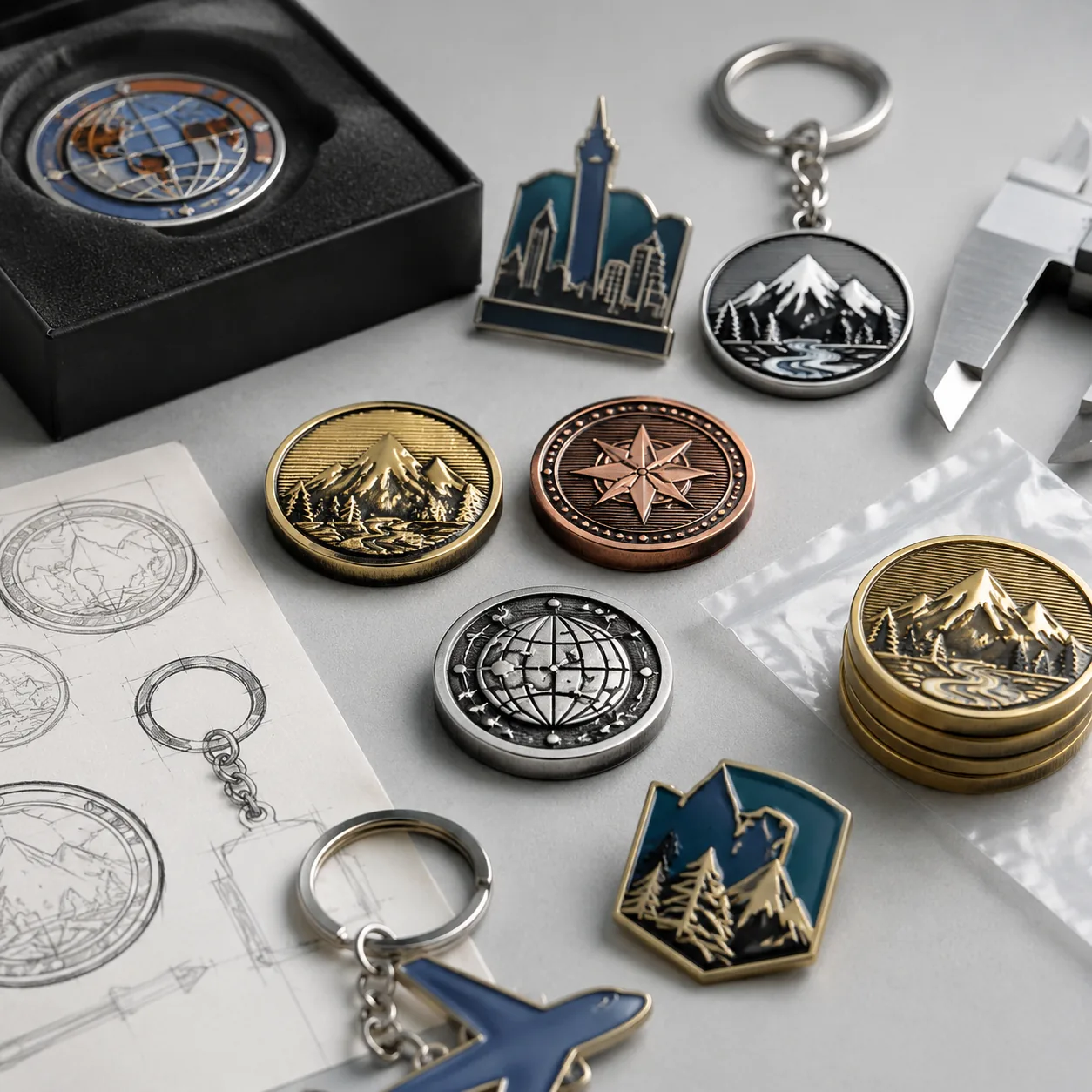
Start with the use case, not the product
Most sourcing errors start when buyers ask for a product before defining the job it must do. A pin, coin, badge, keychain, challenge token, or bottle opener can look similar on a quote sheet, but the right build depends on wear time, handling frequency, distribution channel, and acceptable cosmetic risk. A one-day conference handout can tolerate wider cosmetic variation than a retail gift, a collector coin, or an executive award. If you skip this step, factories will quote different assumptions and your comparison will be meaningless.
A practical example: an event badge for a single-day show usually prioritizes low unit cost, fast turnaround, and reliable attachment. A retail pin needs tighter plating control, cleaner edge finishing, and more consistent color because it will be inspected in hand and photographed. A keychain for daily use needs stronger ring hardware and a finish that can survive abrasion. The best RFQs state the end use first, then translate it into measurable specs.
- Define the end use in one sentence: giveaway, retail, award, or internal recognition.
- State the environment: indoor, outdoor, humid, frequent handling, or one-time event.
- Specify the inspection level: casual glance, desk-side use, or close retail inspection.
- Name non-negotiables early: nickel-free, magnet-free, child-safe, or reorder matching.
Write the RFQ so every factory quotes the same build
A strong RFQ is complete, not long. The goal is to remove hidden assumptions so every factory prices the same geometry, finish, accessory set, and packing level. If you send only a picture, one supplier may assume stamped brass with soft enamel, another may quote die-cast zinc alloy with hard enamel, and a third may simplify the design to win on price. The cheapest quote is often the least comparable.
Include measurable specs wherever possible: overall size in mm, thickness in mm, artwork count, metal type or preferred base alloy, plating color, plating thickness target, enamel type, attachment style, accessory count, and packing method. For small promo metal goods, a typical tolerance band is ±0.3 mm on simple stamped parts and ±0.5 mm on more complex die-cast shapes; hole positions, clasp fit, and alignment should be called out separately. Decorative flash plating is usually specified at about 0.03 to 0.05 microns, while durable decorative finishes often need a heavier deposit, better base metal prep, or a different process entirely. If you do not know the final build, ask for two valid options and compare them on the same quantity ladder.
| RFQ item | Good spec example | Why it matters |
|---|---|---|
| Size | 35 mm wide x 28 mm high | Prevents quote drift and die mismatch |
| Thickness | 1.5 mm stamped brass | Controls weight, feel, and cost |
| Plating | Nickel, polished, 0.03-0.05 micron flash | Sets appearance and corrosion expectations |
| Color | Pantone 186 C by code | Avoids subjective color naming |
| Packing | 1 pc polybag, 50 pcs per carton | Keeps freight and handling comparable |
Choose the manufacturing route before comparing price
Many buyers compare quotes before deciding whether the item should be stamped, cast, etched, printed, or assembled from subcomponents. That creates false savings. The build method drives tooling, surface quality, unit cost, and rework risk more than almost any other choice. The right process is the one that preserves the details that matter at the lowest practical risk.
Stamped brass usually gives sharper lines and lower cost on simpler, flatter artwork such as logos, text badges, and standard pins. Die-cast zinc alloy is better for thicker 3D shapes, soft curves, and sculpted faces, though very fine edges can round slightly. Etching works well for shallow relief and micro-detail, but it usually looks less bold than a stamped or cast part. Printing can be cost-effective for full-color graphics and gradients, but its abrasion resistance depends on the ink system, topcoat, and handling profile.
A simple decision rule helps: if the design is mostly 2D and the edges matter, start with stamped brass. If the design is sculpted or thick, start with die-cast zinc alloy. If the design is line-heavy but shallow, consider etching. For mixed-color retail pieces, confirm whether the factory is using hard enamel, soft enamel, UV print, or epoxy dome, because each changes gloss level, surface feel, and wear behavior.
| Process | Best for | Trade-off |
|---|---|---|
| Stamped brass | Crisp 2D logos, fine outlines | Less suitable for deep 3D relief |
| Die-cast zinc alloy | Thicker shapes, sculpted surfaces | Can soften tiny sharp details |
| Etched metal | Micro detail, shallow texture | Usually less bold than stamped relief |
| Printed surface | Full-color artwork, gradients | Lower abrasion resistance than filled metal |
Lock sample criteria before anyone approves the run
A sample is only useful if both sides agree on what it must prove. Buyers often approve a sample because the shape looks right, then discover the bulk run differs in plating tone, enamel fill, or back fitting. Before sampling, define the pass/fail checklist: color, line sharpness, surface texture, edges, attachment strength, and packaging. If a sample passes visually but fails physically, the bulk order still fails the market test.
For a pin or badge, the sample should confirm front-face appearance, back-side finishing, and attachment stability under normal handling. For a keychain or coin, it should also verify ring strength, chain length, edge alignment, and whether the finish scratches during light abrasion. If the item uses moving parts, magnets, or epoxy dome coating, ask for a functional test, not just a visual review. For plated items, ask the factory to state the plating method, target thickness, and whether the finish is decorative or wear-resistant, because those are not the same thing.
- Check plating tone against the approved reference under neutral light.
- Confirm enamel fill is level and not underfilled or overdomed.
- Inspect edge burrs, sharp points, and visible pits.
- Test closures, rings, magnets, or fasteners by hand.
- Verify carton count, bag count, and label format if packing is customer-facing.
Use a staged checkpoint table instead of one final yes-or-no
The best way to prevent surprises is to split approval into checkpoints rather than one final decision. First approve the artwork and structure. Then approve the physical sample. Finally approve a golden sample or pre-production sample if the order is large, time-sensitive, or color-critical. This matters even more when multiple plants or subcontractors are involved, because each stage catches a different type of risk.
For mixed promo sets, the sample stage should also confirm that brand color, finish, and dimensions stay consistent across different item types. A pin and a keychain may not share the same material, but they should still read as one set when placed together. Keep one master reference for the set and one signed approval record per item so production does not drift between components. If your supplier cannot preserve a repeatable master sample, the bulk order is already risky.
| Checkpoint | What to approve | Typical buyer mistake |
|---|---|---|
| Artwork proof | Size, line work, text, Pantone code | Approving a render without dimensions |
| Physical sample | Shape, color, attachment, finish | Ignoring back-side quality |
| Golden sample | Final benchmark for bulk | Not storing the signed reference |
| Bulk pre-check | Carton count, label, packing | Skipping packing review until shipment |
Set bulk controls before the run starts
Bulk production is where small ambiguities become expensive. Before mass production, lock the final spec sheet, approved sample reference, quantity, tolerance range, and packaging details. If the order is reorderable, save the exact plating color, enamel formula, backing style, and carton configuration. That reduces the risk of “same design, different result” six months later when the buyer needs a repeat order for a new event or campaign.
For metal promo products, the biggest bulk risks are usually finish variation, accessory substitution, and packing drift. Confirm whether the quoted price assumes standard tooling or custom tooling, one-sided or double-sided decoration, and single-piece or multi-piece packing. Ask for an inspection standard appropriate to the channel. Many buyers use AQL 2.5 for major defects and AQL 4.0 for minor defects on promotional goods, while retail orders often need tighter internal controls on cosmetics, fit, and count accuracy. The right level depends on return risk and how visible the product is after delivery.
Lead time should be separated into tooling, sampling, and bulk production. A straightforward stamped pin may need 5 to 8 days for tooling, 7 to 12 days for sample development, and 15 to 25 days for bulk after approval. A die-cast keychain or multi-part set can run 7 to 12 days for tooling, 10 to 15 days for sampling, and 20 to 35 days for bulk. If a supplier promises unusually short timing, confirm whether that includes artwork revisions, sample transit, inspection, and packing. Fast is useful only when the schedule is realistic.
| Order type | Tooling lead time | Sample lead time | Bulk lead time | Typical MOQ | Indicative FOB price range |
|---|---|---|---|---|---|
| Simple stamped pin | 5-8 days | 7-12 days | 15-25 days | 100-300 pcs | USD 0.25-0.70/pc at 500-1,000 pcs |
| Die-cast keychain | 7-12 days | 10-15 days | 20-35 days | 100-500 pcs | USD 0.80-2.50/pc |
| Challenge coin | 7-12 days | 10-14 days | 18-30 days | 100-300 pcs | USD 0.90-3.20/pc |
| Multi-color retail badge | 6-10 days | 8-14 days | 18-28 days | 200-500 pcs | USD 0.60-1.80/pc |
Price the order by risk, not only by unit cost
A low FOB price can be real, but it can also hide weaker control over plating, polishing, or packing. The quote should show where the money goes: tooling, base metal, surface finishing, labor, inspection, accessories, and packaging. For custom promo metal items, FOB pricing moves sharply with quantity and complexity. A simple stamped pin may price in the range of USD 0.25 to 0.70 per piece at 500 to 1,000 units, then drop at higher volume. A die-cast keychain or multi-color challenge coin can stay in the USD 0.80 to 2.50 range, or higher if the design has heavy 3D relief, multiple finishes, or premium packaging.
When comparing offers, ask each factory to quote the same quantity ladder and the same packing level. A quote for 300 pieces, loose packed, is not comparable with a quote for 3,000 pieces, individually bagged, with backing cards. If you need to optimize budget, cut complexity before cutting inspection. Simplifying the build, reducing the number of colors, removing epoxy, or choosing a standard attachment usually saves more than negotiating a tiny unit-rate change. The correct question is not “Which quote is lowest?” but “Which quote best controls failure risk at the target sell-through price?”
- Compare MOQ tiers, not a single price point.
- Match packing level across every quote.
- Ask whether tooling is one-time or repeat-use.
- Check whether the price includes sample freight or only production EXW/FOB.
- Confirm what happens to price if artwork changes after approval.
Use a repeatable handoff and reorder system
Once the first order is complete, the real value is in repeatability. Save the signed spec sheet, approved samples, Pantone references, mold or die numbers, packing instructions, and any defect photos from inspection. For repeat orders, ask the factory to confirm whether the old tooling is still in service, whether the plating bath or enamel mix has changed, and whether the same subcontractor will handle polishing or printing. If the item is a branded program piece, consistency matters more than shaving a few cents off the next order.
A good reorder file should let a purchasing manager restart the job without decoding old emails. That means one file for art, one for physical approval, one for packaging, and one for freight or compliance notes. If the item ever needs a line extension or seasonal variant, the cleanest path is to keep the base construction identical and change only the artwork or accessory where possible. That keeps lead time shorter, tooling simpler, and color control more stable.
What to send before you request quotes
If you are preparing a new order, build the RFQ around function, process, sample criteria, and bulk controls before you send anything out. Use one approved reference for size, color, finish, and packing, and make sure the factory signs off on the same document you will use for production. That discipline cuts rework far more effectively than chasing the cheapest number.
| RFQ element | Minimum detail to include | Example |
|---|---|---|
| Use case | Channel and handling profile | 3-day trade-show giveaway, indoor use |
| Geometry | Size, thickness, and side count | 35 x 28 x 1.5 mm, double-sided |
| Finish | Plating, color, and enamel type | Nickel plating, soft enamel, Pantone 186 C |
| Quantity | Target and ladder tiers | 300 / 500 / 1,000 pcs |
| Packing | Unit pack and carton count | 1 pc polybag, 50 pcs per carton |
| Approval | Sample and inspection standard | Golden sample sign-off, AQL 2.5 major / 4.0 minor |
- One-sentence use case and channel
- Exact size, thickness, and decoration method
- Target quantity ladder with MOQ expectations
- Approved color references and finish notes
- Sample approval criteria and inspection standard
- Packing format, carton count, and label requirements
- Lead time target for tooling, samples, and bulk
If you want a practical next step, draft a one-page spec sheet with artwork, dimensions, materials, finish, quantity, packing, and approval checkpoints. Then request two or three process options from the supplier so you can compare stamped, cast, etched, or printed builds on equal terms. At ZheCraft, we usually help buyers tighten that sheet first, because good sourcing starts with removing ambiguity before anyone cuts a mold or mixes enamel.
Have a project? Send your artwork and target quantity and we’ll reply with a detailed quotation within 12 working hours.
Ready to get this made?
Send your sketch, target quantity and ship-date. Detailed quotation in 12 hours.



