From RFQ to Bulk: A Practical Custom Pin Sourcing Workflow
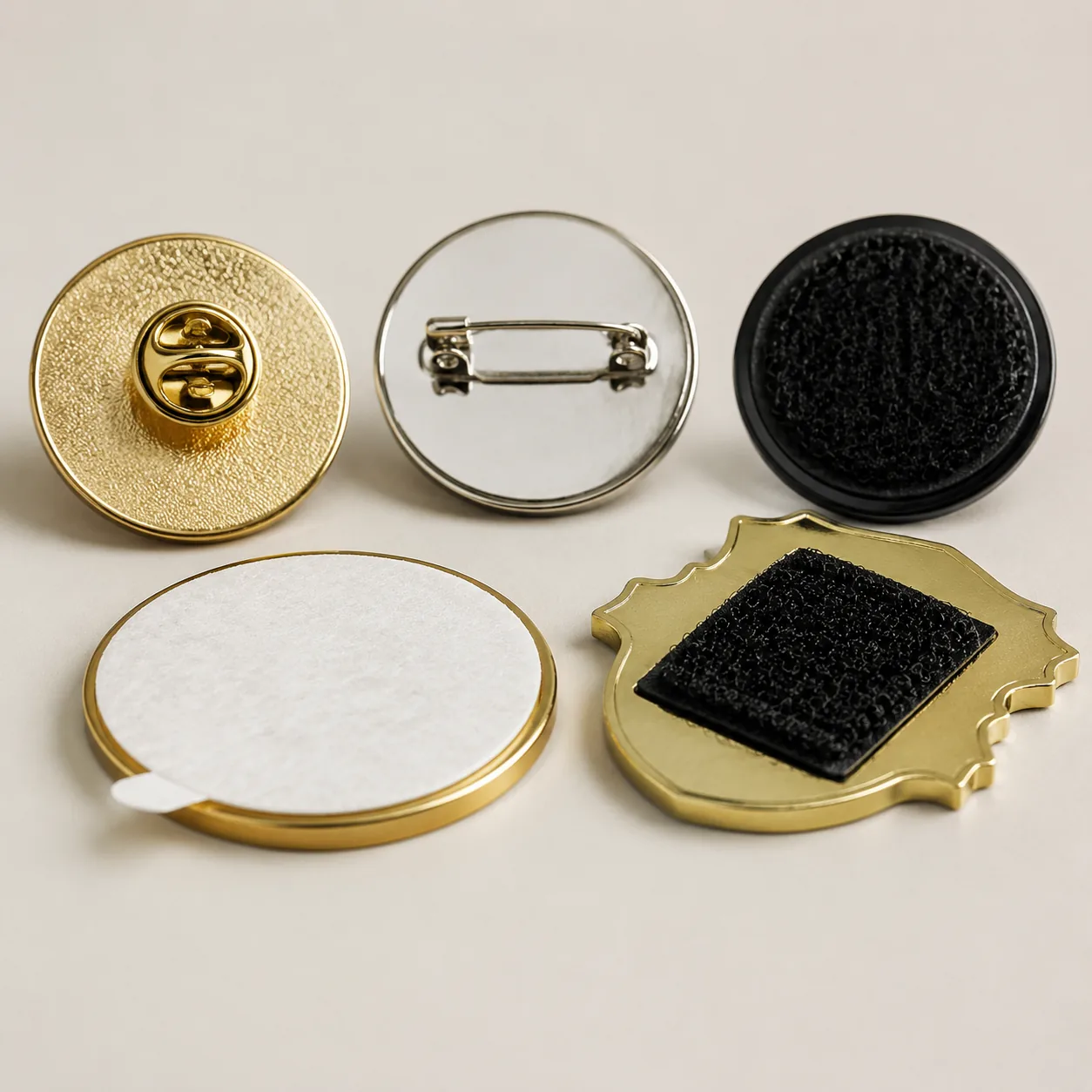
Start With the RFQ You Actually Want Quoted
Most custom pin sourcing problems begin before pricing. If the RFQ is vague, factories quote different assumptions for size, plating, fill method, backing, packaging, and inspection level, so the cheapest offer is often just the loosest interpretation. A useful RFQ forces every supplier to price the same build with the same scope, so you can compare quote-to-quote instead of guessing what was omitted.
For custom enamel pins, specify the finished size in mm, metal thickness, enamel type, plating finish, attachment, quantity tiers, packing method, and the sample and bulk target dates. If you already know the artwork constraints, include minimum line width, minimum text height, and whether cutouts are allowed. A one-page spec sheet plus vector art and one reference image is usually better than a long email thread. When the buyer is precise, the factory can quote faster and with fewer corrections later.
- State size as finished dimension, not artwork canvas size.
- Specify soft enamel or hard enamel, not just “metal pin.”
- Give plating in a named finish and, if needed, a thickness target in microns.
- List quantity breaks such as 100, 300, 500, and 1,000 pcs.
- Ask suppliers to quote FOB and sample cost separately.
- Require lead time in days for sample and bulk, not vague weeks.
Turn Artwork Into Manufacturable Specs
A good design is not automatically manufacturable. The factory has to know what can be stamped, what must be filled, and what will lose detail during polishing or plating. Thin strokes, floating islands, tiny text, and deep negative spaces may look fine on screen and fail in production. The earlier you define the limits, the less time you spend on redesigns after the quote is already in motion.
For standard custom enamel pins, a practical starting point is a minimum line width of 0.25-0.30 mm, minimum text height of 1.2-1.5 mm, and a finished thickness of 1.0-1.8 mm. Soft enamel usually gives more visible metal borders and a lower FOB price. Hard enamel is flatter, more jewelry-like, and more abrasion resistant, but it is less forgiving on fine relief and usually needs tighter polishing control. If the design includes translucent color, glitter, glow, or epoxy dome finishing, call that out explicitly because those options change both cost and lead time.
| Spec item | Practical sourcing guidance |
|---|---|
| Finished size | Quote in mm; round to the nearest 0.5 mm |
| Thickness | Typical 1.0-1.8 mm depending on build |
| Line width | 0.25-0.30 mm minimum for reliable forming |
| Text height | 1.2-1.5 mm minimum if readability matters |
| Plating | Nickel, black nickel, gold, antique brass, or custom finish |
| Fill type | Soft enamel, hard enamel, or no color fill |
| Tolerance | Finished size typically within ±0.2 mm on small pins |
Use practical design rules, not only aesthetic judgment. If a pin is under 25 mm tall, text below 1.2 mm is often difficult to read after plating and fill; if the design uses multiple separated color fields, keep each cavity wide enough to accept a clean enamel pour without overfill. For hard enamel, very fine recessed detail can disappear after repeated polishing, so designs that depend on sharp ridges should be reviewed with the factory before mold cutting. If you need consistent brand color, reference Pantone numbers and ask for the supplier’s actual enamel swatch card rather than a verbal color match.
Ask for Quotations That Can Be Compared
A quote is only useful when each supplier is pricing the same build. One factory may include mold, plating, epoxy, individual polybags, and air freight estimates, while another only prices bare pins. If you compare totals without normalizing scope, you are comparing assumptions, not offers. The fix is simple: send one RFQ template and require every supplier to respond in the same format.
For typical factory quoting, MOQ can start around 50-100 pcs for simple designs, 300 pcs for most custom runs, and 500 pcs or more for better unit economics and more stable plating setup. FOB China pricing for standard custom enamel pins often lands around USD 0.35-0.90 per piece at 500-1,000 pcs, USD 0.25-0.70 at 2,000+ pcs, and USD 0.90-2.50 at low-volume pilot orders. Hard enamel, cutouts, glitter, glow, epoxy, or special plating can push prices higher. Sample charges are commonly USD 30-80 per design, with mold fees often USD 30-150 depending on size and complexity.
| Order tier | Typical MOQ | FOB price range | Typical lead time |
|---|---|---|---|
| Pilot order | 50-300 pcs | USD 0.90-2.50/pc | 12-20 days sample; 18-30 days bulk |
| Standard bulk | 500-1,000 pcs | USD 0.35-0.90/pc | 12-18 days sample; 20-28 days bulk |
| Repeat bulk | 2,000+ pcs | USD 0.25-0.70/pc | 10-15 days sample; 15-25 days bulk |
Treat tooling and production as separate line items. A fair RFQ should ask whether mold/tooling is one-time or amortized, whether the sample fee is deductible from the bulk order, and whether packaging is included in the unit price. For inspection, ask the factory to quote against AQL 2.5 for major defects and 4.0 for minor defects, or state your own accepted criteria if you need a tighter screen for retail use. Also confirm whether shipping terms are FOB, EXW, or DDP, because freight and export handling can change the landed cost materially.
- Separate one-time tooling from recurring unit cost.
- Ask whether plating and color fill are included in the unit price.
- Confirm whether the sample charge is refundable on bulk orders.
- Request the inspection standard, such as AQL 2.5 for major defects and 4.0 for minor defects.
- Make sure packaging is quoted per piece or per carton, not implied.
- Ask for a lead-time split: sampling, sample approval, and bulk production.
Check the Sample Like a Factory Would
Sampling is where you catch cheap mistakes before they become expensive. A supplier sample should confirm proportion, edge quality, plating tone, color match, attachment strength, and whether the design survives polishing without losing detail. If you approve a weak sample, bulk production will usually reproduce the same weakness at scale. The goal is not a pretty sample; it is a sample that proves the process is repeatable.
When the sample arrives, check it against the approved artwork and spec sheet, not against memory. Measure finished size, compare enamel fill against the Pantone reference or agreed color chip, and inspect the back for burrs, sink marks, and pin-post alignment. If the pin uses epoxy, confirm that the dome is centered and does not blur fine text. For plated items, look for thin spots on raised edges and discoloration in recessed areas, because those issues become more visible in bulk. A good sample should already be close to the production target, not something the factory plans to “fix later.”
| Sample check | What good looks like |
|---|---|
| Outline | No waviness, no sharp burrs, no visible warp |
| Plating | Even tone, no patchiness, no exposed base metal |
| Color fill | Clean edges, no overflow, no pinholes |
| Attachment | Post centered, clutch fits firmly, no rotation |
| Thickness | Matches agreed spec within about ±0.2 mm |
| Back finish | Smooth enough to avoid fabric snagging |
Use a real acceptance checklist. Verify the sample under bright light, then again under normal indoor lighting, because some plating defects only show at angle. If your design has engraved text, confirm that the minimum stroke remains legible at arm’s length, not just with magnification. For retail programs, keep one retained sample sealed and labeled by revision so later disputes can be compared to a physical reference, not a recollection.
Use a Clear Approval Gate Before Bulk
A good approval process prevents the classic “we thought that was included” dispute. Once mass production starts, changes become expensive because mold work, plating batches, and color mixing are already locked in. The approval must say exactly what is approved, which revision was approved, and which details remain open. Without that written gate, reorders drift and nobody can prove where the spec changed.
The cleanest sequence is artwork approval, sample approval, and then pre-production confirmation if the order has manual color mixing, multi-plating, or a tight ship date. For repeat orders, lock the golden sample, exact plating code, enamel formulas, backing type, and packaging spec so the reorder matches the first run. If the supplier cannot hold a realistic production tolerance, that is a warning sign. For most small enamel pins, a size tolerance of ±0.2 mm and color consistency against the approved sample is a reasonable benchmark.
The written approval should be specific enough to resolve disputes. State the approved revision number, attach the sample photo set, and identify any acceptable variation such as slight tone change on antique plating or minor brush marks on hand-filled areas. If the product has multiple SKUs, approve each SKU separately; otherwise a factory may mix minor differences across the lot and still consider it one approved style. Keep the approval email and the PO together, because the gap between those two documents is where most later misunderstandings start.
- Approve the sample in writing with date and version number.
- State any deviations you accepted intentionally.
- Lock plating code, enamel colors, and backing type.
- Keep the approved sample as the production reference.
- Ask for pre-production photos if the order is large or time-sensitive.
Choose the Bulk Plan That Fits Your Risk Level
Bulk production is where RFQ discipline pays off. The right batch size depends on whether the design is already proven, how fixed the artwork is, how time-sensitive the delivery is, and how much variation you can tolerate across reorders. If the design is new, a smaller first batch is usually safer than chasing the lowest unit price. If the pin is part of a long-running merch program, a larger run can lower unit cost and stabilize finish matching.
A practical rule is to match MOQ to product risk. Simple soft enamel pins with one plating finish can move faster and cheaper than hard enamel pins with multiple color zones, cutouts, or special effects. As complexity rises, so does the chance of rework and schedule slips. For untested artwork, a pilot batch reduces exposure and gives you a real sample in the market before you commit to a deeper buy.
| Batch strategy | When it makes sense | Typical commercial effect |
|---|---|---|
| Pilot batch 100-300 pcs | New design, tight deadline, or uncertain demand | Higher unit cost, lower risk |
| Standard bulk 500-1,000 pcs | Known seller, stable artwork, normal promotional use | Balanced pricing and schedule |
| Larger bulk 2,000+ pcs | Repeat program, fixed specs, better FOB target | Lowest unit cost, higher commitment |
Match the batch plan to the failure mode you are trying to avoid. If you are validating art, prioritize speed and a real sample over the cheapest FOB price. If you are replenishing a proven SKU, lock the spec and push the factory for better throughput, tighter inspection, and stable plating lots. For programs with seasonal demand, ask the supplier to reserve plating material or raw blanks after sample approval so you are not competing for capacity during peak periods.
Set Quality Controls Before the Shipment Leaves
The shipment should be judged against the spec sheet, not optimism. A clear quality plan tells the factory what to inspect, how to reject, and what defects are unacceptable. Without that, minor cosmetic issues can slip through because everyone assumes someone else made the call. The quality plan should be written into the PO or order confirmation, not left as an internal note.
For pins and similar metal promo items, a useful baseline is AQL 2.5 for major defects and 4.0 for minor defects, with zero tolerance for wrong artwork, wrong attachment, broken posts, missing color, or severe plating failure. Ask for carton counts, random photos, and, if needed, a pre-shipment inspection report that references the approved sample. If you are shipping mixed SKUs, require clear carton marks and a final SKU count, because mix-ups are often more expensive than small visual defects.
Define defects in plain terms. A major defect is one that affects saleability or function, such as a missing clutch, bent post, wrong color field, or exposed base metal. A minor defect is cosmetic but still noticeable, such as a tiny plating speck or a slight enamel overfill that does not break the design boundary. If the order is retail-bound, consider adding a stricter appearance screen for front-side cosmetics even when the factory’s formal AQL is acceptable, because shelf presentation is not the same as export pass/fail.
- Define major vs minor defects in writing.
- Specify how many samples are pulled per lot.
- Require a final quantity count by SKU.
- Ask for carton marks that match the PO.
- Reject mixed-plated or mixed-color lots unless pre-approved.
- Require photo proof of labels, cartons, and packed goods before booking freight.
What to Do Next
If you are sourcing a custom pin program now, start by turning your idea into a one-page RFQ with artwork, finished size, plating, fill type, quantity tiers, packing, and target dates. Send the same RFQ to multiple suppliers so you can compare scope, not just price. That single discipline usually reveals which factory understands process control and which one is only quoting a guess. If the numbers come back too far apart, the issue is usually not price; it is scope drift.
If you want the lowest-risk path, begin with a sample-first order, approve it in writing, and only then release bulk. For repeat programs, lock the approved sample, exact specs, and inspection criteria so the next reorder behaves like the first one. If needed, ZheCraft can help translate a rough concept into a production-ready spec sheet before you request quotes.
Have a project? Send your artwork and target quantity and we’ll reply with a detailed quotation within 12 working hours.
Ready to get this made?
Send your sketch, target quantity and ship-date. Detailed quotation in 12 hours.



