From RFQ to Bulk: A Buyer’s Pin Sourcing Workflow
Start With the RFQ, Not the Artwork
Most pin orders go wrong before a quote is issued. Buyers send a logo file, ask for a price, and leave out the details that determine tooling, unit cost, inspection standard, and lead time. A usable RFQ should define the pin type, finished size, quantity tiers, plating, color count, backing, packaging, and required ship date. If those inputs are vague, suppliers either pad the quote or make assumptions that later become change orders.
For custom enamel pins, state the construction you expect because soft enamel and hard enamel are not interchangeable. A 25 mm soft enamel pin with 4 colors and one butterfly clutch is a different build from a 25 mm hard enamel pin with polished flat fill, even when the artwork is identical. For a clean RFQ, send one vector file, one reference image for finish, and one line-item spec sheet so every supplier quotes against the same target.
- Pin type: soft enamel, hard enamel, die-struck, printed, or mixed media
- Exact size in mm, measured at the widest point
- Plating finish and color, such as gold, nickel, antique brass, black nickel, or matte black
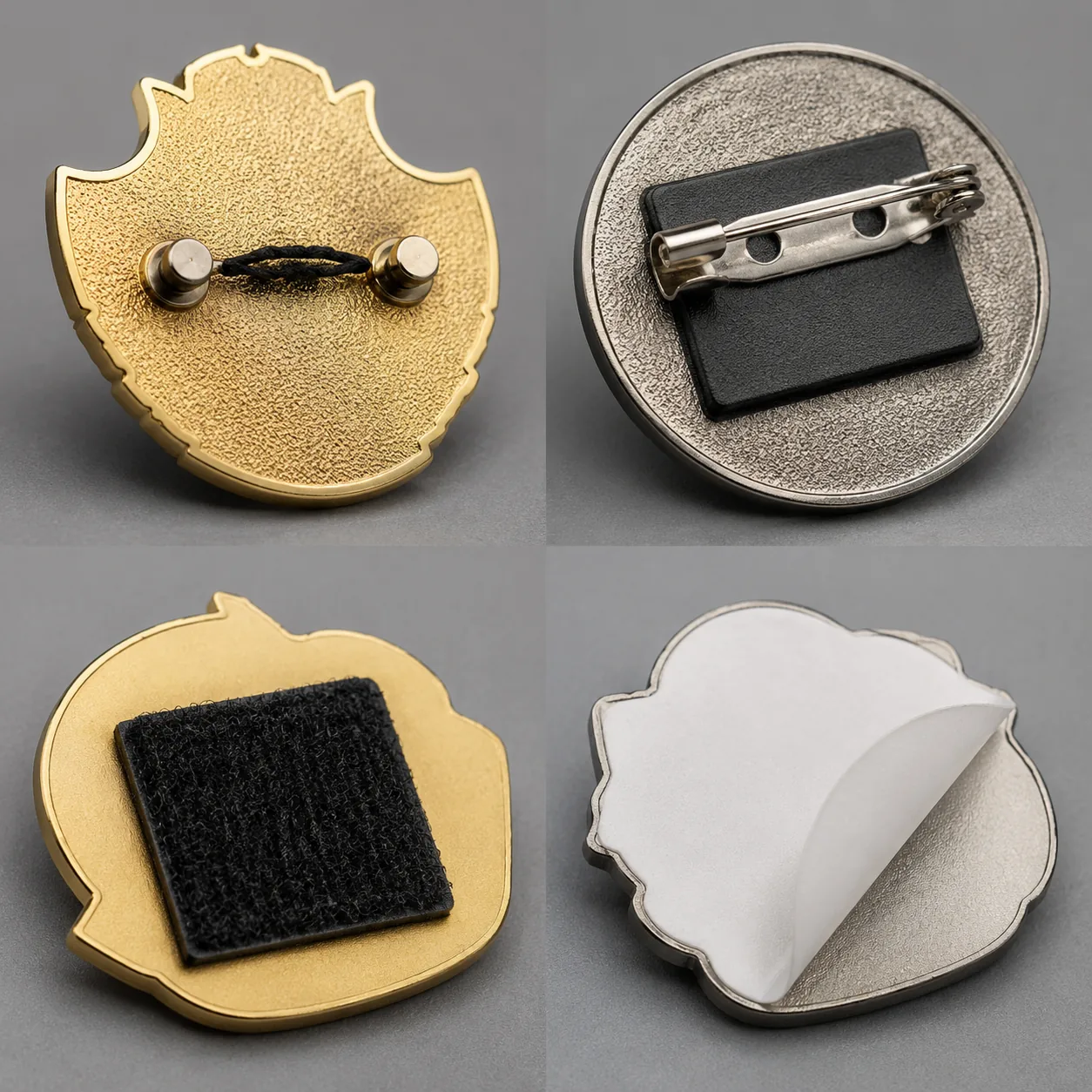
- Attachment type and backing requirements
- Packaging requirement, including individual bag, backing card, or gift box
- Target quantities with tier breaks, such as 100 / 300 / 500 / 1,000 pcs
- Target approval date and ship date, both in calendar days
Translate Artwork Into Manufacturable Specs
A good design still has to survive tooling, fill, polishing, and assembly. The factory needs to know where the linework becomes metal, where color boundaries sit, and which details are too fine for the chosen size. For pins in the 20 to 30 mm range, line widths below about 0.20 mm and text smaller than about 4 pt often become risky unless the layout is simplified. That is why the RFQ should include not just artwork, but the final size and any non-negotiable details.
The most useful spec set combines vector artwork, a dimensioned mockup, and a short tolerance note. Typical practical tolerances for custom metal promo products are about +/-0.3 mm on outline size for small pins and +/-0.5 mm for larger pieces, though actual control depends on shape and process. If the design has cutouts, floating elements, or thin bridges, ask the factory to confirm minimum bridge width before sampling, because that affects tooling strength and reject risk.
| Spec item | Good buyer input | Why it matters |
|---|---|---|
| Final size | 28 mm wide | Controls line weight, detail retention, and quote |
| Minimum text | 4.5 pt outlined | Prevents unreadable or broken text |
| Border width | 0.25 mm minimum | Reduces plating loss and weak edges |
| Cutout gap | 0.4 mm minimum | Helps tooling survive repeated production |
| Color count | 5 colors + 1 metal line | Affects fill labor and unit cost |
For plated finishes, ask for the visual target in plain language, not just a color name. “Bright nickel, mirror polish” is a more useful instruction than “silver tone.” If the pin will sit on dark fabric, a stronger border and higher contrast colors usually read better than a crowded layout with six micro-details. In practical terms, the buyer should optimize for manufacturability before asking for premium decoration.
Request Quotes You Can Compare Fairly
The biggest quoting mistake is comparing prices that do not describe the same product. One supplier may quote a soft enamel pin with standard polybagging, while another includes hard enamel, epoxy, and a backing card. On paper, the second quote can look expensive, but it may actually be the better value once finishing and packaging are normalized. A fair comparison starts by forcing every supplier to answer the same spec set.
Ask for USD FOB pricing with clear MOQ tiers, because unit cost usually drops sharply at 100, 300, 500, and 1,000 pcs. For many custom pins, a simple stamped soft enamel pin often lands around USD 0.75 to 1.80 FOB at 1,000 pcs, while small-run pricing at 100 pcs can be closer to USD 1.80 to 4.50 FOB depending on size, plating, and packaging. Hard enamel usually runs higher because it adds polishing and more controlled fill work. Straightforward items typically take 12 to 20 days after sample approval; complex mixed-finish builds or rush programs can stretch to 20 to 30 days.
| Tier | Soft enamel FOB | Hard enamel FOB | Typical note |
|---|---|---|---|
| 100 pcs | USD 1.80 to 4.50 | USD 2.20 to 5.50 | Tooling and setup dominate |
| 300 pcs | USD 1.10 to 2.80 | USD 1.50 to 3.60 | Best for pilot drops |
| 500 pcs | USD 0.90 to 2.20 | USD 1.20 to 2.90 | Common commercial MOQ |
| 1,000 pcs | USD 0.75 to 1.80 | USD 1.05 to 2.40 | Best unit economics |
Ask whether tooling is included or billed separately. For many pin programs, mold cost may run USD 40 to 120 for a simple shape, while more complex multi-level designs can be higher. Also clarify whether plating is decorative only or controlled to a thickness target. Decorative nickel or gold flash is often roughly 0.1 to 0.15 microns, while heavier wear-resistant plating can be specified above that for premium programs. Finally, confirm whether the quote includes packaging, because a backing card can add real cost even when the pin itself is inexpensive.
- Confirm whether the quote includes mold/tooling or if it is separate
- Ask whether plating thickness is decorative or controlled to a target, such as 0.10 to 0.15 microns for light decorative plating
- Check if packaging is priced separately per unit or per carton
- Ask whether sample cost is refundable against bulk order
- Request the inspection standard, commonly AQL 2.5 for major defects and AQL 4.0 for minor defects on promo items
Use the Sample Stage to Expose Risk Early
The sample is not a formality; it is the cheapest place to discover whether the design can actually be produced cleanly. A good pre-production sample should confirm outline, color placement, plating tone, attachment, and physical feel in hand. Buyers often focus only on color match, but the more expensive failure is usually structural: weak pin posts, poor balance, exposed metal slivers, or fill that pulls away from edges.
At sample approval, measure the actual dimensions against the drawing, especially if the design is asymmetrical or tightly detailed. If the item is hard enamel, confirm that the surface is flush enough for the intended use and that polishing has not erased key detail. If it is soft enamel, inspect fill depth and metal ridge height, because inconsistent fill makes a pin look uneven even when the artwork is technically correct.
| Sample check | Acceptable buyer focus | Common failure |
|---|---|---|
| Outline size | Within agreed tolerance | Tooling drift or shrinkage |
| Color match | Close to approved reference | Wrong Pantone interpretation |
| Plating tone | Consistent with reference | Overbright or muddy finish |
| Attachment | Secure and centered | Post misalignment or weak clutch |
| Surface | Clean, no pits or burrs | Polish marks or rough edges |
If the design has moving parts, epoxy domes, glow pigment, or screen-printed details, test them on the sample instead of assuming they will scale cleanly. Epoxy can slightly soften fine linework, glow pigments can mute on dark metal, and printed details may shift in registration by a fraction of a millimeter. A sample should prove the design survives the actual process, not just look good on screen.
Lock the Spec Before Bulk Production
Once the sample is approved, move the order into a frozen spec sheet. That document should capture the approved size, color reference, metal finish, attachment, packaging, and any deviations the factory used to make the sample workable. Without that step, the bulk run can quietly revert to the original artwork or a salesperson’s shortcut version, which creates disputes that are hard to resolve after production starts.
This is also the point to confirm the production quantity split. Many buyers place one order for 1,000 pcs but actually need mixed packing, such as 600 individually bagged pins, 300 on backing cards, and 100 as spare stock. If that split is not written down, the factory may choose the easiest packing method and charge extra to rework the rest. For shipment-critical orders, require one buyer-side approver and one written approval trail so there is no conflict on what was accepted.
- Freeze the approved sample as the reference standard
- List the exact Pantone or visual color references used for approval
- Record any accepted compromises, such as slightly thicker lines or a simplified cutout
- Confirm packaging split by quantity
- Confirm carton count, inner pack count, and label text
- Name one buyer-side approver to avoid conflicting instructions
The frozen spec should also state what happens if the bulk run drifts outside the approved window. Common remedies include rework, sorting, or partial replacement, but those options are far easier to negotiate before production begins. If the order is tight on date, set a clear cutoff for buyer approval so the factory is not waiting on a late signoff while plating or packing slots slip.
Choose the Right Production Controls
Bulk production is where the process either stays stable or starts drifting. For metal promotional items, the most useful controls are measurable checks: incoming metal thickness, plating consistency, color fill control, and packing accuracy. If the factory has in-house molding, polishing, plating, and assembly, traceability is easier. If those steps are outsourced, expect more variance and longer problem resolution.
A practical quality framework is to inspect first article output, then a mid-run sample, then finished goods before packing. Common checks include finish coverage, attachment alignment, pinback retention, edge burrs, and carton count. For larger runs, ask whether the factory uses AQL 2.5 for major defects and AQL 4.0 for minor defects, or a stricter internal standard for premium orders. For a 1,000-piece run, an in-process pull every 2 to 3 hours is a reasonable control point for many factories.
| Control point | What to verify | Typical buyer note |
|---|---|---|
| First article | Size, finish, color, attachment | Approve before full run |
| Mid-production | Consistency across a random pull | Catch drift early |
| Pre-pack inspection | Surface, count, and packing | Prevent packing-stage damage |
| Carton closeout | Quantity, label, and weight | Match shipping docs |
For shipments that must land in retail channels, ask for pack-out photos and a count sheet before final carton close. That extra step is useful when the order includes multiple SKUs or a mix of backing cards and polybags. If the supplier cannot show the product in the final pack format, you are still at risk of a late packing error even if the pins themselves are acceptable.
Budget for the Real Cost, Not Just the Unit Price
A low quote can still become an expensive order if it hides rework, shipping delays, or unusable samples. The real budget should include tooling, sample freight, production lead time, packing upgrades, and the cost of any likely correction. More complex finishes such as dual plating, glitter enamel, translucent colors, or epoxy coating can improve presentation, but they usually increase labor and reject risk.
The safest comparison is to model three scenarios: bare production, standard packaging, and premium packaging. A pin that is USD 1.10 FOB in a simple bag may become USD 1.35 to 1.70 FOB once a backing card, printed insert, and individual pouch are added. That is reasonable for retail or gift use, but unnecessary if the pins are only going into a trade-show giveaway tray. Treat packaging as part of the product decision, not a leftover line item.
- Use FOB pricing to compare factory offers, not vague ex-works estimates
- Separate tooling from unit price
- Estimate sample cost as a real project expense, not a bonus
- Treat packaging as a design decision, not a leftover step
- Budget 1 to 3 percent extra units if the program is shipment-critical
Lead time should be budgeted in days, not optimism. A typical pin project may need 3 to 5 days for artwork confirmation, 5 to 10 days for sampling, and 12 to 20 days for bulk after approval. Add transit time, customs clearance, and one possible revision cycle, and the total calendar window can easily exceed a month. Buyers who only budget manufacturing days usually miss the real delivery date.
Move to Bulk Without Losing Control
The cleanest sourcing workflow is simple: write the RFQ, simplify the artwork to match the target size, compare quotes on the same spec sheet, approve one physical sample, then freeze the production standard before bulk. That sequence keeps small design issues from turning into mass rework. It also gives procurement a defensible paper trail if there is a later dispute over color, finish, or count.
If you are sourcing a pin order now, send one drawing, one target quantity, one packaging requirement, and one approval deadline. A supplier can usually tell you within a short engineering review whether the design is straightforward, borderline, or likely to need simplification before quoting. The same workflow also works for keychains, badges, coins, and lanyard sets because it forces every supplier to answer the same production questions before price becomes the only decision.
A practical closeout checklist keeps the handoff tight and prevents last-minute surprises:
- Confirm the approved sample number and date
- Verify final FOB price by quantity tier
- Check AQL standard and inspection photos if available
- Approve packaging format, carton count, and ship mark text
- Record the promised lead time in calendar days
- Keep one buyer contact for all post-approval changes
Have a project? Send your artwork and target quantity and we’ll reply with a detailed quotation within 12 working hours.
Ready to get this made?
Send your sketch, target quantity and ship-date. Detailed quotation in 12 hours.



