Freight Decisions for Custom Promo Products in 2026
Freight should be defined in the RFQ, not after production
A buyer can negotiate an excellent FOB price on 10,000 custom enamel pins and still lose the saving by choosing freight too late. For custom promo products, freight is not a back-office detail. It affects packaging style, carton loading, inspection timing, export documents, customs risk, and whether a split shipment is workable. It should be specified at RFQ stage with the same discipline as size, plating, backing card, and logo approval.
Packed weight and carton geometry change economics quickly. A 30 mm soft enamel iron pin with 1.2-1.5 mm base thickness, 8-12 colors, butterfly clutch, and 0.25-0.35 micron nickel plating typically weighs 6-9 g loose. Once packed with a 300-350 gsm backing card and OPP bag, the shipped set is often 13-18 g. At 10,000 pcs, that means roughly 130-180 kg packed cargo before master cartons, corner protection, and pallet materials are added.
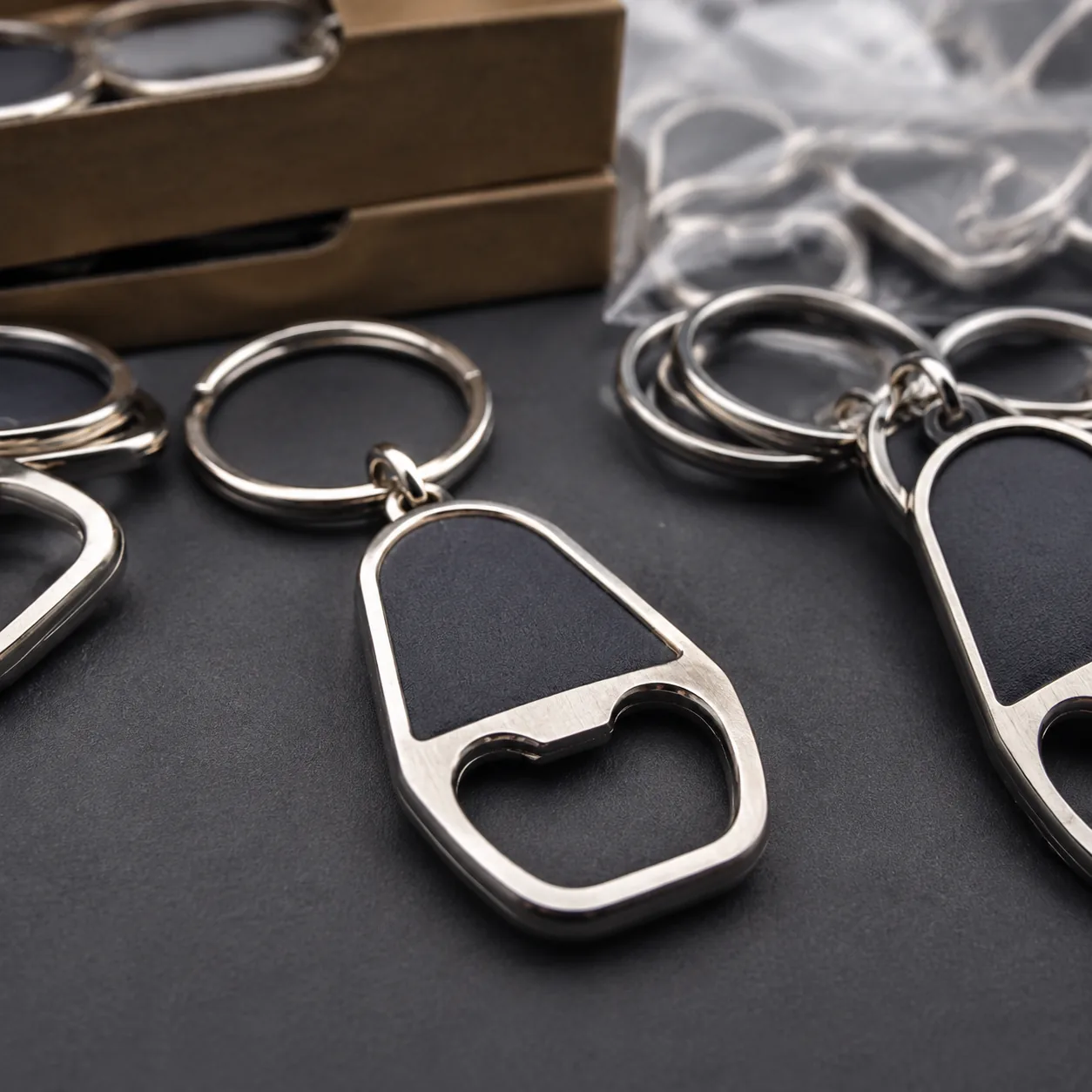
The thresholds are different by product. A 45 mm die-cast zinc alloy keychain with split ring and short chain often ships at 32-50 g packed. A 50 mm challenge coin at 3.0 mm thickness usually weighs 35-50 g loose and 42-72 g packed depending on relief depth, plating, and whether it is loose-packed, pouched, capped, or boxed. Embroidered patches are light at 4-10 g packed, but become volumetric when carded for retail. Lanyards have low unit FOB value yet become freight-heavy when individually bagged with insert cards, trigger hooks, safety buckles, and detachable clips.
For factories quoting FOB Ningbo or FOB Shanghai, compare courier, standard air, air DDP, sea LCL, and sometimes sea FCL only after confirming final carton count, gross weight, carton dimensions, destination postcode, and required in-hand date. The lowest rate per kg is not the decision metric. The real question is whether the goods can arrive, clear, and be received with enough buffer to protect the campaign.
1) Plan backward from the in-hand date, not the event date
Start from the date the goods must be physically usable, not the public event date. If items will be distributed at a trade show on 12 May, a practical in-hand target is usually 5-7 calendar days earlier to allow customs clearance, warehouse intake, relabeling, and final local delivery. For retail, distributor, or 3PL programs that require ASN submission, routing approval, or booking windows, a safer buffer is typically 10-14 days.
Then add production time. After artwork approval and pre-production sample sign-off, typical mass-production lead times are 12-16 days for pins and keychains up to 5,000 pcs, 15-22 days for 5,000-20,000 pcs, 18-25 days for challenge coins or epoxy-domed badges, 10-15 days for screen-printed or sublimated lanyards, and 12-20 days for woven or embroidered patches. Mixed gift kits or multi-SKU promo sets usually need 20-30 days because barcode application, assembly, and final pack-out add manual steps.
After production, reserve 2-4 days for final AQL inspection, carton sealing, shipping mark verification, export paperwork, and trucking to the forwarder. If testing is required for nickel release, azo dyes, phthalates, CPSIA-related requests, REACH SVHC screening, or child-use claims, add 5-10 more days depending on lab queue and sample preparation. During peak weeks before Lunar New Year, Golden Week, and year-end retail cutoffs, booking delays can add another 2-5 days before departure.
| Freight mode | Typical door-to-door time | Typical fit by weight/volume | Best use case | When not to choose it |
|---|---|---|---|---|
| Express courier | 3-6 working days after pickup | Samples to about 200 kg chargeable; occasionally 250 kg if carton count is low | Urgent event stock, approvals, replacement units, low-carton-count launch orders | Heavy low-value goods where freight exceeds about 25-35% of FOB value |
| Air freight / air DDP | 7-12 working days | About 200-1,500 kg or 1-8 cbm depending on lane | Deadline-driven orders with moderate buffer and stable carton data | Very remote delivery points, poor importer setup, or oversized retail packs |
| Sea LCL | 28-45 calendar days to US/EU door | Usually above 1 cbm or 300 kg | Dense metal items, replenishment stock, boxed kits with real time buffer | Any campaign with less than 5 weeks true buffer after pickup |
| Sea FCL | 25-40 calendar days port-to-port; longer to final door | Usually 12-15 cbm and above for efficiency | Large repeat programs with stable intake plans and predictable unloading | Small mixed orders where destination charges make FCL inefficient |
A practical planning rule is simple. If the latest safe ship date leaves only 5-8 days, courier is usually the only realistic option. With 10-18 working days, standard air or air DDP becomes viable. With 35-55 calendar days of real buffer, sea is often the lowest-cost and lowest-risk mode for dense products such as coins, keychains, bottle openers, and magnets.
2) Chargeable weight matters more than piece count
Courier and air shipments are billed on the higher of actual weight and volumetric weight. A common courier formula is L x W x H in cm divided by 5,000. Standard air cargo often uses 6,000, though this varies by lane and forwarder. A carton measuring 40 x 30 x 25 cm has 30,000 cubic cm, equal to 6.0 kg chargeable at divisor 5,000 and 5.0 kg at divisor 6,000. If actual weight is 18 kg, you pay 18 kg. If actual weight is 4.5 kg, you pay the volumetric weight instead.
This is why packaging design can change freight cost more than the item itself. A 30 mm pin on a 55 x 85 mm card in OPP may load 500-800 sets into a 35 x 25 x 20 cm master carton at roughly 8-14 kg gross. Put the same pin into a 70 x 70 x 25 mm rigid gift box and carton loading may fall to 150-250 sets, while chargeable air or courier weight rises sharply because cube, not metal, becomes the cost driver.
Dense products behave differently. Challenge coins, bottle-opener magnets, and zinc alloy keychains usually hit carton weight limits before they fill cube. For courier shipments, many factories cap master cartons at 12-18 kg gross to avoid handling damage and surcharge exposure. For sea shipments, 15-22 kg gross is more typical, depending on customer requirements and destination handling practice. Carton dimension tolerance should normally stay within +/-10 mm of the approved packing spec, and gross weight tolerance within about +/-5%. Otherwise booking accuracy, local delivery charges, and warehouse receiving records can all drift.
| Product and packing | Typical packed unit weight | Typical master carton loading | Common freight trigger |
|---|---|---|---|
| 30 mm soft enamel pin + card + OPP | 13-18 g | 500-800 sets/carton | Retail boxes can raise chargeable freight by 50-120% |
| 45 mm zinc alloy keychain + ring + OPP | 32-50 g | 250-400 sets/carton | Actual weight rises fast; scratch risk increases without inner segregation |
| 50 mm challenge coin, 3.0 mm + pouch or capsule | 42-72 g | 150-300 pcs/carton | Cartons exceed 18-20 kg quickly; courier becomes uneconomic |
| 75 mm embroidered patch, loose pack | 4-10 g | 1,000-2,000 pcs/carton | Usually becomes volumetric only when carded or boxed |
| 20 mm polyester lanyard, 900 mm length + hook | 25-45 g | 250-500 pcs/carton | Individually bagged sets become bulky with low value density |
3) Compare freight to FOB value and MOQ economics
The most useful comparison is freight as a percentage of FOB goods value, not freight per kg alone. That shows whether speed is commercially rational. For example, 1,000 hard enamel pins might price at USD 0.95-1.75 FOB each depending on size, color count, plating, and packaging. If express freight is USD 180-320, freight burden is roughly 10-34% of goods value. That can still be acceptable for an urgent launch because total order value is modest and the event date is fixed.
The logic changes on larger, lower-value orders. A 10,000-piece order of simple iron soft enamel pins may price at USD 0.30-0.55 FOB each at that quantity tier, or USD 3,000-5,500 total. Sending the full lot by express can push freight to a level that destroys landed cost competitiveness. The same pattern appears with low-value lanyards, PVC magnets, and boxed giveaways: operationally the shipment arrives, but margin disappears.
Challenge coins are a common trap because they are dense and often presentation-packed. A 5,000-piece order at 50 g each is already about 250 kg net before pouches, capsules, or outer cartons. Add acrylic capsules or velvet boxes and total cargo can move into the 320-500 kg range. Standard air may still make sense. Couriering the full lot rarely does unless unit value is high and the campaign cannot slip.
Indicative 2026 FOB planning ranges are more useful when tied to MOQs. Standard-spec 30 mm soft enamel iron pins are often USD 0.70-1.15 at 500 pcs, USD 0.42-0.78 at 1,000 pcs, USD 0.32-0.58 at 5,000 pcs, and USD 0.30-0.55 at 10,000 pcs. A 50 mm challenge coin at 3.0 mm is commonly USD 1.50-2.90 at 300 pcs, USD 1.10-2.40 at 1,000 pcs, and USD 0.88-1.90 at 5,000 pcs. A 45 mm zinc alloy keychain is often USD 0.95-1.85 at 500 pcs and USD 0.75-1.55 at 1,000 pcs. A 20 mm x 900 mm sublimation lanyard typically sits around USD 0.55-1.05 at 500 pcs and USD 0.38-0.90 at 1,000 pcs depending on hook, buckle, safety break, and bagging. These are budgeting references, not live quotes, but they help test whether freight is proportionate to goods value.
- Use express when freight is roughly below 15-20% of FOB goods value and the deadline is immovable.
- Use standard air when freight is around 8-18% of FOB value and at least 10 working days remain after pickup.
- Use sea when air would exceed about 20-30% of FOB value and the program has a real 5-8 week buffer.
- Re-price freight whenever gift boxes, insert cards, acrylic capsules, or pouches are added after the initial quote.
- Ask for final packed carton data before freight approval, not after all cartons are sealed.
4) Split shipments usually beat all-or-nothing freight decisions
For event-driven promo products, split shipments are often the best commercial answer. The urgent quantity travels by express or air, while the balance moves by air or sea at lower cost. Example: a 20,000-piece conference pin order might send 2,500 pcs by express for the first show, 7,500 pcs by standard air for regional stock, and the remaining 10,000 pcs by sea LCL for later events. The launch is protected without paying premium freight on every unit.
The split has to be planned before final packing. If the urgent batch needs barcode labels, venue-specific carton marks, retailer routing labels, or different insert cards, those units should be separated during final QC and pack-out, not reopened after palletization. Cartons should be marked by shipment wave, such as Batch A Air and Batch B Sea, with separate carton number ranges, packing lists, and gross/net weight records.
Quality consistency across both waves matters. For metal giveaways, a practical outgoing inspection standard is AQL 2.5 for major defects and AQL 4.0 for minor defects, with functional checks on pin clutches, split rings, lanyard clips, safety breaks, and magnet adhesion. Keep one approved golden sample, Pantone references where relevant, plating standard, and final packing spec for every wave so color, relief depth, finish, and hardware do not drift.
| Scenario | Recommended split | Why it works |
|---|---|---|
| Trade show in 10 days; full stock not required | 10-20% express, 80-90% sea or air | Meets the event date without premium freight on all inventory |
| Retail launch with DC due date in 18 days | 30-50% air, balance sea | Covers first allocation while replenishment follows at lower landed cost |
| Heavy challenge coin order, 5,000+ pcs | Small urgent lot by air, bulk by sea | Avoids extreme courier spend on dense metal goods |
| Influencer kits with mixed promo items | Presentation-critical kits by express, simple bulk packs by sea | Only the units that need perfect timing and pack-out use the fastest mode |
5) Reduce freight through packaging changes before cutting product spec
When freight is too high, many buyers first try to cut product cost by reducing thickness, plating, or finish. That often damages perceived value more than necessary. Reducing a coin from 3.0 mm to 2.5 mm, switching hard enamel to soft enamel, or downgrading plating from 0.5-0.8 micron imitation gold to 0.25-0.35 micron nickel may save product cost, but it also changes feel, appearance, and wear resistance. Packaging changes are usually less visible to the end user and often save more freight.
For pins and badges, replacing rigid gift boxes with flat backing cards can reduce chargeable freight by roughly 30-60%. Common backing cards use 300-350 gsm art paper in 55 x 85 mm or 70 x 100 mm formats. Pin-post alignment tolerance should typically be held within +/-0.3-0.5 mm so the item sits squarely on the card without twisting or tearing the holes during transit.
For keychains, an OPP bag plus inner carton often provides enough scratch protection without the freight penalty of EVA or flocked presentation boxes. But do not remove per-piece protective bags from mirror-polished coins, antique-finish keychains, epoxy-domed badges, or soft PVC items purely to save cube. Damage claims usually cost more than the freight saving. A sensible target is inner cartons of 25-100 pcs for scratch-sensitive metal items and master cartons built to pass a 60-80 cm drop test, depending on gross weight and board grade such as 5-ply BC flute.
- Keep premium retail packaging only on the quantity that truly needs presentation-grade delivery.
- Ask the supplier to quote both loose-pack and retail-pack carton data before PO approval.
- State a maximum carton gross weight in the PO: commonly 18 kg for courier and 20-22 kg for sea.
- Do not remove per-piece protective bags from mirror plating, epoxy domes, antique finishes, or soft PVC surfaces.
- Confirm whether urgent and bulk batches can use different packing styles without changing the product itself.
6) Fast transit does not remove customs or compliance risk
Express and air shipments still fail if the documents are weak or the compliance scope is wrong. Commercial invoice, packing list, consignee details, tax or importer identification, declared value, and clear product descriptions should all be checked before pickup. Generic descriptions such as gifts, accessories, or badges increase the chance of customs queries, especially for mixed cartons containing metal items, textile patches, and polyester lanyards.
Descriptions should be specific: iron enamel lapel pins, zinc alloy keychains, polyester lanyards, embroidered patches, rubber magnets, or metal challenge coins. HS classification should be confirmed with the importer or customs broker before shipment, particularly when a single PO mixes materials. Under-declaring value to save duty is a false economy. It can trigger valuation challenges, entry holds, penalties, and insurance disputes.
Some products need extra planning. Magnets may face carrier acceptance rules and should be packed to reduce field interaction. Sharp pin backs may require safer retail packing. LED accessories or products containing button cells need battery handling compliance. If the item is intended for children, nickel release, phthalates, lead, azo dyes, small-parts, and age-grading requirements should be written into the test plan before production starts. Standard promotional spec is not automatically child-use compliant spec.
Documents should also match the physical cargo exactly. The packing list should show SKU, carton count, carton number range, quantity per carton, net weight, gross weight, and dimensions. That supports customs clearance, warehouse receiving, and split-shipment reconciliation. Factory paperwork helps, but the importer should still confirm destination-country duty treatment and compliance requirements with its own broker before goods move.
7) Build a freight brief into every RFQ and reorder
The best freight decisions are made while packaging and split options are still flexible. Every RFQ for custom promo products should include destination city and postcode, required in-hand date, event date if relevant, target Incoterm, packaging style, carton weight limit, whether partial shipment is allowed, and whether the delivery point is an event venue, warehouse, distributor, retailer, or Amazon prep site.
If the order includes several items, list them separately. Pins, coins, keychains, patches, and lanyards do not behave the same in cartons. Ask the supplier for at least two or three freight scenarios rather than one all-in number. A useful comparison includes FOB goods cost, packed carton data, express cost for an urgent 10-20% quantity, standard air cost for the full order, and sea LCL cost for the balance.
For repeat programs, keep the final approved carton dimensions, gross weights, inner-pack method, carton photos, QC report, and golden sample in the reorder file. That prevents landed-cost surprises when the same item is bought again six months later with a different insert card, pouch, hook, or carton loading assumption.
- Provide event date and required in-hand date, not just a preferred ship date.
- Request final packed weight, carton dimensions, and carton count before balance payment.
- Compare freight as a percentage of FOB goods value, not only as a per-kg rate.
- Consider split shipment once the order reaches roughly 150-250 kg chargeable weight.
- Approve packaging with freight impact in mind, especially boxes, inserts, and retail cards.
- Confirm invoice descriptions, consignee details, importer ID, and broker requirements before pickup.
- Keep a golden sample, final packing list, and carton photos for every reorder.
For buyers sourcing through Yiwu, Ningbo, or Shanghai supply chains in 2026, the best freight decision is rarely the absolute fastest or the absolute cheapest mode. It is the option that protects the launch date while keeping landed unit cost inside budget. When freight rules are defined early, the factory can pack, label, inspect, and split the order correctly instead of trying to solve a preventable logistics problem after cartons are sealed.
Have a project? Send your artwork and target quantity and we’ll reply with a detailed quotation within 12 working hours.
Ready to get this made?
Send your sketch, target quantity and ship-date. Detailed quotation in 12 hours.



