Freight Cutoff Failures in Custom Promo Orders
By Vincent Xi, Editorial Author. Author profile: https://www.zhecraft.com/authors/vincent-xi/. This article uses Vincent Xi's ZheCraft editorial author profile for attribution and does not rely on a first-person factory or client-service claim.
1. Define Cargo-Ready, Not Just Ship Date
A trade-show order can pass product QC and still miss the booth when the PO lists only a requested ship date. The release condition should be operational: approved goods sealed in final cartons, carton-marked, weighed in kilograms, measured in centimeters, photographed, inspection-released, and available for pickup at the named handoff point during the supplier's local China working day.
As January 2026 RFQ planning assumptions to verify in the supplier quote, a 1,000-piece order of 35 mm zinc-alloy soft enamel pins with 1.8 mm body thickness, 4 enamel colors, butterfly clutch, backing card, and OPP bag may need 5-7 calendar days for mold and pre-production sample, 12-18 calendar days for mass production after sample approval, 1-2 calendar days for final inspection and packing, and 3-7 calendar days for express courier pickup-to-delivery by lane. If the event opens in 24 calendar days and artwork approval slips by 3 calendar days, the buyer is no longer choosing between normal options. The choices become a rush charge, partial courier release, reduced packaging, or a smaller event-critical quantity.
For time-critical promo goods, set the latest cargo-ready date before the event, not before the supplier's preferred dispatch date. As January 2026 planning assumptions to verify with the nominated forwarder, use at least 10 calendar days before the event for express courier, 18 calendar days for airport air freight, and 55 calendar days for sea LCL. These are not universal transit guarantees; they are RFQ controls that force schedule risk into the quote before deposit.
2. Engineer Cartons Around Weight and Damage Risk
Small metal merchandise is dense, so freight packing can fail even when the product itself is acceptable. As a January 2026 dense-goods packing assumption to verify in the quote, a master carton for 35 mm enamel pins, metal keychains, or 50 mm challenge coins can be capped at 38 cm x 28 cm x 24 cm outside dimension, 12 kg maximum gross weight, 5-ply corrugated board, inner cartons under 2.5 kg each, and no more than 500 small metal pieces per inner carton. For 20 mm x 900 mm polyester lanyards, a separate assumption is bundles of 50 pieces, master carton gross weight under 15 kg, and a compression check after strapping.
Metal, textile, PVC, acrylic, and lanyard goods need different packing controls. For metal pins, keychains, and coins, an example plating process note to verify by XRF report or supplier process sheet is nickel underplate target 3-5 microns for the quoted finish, with decorative gold-color top finish target 0.05-0.10 microns on visible surfaces. Plated faces should be separated by polybag, tissue, tray, or card where rubbing can expose base metal. For PVC patches, woven patches, embroidered patches, and sublimated lanyards, the main freight risks are staining, dye migration, trapped moisture, carton odor, warped PVC, and crushed webbing. Their RFQs should call for dry packing, color-transfer separation, carton liners, and flat stacking where shape retention matters. ISTA packaged-product test procedures may be requested for formal transit testing, but an ISTA-style request is not evidence of supplier certification.
3. Price Freight With Chargeable Weight Before Packing Is Frozen
Freight should be compared before production because carton volume can change the shipping decision. Public carrier tariff practice and IATA cargo chargeable-weight guidance use the higher of actual gross weight and volumetric weight, while the exact divisor is carrier- and lane-specific as of January 2026. As an example calculation to verify in the freight quote, a 60 cm x 40 cm x 40 cm carton has 96,000 cubic centimeters of volume. Using a courier divisor of 5,000 cubic centimeters per kilogram, the billable volumetric weight is 19.2 kg; using an air divisor of 6,000 cubic centimeters per kilogram, it is 16.0 kg. If the same carton weighs 11.0 kg on a scale, freight is billed at the higher volumetric number.
| Freight mode as of January 2026 | Best fit | Common failure | Spec to request before PO |
|---|---|---|---|
| Express courier | 1-10 cartons or event top-ups; example planning transit 3-7 calendar days after pickup, to verify by carrier and lane | Highest USD per kilogram; dimensional penalties on bulky backing cards, gift boxes, molded trays, lanyards, and plush packaging | Packed carton dimensions in centimeters, gross weight in kilograms, commodity description, pickup deadline, courier account owner |
| Air freight | 45-300 kg chargeable weight or event deadlines under 25 calendar days; example airport-to-airport transit 5-12 calendar days, to verify by lane | Destination clearance, terminal handling, bond fee, and local delivery omitted from product quote | Named FCA or FOB point where relevant, chargeable-weight formula, destination agent, customs document owner, latest airport handover |
| Sea LCL | 0.5-8.0 cubic meters or replenishment orders; example port-to-port transit 25-45 calendar days, to verify by lane and sailing | CFS cutoff missed; carton compression and humidity during consolidation | CBM, carton grade, desiccant or separation spec, warehouse cutoff, cargo-ready date, pallet rule if required |
| Consolidated container | Above 10.0 cubic meters or multi-SKU programs; example port-to-port transit 30-50 calendar days, to verify by lane | One late SKU delays all cartons, or mixed marks create destination receiving errors | SKU release calendar, split-ship approval rule, carton marks by PO, SKU, destination, and carton sequence |
Dense challenge coins often bill by actual scale weight. Lanyards, retail gift boxes, foam trays, backing cards, plush attachments, and campaign kits often bill by volume. A quote-stage packing plan should show carton count, gross weight, net weight where required, and CBM by SKU. As a January 2026 tolerance assumption to verify, allow final mass-packing data to move by plus or minus 5 percent, but require written notice to the buyer and forwarder if the final plan changes by more than 1 master carton, 10 kg gross weight, or 0.10 cubic meter for the order.
4. Put Inspection Before the Freight Cutoff
Final inspection protects the event only when defects can still be corrected before pickup. A practical buyer-selected plan for custom metal and textile promo goods is ANSI/ASQ Z1.4 or ISO 2859-1, General Inspection Level II, with buyer policy limits of AQL critical 0.0, major 2.5, and minor 4.0. The standards provide sampling-plan methods; those AQL limits are buyer settings, not a certification claim for ZheCraft or any supplier. As an example lookup to verify with the inspector, a 2,000-piece lot inspected under General Inspection Level II commonly uses a 125-piece sample size, with acceptance and rejection numbers selected from the applicable AQL table.
Defects should be measurable. For metal badges, January 2026 example reject limits to verify against the approved sample are enamel overflow over 0.20 mm into plated borders, plating pits over 0.30 mm visible at 30 cm under neutral white light, finished size outside plus or minus 0.30 mm, post position outside plus or minus 0.10 mm where packing is affected, bent posts more than 3 degrees from perpendicular, and magnet glue squeeze-out that prevents flat packing. For patches and lanyards, example limits to verify are woven edge fray over 1.0 mm, print registration shift over 0.5 mm, heat-cut edge melt wider than 0.8 mm, hook burrs that snag tape, and moisture odor at carton opening. Rework can add 2-5 calendar days as a January 2026 planning assumption to verify, which may still work for air freight but can miss an LCL warehouse cutoff.
5. Use the Right Incoterm and Name the Handoff Point
FOB is often used loosely on custom merchandise quotes. Under ICC Incoterms 2020, FOB applies to sea and inland waterway transport, with delivery occurring when goods are on board the vessel at the named port. For courier and air freight, FCA at a named factory, forwarder warehouse, or airport is usually clearer because it can allocate export documents, pickup appointment, truck waiting time, local handling, and the point where risk transfers. This is a legal and logistics source context, not a product quality standard. A quote that says only FOB China is incomplete for a time-critical order because it does not name the port, handoff location, document owner, or cutoff responsibility.
Price comparisons also fail when FOB product cost is mistaken for delivered cost. As January 2026 example budget ranges to verify in the supplier quote, a 1,000-piece order of 35 mm zinc-alloy soft enamel pins with 4 enamel colors can price at USD 0.42-0.85 per piece FOB before freight, duty, and tax; a 500-piece order of 50 mm challenge coins at 3.0 mm thickness can price at USD 1.50-3.20 per piece FOB; and a 500-piece order of 20 mm x 900 mm polyester lanyards with standard hook can price at USD 0.35-0.80 per piece FOB. The lowest FOB unit price can become the highest delivered cost when it requires gift boxes, heavy backing cards, courier freight, destination terminal charges, or local delivery that was not included in the comparison.
6. Control MOQs and Split Releases in Mixed-SKU Kits
Campaign kits with pins, challenge coins, patches, PVC items, acrylic charms, and lanyards fail when the slowest SKU controls the consolidated shipment. As January 2026 MOQ assumptions to verify by design and material, soft enamel pins may start at 100 pieces per design, die-struck or 3D challenge coins at 100-300 pieces per design, woven or embroidered patches at 100 pieces per design, PVC patches at 100-300 pieces per design depending on mold complexity, acrylic charms at 100 pieces per design, and sublimated lanyards at 100-500 pieces per design depending on width, hook, buckle, and safety breakaway. Example production ranges to verify are 12-20 calendar days for simple soft enamel pins after approval, 18-25 calendar days for 3D challenge coins, 10-18 calendar days for woven or embroidered patches, 10-20 calendar days for PVC patches, 7-14 calendar days for acrylic charms, and 7-14 calendar days for polyester lanyards.
Before deposit, decide whether the program is all-or-nothing or split-approved. For a launch event, a January 2026 emergency release assumption to verify is courier shipment of 10 percent of each SKU, with the balance moving by air or sea after the last SKU clears inspection. Carton marks should identify PO number, SKU, design version, destination, carton sequence, gross weight in kilograms, outside dimensions in centimeters, and whether the carton belongs to the event-critical release.
- Approve split shipment only in writing, naming SKU, quantity, freight mode, cargo-ready date, handoff location, and who pays the extra freight.
- Require carton marks to include PO number, SKU, destination country, carton number, gross weight in kilograms, and outside dimensions in centimeters.
- Hold final balance until packing list, carton photos, inspection release, and freight booking data match the approved PO.
- Keep 1 approved production sample per SKU as a January 2026 comparison control to verify if replacement stock must be made after the event.
- Require the supplier to flag any SKU that may miss the consolidated cutoff at least 5 calendar days before the planned inspection date.
7. Add a Freight-Risk Addendum Before Deposit
The buyer should send a freight-risk addendum before deposit, not after the forwarder asks for missing data. It should state approved artwork version, material grade, finished dimensions, plating or fabric finish, attachment hardware, individual packaging method, inner and master carton limits, inspection plan, cargo-ready date, Incoterm with named location, freight mode assumed by the schedule, and the party responsible for export and import documents. For metal goods, January 2026 manufacturing tolerance assumptions to verify against the process are plus or minus 0.15 mm on critical metal lines, plus or minus 0.20 mm on enamel fill boundaries, plus or minus 0.30 mm on finished outer size, and plus or minus 0.10 mm on attachment-post position where the hardware affects packing.
Method note: the planning data in this article is derived from source contexts including ICC Incoterms 2020 for delivery terms, ANSI/ASQ Z1.4 and ISO 2859-1 for sampling-plan language, public carrier chargeable-weight practice and IATA cargo guidance for volumetric calculations, and the public ZheCraft author profile for author attribution. Product dimensions, USD FOB ranges, MOQ tiers, lead times, carton limits, plating thicknesses, AQL settings, and tolerances are example RFQ assumptions as of January 2026 and must be verified in the supplier quote, inspection booking, and freight quote.
Limitations and verification: route congestion, customs inspection, destination duties, exchange rates, holiday shutdowns, finish complexity, packaging bulk, HS classification, battery or magnet restrictions, and buyer approval speed can change the final cost and schedule. Before issuing the PO, verify current freight divisors, transit days, import restrictions, duty treatment, destination delivery fees, and any claimed certificate with the supplier, inspector, and forwarder.
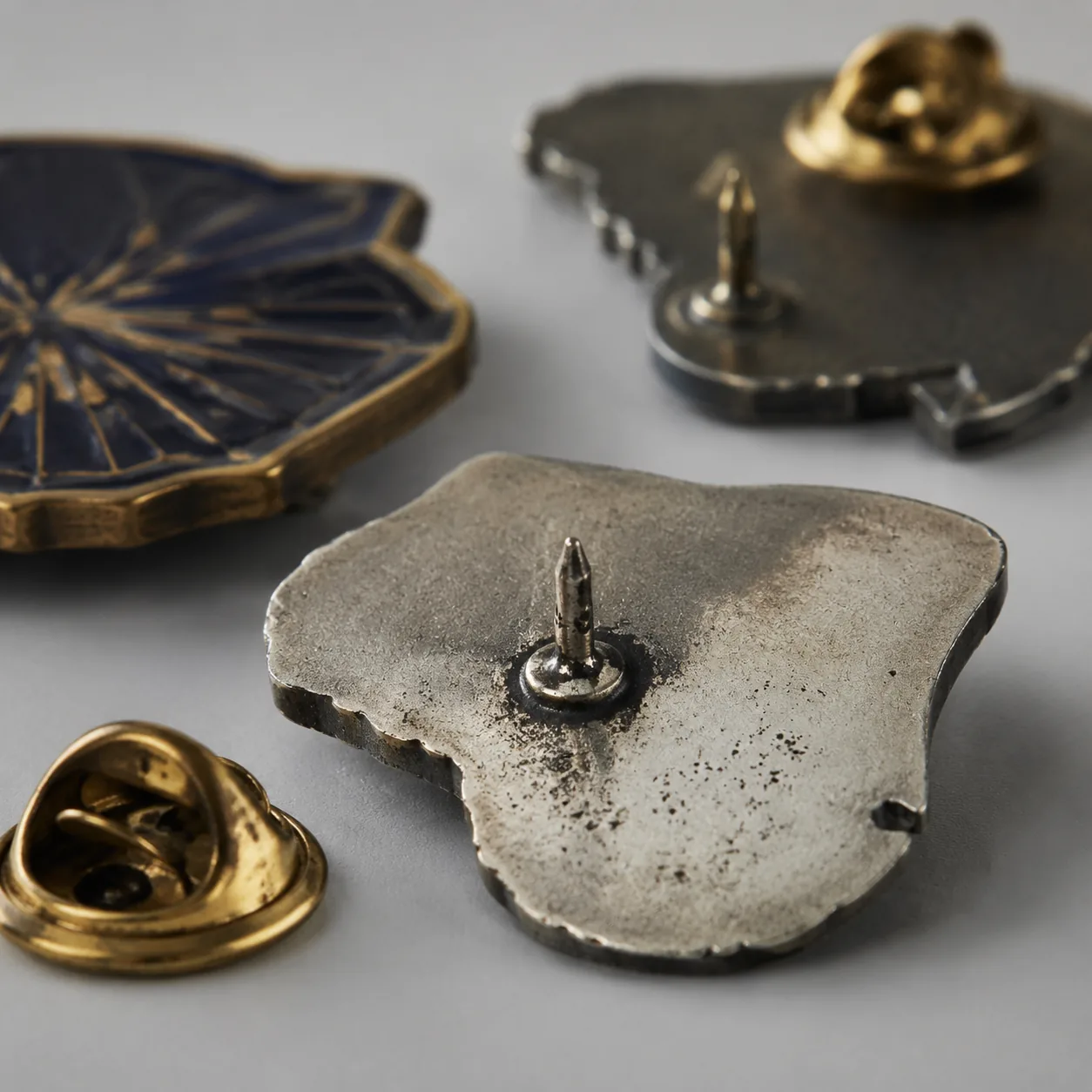
Image prompt for the article header: documentary QC and freight handoff bench for custom promotional merchandise, showing 35 mm enamel pins, 50 mm challenge coins at 3.0 mm thickness, woven patches, 20 mm polyester lanyards, a digital caliper, a digital scale, open 5-ply corrugated master cartons, inner cartons, individual polybags, blank carton labels, and a packing list sheet with no readable text. Use overhead or three-quarter factory workbench lighting, realistic scale, dense metal pieces grouped separately from bulkier lanyard bundles, visible approved samples beside sealed cartons, and neutral industrial surfaces. Do not include logos, watermarks, readable text, fake people, impossible machinery, or decorative props unrelated to QC and freight handoff.
- Request 1 quote page showing unit price, tooling, sample charge, packaging, carton count, gross weight, CBM, Incoterm, named handoff point, and freight-ready date.
- Book final inspection at least 2-5 calendar days before the freight cutoff as a January 2026 planning assumption to verify, so rework does not automatically miss pickup.
- Compare courier, air, and sea using chargeable weight, cargo-ready date, destination delivery need date, and event date, not only FOB unit price.
- Require separate product cost, packing data, inspection release date, and freight-ready date for each SKU.
- Reject any quote for a time-critical order that lacks carton dimensions in centimeters, gross weight in kilograms, named Incoterm location, and a current freight mode assumption.
Have a project? Send your artwork and target quantity and we’ll reply with a detailed quotation within 12 working hours.
Ready to get this made?
Send your sketch, target quantity and ship-date. Detailed quotation in 12 hours.



