FOB, DDP or Courier for Custom Promo Orders
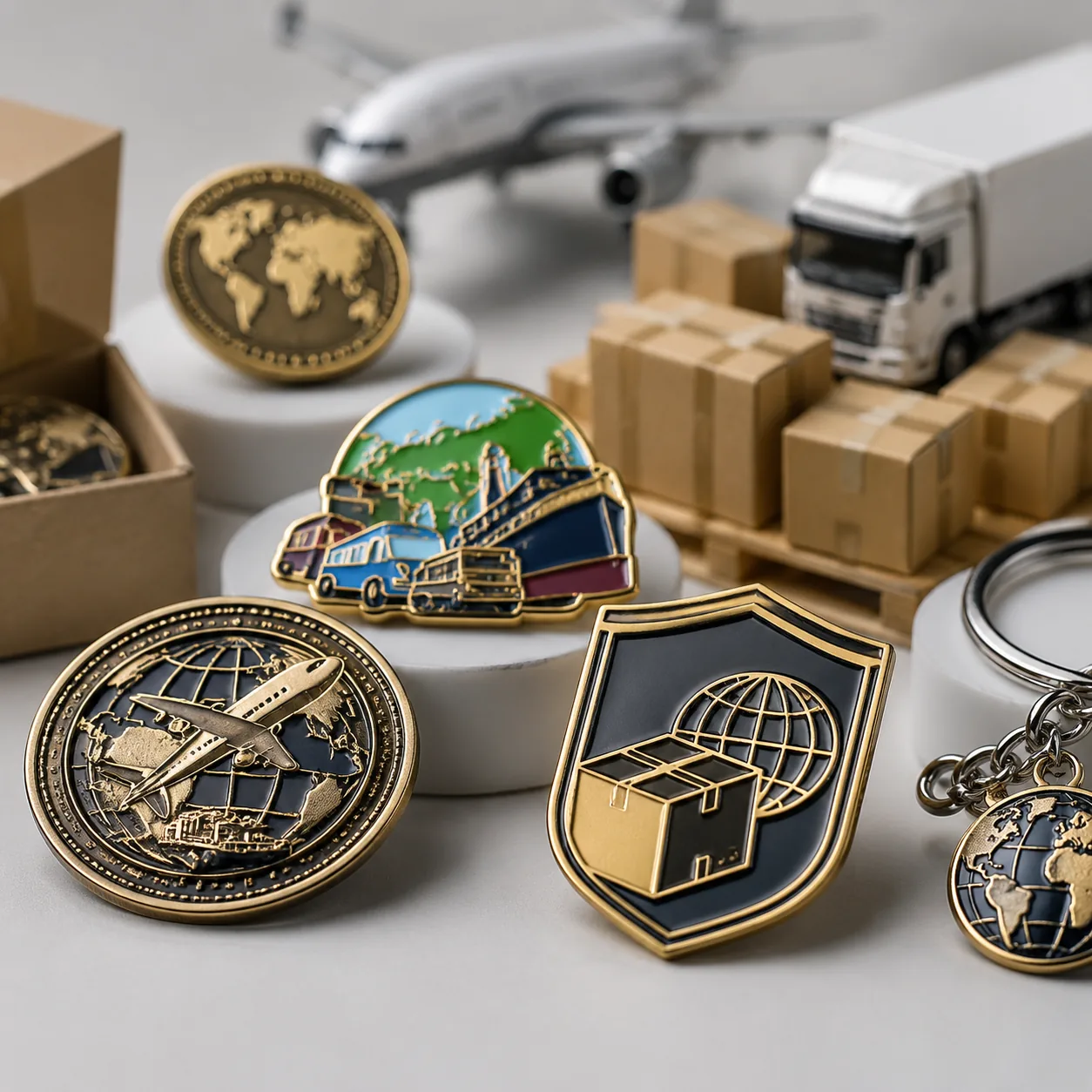
The Monday problem: 10,000 pins, one event date, four shipping choices
A brand team emails a factory on Monday with a familiar request: 10,000 custom enamel pins for a product launch in Los Angeles, needed in hand in 46 calendar days. The artwork is a 30 mm round logo pin, 1.5 mm iron base, soft enamel, 4 enamel colors, nickel plating, butterfly clutch, individual opp bag and a printed backing card. The buyer has quotes marked EXW, FOB Ningbo, air courier, and DDP, but the unit prices do not explain the real landed cost or the delivery risk.
This is where many orders go wrong. A pin that is USD 0.46 FOB can become more expensive than a USD 0.55 DDP quote once freight minimums, customs entry, destination handling and repacking are included. At ZheCraft, we usually separate the discussion into product build, packing weight, Incoterm, freight mode and inspection hold time before we confirm the production schedule.
For this scenario, assume mass production takes 18 to 23 days after sample approval, pre-production sampling takes 6 to 8 days, and final inspection plus carton sealing takes 1 to 2 days. That leaves about 13 to 20 days for transport, customs and delivery buffer. The best shipping answer is not automatically the cheapest one; it depends on who controls customs, how accurate the delivery date is, and whether the buyer can handle import formalities.
First lock the physical shipment, not just the pin price
Before comparing freight, calculate the packed shipment. A 30 mm soft enamel iron pin at 1.5 mm thickness normally weighs 7 to 10 g depending on metal area and cutouts. Add a butterfly clutch, opp bag and 300 gsm backing card, and the packed unit usually lands at 11 to 14 g. For 10,000 pieces, the net packed goods weight is about 110 to 140 kg before master cartons.
A practical carton plan is 500 pieces per export carton, each carton about 30 x 24 x 20 cm and 6.5 to 8.0 kg gross weight. That creates 20 cartons, around 0.29 cbm if stacked tightly, but courier billing may use volumetric weight. If backing cards are larger, for example 75 x 100 mm instead of 55 x 85 mm, carton volume can increase by 20 to 35 percent without changing the pin itself.
The unit FOB price also needs a fixed product specification. In this case, a reasonable 10,000-piece FOB Yiwu or FOB Ningbo range for soft enamel iron pins is USD 0.38 to 0.58 per piece, excluding special packaging. Add USD 0.04 to 0.10 for a printed backing card and individual bag, and USD 55 to 95 for one stamping mold if the design is not reordered from existing tooling. Nickel plating thickness should be specified at 3 to 5 microns for normal indoor use, with 5 to 8 microns if the pin will be handled heavily or sold as retail merchandise.
The comparison the buyer actually needs
The buyer’s spreadsheet should compare landed cost and control, not just the factory line item. EXW puts the most responsibility on the buyer because the goods are picked up at the factory and the forwarder handles China export clearance. FOB shifts China-side export handling to the factory up to the named port, while DDP shifts most logistics and import risk to the seller or their freight partner.
| Option | Typical transit after shipment | Cost range for 120 kg pins | Buyer control | Best fit | Main risk |
|---|---|---|---|---|---|
| Courier express | 3 to 6 days | USD 5.80 to 8.50 per kg all-in to many US/EU addresses | Low to medium | Urgent event orders, small cartons, simple customs | High freight cost, remote area surcharges, customs delays still possible |
| Air freight to airport | 5 to 9 days | USD 3.80 to 6.50 per kg freight, plus local clearance and delivery | High | Buyers with broker and forwarder already set up | Destination fees can surprise inexperienced importers |
| DDP air | 7 to 12 days | USD 4.80 to 7.80 per kg depending on duty, address and season | Medium | Marketing teams without import department | Less visibility into customs entry and tax breakdown |
| Sea LCL | 28 to 42 days | USD 0.90 to 1.80 per kg freight equivalent, plus fixed destination fees | High | Reorders, retail inventory, non-urgent programs | Slow schedule, port congestion, minimum charges can erase savings |
| FOB only | Depends on buyer forwarder | Product price only, freight arranged by buyer | Highest | Distributors consolidating from multiple factories | Buyer must coordinate booking, cutoff, customs and insurance |
For the 46-day event deadline, sea LCL is usually too risky unless production is already complete. Courier or DDP air is the safer path if the buyer does not have an import broker. FOB air freight can be cheaper for experienced distributors, especially if they consolidate pins, lanyards and patches from several suppliers into one shipment.
Where each quote can hide cost or risk
An EXW quote often looks lowest because it excludes pickup from the factory, export documentation, port handling and freight. For a factory in Yiwu, domestic trucking to a consolidation warehouse or to Ningbo or Shanghai may be USD 40 to 120 for this shipment size, but export handling and documentation can add more. If the buyer’s forwarder is slow to collect, finished goods may sit for 2 to 4 days before moving.
FOB is cleaner for B2B comparison because the factory covers export packing, China inland handling to the agreed port or terminal process, and export customs. However, FOB does not mean delivered to the buyer’s door. The buyer still pays international freight, insurance if desired, destination customs clearance, duty, tax and final delivery.
DDP is convenient but should be checked carefully. The quote should say the destination country, delivery postcode, number of cartons, gross weight, whether duty and tax are included, and whether the carrier can deliver to a residential, warehouse or trade show address. A vague DDP price for 10,000 metal pins can become a dispute if the destination is changed from a commercial address in Los Angeles to an event venue with limited receiving hours.
The inspection gate before any carton leaves the factory
Shipping speed cannot fix a bad batch. For a 10,000-piece enamel pin order, we recommend final inspection before cartons are sealed, using ANSI/ASQ Z1.4 general inspection level II unless the buyer has a different standard. A common AQL setting is critical defects 0, major defects 2.5, minor defects 4.0; retail buyers may tighten major to 1.5 if the pin is sold rather than given away.
The inspection should include plating color, enamel fill, logo legibility, attachment strength, card orientation, barcode scan if used, and carton count. Dimensional tolerance for a 30 mm pin should normally be within plus or minus 0.3 mm, thickness within plus or minus 0.15 mm, and backing card trimming within plus or minus 1.0 mm. For butterfly clutches, a simple pull check should confirm that the nail does not detach under normal handling; if the pin will be used on bags or uniforms, ask for a stronger post weld and test samples before production.
- Confirm approved sample photos and physical golden sample if time allows
- Check carton labels include item code, quantity, gross weight, net weight and carton number
- Verify total carton count against packing list before booking pickup
- Reserve 1 to 2 days after inspection for rework, recounting or repacking
- Photograph open cartons and sealed cartons before handover to the carrier
- Keep 30 to 50 spare pieces aside if the event team needs replacements
How the timeline changes once the buyer chooses a route
In the Monday scenario, the safest schedule starts by approving digital artwork within 24 hours and confirming mold and sample payment immediately. A soft enamel pre-production sample can usually be ready in 6 to 8 days, including mold cutting, stamping, plating, enamel fill and curing. If the buyer needs a physical sample shipped overseas before mass production, add 3 to 5 courier days and accept that the event schedule becomes tight.
A common rescue plan is to approve high-resolution sample photos and video first, then ship two to five physical samples while mass production begins at buyer risk. This is not ideal for luxury retail or regulated programs, but it can work for promotional events when the artwork is simple and the factory has made similar builds before. The buyer should limit changes after this point to defects only, not design preference.
Mass production for 10,000 soft enamel pins normally takes 18 to 23 days after approval, but hard enamel may need 22 to 30 days because polishing and surface finishing are slower. Antique plating, glitter enamel, epoxy dome coating or multiple attachments can add 2 to 5 days. At peak periods before major trade shows or Q4 gifting, add a buffer of 3 to 7 days rather than planning to the shortest factory promise.
When not to choose the fastest or cheapest route
Courier is not always the right answer. If the order is 50,000 pins, 800 kg gross weight, and the launch is three months away, courier can waste several thousand dollars compared with sea or consolidated air. Courier also gives the buyer less control over customs classification and duty treatment than a broker-managed import.
Sea freight is also not always cheaper in real landed cost. For a small 0.3 cbm shipment, LCL minimum charges, destination handling, customs entry and warehouse fees can exceed the ocean freight itself. If the buyer does not already import regularly, DDP air may be more predictable even when the per-kilogram rate is higher.
FOB is best for distributors and procurement teams with forwarder relationships, especially when combining pins with keychains, patches, coins or lanyards from multiple factories. It is less suitable for a brand team ordering one urgent event item with no broker. In that case, ZheCraft will usually quote both FOB and DDP air so the buyer can compare control against convenience instead of guessing.
What to do next before you approve the order
Ask the factory for two numbers before you sign the proforma invoice: the product FOB cost and the estimated packed shipment data. For this scenario, the buying decision should be based on 10,000 pieces, 20 cartons, about 120 to 160 kg gross weight, and the exact delivery postcode. Without these figures, every freight comparison is only a guess.
Then decide who owns customs. If your company has an import broker and can accept airport or warehouse delivery, request FOB plus carton details and let your forwarder quote air and sea options. If your team only needs cartons delivered to an office or event venue, request DDP air with the duty and tax treatment stated in writing.
Finally, do not compress the inspection gate to save one day unless the event risk is greater than the defect risk. Lock the pin dimensions, plating thickness, packaging, AQL level, carton labels and shipping address before production starts. A clear logistics decision at the RFQ stage usually saves more time than arguing over freight after the pins are already packed.
Have a project? Send your artwork and target quantity and we’ll reply with a detailed quotation within 12 working hours.
Ready to get this made?
Send your sketch, target quantity and ship-date. Detailed quotation in 12 hours.



