First PO from China: Custom Pin Import Checklist 2026
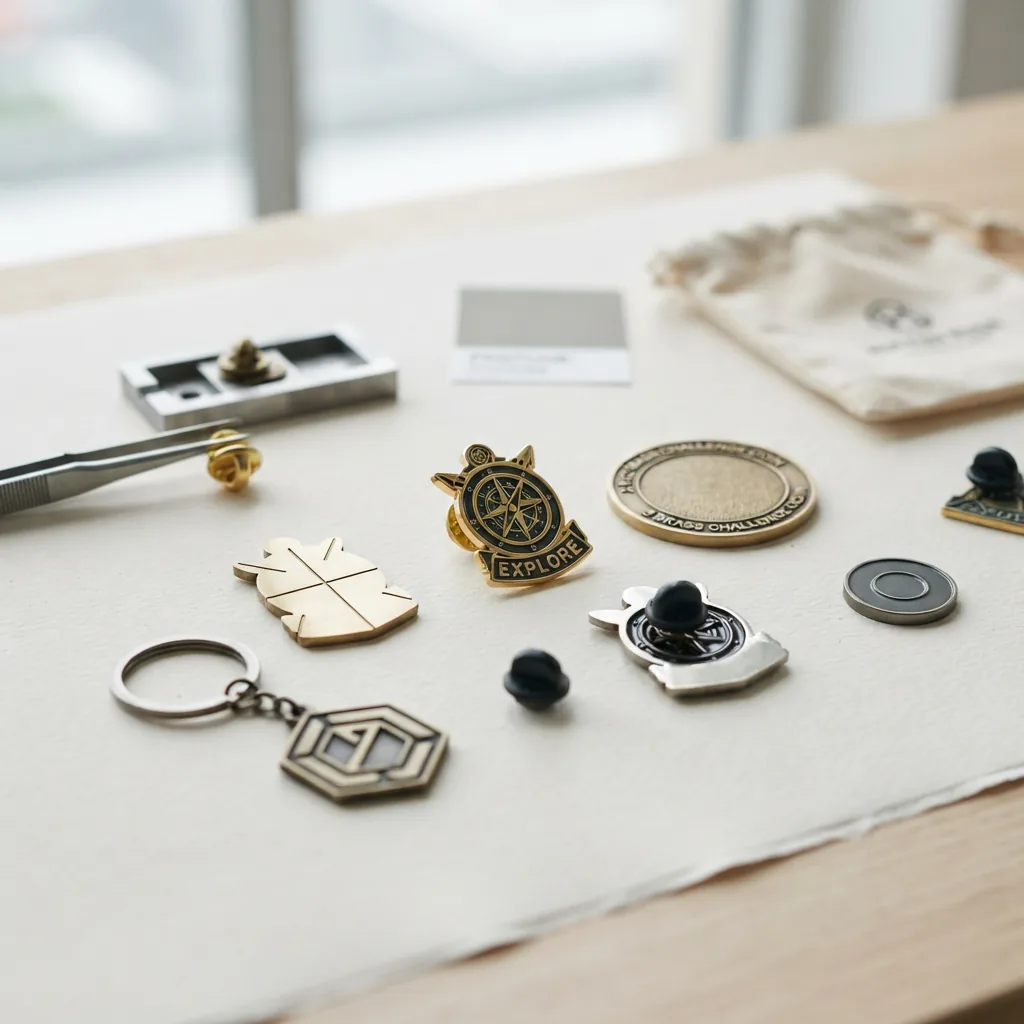
Where first custom pin POs usually fail
Most first orders fail at the specification stage, not the artwork stage. A buyer requests a 30 mm hard enamel pin with butterfly clutch, but the RFQ omits body thickness, base metal, plating finish, attachment count and position, back finish, packaging method, backing card details, carton standard, and acceptable color variation. The supplier prices to its own defaults. The shipment then arrives with a 1.2 mm body instead of 1.5 mm, a lighter plating tone, loose clutches, and no overage to cover inspection rejects.
Lead time is the second recurring mistake. A quoted 7 to 10 days usually means factory production time only after artwork cleanup, mold drawing approval, and deposit receipt. For a first order of 500 to 2,000 stamped enamel pins, a realistic schedule is: 2–4 days for art cleanup and mold drawing, 5–7 days for a pre-production sample if required, 12–18 calendar days for mass production, 1–3 days for export packing, and 3–7 days for express transit. A workable planning window is typically 28–42 days from supplier selection to delivery, not 10–14 days.
The third issue is treating custom pins as a generic promo item. They are small metal parts with measurable process limits. Changing from iron to brass, soft enamel to imitation hard enamel, or one clutch to two affects edge quality, plating consistency, reject rate, perceived weight, and how well the pin sits when worn. On a first PO, the objective is not just to buy a design. It is to buy a controlled component with a defined build, tolerance band, QC method, and packing standard.
Lock these technical specs before sending any RFQ
Comparable quotations require a locked specification sheet. At minimum, define: finished size in millimeters, proportional height if the shape is irregular, base material, process type, body thickness, plating finish, number of enamel colors, attachment type and location, packaging method, quantity tier, and freight term. Without that level of detail, suppliers will quote different constructions and the lowest number will usually reflect thinner metal, lighter plating, or simpler packing.
A usable first-order spec line looks like this: 32.0 mm width x proportional height, stamped brass, soft enamel, 1.5 mm nominal body thickness, bright nickel plating over nickel undercoat, 4 Pantone Solid Coated colors, 1 centered butterfly clutch, polished front, sandblasted back, individually packed in 0.04 mm OPP bag, quantity 1,000 pcs FOB Ningbo. If a backing card is required, also define card size, board weight (e.g., 400 gsm), finish (matte or gloss), slot or hole location, whether the pin is mounted by hand or machine, and whether card plus pin stay in one bag.
Artwork rules should be explicit because they directly affect manufacturability. For stamped enamel pins, minimum raised metal line width should be 0.30 mm absolute minimum, with 0.35–0.40 mm safer for repeat production. Minimum recessed enamel area should be 0.50 mm. Small text should generally be at least 1.2 mm cap height; anything below that needs a larger pin or simplified font. For cutouts, internal bridges should usually stay above 0.8 mm to avoid deformation during stamping and polishing.
- Finished size tolerance: +/-0.20 mm for stamped pins under 40 mm; +/-0.30 mm for 40–60 mm
- Body thickness tolerance: +/-0.10 mm on 1.2–1.8 mm stamped bodies; +/-0.15 mm on cast zinc alloy
- Attachment position tolerance: within +/-1.0 mm from approved centerline
- Plating thickness on decorative finish: commonly 0.03–0.08 microns over nickel undercoat; ask the supplier to state actual plating stack
- Color reference: Pantone Solid Coated code plus approved sample photo under 5000K neutral light
- Quantity variance: many factories default to +/-5 percent unless the PO requires exact ship quantity or approved overrun band (e.g., 0% to +2%)
Choose the right base metal and process for the design
For most first-time importers, stamped brass is the safest choice for enamel pins in the 20–45 mm range. Brass stamps cleanly, usually plates more evenly than iron, and gives more consistent edge definition on medium-detail logos and brand marks. The piece cost is slightly higher, but the premium is often smaller than the cost of a remake or claim on a deadline-driven order.
Iron is still widely used for cost-sensitive programs, especially simple 20–35 mm shapes with basic fills and low branding risk. On a standard 30 mm soft enamel pin at 1,000 pcs, iron may be USD 0.04–0.10 cheaper per unit FOB than brass. That saving comes with trade-offs: rougher edges, more visible stamping stress on narrow lines, and greater corrosion risk if plating coverage is weak or scratched during transit.
Zinc alloy is appropriate when geometry drives the build. Use it for pins above roughly 45 mm, deep relief, irregular outlines, pierced sections, spinner or dangler structures, or forms that cannot be stamped cleanly. Since zinc alloy is die-cast, it handles complex shapes well, but very fine flat borders and micro text are usually less crisp than on a well-made brass stamp. For a first PO, use zinc only when the artwork genuinely requires cast construction.
| Base material | Best use | Typical MOQ | FOB unit range at 1,000 pcs | Key trade-off |
|---|---|---|---|---|
| Iron | Simple 20–35 mm soft enamel pins | 100–300 pcs | USD 0.30–0.52 | Lower cost, but rougher edges and higher corrosion sensitivity if plating is weak |
| Brass | Most premium stamped pins 20–45 mm | 100–300 pcs | USD 0.36–0.66 | More consistent stamping and plating at slightly higher cost |
| Zinc alloy | Large, irregular, cutout or 3D pins 35–60 mm | 100–300 pcs | USD 0.52–0.95 | Handles complex geometry well, but the finest flat detail is less crisp than brass |
Sample approval and QC standards should be evidence-based
For a first order, soft enamel is usually the lowest-risk process. It is more forgiving in production, shows raised metal outlines clearly, accepts Pantone matching reasonably well, and tends to have fewer polishing-related rejects than imitation hard enamel. Imitation hard enamel delivers a flatter, glossier surface and a more premium retail look, but cost is commonly 12–25 percent higher and the process is less tolerant of dust, over-polishing, and fill inconsistency.
If the order supports resale, an event, or paid marketing, approve a physical pre-production sample. A digital proof confirms layout and copy, but not plating tone, clutch strength, burr risk, enamel depth, or how the pin balances on fabric. A sample for a standard stamped pin typically adds 5–7 calendar days and around USD 35–80 including courier; with custom packaging, sample cost can reach USD 90–150. That is usually minor compared with remaking 1,000–2,000 finished pieces.
Inspect the sample in a fixed sequence: dimensions, text legibility, plating color, enamel fill, hardware alignment, attachment pull strength, edge safety, and packaging fit. A practical baseline is ISO 2859-1 single sampling, normal inspection, General Inspection Level II, with AQL 2.5 for major defects and AQL 4.0 for minor defects. On a 1,000-piece lot, that commonly means a sample size code letter J and a sample of 80 units for formal inspection. Put the inspection method on the PO so both parties are judging against the same standard.
A realistic defect classification is straightforward. Major defects include: wrong size beyond tolerance, wrong plating, missing color, detached hardware, sharp burrs, unreadable text, or attachment offset beyond the approved tolerance. Minor defects include: light backside scratches, small rear mold marks, or slight shade variation within the approved range. For hardware, a common functional test is no clutch release or post separation under a 2 kg pull for 10 seconds on sampled pieces.
Realistic 2026 MOQ, tooling, price and lead-time ranges
In 2026, most custom pin projects from China still quote on FOB terms, with MOQ typically 100–300 pcs per design. Tooling for a simple stamped pin is often quoted as included, but that wording is imprecise. In practice, the mold charge may be waived above a threshold quantity, embedded in unit price, or charged separately at USD 40–90 for a basic stamp die and USD 120–250 for a zinc alloy die-cast mold. Confirm what included tooling actually means and make sure the mold or die number appears on the order record.
For pricing, a basic 30 mm stamped iron soft enamel pin with one butterfly clutch and OPP bag commonly lands around USD 0.30–0.52 FOB at 1,000 pcs. A comparable brass version is more often USD 0.36–0.66. Imitation hard enamel usually adds about USD 0.05–0.12 per piece at that size and volume. Two clutches, glitter, glow fill, translucent enamel, epoxy dome, laser numbering, custom backer cards, or retail polybag plus barcode label will all increase price. At 300 pcs, per-piece pricing is often 20–45 percent higher than at 1,000 pcs because die cost, setup, and labor are spread across fewer units.
Lead time should always be counted from approved art and deposit date, not inquiry date. A standard first PO should be planned as: 2–4 days for art cleanup and mold drawing, 5–7 days for pre-production sample, 12–18 days for mass production, and 1–3 days for final count, packing, and dispatch. Express courier to North America or Europe is commonly 3–7 days door to door, while economy air is more often 7–12 days. Sea freight rarely makes sense for pins shipped alone because the carton cube is small relative to order value.
| Stage | Typical timing | What fails when rushed |
|---|---|---|
| Artwork cleanup and mold drawing | 2–4 days | Wrong dimensions, text scaling, or process assumptions get locked into tooling |
| Pre-production sample | 5–7 days | Mass production starts before plating tone, enamel finish, and hardware are confirmed |
| Mass production | 12–18 days | Higher risk of plating inconsistency, fill defects, and count errors |
| Export packing and dispatch | 1–3 days | Incorrect carton marks, barcode errors, mixed SKUs, or wrong case counts |
| Express transit | 3–7 days | Customs hold, flight rollover, or weather can still add 1–3 days |
Control payment, packaging and reorder repeatability
The standard first-order payment term is still 30 percent deposit and 70 percent balance before shipment, although very small orders are often 100 percent prepaid. The payment split matters less than the controls attached to it. Deposit should follow a locked specification sheet, and balance should follow either a third-party pre-shipment inspection or a documented factory inspection report with dated photos, sampled defect results, final quantity count, and carton detail.
Packaging details are often omitted and then become a source of avoidable claims. If each pin needs a backing card, define card dimensions (e.g., 60 mm x 80 mm), paperboard weight (e.g., 400 gsm), lamination type (matte or gloss), and exact pack-out sequence. If the product is heading into retail kits or event packs, specify count per inner bag, count per inner carton, and count per master carton. For export cartons, 5-layer corrugate, outer carton weight under 15 kg, and moisture barrier bag or liner if requested are common workable standards.
Reorder control depends less on nominal mold ownership than on technical file discipline. Require the supplier to retain approved artwork revision, Pantone references, plating callout, attachment coordinates, packaging layout, carton mark format, and sample photos against the SKU and mold number. That is what prevents spec drift when you reorder six months later. Without that file, the supplier may quote the same item name and manufacture a visibly different pin.
- Put the mold or die number on the PO and proforma invoice
- State whether unit price includes tooling, sample cost, packaging, and carton labels
- Require exact ordered quantity or define allowed variance, for example 0% to +2%
- Request 1–2 percent spare quantity packed separately when available
- Set carton maximum gross weight, commonly 15 kg, and carton strength, commonly 5-layer export grade
- Define claim window after receipt, usually 7–15 calendar days with photo and count evidence
Define claimable defects before production starts
No custom metal pin lot will be visually perfect, so the task is to separate normal process variation from defects that break specification or reduce use. Light backside polishing marks, small rear witness lines, or slight color shade drift inside the approved range are usually normal. Wrong plating color, exposed raw metal on the front, missing enamel, skewed backing card assembly, detached hardware, unsafe burrs, or mixed SKUs are not normal and should be treated as claimable defects.
Acceptance language should be measurable. A practical example is: no exposed base metal on the front face at 30 cm visual distance under 5000K neutral light; no missing fill or visible color contamination on the logo area; no front-face pits larger than 0.2 mm in major graphic zones; no burrs sharp enough to scratch a finger in normal handling; no attachment offset beyond +/-1.0 mm from approved position; no hardware failure in the defined pull test; and no carton count discrepancy beyond the agreed variance. Once written into the PO or approved QC sheet, the discussion shifts from opinion to evidence.
For packaging defects, be equally specific. Wrong count per bag, missing backing card, crushed cards, incorrect barcode, wrong label data, or mixed designs in one inner pack should all be listed. Carton-level nonconformities such as weak board, missing consignee marks, or overweight cases matter because they create downstream warehouse and fulfillment issues even when the pins themselves are acceptable.
What must be on the PO before you release the deposit
A first-order PO should function as both the commercial record and the technical control document. If a detail would matter in a dispute, it belongs on the PO now. Keep the wording short, measurable, and tied to an approved drawing, sample, or revision file. That is the simplest way to turn a first China pin order from a guess into a managed manufacturing purchase.
- SKU name, revision number, and approval date
- Approved artwork file reference and mold drawing reference
- Finished size in mm, body thickness in mm, and tolerance limits
- Base metal and process: stamped, die-cast, or etched
- Plating finish, color, and whether nickel undercoat is required
- Enamel color count with Pantone Solid Coated codes
- Attachment type, quantity, spacing, and exact position from datum
- Packaging per piece, per inner pack, and per master carton
- Order quantity, allowed variance, and requested spare quantity
- Tooling status: included, charged separately, or waived above quantity
- Lead time counted from artwork approval and deposit receipt date
- Inspection method and AQL standard
- Freight term: EXW, FOB, CIF, DDP, or delivered courier basis
- Carton marks, consignee label format, barcode data, and carton weight limit
- Claim window after receipt and required evidence for claims
- Whether pre-production sample approval is mandatory before mass production
For a first PO, keep complexity under control. Start with one SKU rather than a five-design assortment, and avoid introducing multiple new variables in one order. A quantity band of 300–1,000 pcs is usually enough to validate the supplier's process control, packaging discipline, and communication quality without overcommitting inventory or deadline risk.
Have a project? Send your artwork and target quantity and we’ll reply with a detailed quotation within 12 working hours.
Ready to get this made?
Send your sketch, target quantity and ship-date. Detailed quotation in 12 hours.



