First Import Order: Pick the Lowest-Risk Custom Promo Item
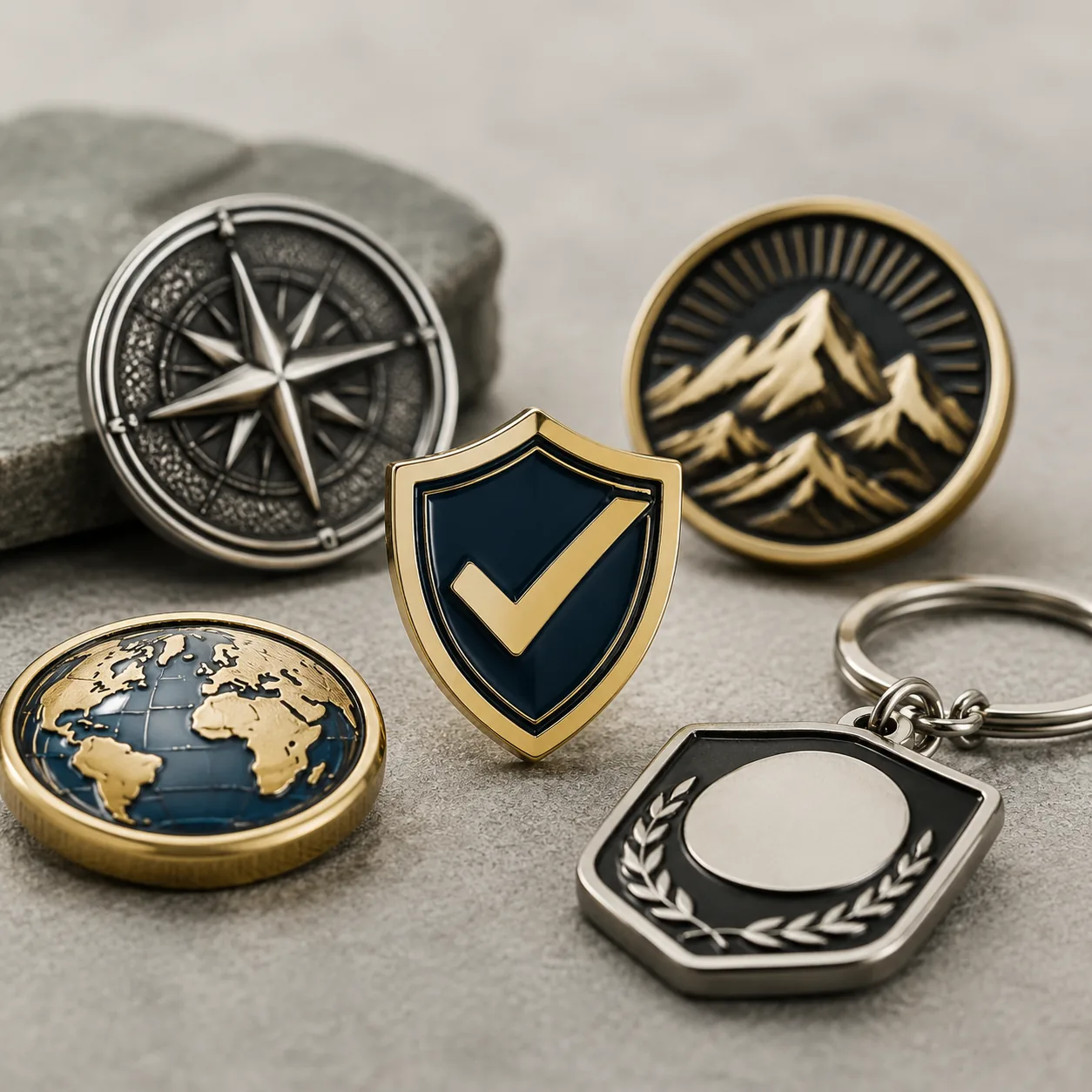
Start with the failure mode, not the cheapest FOB
First-time importers often ask which custom promo item has the lowest ex-factory price. The more useful question is which failure would hurt most: missing a fixed event date, receiving off-brand color, failing a functional requirement, or watching margin disappear after freight, duty, and local delivery are added.
That distinction changes product choice. A 25 mm soft enamel pin can be low risk at $0.55-$0.90 FOB, but it becomes high risk if the art includes text under 1.0 mm cap height, metal lines under 0.25 mm, five tiny enclosed enamel cells, or a single post on a wide shape that spins on clothing. A lanyard looks simpler, yet an incorrect breakaway position, weak hook stitching, or a Pantone mismatch across 2,000 pieces can make it unusable for staff IDs or access control.
Before requesting quotes, rank three constraints in order: in-hand date, maximum landed cost per unit, and tolerance for cosmetic variation. If all three are strict, choose a standard construction, standard finish, and simple packaging. If one variable can move, you gain room for a better attachment, thicker base material, upgraded plating, or a lower MOQ without driving total risk too high.
Pick the item with the most stable production process
For a first import order, the safest SKU is usually the one with the fewest variable steps and the clearest inspection standard. In practice, that usually means soft enamel pins, 2D zinc alloy keychains, embroidered patches, simple metal-face magnets, and polyester lanyards. These use mature tooling, standard decoration limits, and repeatable packing methods.
Higher-risk first orders are still possible, but every added process increases approval time and creates new defect modes. Common examples are challenge coins with deep 3D relief, spinner or hinged parts, transparent or glow enamel, PVC patches, acrylic multi-piece keychains, embedded rare-earth magnets, and gift-box sets. Those features can require extra molds, adhesive curing, hand assembly, secondary suppliers, or more protective packing.
Order size affects risk as much as design. For custom metal goods, 300-1,000 pieces is often the most practical first run because mold cost, setup, and export handling are spread across enough units to show the real production cost. For lanyards, 500-2,000 pieces is typical. For embroidered patches, 100-500 pieces is workable, but very small runs can make unit pricing look artificially high because digitizing, sample setup, and trim loss are fixed costs.
| Product type | Lower-risk first-order specification | Typical MOQ tiers | Lead time after approval | Typical FOB unit range |
|---|---|---|---|---|
| Soft enamel pin | 25-35 mm, iron or zinc alloy, 1.2-1.5 mm thick, 4-6 fill colors, polished raised metal, 1 post under 30 mm / 2 posts above 30 mm, butterfly clutch | 100 / 300 / 500 pcs | 10-15 days | $0.45-$1.10 |
| Zinc alloy keychain | 35-50 mm charm, die-cast 2D, 2.0-3.0 mm thick, 25 mm split ring + 4-5 link chain, standard nickel or black nickel | 100 / 300 / 500 pcs | 12-18 days | $0.85-$2.10 |
| Challenge coin | 40-45 mm, brass or zinc alloy, 3.0 mm thick, 2D relief, plain or rope edge, no spinner, no cutout, no epoxy | 100 / 300 / 500 pcs | 15-22 days | $1.40-$3.50 |
| Fridge magnet | 40-60 mm stamped or printed metal face with 0.8-1.2 mm flexible magnet sheet or ferrite backer | 300 / 500 / 1,000 pcs | 10-16 days | $0.50-$1.40 |
| Embroidered patch | 60-90 mm, 75-90% embroidery coverage, merrow border, twill base, sew-on or iron-on backing | 100 / 300 / 500 pcs | 7-12 days | $0.35-$1.10 |
| Printed lanyard | 15-20 mm polyester, screen print for spot colors or sublimation for gradients, metal swivel hook, safety breakaway | 500 / 1,000 / 2,000 pcs | 7-12 days | $0.30-$0.85 |
If the goal is the lowest-risk first import, embroidered patches and standard lanyards are usually the most forgiving because they avoid plating variation, soldered-post issues, and sharp-edge concerns. If perceived value matters more than absolute lowest cost, soft enamel pins and simple zinc alloy keychains are usually the safest metal choices.
Build a backward schedule from the warehouse date
Always count backward from the date goods must be in your warehouse, not the event opening date. Production usually starts only after artwork approval, quotation confirmation, deposit receipt, and sample-path agreement. New buyers tend to underestimate time lost in proof revisions and sample approval rather than factory production itself.
A conservative first-order planning window is 30-45 calendar days for air shipments and 55-80 days for sea. Typical transit ranges are 3-7 days by express courier, 5-10 days by standard air freight, and 28-45 days port-to-port by sea to the US or Europe, before customs clearance and inland delivery. Peak season, customs exams, blank sailings, and weather can add another 3-10 days.
A realistic approval path often looks like this: digital proof in 24-48 hours, proof revisions in 1-3 days, physical pre-production sample in 5-8 days for most metal items or 3-5 days for patches and lanyards, buyer review in 1-3 days, then mass production. Add 1-2 days if the sample must be shipped internationally rather than approved from factory photos, and add 2-4 days if packaging mockups also require signoff.
If your event is fewer than 25 days away, avoid tooling-heavy products, deep-relief coins, moving parts, unusual finishes, and custom retail packaging. Choose a standard lanyard, embroidered patch, or a simple pin with no special finish. If brand matching is critical, do not skip the physical sample on a first order. Saving 5-7 days is rarely worth the risk of wrong plating tone, thread density, enamel fill height, or breakaway placement.
Choose based on landed cost, not FOB alone
FOB is only the first line of cost. Build a landed-cost estimate before approving premium finishes or packaging. At minimum include unit FOB, mold or tooling, sample charge, carton count, freight, duty, brokerage or customs entry, destination handling, local tax where applicable, and final-mile delivery.
Dense, small metal goods such as pins, coins, and keychains often ship efficiently by air in the 300-1,000 piece range because carton volume stays low. Lanyards, boxed sets, and acrylic products are more likely to be charged by volume weight, not by the material value of the goods. That is why a light but bulky boxed keychain set can land at a higher unit cost than a heavier unboxed coin order.
As a rough planning rule, small custom metal goods shipped by air often land 20-45% above FOB depending on destination, weight break, and whether they move by courier or airport freight. For orders below roughly $2,000 FOB, express or standard air is often simpler and lower risk than LCL sea once origin fees, destination terminal charges, and extra documents are counted.
Keep first-order finish choices disciplined. Standard nickel, black nickel, imitation gold, antique brass, antique copper, and dyed black are common and relatively stable. Features that often add both cost and schedule risk include dual plating, rainbow plating, glitter enamel, epoxy domes, velvet boxes, individual serial numbering, custom back stamps, and mixed packaging assortments.
For example, a 500-piece 30 mm soft enamel pin quoted at $0.72 FOB with a $65 mold lands closer to $1.05-$1.20 per piece after air freight, duty, brokerage, and local delivery in many destinations. Add an epoxy dome, printed backing card, and individual barcode label, and the FOB may increase by $0.12-$0.25 per piece plus packing labor. Because carton volume also rises, the final landed cost can climb another 10-20%.
Write a measurable specification sheet
Low-risk orders have measurable acceptance criteria. If the PO says only "good quality" or "match artwork," disputes are almost guaranteed. Your spec sheet should combine one approved visual reference with dimensions, material, finish, attachment, packaging, and inspection tolerances on a single controlled page.
For metal pins, badges, coins, and keychains under 50 mm, a practical starting tolerance is finished size ±0.3 mm and thickness ±0.15 mm. For items 50-75 mm, size tolerance of ±0.5 mm is more realistic. Raised metal lines should generally stay at or above 0.25 mm width, recessed enamel cells at or above 0.35 mm width, and debossed or embossed text should be at least 0.8-1.0 mm high if readability matters. On soft enamel, specify whether the metal rim may sit approximately 0.05-0.12 mm above the color fill; otherwise buyers sometimes expect hard-enamel-flat appearance from a lower-cost process.
For lanyards, specify width tolerance of ±1.0 mm, finished loop length ±10 mm, breakaway position tolerance ±10 mm, and print registration tolerance of about ±1.5 mm for screen print or edge-to-edge alignment expectations for sublimation. Also define hardware clearly: zinc alloy swivel hook, bulldog clip, or lobster clasp; metal finish; and whether a safety breakaway is required at the back neck position or side seam.
For embroidered patches, call out finished size tolerance of ±2 mm, border style, backing type, thread coverage target, overlock color, and whether jump stitches on the back are acceptable. Small text below 4.0-5.0 mm cap height often fills in with thread, so woven patches may be the safer choice when the design is text-heavy or uses thin outlines. For magnets, specify practical hold performance, such as one 50 mm magnet holding one A4 sheet securely on a painted steel refrigerator door, and state whether the magnet backer is flexible ferrite sheet or rigid ferrite insert.
Plating thickness should be specified in realistic promotional-product terms. Decorative flash gold is commonly around 0.05-0.10 microns, while nickel or black nickel decorative plating is often around 0.10-0.20 microns. That is usually acceptable for giveaways and commemorative items, but not for products exposed to repeated abrasion. If the item will ride with keys, clip to bags, or sit in retail for months, ask whether thicker decorative plating or a clear protective topcoat is justified.
Use AQL instead of subjective acceptance language. For a first import, AQL 2.5 for major defects and 4.0 for minor defects is a practical baseline, with critical defects at zero acceptance. Critical defects include sharp burrs, detached posts, split rings that do not close, missing breakaways where specified, wrong logo, serious color error, rust, exposed adhesive, or outright functional failure.
- Approve one final artwork sheet with dimensions in mm, Pantone or thread references, metal finish, backing, and packaging.
- Define a golden sample for plating tone, enamel level, stitch density, logo size, and assembly method.
- State functional tests: post solder pull check, clutch fit, split-ring closure, magnet adhesion, iron-on backing bond, or breakaway release.
- Set carton rules early: inner pack quantity, barcode or carton mark format, and master carton maximum 15-18 kg gross weight.
- Require pre-shipment photos plus an inspection report before balance payment or shipping release.
Match defect definitions to the actual product and use case
Not every cosmetic flaw has the same commercial impact. A practical first-order inspection plan separates critical, major, and minor defects by how the item will actually be used. For a trade-show giveaway, a tiny enamel pinhole on the back may be minor, while a crooked post, missing clutch, or incorrect event date is major or critical. For retail resale, front-face scratches, wrinkled backing cards, or unreadable barcodes may also become major defects because they affect sell-through.
For metal promo items, common major defects include dimensions outside tolerance, wrong finish, visible front-face scratches at arm's length, missing color fill, loose jump rings, weak solder joints, and mixed attachments in one lot. Minor defects may include small backside marks, slight color variation within the approved range, or tiny plating flow marks not visible in normal use. For lanyards, major defects usually include off-center print, hardware substitution, absent breakaway, twisted stitching, or loop length out of tolerance.
Ask the supplier or third-party inspector to photograph defects against a ruler, caliper, or Pantone reference where relevant. Measurements resolve disputes faster than opinion. If defect classes are agreed before production starts, the supplier can control inline QC instead of arguing after everything is packed.
Avoid premium features that multiply failure points
Many premium features make sense on repeat orders but are weak first-order choices because they add tooling steps, assembly labor, curing time, or another supplier. Moving parts, hinges, glow enamel, transparent enamel over texture, PVC layering, sequenced serial numbers, embedded magnets, acrylic add-ons, and retail gift boxes all increase the number of ways a shipment can miss spec.
A standard 30 mm soft enamel pin, 1.5 mm thick, standard nickel plating, one post, and individual polybag packing is straightforward to inspect and easy to reorder. A spinner keychain with epoxy dome, glitter fill, and two linked components requires rotation testing, dome-surface scratch checks, adhesive verification, and thicker packing protection to prevent transit scuffing. The unit cost may rise modestly, but the real increase is in inspection complexity and the chance of rework.
Retail resale changes the calculation because finish and packaging directly affect conversion. In that case, the extra cost of a backing card, barcode label, hang tab, stronger polybag, or thicker plating may be justified. But the defect list must tighten accordingly: scuffed cards, misapplied labels, dust under epoxy, barcode mismatch, and inconsistent plating tone across lots should all be defined before production begins.
Use commercial terms and a sourcing brief that reduce ambiguity
For custom goods, 30% deposit and 70% balance before shipment is standard because the factory carries custom tooling and material risk. On small orders, full prepayment is sometimes requested because banking fees and manual handling are high relative to the order value. If you need alternate terms, raise that before sampling starts, not after production is complete.
Shipping terms affect both control and hidden cost. FOB Shanghai or FOB Ningbo is usually best for buyers who already have a forwarder and can manage customs entry. EXW can look cheaper but often leaves the buyer responsible for pickup, export filing, and origin handling. DDP can help first-time importers, but only if the supplier confirms exactly what is included: duty, VAT or GST, customs clearance, fuel surcharge, and whether delivery is to a business dock, commercial address, or residential location.
Before asking for prices, prepare a one-page sourcing brief. It should state the product family, exact size, quantity tiers, destination country, fixed in-hand date, end use, packaging expectation, and any compliance need such as REACH, CPSIA, Proposition 65, or azo-free fabric dyes where relevant. Then ask the supplier for only two versions: a safe base construction and one controlled upgrade. Too many options slow approval and create confusion between approved sample, PO, and invoice.
- Send vector artwork if possible, or a high-resolution PNG with target size in millimeters.
- Quote realistic tiers: 300, 500, and 1,000 pcs for most metal items; 500, 1,000, and 2,000 pcs for lanyards.
- Request FOB price, tooling charge, sample charge, lead time, carton size, gross weight, and suggested AQL.
- Confirm whether a physical pre-production sample is included and how many approval days the schedule assumes.
- Ask the factory to flag artwork below minimum line width, enamel cell size, stitch detail, or print registration limit.
A first import order should validate the supply chain, not test every feature the factory can make. The best first order is the one you can specify clearly, inspect objectively, ship predictably, and reorder without rebuilding the process from zero. In practical terms, that usually means a standard lanyard, embroidered patch, simple soft enamel pin, or 2D zinc alloy keychain at a realistic MOQ, with a physical sample, measurable tolerances, and a landed-cost target set before you approve any upgrade.
Have a project? Send your artwork and target quantity and we’ll reply with a detailed quotation within 12 working hours.
Ready to get this made?
Send your sketch, target quantity and ship-date. Detailed quotation in 12 hours.



