First Import Decision Framework for Custom Metal Giveaways
Start with the failure mode, not the product label
Many first-time buyers ask for a quote on a pin, coin, medal or keychain before defining what would make the order fail. That is the wrong sequence. The first decision is the dominant risk: cosmetic rejection, hardware failure, schedule slippage, compliance exposure, or landed-cost overrun. That choice drives the specification package, process route, inspection plan and packaging standard.
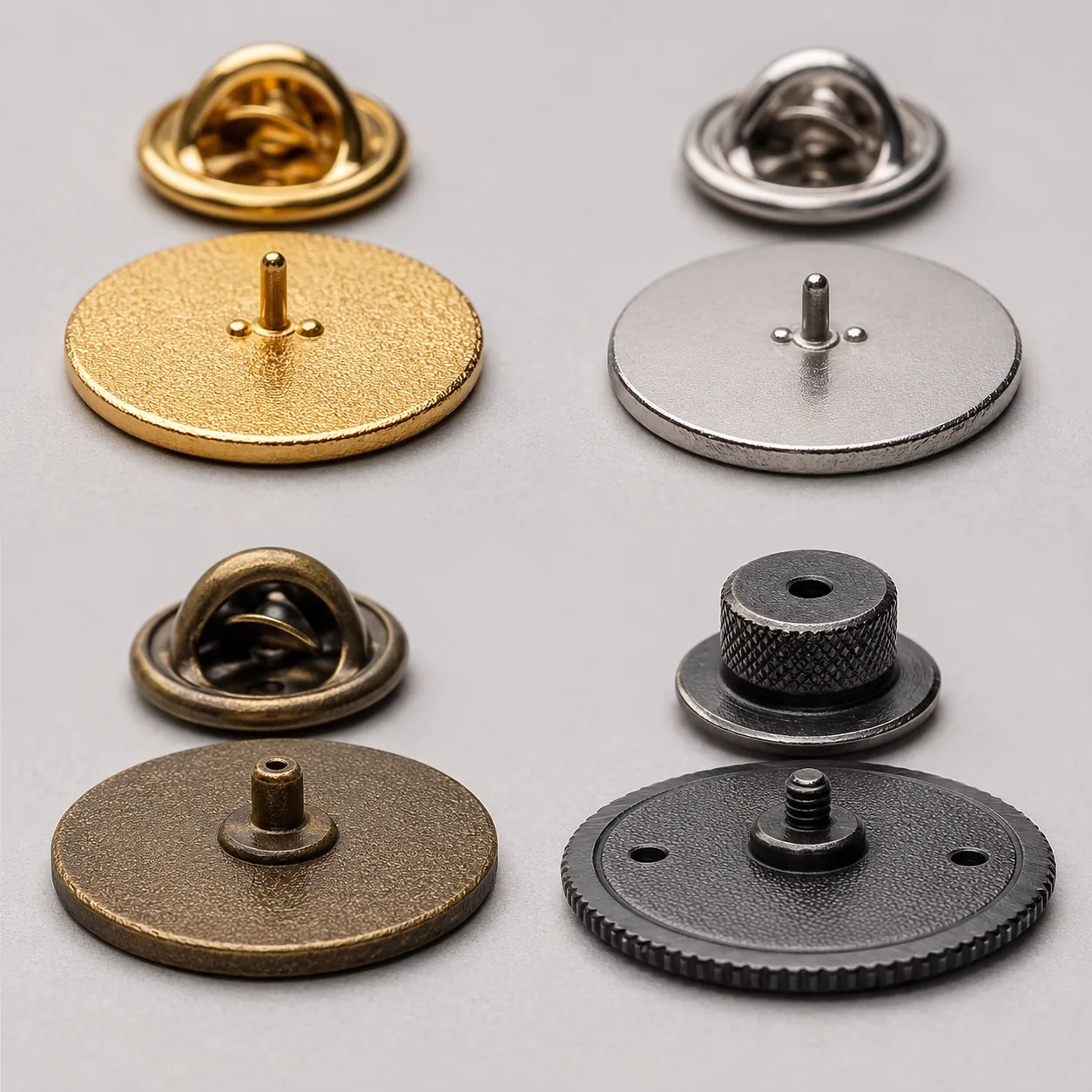
A 30 mm employee-recognition pin worn a few times per year does not fail the same way as a 55 mm zinc-alloy keychain sold at a museum checkout, or a 45 mm commemorative coin in an acrylic capsule for an awards event. Wearable items typically fail on sharp edges, weak post solder, loose clutches, plating irritation on skin contact, and visible scratches on raised metal. Keychains and bag accessories fail more often on split-ring opening, jump-ring deformation, swivel wear, enamel edge chipping, gate-mark cleanup and plating rub at metal-to-metal contact points. Coins and medals see less hardware stress but are rejected quickly for shallow relief, rim dents, plating shade mismatch, capsule haze or poor fit in the box insert.
This framing prevents a common first-order mistake: over-specifying decoration while under-specifying the part that causes returns. Premium plating, more enamel colors and a custom gift box do not help if the body is too thin, the ring wire is too light, the magnet pull is weak, or a wide pin needs a second post to stop rotation. On custom metal giveaways, the structural base is usually the cheapest place to add control and the most expensive place to discover a mistake after mass production.
Choose the process before cleaning up the artwork
Once the failure mode is clear, select the manufacturing route. For most custom metal giveaways, the practical choices are stamped iron, stamped brass, die cast zinc alloy, or photo-etched brass or stainless steel. Each process has a useful operating window. Stamped iron is cost-efficient for relatively flat products with clean outlines, moderate detail and thickness around 0.8 to 1.5 mm. Stamped brass costs more but usually delivers cleaner edges, better corrosion resistance and more stable decorative plating. Die cast zinc alloy is the standard choice when you need cutouts, undercuts, irregular silhouettes, bottle-opener geometry, spinners or 3D relief, typically at 2.0 to 5.0 mm thickness. Photo-etching suits very fine lines and small text, often down to 0.15 to 0.20 mm line width, where stamping tools start to close detail.
Do not let a supplier push every design into its preferred process. A 38 mm pin with 0.20 mm internal lines, small text and several isolated color cells should not be forced into low-definition die casting if crisp outlines matter. A functional 60 mm bottle-opener keychain should not be pushed into thin stamped construction just to avoid a mold charge, because bending risk rises quickly below about 2.2 mm body thickness and opener lips deform in use. A 45 mm presentation coin with sculpted relief usually needs either die casting or a heavier stamped build around 2.5 to 3.0 mm; a thin 1.5 mm strike often makes the art read flat.
For first orders, match process to geometry first, then tune finish level to budget. Tooling corrections are manageable before production. They become expensive once the wrong process has locked in edge softness, porosity, weak relief or undersized hardware geometry.
| Use case | Recommended build | Typical thickness | MOQ | Lead time | FOB unit range |
|---|---|---|---|---|---|
| Staff recognition pin, 25-35 mm | Stamped iron or brass, soft enamel, butterfly clutch | 1.2-1.5 mm | 100-300 pcs | 12-18 days after sample approval | USD 0.35-0.95 |
| Retail keychain, 45-60 mm | Die cast zinc alloy, split ring, optional epoxy dome | 2.5-4.0 mm | 100-300 pcs | 15-22 days | USD 0.85-2.60 |
| Presentation coin, 38-50 mm | Stamped brass or iron, polished raised metal, optional hard enamel | 2.0-3.5 mm | 100-200 pcs | 15-20 days | USD 1.00-3.50 |
| Fridge magnet, 50-80 mm | Stamped metal face with ferrite or rubber magnet backing | 0.8-1.2 mm metal body | 100-300 pcs | 12-18 days | USD 0.65-1.85 |
| Bottle-opener keychain, 50-70 mm | Die cast zinc alloy with integrated opener profile | 3.0-5.0 mm | 100-300 pcs | 15-22 days | USD 1.10-2.90 |
Define the quality tier in production terms
First-time buyers often ask for the highest possible specification because they want to reduce risk. In practice, that usually raises price faster than it improves sellable quality. A better approach is to define the order as promotional, resale or presentation grade, then translate that tier into measurable production requirements.
Promotional grade fits event giveaways and internal distribution where minor backside scratches, slight plating-tone variation and standard OPP bag packing are acceptable. Decorative nickel, imitation gold or black nickel plating is commonly around 0.03 to 0.05 microns. Soft enamel is standard. AQL 2.5 major and 4.0 minor is common. Resale grade fits museum shops, ecommerce and retail counters where cosmetic consistency and pack-out matter. Decorative plating often moves to about 0.05 to 0.10 microns, polishing improves, color comparison against approved artwork gets tighter, and an epoxy dome may be added for abrasion protection. AQL commonly tightens to 1.5 to 2.5 major and 2.5 to 4.0 minor, depending on price point. Presentation grade fits executive gifts, commemorative coins and formal awards. It typically adds cleaner edge polishing, stricter sorting for plating pits and shade variation, individual protective packing, and tighter fit control, often within plus or minus 0.10 to 0.15 mm on capsule diameter or box-cavity dimensions.
The goal is not to buy presentation grade every time. A 2,000-piece conference pin does not need the same plating consistency, reject sorting or packaging cost as a 300-piece museum-shop keychain. The buyer's job is to define where variation is acceptable and where it is not. That makes quotes comparable and prevents factories from pricing process steps that do not change the selling outcome.
Treat MOQ, tooling and SKU count as one commercial decision
Quoted MOQ means little unless you understand how it interacts with tooling, plating setup, assembly and packaging. For many custom metal giveaways, nominal MOQ is 100 pieces per design, but better unit economics usually begin around 300 to 500 pieces because setup cost spreads more effectively. A simple stamped pin die often runs about USD 50 to 120. A zinc-alloy mold for a cast keychain, thick coin or bottle opener is more often USD 80 to 220. If the design includes cutouts, multi-level relief, a spinner, a hinge or custom insert cards, setup cost rises again.
The larger hidden cost on first orders is SKU fragmentation. Three 30 mm pin designs in the same nickel plating, same butterfly clutch and same 90 x 55 mm backing card still require separate tooling, but production planning stays manageable. Once each design uses a different plating color, attachment, card size, barcode label, inner-pack quantity and shipping mark, handling cost rises sharply even if nominal MOQ stays unchanged. Buyers often focus on the base unit quote and miss the labor buried in pack variation and line changeovers.
- Keep one plating finish across the first order unless brand requirements clearly justify a split.
- Standardize attachment type, backing card size, barcode position and inner-pack count across the SKU family.
- Confirm whether MOQ applies per design, per plating color, per packaging type or per shipment line.
- Avoid mixing gift boxes, polybags and bulk pack in one small run unless the margin supports the handling cost.
- Where variants are necessary, concentrate the differences in enamel color or printed card artwork rather than hardware changes.
For a first import, fewer variables usually save more money than a lower nominal piece price. It is common to recover more cost by simplifying SKU structure than by negotiating USD 0.03 off the metal item.
Sample only the risks that can still be corrected
Sampling should target unresolved risk, not become a ritual. If geometry is simple and the real question is logo size, color placement or backside copy, a digital artwork proof followed by one pre-production metal sample is usually enough. If the product has moving parts, bottle-opener function, magnets, layered assembly, spinner components or retail packaging fit, you need a physical pre-production sample that reflects actual use. Typical timing is 1 to 3 days for art proof, 5 to 8 days for a pre-production sample after art approval, and about 12 to 18 days for mass production on orders below 3,000 pieces. Hard enamel, epoxy dome curing, gift-box assembly and hand-packed sets commonly add 2 to 5 days.
The sample checklist should be measurable. For a keychain, inspect split-ring wire diameter, jump-ring closure, swivel rotation and plating rub after 20 to 30 full rotation cycles. A typical split ring for a 50 mm retail keychain is around 25 to 30 mm outer diameter with 1.6 to 2.0 mm wire; below that, opening strength and long-term retention often drop. For pins, verify post placement, solder cleanliness, clutch fit and whether the item stays stable on actual fabric; bodies wider than about 32 mm usually need two posts to prevent rotation. For coins, check diameter, thickness, die alignment, relief sharpness, rim uniformity and whether the capsule or box cavity fits without forcing the edge. For magnets, verify magnet area, adhesive coverage and pull strength on the intended substrate rather than a random office whiteboard.
Do not spend time refining a foil-stamped gift box if the unresolved risk is weak hardware or shallow relief. One extra sample loop can add 4 to 7 days; two or three loops can easily add 10 to 14 days and push the shipment from sea freight into air or express. Before sampling begins, issue a short written approval list tied to dimensions, finish, hardware and pack-out so feedback stays objective.
Write QC around measurable defects and realistic tolerances
Generic final-inspection forms miss the defects that matter in custom metal giveaways. Inspection criteria should follow the product. A 30 mm hard-enamel pin should focus on fill level, surface smoothness, edge burrs, post centering, plating pits and carding position. A cast keychain needs more attention on cavity fill, visible-face porosity, gate-mark cleanup, split-ring closure, swivel function, scratch points and assembled weight. Coins and medals need additional checks on rim continuity, strike depth, relief sharpness, plating consistency and dent resistance during transit.
For first import orders, agree tolerances before production starts. A practical baseline is dimension tolerance of plus or minus 0.20 mm for products under 50 mm, plus or minus 0.30 mm for larger cast pieces, and thickness tolerance of plus or minus 0.10 to 0.15 mm on stamped items. Soft enamel can sit slightly below the raised metal line, but keep the recess around 0.05 to 0.08 mm if the face must read visually even. For epoxy domes, specify no overflow onto metal borders, no visible bubbles at 30 cm under normal light, and no major yellowing after cure. Line width below 0.20 mm should be treated as a design risk unless the process is photo-etching or a proven high-definition die. Exposed base metal on visible front surfaces should be classified as a major defect, not minor, because it normally worsens in use.
AQL should match the channel. Promotional orders commonly run at AQL 2.5 major and 4.0 minor. Retail and corporate-gifting programs often move to AQL 1.5 major and 2.5 minor, especially when items are individually packed for resale. If a third-party inspector is involved, send one control file containing approved artwork, approved sample photos, packaging layout, carton marks, barcode position and written defect definitions. A purchase-order line by itself is not enough for consistent judgment on the factory floor.
Plan packing and freight from the finished unit outward
Freight surprises usually come from late packaging decisions. Metal giveaways are dense, but freight cost is often driven by package volume before buyers expect it. A pin in a single OPP bag packs very differently from the same pin on a 90 x 55 mm backing card inside a sleeve, or in a velvet box. A presentation coin with capsule and gift box can take several times the cube of the coin itself. On low-value giveaways, oversized retail packaging can erase the savings achieved in production.
Start with the selling channel and choose the minimum pack-out that protects the finish. Bulk company-use pins may be packed 50 or 100 pieces per inner bag and then into export cartons with dividers if needed. Retail keychains should usually be individually bagged at minimum to reduce scratches and keep count accuracy. Mirror-finish coins and medals often need a PVC sleeve, acrylic capsule, velour pouch or EVA-lined box because front-to-front contact leaves rub marks quickly. Carton specifications should state outer carton size, board grade, shipping-mark format, gross-weight cap, inner-carton count and whether desiccant is required for long sea transit in humid months. A practical working limit is gross carton weight at or below 12 to 15 kg to improve handling and reduce crush risk.
For many first China orders shipping to North America or Europe, FOB is the cleanest term if the buyer already has a forwarder. If not, compare express, air and sea using packed carton dimensions and total carton count, not item weight alone. As a planning rule, sea freight usually becomes more economical when lead time can absorb roughly 25 to 40 transit days and shipment volume is large enough that airfreight would materially dilute margin. A 15-day production cycle stops mattering if gift-box cube pushes the shipment into a much higher air bracket. Freight planning should happen after unit pack is fixed, not before.
Use a disciplined first-order sequence for 2026
For a first import order in 2026, keep the workflow tight. First, write one sentence defining the failure you cannot accept, such as weak hardware, visible plating scratches, retail color mismatch or late delivery against an event date. Second, lock the architecture and quality tier before asking for quotes: material, thickness, finish, attachment, unit pack, target MOQ, tooling basis and FOB term. Third, sample only the unresolved risks and approve against a short checklist with measurable points. Fourth, confirm QC standard, defect definitions, packing method, carton details and shipping marks in the purchase order before mass production starts.
That sequence removes most avoidable friction on first orders because it forces supplier comparison on the same build instead of three different interpretations. It also clarifies where to spend money: on body thickness, stronger hardware, protective packing, more polishing or tighter inspection where those controls change the outcome. A first order does not need to be perfect. It needs to be defined tightly enough that defects, lead time and landed cost stay within a range the buyer can actually manage.
Have a project? Send your artwork and target quantity and we’ll reply with a detailed quotation within 12 working hours.
Ready to get this made?
Send your sketch, target quantity and ship-date. Detailed quotation in 12 hours.



