First Import Custom Pins in 2026: Landed Cost and Timeline
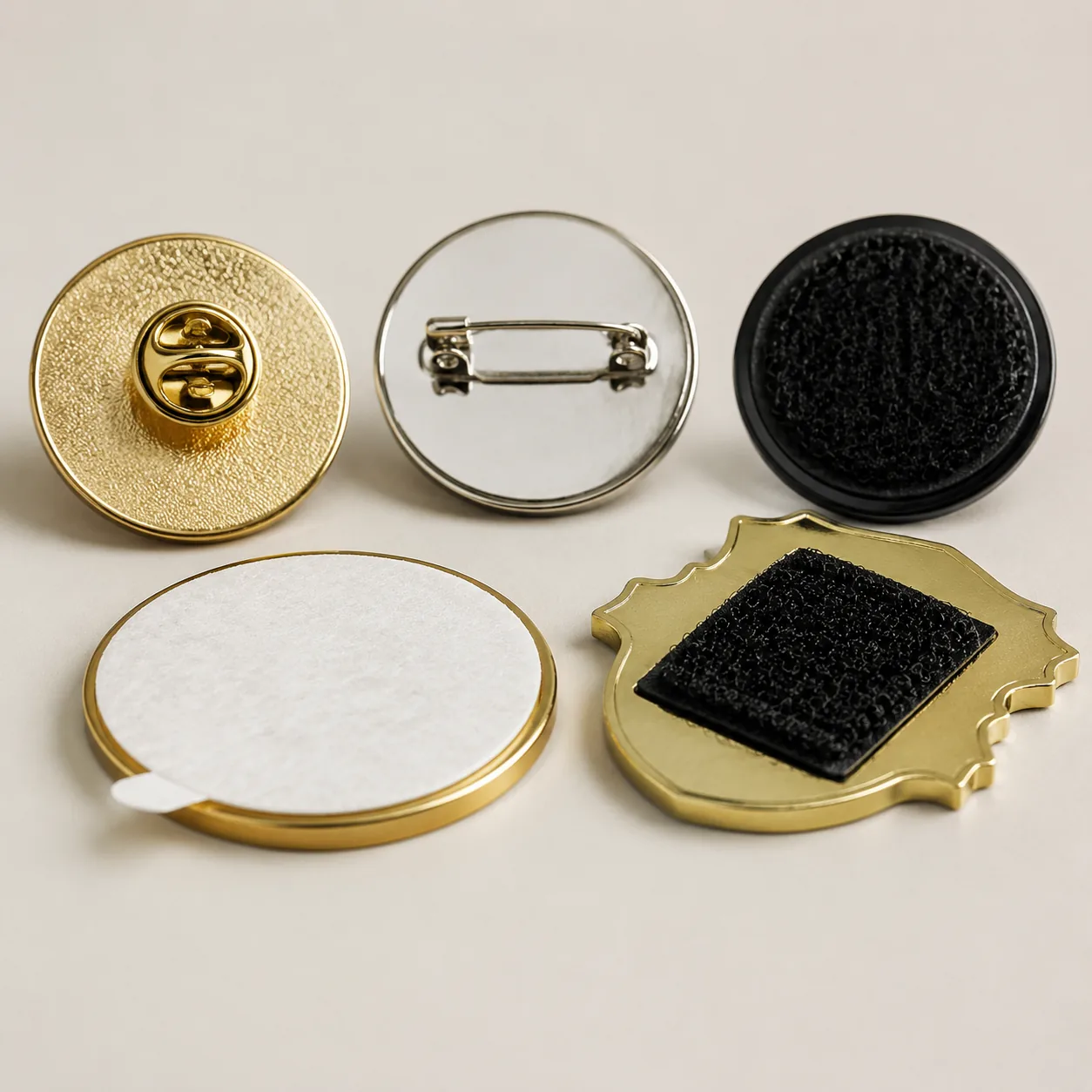
Why first-time pin imports run over budget before production starts
Most first-time buyers anchor on the quoted FOB unit price and underestimate the fixed and destination-side charges that determine the real per-piece cost. In 2026, a factory may quote a standard 32 mm (1.25 in) soft enamel iron pin at USD 0.44 to USD 0.62 FOB at 500 pieces, but the delivered result often lands closer to USD 0.76 to USD 1.06 each once tooling, sample freight, packaging, payment fees, duty, customs clearance and last-mile delivery are included. On smaller orders, fixed charges distort the math quickly: a USD 70 die, USD 38 pre-production sample charge and USD 42 courier fee add only USD 0.15 per piece at 1,000 units, but about USD 0.50 per piece at 300 units before any import tax or brokerage is counted.
Lead time is misunderstood in the same way. When a supplier says 12 to 15 days, that normally means factory production time only after proof approval, deposit receipt and spec confirmation. It usually excludes redraws, sample review lag, export booking, customs processing and delivery to your warehouse or 3PL. For a first import in 2026, a realistic door-to-door planning window for standard custom enamel pins is usually 24 to 38 calendar days from approved proof to delivery by courier or air service, and 38 to 65 days if sea freight is used. Add another 3 to 8 calendar days for backing cards, barcode labels, assortment collation, split packing, epoxy domes or dual-finish plating.
The key budgeting mistake is treating pins like a commodity instead of a configured manufactured item. A quote changes materially when you move from one post to two posts, 1.2 mm thickness to 1.5 mm, plain polybag to carded retail pack, or standard nickel finish to antique plating plus epoxy. First imports go most smoothly when buyers price the exact specification they intend to reorder, not a stripped-down placeholder version used only to collect quotes.
Build the budget in the right order: fixed cost, FOB unit cost, then landed cost
A reliable cost model has three buckets. First are fixed charges: die or mold tooling, typically USD 50 to USD 95 for stamped iron or brass and USD 90 to USD 160 for cast zinc alloy; sample charges and courier, often USD 30 to USD 60 per shipment; and one-time print setup for backing cards, labels or cartons. Second are variable unit charges: the FOB pin price, attachment upgrades, packaging, inspection and any compliance testing. Third are landed charges: international freight, customs clearance, duty, VAT or GST where applicable, and local delivery from port, airport or courier hub to the final destination.
For 2026 buying, realistic FOB pricing for a standard 25 to 32 mm soft enamel pin with 4 to 6 colors, 1 post, butterfly clutch, 1.2 to 1.5 mm thickness and individual polybag is typically USD 0.78 to USD 1.10 at 100 pieces, USD 0.46 to USD 0.72 at 300 pieces, USD 0.31 to USD 0.49 at 1,000 pieces, and USD 0.24 to USD 0.38 at 3,000 pieces. Hard enamel usually adds about USD 0.10 to USD 0.22 per piece at 1,000 units. A second post often adds USD 0.02 to USD 0.05, rubber clutches add around USD 0.03 to USD 0.06 per set, and locking backs can add USD 0.12 to USD 0.18 depending on type. Backing cards in the 300 to 350 gsm range typically add USD 0.03 to USD 0.08, while rigid gift boxes can add USD 0.35 to USD 0.85 before they raise freight cost.
Like-for-like quote comparison matters more than headline price. A low quote may hide a smaller finished size, thinner base metal, fewer posts, simpler packaging or a lower paper weight card. A 30 mm pin at 1.0 mm thickness is not equivalent to a 32 mm pin at 1.5 mm thickness, even if the artwork looks similar on screen. Request all quotes on the same basis: finished size in mm and inches, material, thickness, plating, color count, post quantity, clutch type, backing card size, packaging method, inspection target and delivery term.
| Cost bucket | Typical 2026 range | Main cost drivers |
|---|---|---|
| Tooling and setup | USD 50-95 stamped; USD 90-160 cast | Size, cutouts, relief depth, mold type, artwork complexity |
| FOB unit pin cost | USD 0.24-1.10 per piece | Quantity, material, size, thickness, plating, colors, posts |
| Packaging add-on | USD 0.03-0.85 per set | Polybag, backing card, barcode, paper box, EVA insert, velvet box |
| Inspection and testing | USD 0-280 per lot | AQL target, third-party inspection, nickel-release or pull test |
| Freight and import | Lane-dependent | Chargeable weight, carton volume, mode, duty, brokerage, local delivery |
For a first landed-cost model, use this sequence: tooling plus sample charges plus total FOB goods value plus packaging plus inspection plus freight plus import charges plus payment fees. Then divide by sellable units, not ordered units, if the run includes spare quantity, internal approval samples or marketing reserve. That number is what procurement and sales can actually use for margin planning.
MOQ tiers change pricing, process stability and factory attention
MOQ is not just a sales threshold; it changes how a factory schedules the job and how efficiently the line runs. Many factories will accept 50 to 100 pieces, but those orders still require proofing, die setup, plating setup, color matching and manual packing control. That is why the price drop from 100 to 300 pieces is often much larger than the drop from 1,000 to 3,000 pieces. For a first import, 200 to 300 pieces per design is usually the lowest practical tier where process flow, proof revision control and pack-out accuracy begin to look routine rather than exception-based.
At 300 pieces, suppliers can generally run standard stamping, plating and enamel fill without delaying the order behind larger jobs for too long. At 500 to 1,000 pieces, buyers usually get meaningfully better economics on 1.5 mm thickness, dual posts, rubber clutches and custom 300 to 350 gsm backing cards. Above 2,000 pieces, the main cost questions often shift away from the pin itself and toward packaging labor, carton assortment, freight density and warehouse handling. If the design has never been produced before, approving one sample and placing a 300 to 500 piece first run is usually lower risk than jumping directly to 3,000 pieces.
- 100 pieces: use for approvals, influencer kits, internal launches or urgent test runs only
- 200-300 pieces: the most practical first-import learning tier for a new design
- 500-1,000 pieces: strongest value band for events, ecommerce and distributor programs
- 2,000+ pieces: best reserved for repeat SKUs, stable packaging and forecasted demand
- Mixed SKUs: expect more manual collation cost and higher pack-out error risk below 500 sets
A realistic 2026 timeline from artwork approval to delivery
For standard soft enamel pins, factory proofing usually takes 1 to 3 working days when the buyer provides vector artwork, Pantone references and final dimensions. If line widths are too fine, boundaries are unclear or text is below roughly 1.2 mm cap height, proofing can stretch to 3 to 5 working days because the supplier must redraw manufacturable outlines. As a general rule, recessed metal lines below about 0.20 mm to 0.25 mm and isolated enamel cells below about 0.60 mm carry elevated fill risk and should be simplified before approval.
Tooling and pre-production sample making normally take 4 to 7 working days for stamped iron or brass and 6 to 10 working days for cast zinc alloy designs with cutouts, hinges, danglers or sliders. After sample approval, mass production for 300 to 1,000 pieces usually takes 8 to 15 working days. That period covers stamping or casting, trimming, polishing, plating, enamel filling, baking, post soldering, clutch fitting, packing and final QC. Add 2 to 5 working days for nickel-free plating controls, epoxy domes, dual-finish plating, barcode application, custom boxes or mixed-set collation.
Transit time depends on mode and shipment profile. International courier is commonly 3 to 7 calendar days door-to-door for parcel-scale shipments. Airport-to-door air freight often lands in 6 to 12 days depending on consolidation, flight availability and customs handling. Sea freight commonly runs 20 to 35 days port-to-door on major lanes, but first-time buyers should budget 30 to 45 days total because documentation mistakes, customs exams and delivery handoff can consume the difference quickly. For event-driven programs, count backward from the required in-hand date and keep at least a 7-day post-arrival buffer.
| Stage | Typical duration | Common delay trigger |
|---|---|---|
| Artwork proof | 1-3 working days | Unreadable text, missing Pantone refs, under-spec line widths |
| Tooling and sample | 4-10 working days | Cutouts, cast parts, moving structures, proof revisions |
| Mass production | 8-15 working days | Special finishes, dual posts, mixed packaging assortments |
| Final QC and export packing | 1-3 working days | AQL recheck, barcode mismatch, carton mark edits |
| Transit to buyer | 3-45 calendar days | Mode choice, customs clearance, local carrier handoff |
Specs that raise cost, and which ones usually earn their keep
Some upgrades are cheap insurance. On pins wider than about 35 mm, adding a second post often costs only USD 0.02 to USD 0.05 per piece at 1,000 units and materially reduces rotation on garments, totes and backpacks. Moving from a butterfly clutch to a rubber clutch or locking back usually adds about USD 0.03 to USD 0.18 per piece depending on type and is often justified for uniforms, resale items or youth-oriented use where pin loss drives complaints. Increasing thickness from 1.2 mm to 1.5 mm commonly adds USD 0.02 to USD 0.06 per piece at mid-volume and usually improves perceived quality more efficiently than upgrading to a premium box.
Decorative plating needs precise wording. Gold-look, nickel-look, copper-look and black-nickel-look finishes on promotional pins are usually decorative electroplating, not heavy corrosion-resistant functional plating. Decorative top-coat thickness is commonly around 0.03 to 0.08 micron depending on finish and process, which is adequate for appearance but not a guarantee against tarnish in high-humidity storage or marine environments. If nickel release, REACH alignment or skin-contact requirements matter, specify those separately and ask whether the supplier can provide nickel-free or low-nickel plating with supporting test data.
Material choice should match geometry. Stamped iron or brass is usually the most economical route for flat 2D designs. Hard enamel gives a smooth flush face and more premium feel, but costs more and can soften extremely fine recessed detail. Zinc alloy is better for openwork, thick profiles, stepped relief, cutouts and moving structures, but its tooling and finishing cost usually make less sense for a simple flat badge. On first orders under 500 pieces, buyers often gain more visible quality from thicker metal, cleaner carding or a second post than from elaborate presentation packaging.
Packaging should be chosen by sales channel, not appearance alone. A self-seal polybag with a printed backing card often costs USD 0.06 to USD 0.16 per set. A printed tuck box or rigid paper box with insert can cost USD 0.35 to USD 0.85 depending on structure, insert and finish. That decision also changes carton cube, chargeable weight and transit damage risk, so buyers should ask for estimated export carton count, carton size and gross weight before approving any retail box.
Quality controls that prevent claims and make reorders easier
The cheapest order is the one that does not need rework, credits or markdowns after arrival. For custom pins, the most useful QC checkpoints are finished dimensions, thickness, plating consistency, enamel fill level, post alignment, solder strength and pack-out accuracy. A reasonable dimensional tolerance for a standard promotional pin is often plus or minus 0.20 mm to 0.30 mm on length and width, with thickness tolerance around plus or minus 0.10 mm. Buyers should also define what is acceptable for backside polish marks, edge variation, tiny enamel pinholes and minor color spread rather than assuming jewelry-grade finishing on a low-cost promotional item.
For lot inspection, AQL 2.5 for major defects and AQL 4.0 for minor defects is a common starting point for non-safety promotional pins. Major defects usually include wrong size beyond tolerance, wrong plating, wrong attachment, missing colors, severe underfill, bent posts, weak solder joints or incorrect pack count. Minor defects may include light backside polishing haze, small edge roughness or slight front-side color variation that does not affect use. For retail programs, random carton checks for barcode placement, card orientation, assortment count and mixed-SKU accuracy often prevent more expensive failures than over-inspecting tiny backside cosmetics.
If the factory stores tooling for repeats, confirm the die or mold number, approved finish, Pantone references, post positions, clutch type, packaging code and carton specification on the final approval record. That single document can cut reorder setup time by several days and materially reduces silent spec drift between batches. First-time buyers who approve only front artwork but not the back structure, spacing and packaging details often create their own reorder problems.
- Confirm final size in both mm and inches on the approved proof
- State material, thickness, plating finish and color count on the purchase order
- Approve one plated sample or full pre-production sample before mass production
- Specify post quantity, post spacing and minimum pull-strength expectation
- Lock backing card size, barcode position and carton marks before production
- Use an AQL target that matches claim risk, sales channel and resale value
Shipping mode can erase any FOB savings
A cheaper FOB quote is irrelevant if the packaging creates expensive chargeable weight. For small orders of 300 to 500 pins packed on cards in polybags, international courier is often the simplest option and commonly lands in under a week, but the rate per kg is high and dimensional weight still matters. Standard air freight becomes more competitive once a shipment moves beyond parcel scale or once retail packaging increases carton count. Sea freight generally works only when volume is large enough to offset the slower transit and the fixed cost of origin and destination handling.
The practical issue is packed volume, not just net product weight. A flat pin on a card ships efficiently, but a presentation box traps air and can double or triple freight cost per sellable unit. For first imports, ask the supplier to quote estimated export carton dimensions, gross weight and carton count before packaging is approved. Then compare shipping modes using delivered cost per sellable set. A unit-price saving of USD 0.04 disappears quickly if packaging pushes the shipment into a more expensive courier or airfreight bracket.
If the delivery date is fixed, choose freight mode backward from the in-hand date rather than forward from factory completion. For many first-time buyers, the lowest-risk route is a simpler first pack-out shipped by courier or air, followed by sea freight only after the design, packaging and reorder cadence are stable. That usually costs less than forcing a slow freight mode onto an unstable first run and then paying for delays, split shipments or stockout penalties.
What to lock before issuing the first purchase order
Keep the first order narrow: one design, one finish, one attachment type and one packaging format unless there is a strong commercial reason to split variants. Ask every supplier to quote on exactly the same basis: size, material, thickness, plating, color count, attachment, packaging, AQL target and delivery term. Request separated line items for tooling, FOB unit price, packaging add-ons, sample charges and estimated export carton data. That format exposes omissions immediately and makes landed-cost comparison possible.
Build the timeline with buyer-side approvals included. Add at least 2 to 3 calendar days for artwork corrections and sample feedback if marketing, procurement and compliance all need sign-off. For a first import, a disciplined path is usually to approve one pre-production sample, place a 300 to 500 piece order, inspect against agreed checkpoints and lock a reorder spec sheet as soon as the shipment departs. Across two purchase cycles, that often costs less than rushing a larger first PO with incomplete specifications.
Before sending RFQs, convert the artwork into a manufacturing-ready brief: finished size in mm and inches, metal type, thickness, plating finish, Pantone references, enamel fill method, post placement, backing, packaging, AQL target, destination country and required in-hand date. A competent supplier can price and flag process risk quickly when those details are present. The goal of a first import is not the lowest quoted unit price. It is a first order that arrives on time, matches the approved sample and can be reordered without relearning the job.
Have a project? Send your artwork and target quantity and we’ll reply with a detailed quotation within 12 working hours.
Ready to get this made?
Send your sketch, target quantity and ship-date. Detailed quotation in 12 hours.



