First Import Custom Pins in 2026: 9 Questions to Settle Before You Place the PO
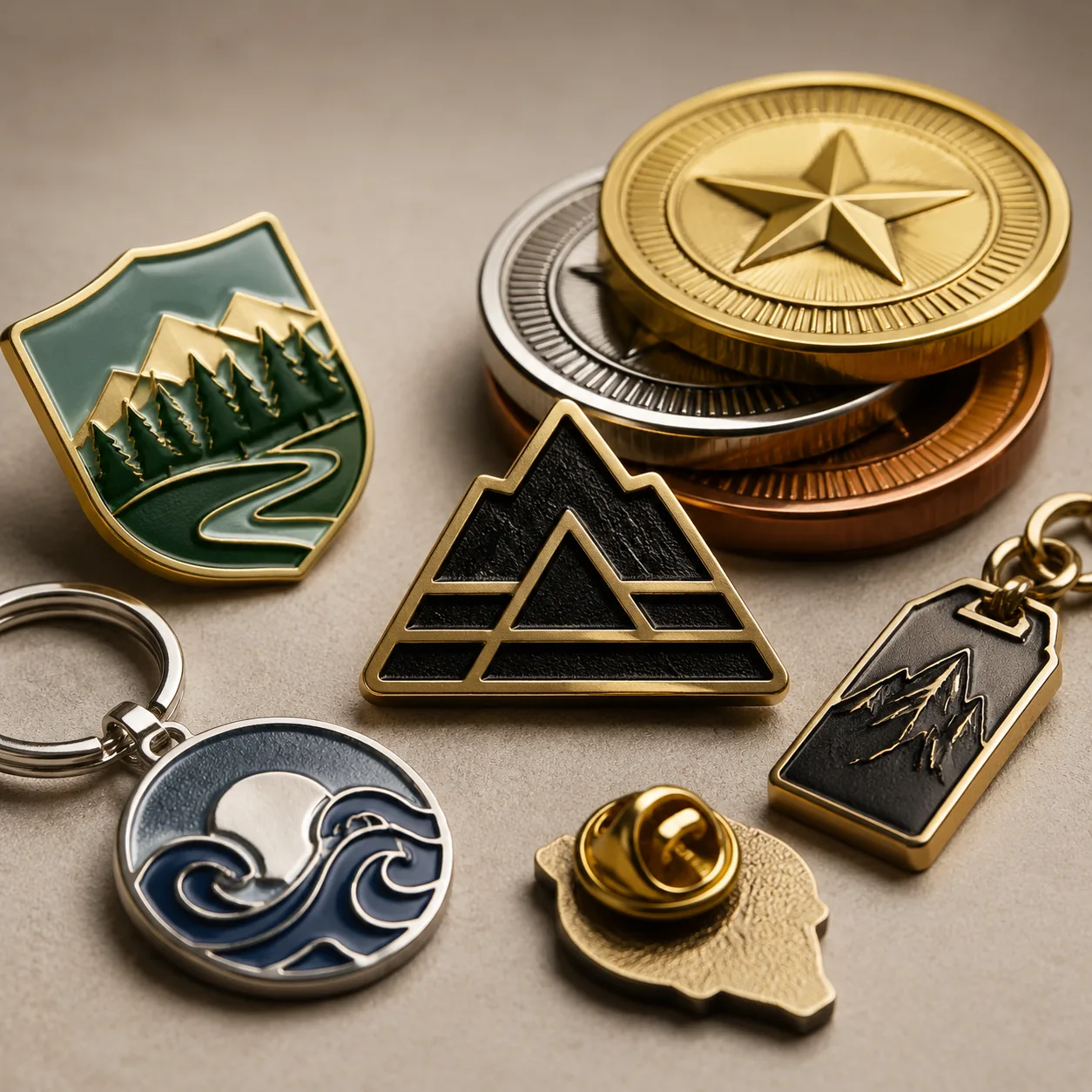
Q1: What are you actually buying when you say “custom pin”?
The quickest way to overpay or receive the wrong product is to request quotes for “a custom metal pin” without a manufacturing specification. Suppliers may price visibly similar pins built with different processes, metals, thicknesses, attachments, and packaging. A 30 x 25 mm stamped iron soft enamel pin, 1.2 mm thick, bright nickel plated, one butterfly clutch, bulk packed can land at a very different FOB price than a 30 x 25 mm die-cast zinc alloy pin, 1.5 mm thick, black nickel plated, epoxy coated, two posts, backing card, and polybag. A 30% to 80% spread is normal when the build is not aligned.
Define the pin in factory language before you ask for price. At minimum, specify width x height in mm, process, base metal, finished thickness, plating finish, color fill type, epoxy yes or no, attachment type, number of posts, backstamp or laser mark if required, and packaging. Common commercial builds are 25 mm, 30 mm, and 38 mm wide. Stamped iron suits simple 2D shapes and lower-cost runs. Die-struck brass is used less often now but still appears in premium designs. Die-cast zinc alloy is usually the better choice for openwork, cutouts, curved silhouettes, or complex outlines that do not stamp cleanly.
Manufacturability should be checked before tooling. As a working rule, raised metal lines below 0.30 mm, recessed enamel cells below 0.35 mm, and text under 0.8 to 1.0 mm cap height become risky on small pins. Fine details can fill in during plating, polishing, or enamel bake. For soft enamel, metal lines remain slightly raised above the color fill. For imitation hard enamel, the face is polished flatter, which improves perceived quality but makes color control and polishing consistency more important. Standard finished thickness for promotional pins is usually 1.2 to 1.5 mm for stamped iron and 1.5 to 2.0 mm for zinc alloy castings, with a reasonable thickness tolerance of ±0.10 to ±0.15 mm.
- Checklist: state size as exact width x height in mm, such as 30 x 28 mm, not “around 1 inch”
- Checklist: specify process and metal, for example stamped iron or die-cast zinc alloy
- Checklist: define finished thickness, such as 1.5 mm ±0.15 mm
- Checklist: list plating clearly: bright nickel, matte gold, black nickel, antique copper, etc.
- Checklist: confirm attachment type, post quantity, and post placement on the drawing
- Checklist: state packaging: bulk, polybag, backing card, barcode label, export carton standard
Q2: Which process and attachment setup fit your design?
Process selection affects both appearance and failure risk. Stamped iron is the default entry option for simple logos with closed outlines and standard recessed color areas. It is usually the lowest-cost route for 100 to 1,000 pcs. Zinc alloy casting is more suitable for interior cutouts, thin arms, asymmetrical shapes, and irregular edges. If the design has several pierced sections or a silhouette with many interior voids, forcing it into stamping often creates burrs, distorted edges, or unstable fill areas.
Attachment choice matters as much as the face design. One centered post is common on compact pins up to roughly 30 to 32 mm, but wide or horizontal designs often need two posts to stop rotation on garments or backpacks. A practical spacing range is about 12 to 18 mm between post centers on a 32 to 40 mm wide pin, depending on shape. Butterfly clutches are the low-cost standard. Rubber clutches are easier for end users but can loosen over time. Deluxe locking clutches improve feel and retention but add cost. Magnet backs avoid fabric puncture, yet they increase unit price and can tilt if the weight distribution is wrong.
For example, a 38 x 18 mm horizontal nameplate pin with one post may pass visual inspection yet rotate in real use. The same pin with two posts and deluxe clutches costs a few cents more but performs correctly. That is the kind of issue to settle before quotation, not after a sample fails wear testing.
Q3: What MOQ and FOB price tier are realistic for a first order?
In 2026, the practical MOQ for custom metal lapel pins from China is still usually 100 pcs per design, but the most efficient opening tier for importers is often 200 to 300 pcs. Below that, tooling, setup, plating, and packing labor are spread across too few units. Some factories accept 50 pcs for a basic design, but the unit economics are usually poor enough that a 200 pc pilot order is the safer commercial test.
For a standard 30 mm stamped iron soft enamel pin, 1.2 mm thick, bright nickel or black nickel plating, one butterfly clutch, individually polybagged, typical 2026 FOB China pricing is about USD 0.42 to 0.88 each at 100 pcs, plus tooling of roughly USD 30 to 65 per design. At 300 pcs, the same build often falls to USD 0.26 to 0.52. At 500 pcs, USD 0.20 to 0.42 is common. Add approximately USD 0.02 to 0.05 for epoxy, USD 0.03 to 0.10 for a printed backing card depending on stock and print coverage, and more for glitter, glow enamel, transparent color, screen print, danglers, sliders, or spinner assemblies.
Die-cast zinc alloy usually carries higher tooling and unit cost. A 35 mm cast pin with one or two cutouts may run USD 0.72 to 1.45 FOB at 100 pcs and USD 0.48 to 0.95 at 300 pcs, depending on finish and packaging. If you are testing a new design, 200 to 300 pcs per SKU usually gives enough volume to expose real production variables without tying up too much cash in slow inventory.
| Order scenario | Typical MOQ | Lead time after art approval | FOB unit range USD | Typical tooling USD | Notes |
|---|---|---|---|---|---|
| 30 mm stamped iron soft enamel, 1 post | 100 pcs | 10-16 days | 0.42-0.88 | 30-65 | Best entry build for simple 2D logos |
| 30 mm imitation hard enamel, polished face | 100 pcs | 12-18 days | 0.55-1.00 | 35-75 | Flatter premium look, tighter polish control |
| 35 mm die-cast zinc alloy with cutouts | 100 pcs | 14-22 days | 0.72-1.45 | 55-110 | Better for openwork and irregular outlines |
| 38 mm pin, 2 posts, backing card + polybag | 200 pcs | 13-20 days | 0.62-1.18 | 35-80 | Extra post and packaging increase labor |
| Rush order, simple stamped design | 100 pcs | 7-12 days possible | base price +10%-25% | standard or waived by supplier | Only realistic when tooling, plating, and packing capacity are open |
Q4: Which specifications must be fixed before you approve a sample?
A sample only reduces risk if it tests the same variables that will be used in mass production. Importers often approve a sample while leaving plating tone, post placement, card size, barcode placement, or bagging method undefined. Then the production lot differs from the sample in exactly the areas that matter to end use or retail presentation.
Before any physical sample is made, freeze the vector artwork revision, exact dimensions, Pantone references where applicable, backside text, raised line widths, recess depths if called out, post positions, clutch type, and final packaging. If the design includes screen-printed details, specify print location and expected registration tolerance. On small decorated areas, ±0.15 to ±0.25 mm is a practical expectation. If imitation hard enamel is required, state whether the entire face must polish flush or whether slight edge relief is acceptable.
The drawing should also show post centerlines. A narrow 28 mm vertical crest may work with one centered post. A 32 x 20 mm horizontal design typically needs two posts. If magnets or safety-pin backs are used, balance becomes more critical because off-center weight distribution can make the finished item hang crooked.
Set the sample path in writing. A digital proof usually takes 1 to 3 days. A tooling-and-photo sample often takes another 4 to 7 days. A true pre-production metal sample normally adds 5 to 10 days depending on plating queue and packaging complexity. For licensed merchandise, employee awards, uniform programs, and retail launches, a real metal sample is usually worth the extra cycle time because it verifies color, plating tone, post position, and packing execution before you commit to volume.
Q5: Is the quote complete, or are downstream costs and finish details missing?
A low quote is often an incomplete quote. A usable quotation should show tooling, sample charge if any, unit price by quantity tier, attachment type, packaging spec, carton quantity, carton dimensions, gross weight, and trade term such as EXW, FOB Shenzhen, FOB Ningbo, or DDP destination. If epoxy, deluxe clutches, custom backing cards, barcode stickers, retailer labels, split shipments, or sample freight are not listed, do not assume they are included.
Plating language is a common source of confusion. “Gold” is not a specification. Ask whether it means bright gold, matte gold, antique gold, or imitation gold tone. Decorative flash plating on promotional pins often uses a decorative top layer around 0.03 to 0.08 microns over an underplate. That is usually adequate for indoor promotional use. If the pin will be handled heavily, stored in humid environments, or sold as premium retail, ask whether a thicker plating build or clear protective lacquer is available and what the adder is. Also confirm whether post and clutch engagement areas are properly masked or controlled during plating, since excessive buildup can affect clutch fit.
Packaging also changes cost more than first-time buyers expect. Bulk packing may be included by default, while backing card insertion, individual polybagging, barcode application, and assortment by SKU can add both labor cost and 1 to 3 extra production days. If the backing card is custom-shaped, ask for final card dimensions, paper stock such as 250 gsm or 350 gsm, print side count, surface finish, and packing orientation. The revised quote after artwork review, not the first rough RFQ number, is the version that should be attached to your PO.
Q6: What QC standard should you agree before paying a deposit?
Quality should be defined before production begins, not after goods are finished. For most B2B promotional pin orders, AQL 2.5 major and 4.0 minor under ANSI/ASQ Z1.4 single sampling is a workable baseline. For premium retail, licensed merchandise, or brand-sensitive programs, many buyers tighten to AQL 1.5 major and 2.5 minor. The AQL numbers matter only if defect definitions are also agreed.
For pins, critical defects typically include sharp burrs or points that can cut the user, detached metal fragments, wrong safety backing on children’s products, or failed attachment that makes the item unsafe. Major defects usually include wrong artwork or text, wrong plating finish, missing or loose post, detached clutch, visible contamination under epoxy, dimensions outside tolerance, incorrect item on the wrong backing card, or missing barcode where retail compliance requires it. Minor defects may include light backside polish marks, small color specks on non-focal areas, or limited enamel shade variation within an approved standard.
Typical dimensional tolerance on small metal pins is about ±0.20 mm on width and height. Finished thickness is commonly held to ±0.10 to ±0.15 mm, depending on process. If epoxy is specified, define whether edge overflow, trapped dust, bubbles, or orange-peel texture are acceptable; for retail-facing work, visible dust or bubbles in the main logo area should normally be treated as major. For color evaluation, exact Pantone matching is not always possible in baked enamel systems, so define whether visual match under D65 lighting is acceptable and whether the master is a Pantone chip, approved photo, or physical sample.
Attachment strength should also be documented. On soldered posts, many factories run 100% manual twist checks in-line and sampled pull checks on finished goods. If the pin will be worn on thick uniforms, bags, or caps, ask whether a wider solder pad or larger post base is needed rather than assuming the standard post is enough.
- QC checklist: define AQL level and defect categories on the PO
- QC checklist: request in-line photos before enamel filling if the design has fine recessed detail
- QC checklist: agree dimensional tolerance, thickness tolerance, and print registration tolerance
- QC checklist: confirm deburring standard for perimeter edges and post ends
- QC checklist: define epoxy acceptance for bubbles, dust, overflow, and orange peel
- QC checklist: state who pays for third-party inspection, rework, or remake if the lot fails the agreed standard
Q7: How much lead time should you really allow from artwork to goods in hand?
Factory production time alone is not your schedule. You need the full chain from proof approval to final delivery. A realistic first-order plan is 1 to 3 days for digital proofing, 3 to 6 days for tooling, 7 to 12 days for standard production, 1 to 3 days for carding and bagging if required, and 2 to 4 days for final inspection and export handoff. If you require a true pre-production sample, add 5 to 10 days. Around Lunar New Year, Golden Week, and Q4 promotional peaks, add at least another 7 to 14 days of buffer rather than relying on nominal lead times.
Transit is separate. Sample courier is often 3 to 7 days. Air freight for production orders is commonly 5 to 10 days airport-to-door depending on destination and customs performance. Ocean freight is usually 25 to 45 days door-to-door depending on route, consolidation, and port congestion. For low-volume first orders, air can still make sense if launch timing matters more than freight efficiency.
Packaging is a frequent hidden bottleneck. Bulk-packed pins move fastest. Individually carded and polybagged units, assorted sets, retailer labels, barcode application, or mixed-product POs with patches and lanyards can add several days and create dependencies on the slowest line. As a planning rule, lock artwork 6 to 8 weeks before required in-hand date for a simple first import, or 8 to 10 weeks if you want a real sample, retail packaging, or ocean freight.
Q8: What shipping, customs, and PO controls prevent first-order delays?
Before deposit, decide whether you are buying EXW, FOB, CIF, or DDP and define who handles export customs, freight booking, import clearance, duty, tax, and final delivery. FOB is often the most practical term for importers with their own forwarder. Smaller first-time buyers may prefer DDP, but they should still request separate line items for freight, duty assumption, and local delivery instead of accepting one blended number they cannot audit.
Carton planning should be confirmed before shipment. Depending on pin size and packaging, a standard export carton may hold roughly 1,000 to 3,000 pcs. Many factories try to keep gross carton weight under about 12 to 15 kg to reduce handling damage. Ask for carton count, inner pack method, carton dimensions, net weight, gross weight, and required carton marks. If your consignee is a chain retailer, event organizer, or 3PL, one wrong carton label format can create chargebacks or relabel fees that exceed the savings from a cheap unit price.
Documentation must be consistent across the commercial invoice, packing list, carton labels, and booking data. Use plain but accurate product descriptions, not vague labels such as “metal gift.” Match SKU codes, piece counts, declared values, and packaging descriptions across all documents. Then issue a one-page purchase specification sheet with SKU name, art revision, dimensions, process, base metal, plating, enamel colors, thickness, attachment, packaging, quantity, AQL, trade term, target ship date, and destination. If any of those fields are blank, the PO is not ready.
For a low-risk first import, keep the opening program simple: one or two SKUs, standard plating, no moving parts, no unusual effect fill, and a quantity tier large enough to price efficiently but small enough to test demand. Once the order runs cleanly, save the approved art, sample photos, specification sheet, and final quote as the repeat-order standard. That file becomes your control document for future buys and makes it much easier to expand into related custom items without restarting the quality conversation from zero.
Have a project? Send your artwork and target quantity and we’ll reply with a detailed quotation within 12 working hours.
Ready to get this made?
Send your sketch, target quantity and ship-date. Detailed quotation in 12 hours.



