First Import Custom Pin Failure Modes: 7 Specs to Lock Early
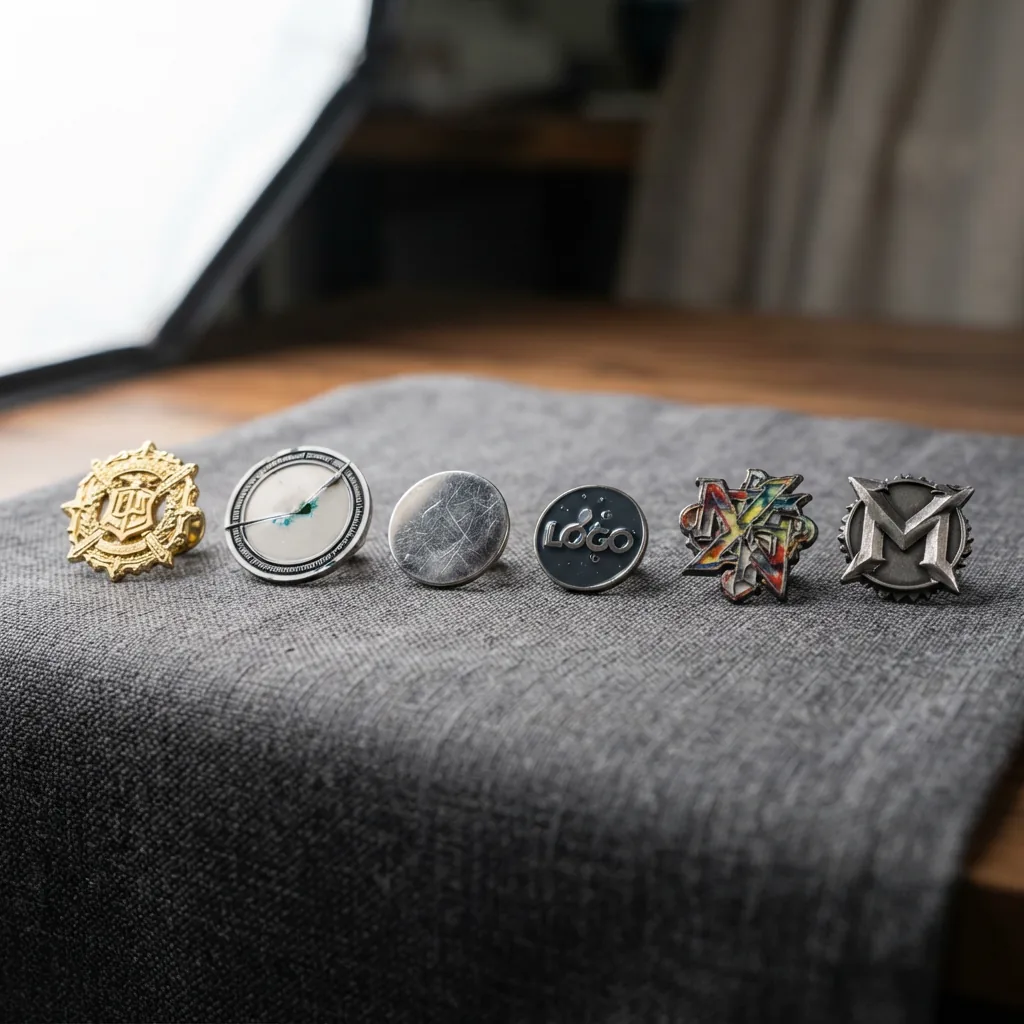
The first failure is usually the spec package, not the pin
On first custom pin imports, the biggest cost is rarely a dramatic factory miss such as the wrong plating color or a completely unusable mold. More often, the failure starts in an approval package that leaves key decisions open to interpretation. If the PO, artwork proof, and packing notes do not define measurable targets, the factory fills the gaps during die engraving, stamping or casting, enamel filling, polishing, plating, post soldering, and packing. The shipment may arrive broadly usable and still be wrong for your brand standard, retail channel, or launch date.
That is why many first orders do not fail as 100 percent rejects. They fail as 5 to 10 percent destination sorting, a partial remake that adds 7 to 12 days, or a product that starts generating complaints only after distribution. On custom enamel pins, prevention is straightforward: lock a short list of production-critical specs before tooling, approve against those same specs at pre-production sample stage, and inspect against them again at final AQL inspection.
The seven failure modes below are the ones that repeatedly affect first imports of lapel pins, employee recognition badges, club pins, and event merchandise. The figures are practical starting points for common 20 to 40 mm iron stamped, brass stamped, and zinc alloy die-cast pins. They are not universal. A 35 mm collector pin with hard-enamel-style fill, screen print overlay, and cutouts needs a tighter standard than a 25 mm giveaway pin with two soft-enamel colors. But if these items are written into the approval sheet early, most first-order surprises disappear.
1. Artwork is technically producible, but the face reads muddy
Pins often look clean on screen and muddy in metal because a 25 to 30 mm face cannot hold the same detail density as vector artwork. Fine outlines become shallow ridges, narrow enamel cells underfill, and small text closes after polishing. The part may be within overall size tolerance and still fail visually at arm's length.
For soft enamel and imitation hard enamel, a practical starting spec is minimum metal line width of 0.25 mm for secondary separators and 0.30 to 0.35 mm for brand-critical outlines. Minimum recessed enamel cell width should generally be 0.40 mm, with 0.50 mm preferred for long narrow shapes. Recess depth on stamped pins is commonly 0.20 to 0.30 mm; below 0.18 mm, fill consistency becomes unstable, especially in acute corners and thin channels. If text matters, keep the smallest uppercase characters above 1.2 mm finished height on a 30 mm pin, and avoid serif details that depend on strokes below 0.20 mm.
Do not try to solve a scale problem by demanding tighter machining tolerance. A supplier can hold overall size to +/-0.15 mm on a 30 mm stamped pin and still produce a face that looks crowded because the issue is visual density, not die accuracy. In practice, the fastest correction is usually one of three changes: increase the pin from 25 mm to 32 mm, remove low-value background elements, or convert tiny text to a simplified mark or backstamp.
A concrete example: a 26 mm event pin with three text lines, a mascot outline, and six enamel colors is typically marginal in production. The same design at 32 mm, with text reduced from three lines to one and two background shapes removed, usually moves from unstable to repeatable. Unit FOB may only rise by about USD 0.04 to 0.10 at 500 pieces, while the visual yield improves materially.
2. Color is approved from photos, then shifts in bulk
First-time buyers often approve color from phone photos or a single sample under unknown lighting. That is weak process control. Bulk production can shift enough to create visible inconsistency on large fills, especially with red-orange, navy, warm gray, cream, and off-white tones. Plating also changes perceived contrast, so the same enamel can read differently on bright gold, nickel, and black nickel.
Lock Pantone references for each enamel area, then define how color will be judged. A workable standard is visual match to an approved physical sample under D65 or equivalent daylight lighting at 500 to 1000 lux, viewed at about 50 cm, with no obvious lot-to-lot difference within the same run. For soft enamel, specify even fill with no exposed base metal in color cells and fill height variation within 0.10 mm between adjacent major areas. For imitation hard enamel, specify a polished level surface with sink no deeper than 0.05 mm on large visible fields.
If brand identity matters, approve one physical pre-production sample before mass production. Digital approval alone is usually not enough for retail launch, licensed merchandise, employee recognition, or any program where pins will be compared side by side across batches. Special effects such as glitter, pearl, transparent, glow, and stained-glass finishes should be approved as effect samples with written limits on opacity, flake density, or transparency instead of being treated as exact Pantone matches.
| Spec area | Soft enamel starting spec | Imitation hard enamel starting spec | Common failure if omitted |
|---|---|---|---|
| Minimum metal line width | 0.25-0.30 mm | 0.25-0.30 mm | Lines merge or disappear after polishing |
| Minimum enamel cell width | 0.40 mm minimum; 0.50 mm preferred for narrow shapes | 0.40 mm minimum; 0.50 mm preferred for narrow shapes | Underfill, bubbles, or unstable color edges |
| Color standard | Pantone reference plus approved physical sample | Pantone reference plus approved physical sample | Bulk lot shifts from approved sample |
| Fill level tolerance | Adjacent major cells within 0.10 mm | Surface level; sink max 0.05 mm on key fields | Uneven face and visible low spots |
| Dimensional tolerance | Overall size +/-0.15 mm at 30 mm | Overall size +/-0.15 mm at 30 mm | Poor fit on backing cards or inconsistent appearance |
| Sample approval method | Daylight visual check plus written comments | Daylight visual check plus written comments | Factory relies on photo interpretation instead of fixed standard |
3. Plating is treated as a color choice instead of a wear layer
Plating is not only decorative. It is a performance layer that affects abrasion resistance, fingerprint visibility, corrosion behavior, and how quickly high points expose base metal. Many first imports focus on gold, nickel, or black nickel appearance and ignore use conditions. The pin looks acceptable at unboxing and starts showing edge exposure after two weeks on a bag, lanyard, or uniform.
For standard indoor-use promotional pins, specify plating type and decorative thickness range. Common decorative nickel, gold-tone, or black nickel finishes on pins are thin, often around 0.03 to 0.10 microns depending on process and supplier standard. That is usually adequate for collector pins kept on cards or worn occasionally. For daily-wear uniform pins or accessories exposed to repeated friction, ask for heavier decorative plating where available, an electrophoretic clear topcoat, or both. A clear topcoat can improve resistance to sweat and skin oils, but it may slightly change gloss and typically adds 2 to 4 production days.
Black finishes need especially clear expectations. Black nickel and dyed black effects tend to show edge wear early on corners and raised lines because those areas take the most abrasion. That is often a use-case mismatch rather than a plating defect. If the item will be clipped to a bag, jacket zipper area, or key ring, state that in the RFQ and ask whether antique silver, antique brass, or a clear-coated bright finish is the more realistic option.
For budgeting, plating upgrades usually add USD 0.03 to 0.12 per piece depending on finish, quantity, and whether topcoat is included. That increase is minor compared with the cost of field complaints on a premium retail pin or employee program handled every day.
4. Attachment layout is treated as hardware when it is really geometry
Attachment complaints usually appear after distribution, which makes them expensive. Pins rotate, tilt, sag on light fabric, or scratch garments. The root cause is often geometry rather than clutch quality. A 38 mm wide pin with one centered butterfly clutch will rotate. A tall badge with a single post near the top edge will lever outward. A heavy zinc alloy shape may need a different backing system entirely.
Lock attachment quantity and post placement by size and weight. As a starting rule, one post is acceptable for pins up to about 25 mm width and 8 g finished weight. From 30 to 45 mm width, use two posts spaced as far apart as the design allows, typically 18 to 22 mm center-to-center on a 32 to 40 mm pin. Above roughly 12 to 15 g finished weight, move from standard butterfly clutches to deluxe locking clutches, a tie tack, or a brooch-style pin depending on orientation and garment type.
Butterfly clutches are the volume default because they are low cost and easy to use, but they are not universal. Rubber clutches reduce scratching and work well for casual merchandise. Deluxe metal clutches improve hold for premium pins. Magnetic backs avoid fabric puncture, but they add thickness, increase FOB by roughly USD 0.20 to 0.60 per set, and hold less reliably through heavy fabrics. For employee uniform programs, the garment matters as much as the pin. A polo, blazer lapel, and knit sweater should not share the same default hardware assumption.
If backing cards are used, post spacing must match the card slot layout. Many first-order reworks come from approving card artwork before actual post positions are frozen. Even a 1 to 2 mm mismatch can slow assembly, force card reprinting, or bend cards during packing.
5. Edge finish, reverse quality, and AQL severity are left to factory standard
Most first-time buyers focus on the front face and miss the edge and reverse side. End users do not. Retail complaints commonly come from sharp edge feel, rough internal cutouts, visible solder overflow around posts, plating scratches on the back, or polishing compound trapped in recessed backstamp areas. These issues are easy to miss in approval photos and obvious in hand.
Write a clear edge and reverse standard into the order. For stamped iron or brass pins, require a smooth perimeter with no burrs perceptible in normal finger handling, no sharp points on cut lines, and neat solder joints contained close to the post base, typically with solder spread not exceeding about 1.0 mm beyond the post base diameter. For die-cast zinc alloy with cutouts or irregular profiles, specify that both outer perimeters and internal windows must be evenly deburred. Complex cast shapes often hide roughness on inside curves unless that point is stated explicitly.
Then define inspection severity. For general promotional programs, AQL 2.5 major and 4.0 minor is common. For collector pins, ecommerce retail, licensed merchandise, or employee recognition pieces where appearance drives the purchase decision, AQL 1.0 to 1.5 on appearance-critical defects is more realistic. Typical major defects include missing plating, exposed sharp burrs, wrong post placement beyond +/-1.0 mm, obvious color contamination, bent posts, or visible enamel voids larger than 0.30 mm on the front face. Minor defects include light back-side scratches, a low-visibility dust point under 0.20 mm in enamel, or slight plating tone variation that does not affect front presentation.
Tighter AQL is not free. It adds sorting time, can increase third-party inspection cost by USD 150 to 300 per lot, and raises the chance of remake discussions if the standard was not aligned before production. But it is still cheaper than receiving 1,000 units that are technically saleable and commercially wrong.
6. Packaging is finalized late, so finished goods get damaged or repacked
Packaging failures are common because buyers treat pack-out as an administrative detail instead of a production spec. Pins rub each other in bulk bags, loose butterfly clutches scratch neighboring faces, epoxy-domed pieces scuff during transit, or backing cards are approved without confirming slot spacing against actual post placement. Once discovered after assembly, rework often adds 3 to 6 days.
Lock the pack-out method in the same approval sheet as the product. If using backing cards, specify card size, board weight, finish, and slot geometry. A common retail card is 90 x 55 mm on 300 to 350 gsm C1S or C2S stock, with slot spacing tolerance of +/-1.0 mm. State whether clutches are pre-attached on the back of the card or packed separately in a small polybag. For bulk-packed promotional pins, individual polybagging is worth adding mainly for scratch-sensitive finishes, mirror-polished surfaces, black nickel, or epoxy-dome parts.
Packaging changes FOB more than many first-time importers expect. On a standard 30 mm soft enamel iron pin with one post, approximate FOB pricing is often USD 0.90 to 1.50 at 100 pieces, USD 0.50 to 0.95 at 300 pieces, USD 0.38 to 0.72 at 500 pieces, and USD 0.28 to 0.55 at 1,000 pieces, depending on plating, color count, attachment type, and packing. Adding a printed backing card plus individual polybag typically adds USD 0.08 to 0.20 per unit at 500 pieces. Barcode labels, exact retail set collation, or mixed-SKU master carton sorting should be quoted as separate labor.
Also write quantity tolerance into the PO. Many factories quote with +/-5 percent overrun or underrun on custom promotional goods unless exact count is contracted. If you need 1,000 sellable retail sets, state whether 1,000 means shipped quantity, packed quantity, or passed-inspection quantity after sorting.
7. The quoted lead time sounds normal until one revision resets the clock
Many first-time importers receive a headline production time such as 12 to 18 days and treat it as fixed. It is not. Pin production has multiple gates: artwork correction, die engraving, sample making, plating queue, final assembly, and packing confirmation. One late change in plating, post position, or card format can restart part of the process and add a full week.
Break the schedule into stages before deposit. For a standard soft enamel order, a realistic range is 2 to 4 days for artwork proofing, 3 to 5 days for tooling and pre-production sample, 7 to 12 days for mass production after sample approval, and 2 to 4 days for packing and export preparation. Imitation hard enamel, epoxy topcoats, screen print, glow enamel, or complex cutouts can push total factory time toward 18 to 25 days before transit. Around Lunar New Year, Q4 gifting season, and pre-trade-show peaks, queue delays can add another 5 to 10 days if the supplier is not holding capacity.
Ask the supplier to state which changes restart the clock. Changing plating after sample approval, moving posts to fit a revised card, altering Pantone references after enamel testing, adding laser serial numbers, or switching from bulk polybag to barcoded retail packs are all common changes that add 3 to 9 days and may trigger new tooling or labor charges. On a first order, the items that should be frozen together before tooling are size, thickness, plating, attachment layout, packaging method, and target inspection standard.
MOQ matters as well. Many pin factories can technically produce 50 to 100 pieces, but the most stable pricing and process flow usually start around 200 to 300 pieces per design. Below that, tooling cost is spread across too few units and sample-to-bulk consistency is harder to judge because the run is short. For first imports, 300 to 500 pieces is often the best learning tier: enough volume to test process control, but not so much inventory that a specification mistake becomes expensive.
What to lock before deposit
Do not write a 40-point engineering document for a first order. Lock the small set of specifications that controls most of the failure risk, then force all approvals to reference those same points. That gives the factory a written production target and gives you an objective basis for inspection and remake discussions.
- Confirm the actual use case: event giveaway, retail collector pin, employee uniform, resale accessory, or gift-with-purchase
- Set finished size in mm before tooling; increase size if text, outlines, or narrow enamel cells are near process limits
- Specify material and thickness, for example iron or brass stamped at 1.2-1.5 mm, or zinc alloy die-cast at 2.0-3.0 mm for irregular shapes
- Write attachment layout by size and weight; use two posts on wider pins and define center-to-center spacing in mm
- State plating as a performance choice, including finish type, expected wear condition, decorative thickness range, and any clear topcoat requirement
- Approve color against Pantone references plus one physical sample when brand accuracy matters
- Define front, edge, reverse, solder-joint, and cutout appearance standards, then set AQL and defect classification before inspection is booked
- Freeze packaging, card dimensions, clutch packing method, quantity tolerance, MOQ tier, and approval deadlines before mass production starts
The practical next step is to send one combined approval sheet instead of scattered email comments. Put the final artwork, finished size, material, thickness, plating, Pantone list, post locations, backing card layout, packing method, AQL target, MOQ, unit FOB basis, and ship date on one page. That single document does more to reduce rework, control lead time, and compare supplier quotes fairly than negotiating a few cents off unit price after the process has already been left open.
Have a project? Send your artwork and target quantity and we’ll reply with a detailed quotation within 12 working hours.
Ready to get this made?
Send your sketch, target quantity and ship-date. Detailed quotation in 12 hours.



