First Import Cost and Lead-Time Map for Custom Metal Pins
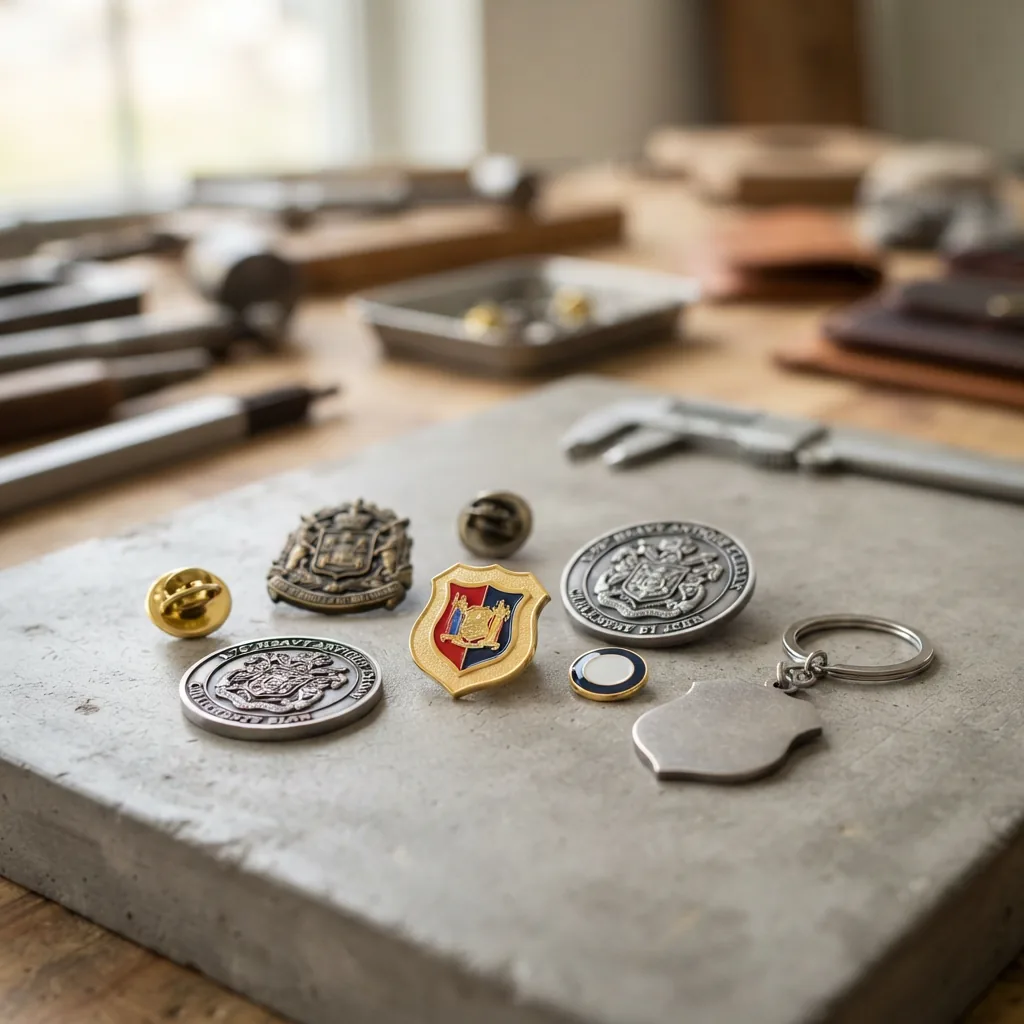
Why a low pin quote becomes an expensive first PO
First-time buyers often compare custom metal pin suppliers by one headline number, such as USD 0.42 FOB each at 1,000 pieces, and miss the line items that decide whether the order is commercially workable. In this category, the budget overrun is usually not hidden in the base pin cost. It sits in tooling, sample creation, sample courier, upgraded plating, extra attachment hardware, backing cards, barcode labels, split-carton packing, inspection, and expedited freight used to recover approval delays.
That is why a low first quote can be misleading. A 500-piece order quoted at USD 0.48 FOB appears to cost only USD 240. After adding a USD 60 to 110 mold, USD 30 to 45 sample courier, USD 0.06 to 0.10 per unit backing card with insertion, and USD 130 to 190 express freight, the pre-duty spend typically lands closer to USD 490 to 635. Add destination charges such as customs brokerage, duty where applicable, and last-mile delivery, and the payable amount moves further away from the unit-price-only view.
Lead time is misread the same way. Factory production does not begin when the RFQ is sent. It begins after vector artwork is approved, Pantone references are confirmed, pin dimensions and post locations are signed off, packaging dielines are frozen, and the deposit is received. For a first import of a 30 mm die-struck soft enamel pin, a realistic factory cycle is usually 14 to 24 calendar days before transit. Once buyer-side approvals and freight are included, the total program is more often 32 to 52 days than the 7 to 10 days many new importers assume.
The practical correction is to separate the order into four cost buckets and four time buckets. Cost should be quoted as tooling, unit production, packaging, and freight. Time should be mapped as artwork approval, sample stage, mass production, and export transit. When suppliers break the program out that way, comparison becomes factual instead of cosmetic.
Where the first-order budget actually goes
For a standard 30 mm custom soft enamel pin in stamped iron or die-cast zinc alloy, 1.2 to 1.5 mm thick, with one or two posts, butterfly clutch, and individual OPP bag, FOB pricing follows a repeatable range when specifications are clear. At 300 pieces, typical quotes are about USD 0.55 to 0.95 each. At 500 pieces, about USD 0.42 to 0.78. At 1,000 pieces, about USD 0.30 to 0.56. Hard enamel, 1.8 mm thickness, two posts, epoxy dome, premium plating, and hand-packed retail presentation move the price to the upper end quickly.
Tooling is usually a one-time charge per design, but it has an outsized effect on a small opening order. A 30 mm stamped iron pin commonly carries a mold charge around USD 50 to 90, while a zinc-alloy die-cast design is often USD 80 to 140 because irregular outlines, interior cutouts, and multi-level relief create more tooling complexity. As a rule, bridges below about 0.8 to 1.0 mm, recessed copy below 0.20 to 0.25 mm line width, and fine enclosed spaces increase reject risk and should be reviewed before quoting is treated as firm.
Packaging is where many first budgets drift. A plain OPP bag usually adds USD 0.01 to 0.02 per piece. A printed backing card in 350 to 400 gsm board with hand insertion usually adds USD 0.05 to 0.12 per unit. A rigid gift box often adds USD 0.35 to 0.90 per unit before foam insert, paper sleeve, or barcode application. On small retail programs, packaging can represent 15% to 35% of landed cost, so it needs to be specified in the first RFQ instead of added after sample approval.
| Cost element | Typical range for 30 mm custom pin | What moves it up |
|---|---|---|
| Tooling charge | USD 50 to 140 per design | Zinc alloy die-cast mold, interior cutouts, 3D relief, bridges below 1.0 mm |
| FOB unit cost at 300 pcs | USD 0.55 to 0.95 | Hard enamel, 1.8 mm thickness, two posts, premium plating |
| FOB unit cost at 500 pcs | USD 0.42 to 0.78 | Epoxy dome, extra colors, backing card insertion, tighter sorting |
| FOB unit cost at 1000 pcs | USD 0.30 to 0.56 | Higher polish standard, split packing, added QC requirements |
| Pre-production sample | Included to USD 50 | Physical sample with packaging mock-up or second revision loop |
| Sample courier | USD 30 to 45 per shipment | Remote destination, urgent express service, oversize sample pack |
| Standard polybag | USD 0.01 to 0.02 each | Suffocation warning print, thicker film, barcode label |
| Printed backing card | USD 0.05 to 0.12 each | 400 gsm stock, double-sided print, spot UV, hand insertion |
MOQ tiers that change the economics
The real MOQ question is not whether a factory can physically make 100 pins. It is whether the finished economics still make sense after tooling, sample handling, freight, and sorting loss are included. Many suppliers will accept 100 to 200 pieces for a simple design, but the landed cost per usable unit is usually weak unless the order is meant for approval samples, influencer mailers, or a one-time internal event.
For most first imports, the planning tiers that matter are 300, 500, and 1,000 pieces. At 300 pieces, the buyer is paying for customization access rather than process efficiency. At 500 pieces, mold and setup cost spread better and packaging labor becomes easier to absorb. At 1,000 pieces, plating, polishing, color filling, and assembly become materially more efficient, especially for a 4 to 6 color design with one standard finish and no rigid retail box.
MOQ also affects quality stability. Very short runs leave less room for setup pieces, plating test pieces, and sorting loss from enamel overflow, contamination between adjacent colors, or post misalignment. If the requirement is retail-facing quality with AQL 2.5 major and 4.0 minor, dimensions held to plus or minus 0.15 mm on width and height, and finish judged against an approved reference sample at normal viewing distance, 300 to 500 pieces is usually more stable than forcing a 100-piece run.
- 100 to 200 pcs: suitable for internal approval sets, pilot launches, or mailer kits where unit cost is secondary
- 300 pcs: workable opening tier when the design is simple, packaging is basic, and freight can be consolidated
- 500 pcs: often the best first commercial tier when the order needs one sample loop plus custom backing cards
- 1000 pcs and above: strongest tier for retail programs, distributor stock, and lower freight cost per usable unit
Lead-time stages buyers usually underestimate
A useful schedule separates supplier working days from buyer waiting days. Artwork cleanup, Pantone clarification, proof approval, backing card dieline approval, and post-position confirmation often consume 2 to 5 days before the supplier can even cut tooling. Across time zones, a slow internal sign-off chain can quietly add another 3 to 7 days without appearing anywhere on the factory schedule.
For a straightforward die-struck soft enamel pin, tooling and pre-production sampling usually require 5 to 8 days. After sample approval, mass production commonly takes 8 to 15 days for a 500 to 3,000 piece order. Export packing and dispatch add 2 to 4 days. Black nickel, antique finishes, dual plating, glow enamel, epoxy dome, custom carding, and gift-box assembly often add 2 to 5 more days because they introduce extra handwork, plating control, or drying time.
Freight has to be chosen at PO stage, not after the goods are finished. Express courier is commonly 3 to 7 days door to door. Standard air cargo is often 7 to 12 days depending on customs clearance and local handoff. Sea freight may be 20 to 35 days port to port on major lanes, but 30 to 45 days is a safer planning number once origin handling, destination clearance, and inland delivery are included. Buyers who delay the freight decision often lose the sea option and end up paying air rates to protect an event or launch date.
| Stage | Typical days | Main failure point |
|---|---|---|
| Artwork and specification confirmation | 2 to 5 days | Unclear Pantone, missing post layout, packaging not finalized |
| Tooling and sample | 5 to 8 days | Thin lines, unreadable copy, unstable cutouts, revision loop |
| Sample approval gap | 1 to 4 days | Buyer-side delay across sourcing, marketing, and packaging teams |
| Mass production | 8 to 15 days | Plating queue, color correction, attachment assembly bottlenecks |
| Export packing and dispatch | 2 to 4 days | Late carton-marking changes or barcode additions |
| Express courier | 3 to 7 days | High freight cost relative to low shipment value |
| Sea freight and final delivery | 30 to 45 days | Missed launch because vessel space was not planned early |
Technical specifications that quietly add cost and days
Most quote variance comes from six technical variables: base metal, thickness, finish type, number of posts, packaging format, and cosmetic inspection standard. Iron is common for flatter stamped designs and is usually the lower-cost option for simple shapes. Zinc alloy is often preferred for irregular outlines, inner cutouts, and softer contoured forms because die-casting handles those geometries better, but the unit price is usually higher than a straightforward stamped iron piece.
Thickness matters more than many first buyers expect. Moving from 1.2 mm to 1.5 mm or 1.8 mm increases metal weight, polishing time, and freight weight. For a 30 mm decorative pin, width and height are often held to plus or minus 0.15 mm, while thickness tolerance is commonly about plus or minus 0.10 mm depending on process. Text below roughly 0.20 mm line width, or visual detail equivalent to about 5 pt in print artwork, should be reviewed carefully because enamel fill, polishing, and plating can soften edges or close small gaps.
Plating affects both appearance and process stability. Bright gold-tone, bright nickel, and black nickel are standard decorative finishes. Antique copper, antique brass, and dual plating generally require more hand sorting because lot-to-lot tone variation is easier to see. For custom lapel pins, decorative flash plating is commonly around 0.03 to 0.08 microns, often followed by clear lacquer when moderate tarnish resistance is needed. That is a cosmetic finish, not an engineering-grade wear layer, so it should not be specified as though the part were functional hardware.
Attachment choice also changes throughput. One butterfly clutch is common for pins under about 25 mm. At 30 to 40 mm, two posts are often used to prevent rotation on garments or bags, which adds soldering or attachment work and increases alignment risk if spacing is inconsistent. Rubber clutches usually add USD 0.02 to 0.05 per unit over standard metal butterflies. Magnetic backs add materially more cost, often USD 0.18 to 0.45 per unit depending on magnet size and mounting method, and may be unsuitable for wearers with pacemakers or for regulated workplaces.
What not to over-spec on a first import
First orders run more reliably when brand-critical requirements are separated from presentation extras. If the pins are event giveaways or low-cost promotional items, do not start with hard enamel, dual plating, custom die-cut backing cards, spot UV, individual barcode labels, and rigid gift boxes unless those features are commercially necessary. Each added process introduces another queue, another approval point, and another chance to lose the ship window.
Sampling is the second place where discipline matters. A physical pre-production sample is worth the time when the design contains small text, unusual geometry, retail packaging, or a finish-sensitive color scheme. For a basic 25 to 30 mm soft enamel pin with standard plating and simple bagged packing, some buyers can approve production artwork plus factory first-article photos and save 3 to 5 days. That shortcut is not appropriate when precise finish appearance, exact Pantone match, or shelf presentation matters.
Cosmetic expectations also need calibration. Decorative custom pins are not jewelry-grade parts. Minor backside marks, small plating tone variation across a lot, and slight Pantone approximation drift are normal unless the buyer pays for tighter sorting, lower defect tolerance, and higher scrap. If front-face appearance matters, the inspection level should be stated before the PO is accepted. A common commercial standard is AQL 2.5 major and 4.0 minor, with appearance judged against an approved reference sample at normal viewing distance rather than under magnified inspection.
How to build a first-order budget that survives approval
A workable first-order budget should be built in landed-cost format rather than FOB unit price alone. Include tooling, sample charge if any, sample courier, production cost, packaging, third-party inspection where required, freight, duty, customs clearance, and a contingency for late artwork or packaging edits. For a first PO, a 5% to 10% reserve is sensible because teams often change the card design, finish callout, or carton mark after seeing the sample in hand.
Variants should never be averaged together. If one SKU uses black nickel and another uses bright gold, cost them separately. If half the order uses a backing card and the other half uses a rigid box, split those as separate costing lines too. Labor-heavy variants behave differently even when the front pin face is identical, and blended costing hides margin loss until the final invoice arrives.
The most effective control document is a single specification sheet approved before sample release. It should combine finished size, thickness, base metal, plating, post quantity and position, clutch type, Pantone references, packaging method, inner-pack quantity, export carton quantity, carton marking, and inspection notes. One clean specification sheet usually prevents more delay and rework than negotiating another one or two cents off the unit price.
- List finished size in mm, metal thickness in mm, and target tolerance such as plus or minus 0.15 mm on face dimensions
- State base metal, plating finish, and whether clear lacquer is required for added tarnish resistance
- Confirm number of posts, clutch type, and post positions to control rotation on garments or bags
- Define piece packing, inner-pack quantity, export carton quantity, and carton label content before sampling
- Set inspection expectation such as AQL 2.5 major and 4.0 minor before mass production starts
- Choose freight mode at PO stage based on launch date and total landed cost, not after goods are finished
A practical first-import plan for custom pins
Start the RFQ with three quantity tiers on one specification sheet: 300, 500, and 1,000 pieces. Ask the supplier to break out mold, unit price, sample terms, packaging, inspection, and courier separately. If the quote comes back as one blended total, the real cost drivers remain hidden and supplier comparison becomes unreliable.
Then decide which variable is actually fixed: launch date, retail presentation, exact finish, or lowest landed cost. Most first orders cannot optimize all four at once. If the date is fixed, simplify the finish and packaging. If shelf presentation matters, allow time for a physical sample and accept a higher reject-controlled cost. If lowest landed cost matters most, hold the design to standard plating, standard clutch, and simple bagged packing.
A concrete example makes the economics clearer. For 500 soft enamel pins at 30 mm, 1.5 mm thick, two posts, bright nickel plating, 4 colors, one printed backing card, one sample loop, and express delivery, a realistic budget is often USD 210 to 390 for production, USD 60 to 110 for tooling, USD 30 to 45 for sample courier, USD 30 to 60 for backing cards and insertion, USD 130 to 190 for express freight, and USD 80 to 150 for duty, customs brokerage, and local delivery depending on destination. That puts the first landed spend roughly in the USD 540 to 945 range, not the USD 240 unit-price-only view suggested by FOB cost alone.
Finally, place the order early enough to preserve the sea-freight option where practical. For a first custom metal pin import, a safer total planning window is 5 to 8 weeks including approvals and transit, even when pure factory production is only 2 to 3 weeks. That buffer is what keeps one sample correction, one packaging revision, and normal export handling from turning into rush freight, margin erosion, and a missed launch.
Have a project? Send your artwork and target quantity and we’ll reply with a detailed quotation within 12 working hours.
Ready to get this made?
Send your sketch, target quantity and ship-date. Detailed quotation in 12 hours.



