Final Inspection AQL Specs for Custom Promo Products
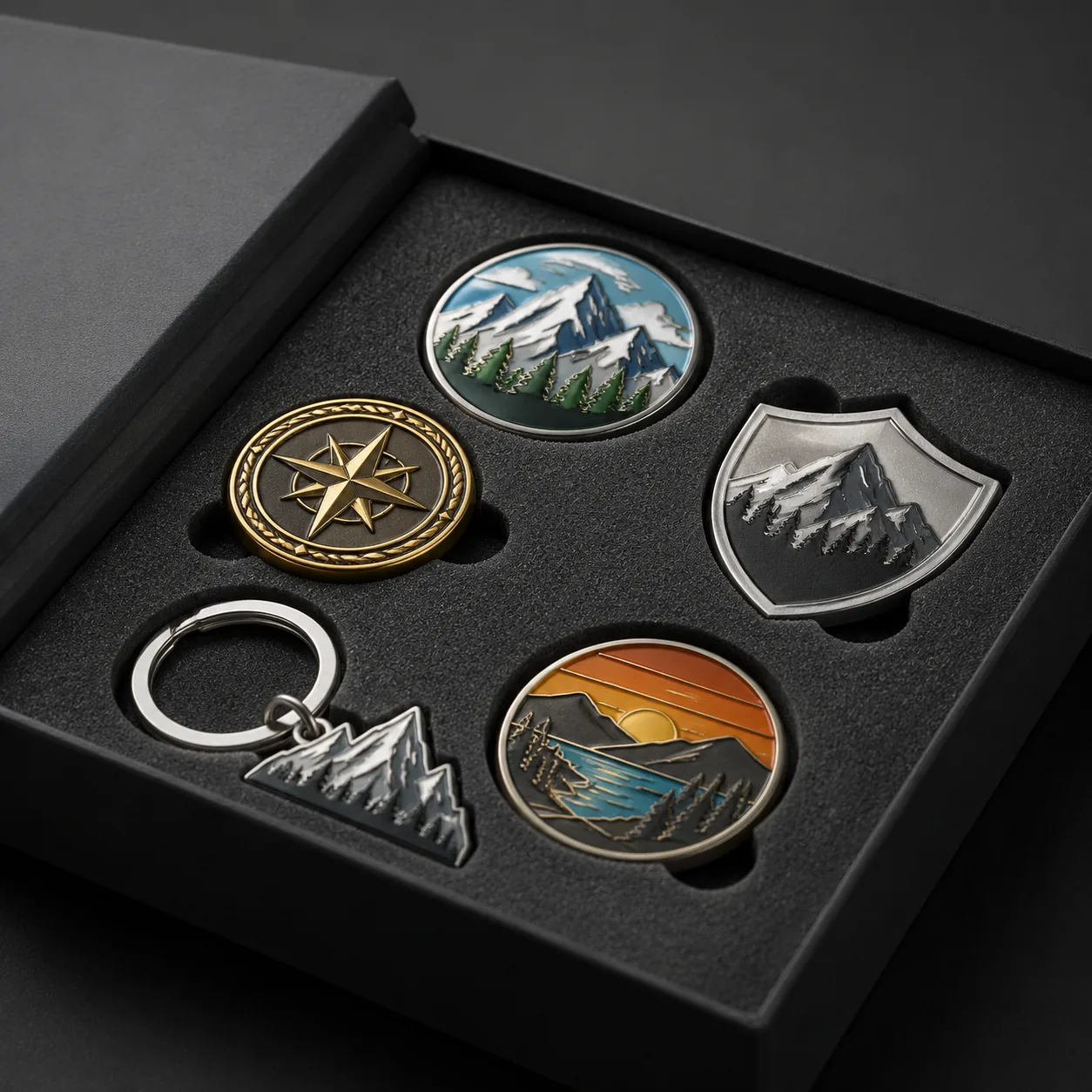
Why Approved Samples Still Become Bad Shipments
A pre-production sample can look excellent while the shipment still arrives with mixed plating shades, weak split rings, scratched epoxy, loose clutch backs, incorrect backing cards or crushed export cartons. The usual cause is not bad intent; it is an incomplete inspection requirement. “Inspect before shipment” does not tell the factory how many pieces to check, which flaws are rejects, which tolerances apply or who decides whether a defect is critical, major or minor.
Custom promotional products need a different checklist from apparel or simple printed goods. Enamel pins, brooches, keychains, fridge magnets, challenge coins, patches and lanyards combine decoration, hardware, adhesives, plating, stitching, printing and packing. A tiny back-side polishing mark is not the same risk as a sharp burr, a detached magnet or a pin post that snaps off during use.
At ZheCraft, outgoing inspection is normally built from four inputs: approved golden sample, final artwork file, confirmed packing method and the buyer’s AQL requirement. If the buyer has no internal standard, a practical default for most B2B promo shipments is Critical 0, Major 1.5, Minor 4.0 under ANSI/ASQ Z1.4 or ISO 2859-1, general inspection level II, normal inspection. This is strict enough to catch process drift without failing a hand-finished order for every tiny cosmetic variation.
Set AQL by Product Risk and Channel
AQL means acceptable quality limit. It is not a promise of zero defects and it is not permission to ship careless work. It defines the sampling plan and the maximum defect level allowed in the checked sample. The correct AQL depends on the product, sales channel and user. A child-facing magnetic badge needs tighter controls than an adult trade-show lanyard. A retail pin sold at USD 8.00 needs a cleaner finish than a one-day event giveaway costing USD 0.28 FOB.
Use Critical 0 for unsafe or regulatory failures. Any critical defect should fail the inspection: sharp points, exposed wire ends, detachable small magnets, lead or nickel non-compliance where specified, broken pin posts, mold contamination or loose parts that create a choking hazard. Major defects should cover functional failure or clear mismatch from the approved sample: wrong plating, wrong logo, missing color fill, weak key ring, unreadable QR code, wrong attachment, carton shortage or dimensions outside tolerance. Minor defects should cover limited cosmetic variation: back-side scratches, tiny plating dots, slight enamel waviness or short thread ends that do not affect use.
| Use case | Recommended AQL | Inspection level | Typical tightening trigger |
|---|---|---|---|
| Retail enamel pins or brooches | Critical 0, Major 1.0, Minor 2.5 | General II | High-polish gold, black nickel, epoxy dome, backing card, gift box |
| Corporate keychains and challenge coins | Critical 0, Major 1.5, Minor 4.0 | General II | Moving parts, rotating hardware, laser serials, QR codes |
| Event lanyards and patches | Critical 0, Major 2.5, Minor 4.0 | General II | Sponsor logos, barcode cards, retail packing, breakaway clips |
| Child-related promo items | Critical 0, Major 1.0, Minor 2.5 | General II plus safety checks | Small magnets, sharp pins, nickel-free or CPSIA-style requirements |
| Low-cost event giveaways | Critical 0, Major 2.5, Minor 4.0 | General I or II | Only when buyer accepts broader cosmetic variation |
Define Defects, Tolerances and Finish Limits
Most inspection disputes start because the defect list is written after production. Put defect classes in the purchase order or quality appendix before tooling starts. The inspector should compare against the approved sample and written tolerances, not against screen color, memory or a sales photo.
For enamel pins and badges, classify as major: wrong Pantone family, missing enamel, exposed base metal on the front, front scratch longer than 2 mm, pin post off-position by more than 1.5 mm, clutch that cannot lock, size outside ±0.3 mm for pieces under 40 mm, thickness outside ±0.2 mm where specified or plating below the quoted minimum. For die-struck brass or iron pins, typical outline tolerance is ±0.2 to ±0.3 mm on simple shapes. Cast zinc alloy items often need ±0.3 to ±0.5 mm because of mold shrinkage and 3D relief.
Set realistic plating expectations. Standard promotional plating is usually decorative, not jewelry grade. Typical quoted thickness may be 0.03 to 0.08 microns for flash gold color, 0.10 to 0.30 microns for standard nickel, black nickel or antique plating, and 0.50 microns or more only when specifically quoted and tested. If the product needs skin-contact compliance, corrosion resistance or nickel-free finishing, specify the standard and test method before price confirmation.
For lanyards, patches and woven items, major defects include width beyond ±1 mm, length beyond ±10 mm, logo distortion, color bleed, missing safety breakaway, weak stitching, hook failure or print position shift beyond ±2 mm. Minor defects include a loose thread under 5 mm, a small back-side stain or slight weave variation within the approved sample range. For magnets, treat adhesive peel-off, weak holding force, cracked PVC or acrylic and magnet polarity errors as major defects.
- Critical defects: sharp burrs, broken pin points, detachable magnets, exposed wire, toxic material non-compliance where specified or any issue that can injure the user.
- Major defects: wrong item, wrong logo, wrong plating, missing attachment, weak function, unreadable text, size or thickness outside tolerance, carton shortage or barcode mismatch.
- Minor defects: small back-side scratches, light plating dots under 0.3 mm, slight enamel unevenness, short thread ends, non-front-facing marks or acceptable hand-polishing variation.
- Buyer decision defects: antique depth, glitter density, transparent enamel darkness and shade differences should be judged against the approved golden sample.
Use Correct Sample Sizes and SKU Coverage
Final inspection must represent the lot. Checking 20 pins from a 10,000-piece order is not meaningful. Checking 100 percent of a low-value lanyard order is often unnecessary unless safety, serialization or retail packing requires it. Most promo buyers use ANSI/ASQ Z1.4 or ISO 2859-1 sampling logic, even when the PO simply says “AQL inspection.”
Under general inspection level II, a 500-piece coin order commonly uses a 50-piece sample. A 3,000-piece pin order uses code letter K, or 125 pieces. A 10,000-piece keychain order usually uses 200 pieces. The acceptance and rejection numbers then depend on the selected AQL level. For example, at AQL Major 1.5 on a 125-piece sample, the pass/fail decision is stricter than at Major 2.5; do not mix the sample size and acceptance criteria from different tables.
Mixed designs need a sampling matrix. A 5,000-piece order with five enamel pin designs should not be inspected from only the easiest design or the top cartons. Pull from early, middle and late production cartons; include every design, plating finish, attachment and packing style. For mixed-SKU promo sets, we usually allocate at least 20 to 32 pieces per major SKU when the total AQL sample allows, then add targeted function checks for hardware, barcodes and assortments.
| Lot quantity | General II sample size | Common promo example | Extra control |
|---|---|---|---|
| 151 to 280 pcs | 32 pcs | Small brooch or coin reorder | Inspect all SKUs if designs are mixed |
| 281 to 500 pcs | 50 pcs | Low-MOQ pins or magnets | Consider 100% count check for premium packing |
| 501 to 1,200 pcs | 80 pcs | Patch, lanyard or keychain batch | Add pull tests for sewn or assembled hardware |
| 1,201 to 3,200 pcs | 125 pcs | Standard enamel pin order | Pull from early, middle and late cartons |
| 3,201 to 10,000 pcs | 200 pcs | Distributor promo shipment | Verify assortment ratios and carton labels |
| 10,001 to 35,000 pcs | 315 pcs | Large event or retail rollout | Use in-line checks to avoid late rework |
Add Functional Tests for Hardware and Assemblies
Visual AQL checks are not enough for moving, magnetic or load-bearing parts. A keychain can look clean but fail after one week if the jump ring is soft or not fully closed. A brooch can pass front appearance inspection but sag because the pin bar is too short for the badge weight. A magnet can look correct but detach from the printed face because adhesive curing was rushed.
For keychains, specify a pull test on the split ring, connector and charm. Practical targets are 5 kg for lightweight acrylic or PVC charms, 8 kg for metal keychains under 50 g and 10 kg for heavier zinc alloy or multi-charm designs. Common split rings are 24 to 30 mm outside diameter with 1.6 to 2.0 mm wire diameter. Smaller or thinner rings may reduce FOB cost by a few cents, but they increase complaints when users attach real keys.
For pins and brooches, check post solder strength, clutch locking force and rotation. Standard pin posts are often 8 to 10 mm long and 1.0 to 1.2 mm in diameter. Badges over 35 mm wide, heavy 3D zinc alloy pieces or long horizontal brooches may need two posts, a safety brooch bar or a thicker base. For magnets, define the test surface and target: for example, hold one A4 80 gsm sheet for 24 hours on flat painted steel at room temperature. Stainless steel, textured refrigerators and curved surfaces should not be assumed unless tested.
- Check 20 to 32 pieces per lot for pull strength when hardware is assembled by hand.
- Check 100% of safety-critical magnets or pin backs when the item is intended for children.
- Cycle lobster clasps, carabiners, swivel hooks and breakaway clips at least 10 times on sampled pieces.
- For epoxy dome items, reject bubbles over 0.5 mm on the front, edge overflow, tacky curing and visible yellowing versus the golden sample.
- For QR codes and serial numbers, scan at least 32 pieces per SKU and confirm no duplicates, missing numbers or unreadable codes.
Inspect Packing, Cartons and Warehouse Labels
Many claims come from packing rather than production. The product passes appearance inspection, then arrives mixed by design, short in quantity, scratched inside bulk bags or rejected by the buyer’s warehouse because carton labels do not match the PO. Packing checks should be part of the final inspection report, not a separate afterthought.
Choose packing that matches the finish. High-polish coins and enamel pins need separation to prevent metal-to-metal abrasion. Standard options include individual OPP bags, tissue separation, bubble pouches, backing cards or gift boxes. Individual OPP bags usually add about USD 0.01 to 0.03 per piece. A printed backing card plus bag often adds USD 0.05 to 0.15 depending on card size, printing and assembly labor. Gift boxes may add USD 0.25 to 1.20 per set and require stronger carton planning.
Specify carton limits. For small metal items, keep export cartons below 15 kg gross weight where possible; coin cartons over 18 kg are more likely to split, be dropped or be rejected by warehouse handlers. A practical carton check includes quantity count, SKU assortment, inner bag count, barcode scan, carton mark, PO number, destination, moisture protection and carton condition. For non-fragile promo goods, a basic drop check from 60 to 80 cm on one corner, three edges and six faces can reveal weak cartons or poor internal packing before shipment.
Plan Inspection Into Lead Time and Cost
Final inspection should occur when 100 percent of goods are produced and at least 80 percent are packed. Inspecting too early hides packing defects and late color drift. Inspecting only after cartons are sealed and loaded makes rework expensive and can push the order into air freight.
Build inspection time into the production schedule. A typical 1,000 to 5,000-piece soft enamel pin order takes 12 to 20 production days after sample approval, depending on mold, plating, enamel drying and packing. Zinc alloy keychains and fridge magnets are commonly 10 to 18 days. Challenge coins often take 15 to 25 days because of 3D molds, antique finishing and edge work. Embroidered or woven patches usually take 10 to 16 days. Lanyards are often 8 to 15 days for standard polyester printing and assembly. Add 1 to 2 days for final inspection and 1 to 3 days for sorting, repair or repacking if defects are found.
Pricing should reflect the quality plan. Typical FOB China ranges at 500 to 5,000 pieces are about USD 0.45 to 1.20 for 25 to 35 mm soft enamel pins, USD 0.70 to 2.20 for zinc alloy keychains, USD 1.20 to 4.50 for challenge coins, USD 0.35 to 1.50 for patches and USD 0.25 to 0.90 for lanyards. Tighter AQL, 100 percent sorting, premium individual packing, pull testing or third-party inspection adds labor cost and should be quoted before the PO is issued.
Third-party inspection in Yiwu, Dongguan, Shenzhen or nearby production areas commonly costs about USD 180 to 300 per man-day, excluding urgent travel, weekend work or re-inspection. Factory internal QC is usually included in the FOB price, but it is not the same as independent reporting. For orders below USD 1,000, full third-party inspection may be uneconomical; request an internal AQL report, packing photos and short function-test videos instead.
Write a Purchase Order Clause That QC Can Use
A good inspection clause is short, specific and operational. It should name the inspection standard, AQL level, defect definitions, sample condition, tolerances and failure action. Avoid vague wording such as “factory must guarantee good quality” because it gives the QC team no measurable instruction.
A workable clause might state: “Final inspection shall follow ANSI/ASQ Z1.4, normal inspection, general level II. AQL: Critical 0, Major 1.5, Minor 4.0. Inspection to be conducted when 100% of goods are finished and at least 80% packed. Approved artwork, Pantone list, golden sample and packing layout are the reference standards. Factory shall sort, repair or replace failed goods before shipment, and re-inspection cost caused by factory failure is for factory account unless otherwise agreed.”
Attach the practical details to that clause: size tolerance, thickness tolerance, plating expectation, logo position, attachment position, carton count, carton weight, barcode format and assortment ratio. MOQ also matters because low quantities give less room for sorting. For custom pins and coins, many factories quote from 100 to 300 pieces per design, but cleaner pricing and better AQL economics normally start at 500 pieces. Lanyards often start at 300 to 500 pieces per design, while patches may start at 100 pieces depending on backing and thread count.
- State the standard: ANSI/ASQ Z1.4 or ISO 2859-1, normal inspection, general level II unless otherwise agreed.
- State the AQL: Critical 0, Major 1.5, Minor 4.0, or tighter levels for retail, premium or child-related items.
- Attach approved artwork, Pantone references, golden sample photos, packing layout and barcode files to the PO.
- Define tolerances for size, thickness, logo position, attachment position, carton count, carton weight and assortment ratio.
- Define functional tests for pull strength, magnet holding, clasp cycling, QR scanning, epoxy curing and breakaway clips.
- Define failure action: factory sorts and reworks, buyer re-inspects, or shipment waits until written approval.
Before your next order, create a one-page inspection appendix instead of relying on scattered email comments. A metal pin needs plating, enamel and attachment checks. A lanyard needs print, length, hook and breakaway checks. A magnet needs holding-force and adhesive checks. Mixed promo sets also need assortment and barcode verification so the warehouse receives the correct combination. Sending these requirements with the RFQ lets the factory price quality correctly before production, when changes are still cheap.
Have a project? Send your artwork and target quantity and we’ll reply with a detailed quotation within 12 working hours.
Ready to get this made?
Send your sketch, target quantity and ship-date. Detailed quotation in 12 hours.



