Final Inspection AQL for Custom Pins, Coins and Keychains
Why Approved Samples Still Fail at Shipment
An approved pre-production sample proves that one good piece can be made under close supervision. It does not prove that 5,000, 20,000 or 80,000 pieces were die struck, plated, enamel-filled, assembled and packed to the same standard. Most shipment failures come from variation: mixed gold tones between plating baths, soft enamel underfill, open jump rings, weak pin posts, scratched epoxy domes, wrong backing cards, short carton counts or mixed SKUs in one inner box.
For enamel pins, challenge coins, metal keychains, zipper pulls, magnets and brooches, final inspection should occur after 100% of production is finished and at least 80% of cartons are packed. Inline inspection can catch early process drift, but it cannot confirm barcode labels, polybag sealing, inner-box quantities, master-carton marks or mixed-SKU packing. For air shipments, launch dates or trade-show deadlines, book inspection 1-2 working days before pickup, not on the morning the forwarder arrives.
The inspection plan should verify shipment risk, not re-approve artwork. Key checkpoints are dimensions, thickness, plating finish, enamel fill, color match, hardware strength, visible defects, packing quantity and carton labeling. Inspect each SKU separately when size, plating, attachment, artwork or packaging differs. A pass result for a 38 mm soft enamel pin does not cover a 50 mm antique coin, bottle-opener keychain or retail card set in the same order.
Set AQL Before Deposit
For most B2B promotional metal products, a practical default is ISO 2859-1 / ANSI/ASQ Z1.4, General Inspection Level II, single normal sampling, with Critical 0, Major 2.5 and Minor 4.0. This controls visible and functional defects without requiring a full sort. For premium retail, museum merchandise, paid fan goods, licensed products, jewelry-style brooches or child-facing items, tighten to Critical 0, Major 1.5 and Minor 2.5.
Write the AQL level, defect definitions and sampling basis into the purchase order before deposit. Sampling should be based on lot quantity per SKU, not the total order, when SKUs differ in artwork, size, plating, attachment or packaging. Do not combine a 2,000-piece gold pin lot and a 2,000-piece black nickel keychain lot into one 4,000-piece sampling pool; the manufacturing risks are different.
| Lot quantity per SKU | ISO Level II sample size | Standard promo AQL | Stricter retail/licensed AQL |
|---|---|---|---|
| 501-1,200 pcs | 80 pcs | Critical 0 / Major 2.5 / Minor 4.0 | Critical 0 / Major 1.5 / Minor 2.5 |
| 1,201-3,200 pcs | 125 pcs | Critical 0 / Major 2.5 / Minor 4.0 | Critical 0 / Major 1.5 / Minor 2.5 |
| 3,201-10,000 pcs | 200 pcs | Critical 0 / Major 2.5 / Minor 4.0 | Critical 0 / Major 1.5 / Minor 2.5 |
| 10,001-35,000 pcs | 315 pcs | Critical 0 / Major 2.5 / Minor 4.0 | Critical 0 / Major 1.5 / Minor 2.5 |
| 35,001-150,000 pcs | 500 pcs | Critical 0 / Major 2.5 / Minor 4.0 | Critical 0 / Major 1.5 / Minor 2.5 |
Acceptance numbers must come from the same AQL table used by the buyer, factory and inspection agency. As reference, a 125-piece sample at Major 2.5 normally accepts up to 7 major defects and rejects at 8. A 200-piece sample at Major 2.5 normally accepts up to 10 and rejects at 11. Critical defects should have zero acceptance because they involve safety, legal compliance or unusable product.
Classify Defects by Risk
Critical defects are safety, legal or completely unusable-product issues. Examples include sharp exposed burrs above 0.20 mm, detached pin posts, broken keyrings, magnets supplied where prohibited, missing required warnings, lead or cadmium risk, nickel-release non-compliance when nickel-free was specified, or artwork that creates a licensing or trademark violation. A lot with any confirmed critical defect should be held.
Major defects affect function, saleability or brand presentation. Typical examples are wrong plating color, exposed base metal, missing enamel, severe underfill, wrong Pantone family, unreadable logo text, loose clutch, open jump ring, weak magnet, reversed backing card, incorrect barcode, mixed SKU in carton or quantity shortage. For retail and licensed products, front-face scratches visible at normal viewing distance should usually be major because they drive returns.
Minor defects are small cosmetic issues that do not affect use or normal presentation. Examples include a slight plating shadow away from the logo, a polishing line on the back, a pinhead enamel speck under 0.20 mm or a small polybag wrinkle. Severity depends on use case: a 0.30 mm speck on the back of a conference giveaway may be minor, while the same speck on the front of a gold-plated museum badge may be major.
Measure Dimensions, Plating and Hardware
Use calibrated digital calipers and compare results with the approved drawing. For die-struck or soft enamel pins under 50 mm, a realistic tolerance is ±0.20 mm on width and height. For larger coins, medals and keychains, use ±0.30 mm unless the product fits into a display tray, blister card or assembled set. Thickness tolerance is commonly ±0.15 mm for 1.2-2.0 mm pins and ±0.20 mm for 3.0-4.0 mm challenge coins. Pin post location should normally stay within ±0.50 mm when it affects hanging angle or backing-card fit.
Plating should be defined by finish, color and minimum thickness. Promotional flash plating on gold, nickel or imitation finishes may be only 0.03-0.05 microns. For keychains, zipper pulls and bag charms that rub against keys or hardware, specify at least 0.08-0.10 microns on exposed high points. For premium items handled frequently, 0.15 microns or higher gives better wear resistance but increases unit cost and may add 1-3 production days. For higher-value orders, use XRF spot checks on representative pieces instead of relying only on visual approval.
Color should be judged against Pantone references, enamel chips or the approved golden sample under consistent white light, not by phone photos. Hard enamel specified as polished flush should not show low areas deeper than about 0.10-0.15 mm. Soft enamel may sit below raised metal by design, but bubbles over 0.30 mm in a logo area, visible contamination, missing fill or overflow across metal lines should be rejected.
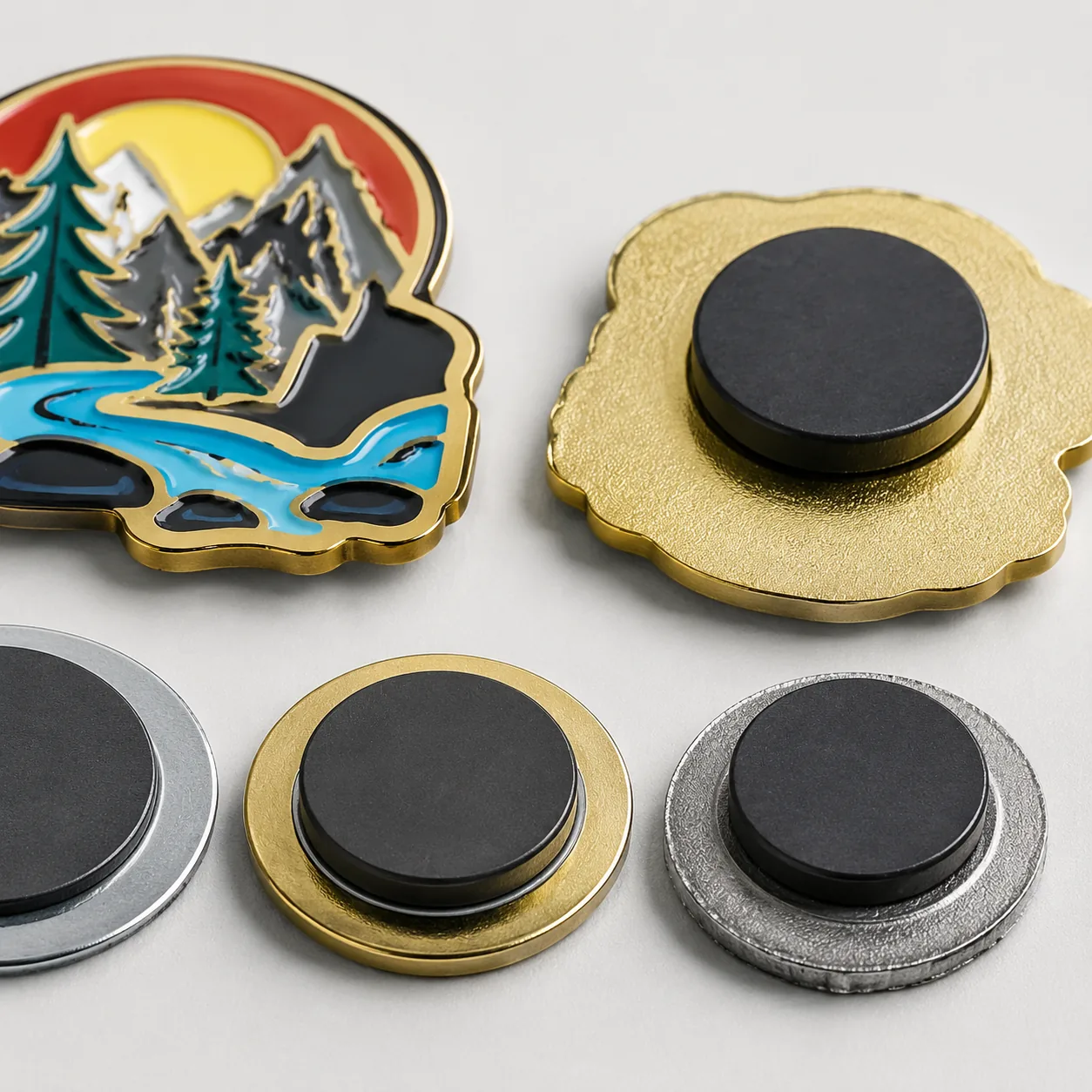
Hardware checks should be functional, not only visual. Butterfly clutch retention should typically hold 1.0-1.5 kgf on a straight pull; rubber clutch retention should hold about 0.8-1.2 kgf. Split rings should return closed after opening 3-4 mm. Jump rings should show no visible gap above 0.20 mm after assembly. Magnet backs should be centered, fully glued and checked after a dwell period; a magnet that releases after 24 hours is a major defect even if it appeared acceptable during packing.
Inspect Finish and Packaging Separately
Separate decoration, plating, hardware and packaging in the inspection report. This prevents arguments where different defect types are averaged together and makes rework decisions clearer. Missing clutches can often be corrected in hours. Wrong plating shade, contaminated enamel or incorrect epoxy usually requires sorting, refinishing or replacement production.
For enamel pins and coins, reject wrong color, missing fill, contamination, overflow across raised metal, visible pits in the main logo, dirty recessed areas and hard enamel that is not flush when the specification requires flush polish. For epoxy-coated pins or keychains, reject dome overflow, fisheyes above 0.50 mm, yellowing, trapped dust in central artwork, edge lifting and sticky or uncured surfaces. Dark artwork needs stricter epoxy control because dust, bubbles and fisheyes are more visible.
For plating, reject exposed base metal, black oxidation spots, peeling, burnt rough areas, uneven antique wash, stains that cannot be wiped off with a dry cloth and obvious shade mismatch within the same SKU. Compare cartons side by side against the golden sample. A single carton may look acceptable until it is placed next to another carton from a different plating bath.
Packaging defects become expensive after kitting and distribution. Treat wrong card orientation, missing polybag, unsealed bag, incorrect barcode, mixed colors in one inner carton, unreadable carton label, missing spare clutches and short master-carton count as major defects. A small bag wrinkle is minor; an open bag that allows products to scratch each other in transit is major.
Use an Evidence-Based Floor Checklist
The inspector should work from the approved artwork, golden sample, purchase order, packing instruction and carton-mark file. If those documents conflict, inspection should pause before sampling starts. The report should include SKU codes, carton numbers, defect counts, measurement records and photos. A defect photo without SKU and carton traceability is weak evidence when deciding rework, chargebacks or partial release.
- Confirm factory name, PO number, SKU list, production quantity, packed quantity and carton count before cartons are opened.
- Select cartons randomly from top, middle and bottom pallet positions; do not accept factory-picked cartons as the only sample source.
- Sample each SKU separately when artwork, size, plating, attachment or packaging differs.
- Verify width, height, thickness, plating finish, enamel colors, backstamp, attachment type and packaging against approved references.
- Inspect under neutral white light at 50-60 cm viewing distance for 5-8 seconds per piece, then examine suspected defects closer.
- Run functional checks on a sub-sample: clutch pull, split-ring closure, clasp action, magnet adhesion, epoxy adhesion and barcode scan.
- Count inner bags, backing cards, spare clutches, master-carton quantity and shipping marks.
- Record every defect with photo, severity, SKU code and carton number; do not merge different SKUs into one tally.
Carton drop testing should be included only when packaging is complete and the buyer has specified the method. A practical check is one drop sequence on a sealed master carton from 60-80 cm depending on carton weight, followed by inspection for broken products, loose pins, opened bags or crushed retail cards. For premium gift boxes or collector packaging, agree on the drop-test standard before production because the test can damage otherwise saleable goods.
Decide When 100% Sorting Pays
AQL is a risk-control method, not a promise that every unit is perfect. For most distributor and brand orders, final random inspection is the best balance of cost and schedule. A full visual sort typically adds 1-3 production days per 5,000-10,000 simple pieces and about USD 0.015-0.06 per piece for pins or keychains. Items with epoxy domes, serial numbers, QR codes, moving parts or multi-component assemblies cost more to sort accurately.
Use 100% inspection when defects are likely to be concentrated in high-risk features or the commercial impact of one bad unit is high. Good candidates include dual-post brooches, spinner pins, hinged coins, bottle-opener keychains, epoxy domes over dark artwork, serialized challenge coins, QR-coded metal tags, retail blind-bag sets and licensed merchandise sold at full price. Also use 100% sorting after a failed AQL inspection if the issue is sortable, such as missing clutches, mixed backing cards, open jump rings or visible front scratches.
Do not use 100% inspection to compensate for vague specifications. If plating tone, enamel depth, scratch limits or acceptable shade variation were never defined, a full sort creates a larger argument rather than a cleaner shipment. Lock the golden sample, Pantone references, plating chip, drawing tolerances and packaging mockup before mass production begins.
Budget Lead Time, MOQ and Reinspection
Factory QC is usually included in the quoted FOB unit price. Third-party inspection is normally paid by the buyer and often costs USD 150-300 per man-day in major Zhejiang, Guangdong and Jiangsu production areas, excluding travel surcharges for remote factories. Booking usually needs 2-4 working days of notice, inspection takes about 1 day, and failed lots may need 2-7 days for sorting, rework or replacement depending on defect type.
FOB prices vary by size, base metal, plating, enamel count, mold complexity, attachment and packaging. As working ranges, simple 25-35 mm soft enamel pins often run USD 0.35-1.20 at 500-5,000 pcs; metal keychains commonly run USD 0.55-1.80; and 40-50 mm challenge coins often run USD 1.20-4.50. Typical MOQs are 100-300 pcs per design for pins, 300-500 pcs for keychains and 100-300 pcs for coins, but meaningful price breaks usually start at 1,000 pcs per SKU.
| Control option | Typical added time | Typical cost impact | Best use case |
|---|---|---|---|
| Factory inline QC | 0-1 day | Usually included in FOB price | Repeat orders and simple designs |
| Final random AQL inspection | 1 inspection day plus 2-4 days booking | Often USD 150-300 per man-day | Most orders above 1,000 pcs per SKU |
| 100% visual sorting | 1-3 days per 5,000-10,000 pcs | About USD 0.015-0.06 per simple piece | Retail, licensed or failed AQL lots |
| Rework plus reinspection | 2-7 days | Rework cost plus second inspection fee if agreed | Major defect found before shipment |
State reinspection rules in the PO. If the lot fails due to factory-caused defects, the factory should sort or replace goods and pay for reinspection. If the buyer changes acceptance standards after production, the buyer should expect to carry the extra inspection or rework cost. Also define whether partial shipment is allowed; for event orders, releasing accepted SKUs while holding failed SKUs can protect the deadline.
Before placing the order, confirm the AQL level, defect classes, golden sample reference, drawing tolerances, plating thickness, color standard, inspection timing, packing method and decision rule after failure. A pin order needs post alignment, clutch retention and card orientation checks. A keychain order needs split-ring closure, chain assembly and plating wear checks. A challenge coin order needs rim dents, relief clarity, antique wash and thickness checks. A magnet order needs pull force, glue coverage and dwell testing. Clear acceptance criteria reduce pressure to approve borderline goods when the vessel closing date or event date is near.
Have a project? Send your artwork and target quantity and we’ll reply with a detailed quotation within 12 working hours.
Ready to get this made?
Send your sketch, target quantity and ship-date. Detailed quotation in 12 hours.



