Fastest Custom Promo Items for Trade Shows in 2026
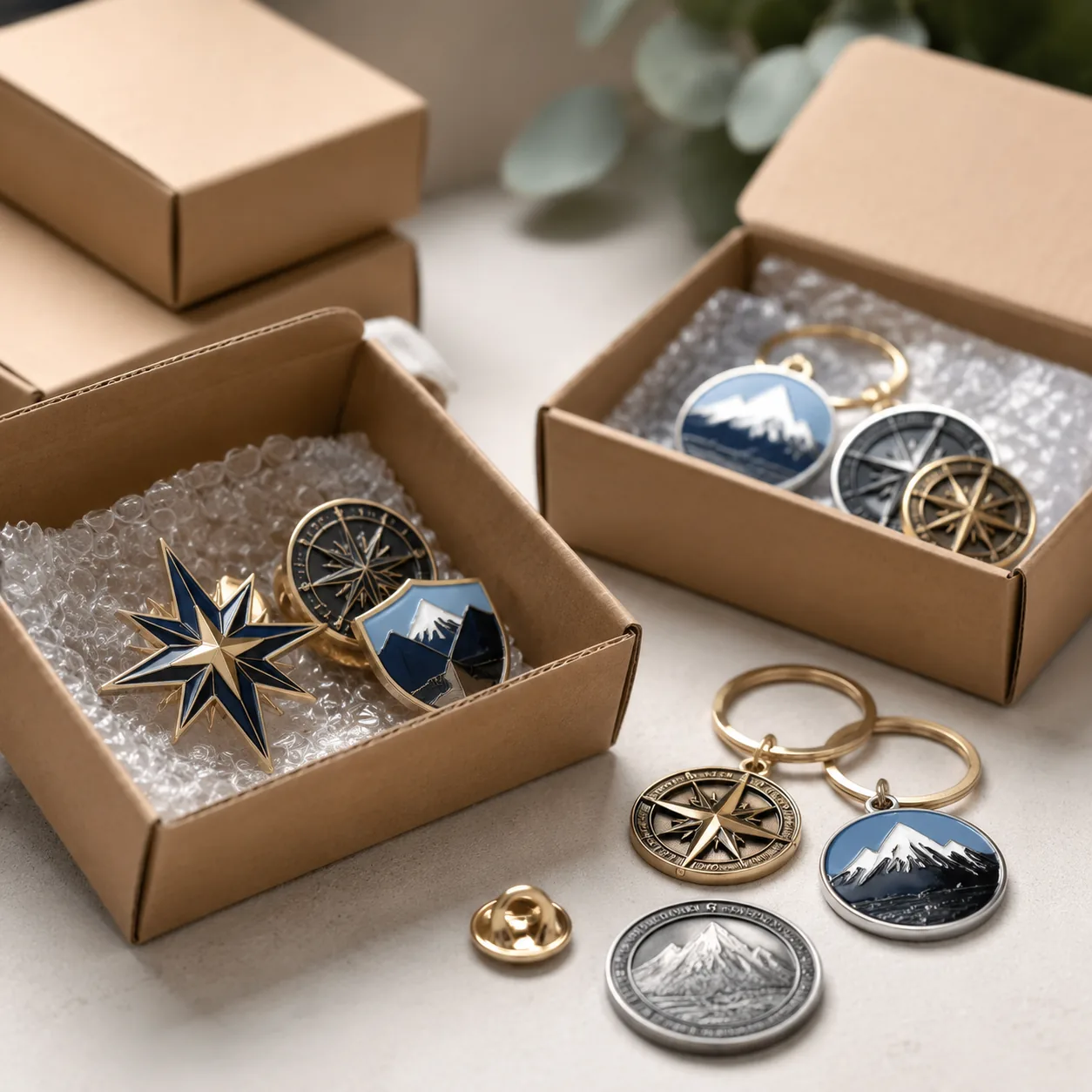
Choose the manufacturing route before you choose the giveaway
The most common rush-order mistake is assuming any promo item can be accelerated if budget increases enough. In practice, the hard limit is the process stack: artwork cleanup, engineering review, tooling release, plating or print queue, curing or baking, assembly, QC, and export packing each consume fixed time. If your trade show opens in 18 to 25 calendar days, one wrong product category can remove the entire schedule buffer before mass production even starts.
For 2026 event buying, the fastest item is rarely the most premium, and the cheapest item is not automatically the safest. A woven patch with a merrow border or heat-cut edge usually ships faster than a soft enamel pin because it avoids die striking, plating, baking, and color-fill inspection. A printed acrylic keychain can be faster than both when the cut path is simple, the vector file is clean, and no epoxy dome is required. Buyers who compare processes at RFQ stage usually avoid the two most expensive outcomes: approving a specification that cannot ship on time, or simplifying so aggressively that the giveaway no longer supports the brand.
This comparison covers the categories most often rushed for exhibitions: enamel pins, acrylic and zinc alloy keychains, magnets, challenge coins, woven patches, and polyester lanyards. The ranges below reflect standard export production in East China under normal factory loading, with artwork approved on day 0 and no public-holiday disruption. They are planning ranges, not guarantees. Final timing still depends on artwork quality, finish selection, quantity, proof approval speed, carton count, and whether the shipment moves by express courier, air freight, or consolidated air cargo.
Lead-time benchmark by category, MOQ, and FOB cost
| Product | Typical MOQ tiers | Tooling needed | Sample route | Mass production lead time | Rush-safe quantity | Typical FOB unit price | Key process limits |
|---|---|---|---|---|---|---|---|
| Soft enamel pin, iron, 32 mm, 1.2-1.5 mm thick | 100 / 300 / 500 pcs | Yes, stamped die | Digital proof; physical sample optional | 7-11 days | 100-1,500 pcs | $0.34-$0.78 | Recessed line about 0.25 mm minimum; raised metal about 0.30 mm minimum; text usually needs 1.2-1.5 mm cap height; 4-6 colors is safest for rush |
| Printed acrylic keychain, 50 mm, 3 mm clear acrylic | 100 / 300 / 500 pcs | No metal die; laser-cut path required | Digital proof; sample optional | 4-7 days | 100-3,000 pcs | $0.38-$0.92 | Simple outer contour runs fastest; white underprint adds little risk; epoxy dome usually adds 1-2 days and higher scratch-inspection load |
| Zinc alloy keychain, soft enamel, 50 mm, 3-4 mm thick | 100 / 300 / 500 pcs | Yes, mold | Physical sample recommended for irregular shapes | 10-14 days | 100-1,000 pcs | $0.88-$2.10 | Mold setup, polishing, plating, and assembly reduce flexibility; cutouts, swivel parts, and multi-piece assembly increase scrap exposure |
| PVC fridge magnet, 2D, 50-63 mm | 200 / 500 / 1,000 pcs | Yes, mold | Physical sample recommended | 10-15 days | 200-2,000 pcs | $0.55-$1.38 | Undercuts, multiple raised levels, and soft PVC color curing extend the schedule; color matching is slower than flat print |
| Stamped challenge coin, 44.5 mm, 3-3.5 mm thick | 100 / 300 / 500 pcs | Yes, die | Physical sample often required | 10-16 days | 100-800 pcs | $1.15-$2.80 | Edge text, cutouts, dual plating, and sequential numbering increase remake risk; antique finish consistency is batch-sensitive |
| Woven patch, 75 mm, merrow or heat-cut edge | 100 / 300 / 500 pcs | No metal die | Digital proof; sample optional | 4-6 days | 100-5,000 pcs | $0.24-$0.68 | Fine text below about 1.0 mm cap height may lose clarity; merrow border is usually faster than laser-detail contour |
| Sublimated polyester lanyard, 20 x 900 mm | 100 / 300 / 500 pcs | No hard tooling | Digital proof; sample optional | 3-6 days | 100-10,000 pcs | $0.39-$1.08 | Standard swivel hook, buckle, and no individual retail packing keep sewing and assembly fast |
If speed is the top priority, sublimated lanyards and woven patches usually rank first because they avoid metal tooling and plating queues. Printed acrylic keychains are also strong rush candidates when artwork is final and the perimeter is not highly irregular. Metal items can still fit a short timeline, but risk rises sharply once the design includes cutouts, more than six enamel colors, custom back stamps, multiple attachment points, or special finishes such as dual plating, glow fill, glitter, pearl pigment, or epoxy dome.
A practical first screening question is simple: does the item require a die or mold? If yes, add roughly 2 to 4 calendar days of schedule exposure before counting approval loops, remake risk, or freight handoff. On many rush orders, the delay is not the press or casting cycle itself. It is waiting on approval of line thickness, plating tone, backing card layout, barcode labels, warning stickers, or carton split instructions.
Where rush projects actually fail
Rush jobs usually break in three places: artwork, finishing, and approvals. Artwork is the first failure point. A pin or coin design with 0.15 mm lines, text strokes below 0.20 mm, or enclosed voids below process minimum usually needs redraw before tooling can be released. For metal products, a safer rush specification is line width at or above 0.25 mm, raised metal width above 0.30 mm, enclosed gaps above 0.35 mm, and minimum text height around 1.2 to 1.5 mm depending on font weight. By contrast, a lanyard file can often move straight to print if repeat length, logo spacing, bleed, and Pantone references are already clear.
Finishing is the second failure point. Metal goods add manual and semi-manual stages buyers routinely underestimate: die striking or casting, trimming, polishing, plating, color filling, oven baking, attachment soldering, surface inspection, and repacking after QC. Queue time matters as much as run time. Bright nickel, bright gold, black nickel, and antique brass are standard finishes and generally move faster than custom mixed tones or dual-plated parts. Epoxy dome, glow powder, glitter, pearl pigment, and large translucent color areas add handling time and increase scrap risk because they amplify cosmetic defects.
Approvals are the third failure point, and often the most avoidable. If the workflow requires a pre-production sample, then a photo confirmation, then packaging signoff, the project can lose 4 to 8 calendar days without any factory delay. For event deadlines, experienced buyers often use the digital proof as the binding production release for lower-risk items and reserve physical samples for higher-risk products such as challenge coins, hinged keychains, or molded PVC. On tight schedules, slow decision structure is often a bigger threat than factory capacity.
In practical terms, bottleneck intensity usually ranks like this: lowest risk for sublimated lanyards, woven patches, and flat printed acrylic; medium risk for simple soft enamel pins and flat printed magnets; highest risk for challenge coins, multi-level zinc alloy keychains, and PVC magnets with undercuts or multiple raised layers. Inside a three-week window, that risk ranking matters more than a difference of $0.08 per piece.
What compresses well, and what degrades under rush
Some categories survive simplification well, while others lose their value proposition if compressed too hard. Lanyards, woven patches, and acrylic keychains usually remain commercially acceptable after spec trimming because you can remove optional packaging, reduce accessory choices, and keep standard hardware without damaging the base product. Challenge coins and enamel pins are less tolerant. If you cut thickness, remove edge detail, or accept unstable antique shading, the item may still ship on time but feel noticeably cheaper in hand.
For example, a soft enamel pin can usually be accelerated by moving from 1.5 mm to 1.2 mm thickness, limiting the design to 4 to 6 fill colors, choosing iron instead of zinc alloy, using one butterfly clutch instead of two posts, and switching from individual carding to bulk polybag packing in lots of 50 or 100 pieces. At 500 pcs, that combination can reduce FOB by roughly $0.08 to $0.18 per piece and save 1 to 3 production days. At 1,000 pcs, savings often scale to $80 to $180 total before freight. But if the design depends on tiny lettering, recessed textures, dual plating, or precise antique contrast, oversimplification creates a weaker product rather than a faster good one.
Acrylic and textile items are more tolerant when artwork is photo-based, gradient-heavy, or typographically fine. A 3 mm acrylic keychain with CMYK print, white underbase, and standard split ring will usually preserve a complex logo better under time pressure than a metal item forced into thicker outlines and fewer colors. Metal works best when the artwork is bold, uses closed shapes, and remains legible after process-driven simplification.
Cost, rush premiums, and the real landed budget
Rush pricing is rarely a single surcharge line. The premium usually appears through prioritized labor, overtime on assembly or packing, higher scrap allowance, split-carton handling, and upgraded freight. For common event quantities such as 300, 500, and 1,000 pcs, the premium is usually lower on textile and printed goods than on plated metal goods because the process chain is shorter and scrap is easier to recover.
A useful planning rule for 2026 is this: when the normal production window is under 7 working days, the rush premium often stays around 5% to 12%. When the standard lead time is 10 to 15 working days and you want to compress it by 25% or more, the premium often rises to 12% to 25%, especially if the shipment also needs air transport. For metal products that require overtime plating, hand color fill, or special pack-out, premiums can reach 30% on small lots under 300 pcs.
Freight can overtake ex-factory value surprisingly fast on low-value goods. For example, 1,000 sublimated lanyards may total only $520 to $850 FOB, but express courier on 2 to 3 export cartons can add $180 to $420 depending on destination and billable weight. Air freight plus local customs handling is often cheaper per kg on larger lots, but it usually requires more coordination and less schedule slippage at cargo handoff. As a planning guide, allow about 3 to 5 days for express courier, 5 to 9 days for airport-to-airport air cargo plus clearance, and 30+ days for sea freight, which is normally irrelevant for urgent event orders.
That is why experienced buyers compare cost per on-time usable piece, not cost per ordered piece. A $0.58 lanyard that reaches the venue before exhibitor setup is cheaper than a $0.42 pin that misses the show and sits in storage. A common strategy is to split the order: one fast functional item with high on-time probability, plus one premium metal item only if the schedule still preserves at least a 3-day cargo buffer after final approval.
Specification choices that buy real days
- Use stock hardware whenever possible: butterfly clutch, split ring, lobster clasp, swivel hook, bulldog clip, or standard safety buckle.
- Keep size inside proven rush ranges: pins 25-38 mm, coins 38-45 mm, keychains 45-57 mm, patches 65-90 mm, and lanyards 15-20 mm wide.
- Limit rush metal jobs to 4-6 enamel colors and avoid glitter, glow, pearl, or large translucent fill areas.
- Choose standard plating such as bright gold, bright nickel, black nickel, or antique brass; avoid dual plating on deadline-sensitive jobs.
- Skip custom retail packaging unless it materially changes presentation; bulk pack or simple polybag packing often saves 1-3 days.
- Approve digital proofs within 12-24 hours and assign one final decision-maker to avoid internal loops.
- Set QC expectations early, typically AQL 2.5 for major defects and AQL 4.0 for minor defects on promo-grade goods.
- Define packing targets before production, including outer-carton weight under 15 kg for courier-friendly export handling and fewer repack delays.
The largest time savings usually come from standard hardware and simpler pack-out, not from trying to push the factory after tooling starts. Buyers often focus on removing one day from manufacturing while ignoring a two-day delay caused by custom backing cards, barcode labels, suffocation warnings, insert cards, or carton sorting by region. Packaging is part of the production schedule, not an afterthought.
Tolerance expectations also affect speed. If you demand near-perfect enamel leveling, highly uniform antique tone, or zero visible pinholes across an entire low-cost metal run, you are effectively specifying slower manual inspection and higher remake risk. For event giveaways, realistic tolerances are usually more useful than premium cosmetic standards most booth visitors will never notice. Typical factory tolerances for promo metal goods are about +/-0.2 to +/-0.4 mm on overall size, +/-0.1 to +/-0.15 mm on thickness, and moderate plating-tone variation within the same batch. For lanyards, width tolerance is commonly about +/-1 mm, cut-length tolerance about +/-5 mm, and sewn hardware alignment variation about +/-3 mm. For acrylic pieces, laser-cut edge tolerance is often around +/-0.3 mm depending on shape complexity.
Best product by deadline window
With 30 or more calendar days before the event, almost every mainstream custom category is still viable, including challenge coins, molded PVC magnets, and more detailed zinc alloy keychains. This is the range where a pre-production sample is still realistic, one revision cycle can be absorbed, and premium metal pieces begin to make commercial sense.
With 18 to 25 calendar days, the strongest options are sublimated lanyards, woven patches, printed acrylic keychains, and simple soft enamel pins. Challenge coins are possible but less comfortable, especially above 1,000 pcs or when the specification includes cutouts, edge text, sequential numbering, or dual finishes. For magnets, flat printed or simple 2D PVC is safer than layered construction. In this window, buyers should target products whose normal lead time is no more than 7 to 10 production days, leaving the remaining days for proofing, QC, and freight.
With 10 to 17 calendar days, buyers should think in terms of survivable products rather than ideal products. Lanyards are usually the safest option. Woven patches remain strong. Acrylic keychains are often the best premium-looking compromise. Simple soft enamel pins remain possible only when artwork is clean, quantity is moderate, tooling is straightforward, and approvals are immediate. Below 10 calendar days, any fully custom item becomes a case-by-case feasibility review. In that zone, stock-base products with custom print usually outperform fully custom molded items.
How to RFQ when the event date is already close
Start with a two-column internal brief: must-have outcome and maximum acceptable compromise. If the must-have is booth visibility or staff identification, pick the fastest category first and then optimize size, finish, and packaging. If the must-have is prestige for VIPs, media kits, or channel partners, reduce quantity and protect the metal specification, but prepare a second lower-risk item for the broader audience.
Send one RFQ that compares two or three product types against the same in-hands deadline instead of requesting one item in isolation. Include quantity, destination country, target delivery date, artwork files, preferred dimensions, hardware, packaging method, Incoterm, and whether a physical sample is mandatory. Ask for best-case lead time, safe-case lead time, latest artwork approval date, latest cargo cutoff date, carton estimate, net and gross weight estimate, and the exact assumptions behind the quote.
The fastest path is usually a rush-feasibility review before design polishing starts. That allows the factory engineering team to flag line widths below 0.25 mm, product bodies above 60 mm, unusual plating combinations, nonstandard hooks, carton split requirements, or packing instructions that force manual sorting. As a practical rule, shortlist one fast textile or printed item and one premium metal option, then release only the option that still preserves at least a 3-day buffer before cargo cutoff and at least a 1-day internal buffer before venue delivery. That approach is usually safer than forcing one attractive but schedule-fragile specification into a timeline it is unlikely to survive.
Have a project? Send your artwork and target quantity and we’ll reply with a detailed quotation within 12 working hours.
Ready to get this made?
Send your sketch, target quantity and ship-date. Detailed quotation in 12 hours.



