Failure Modes That Inflate Custom Pin Costs in 2026
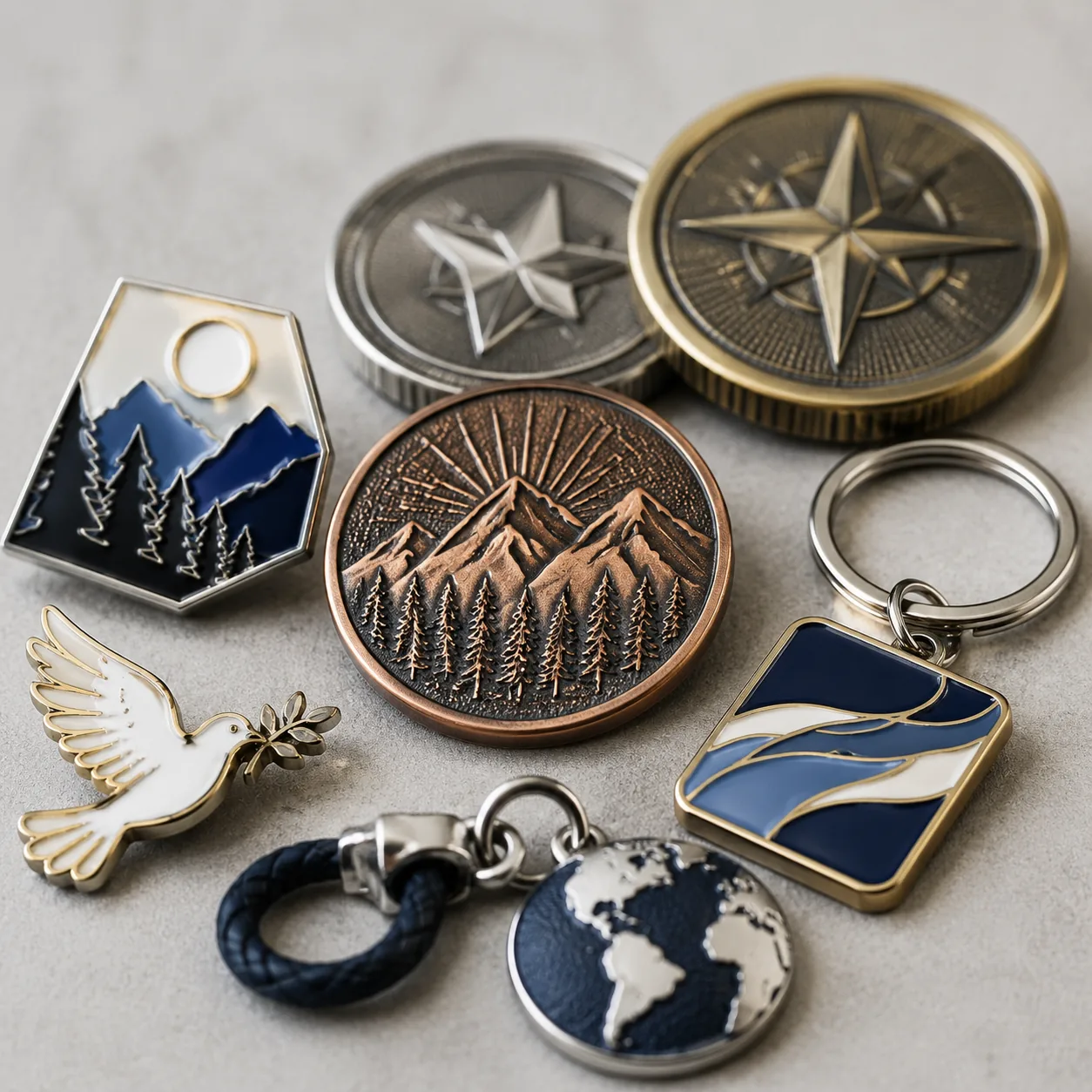
The real cost spike in custom pins is usually process failure, not the quote or tariff line
In 2026, tariffs, ocean freight, and FX still matter, but on most custom pin programs the larger controllable cost driver is factory-side instability: die correction, enamel remake, plating rework, cosmetic hand sorting, extra sample rounds, and replacement freight after arrival defects. On a standard 35 mm stamped iron soft enamel pin, 1.2 mm thick, 4 spot colors, butterfly clutch, individual polybag, FOB China at 1,000 pcs typically sits around USD 0.43-0.60. Yet the same item often ends up costing USD 0.62-0.78 per usable unit once preventable losses are included: 4-8% extra production to cover rejects, one delayed sample loop, tighter manual sorting, and partial air reshipment for shortages.
That is why the lowest piece-price quote is often the most expensive commercial option. Saving USD 0.02-0.04 on paper is easy; losing USD 0.10-0.20 per sellable unit through vague specifications is even easier. Common examples are artwork with 0.20 mm metal lines on a stamped die, a PO that only says “gold plating,” attachment hardware added after tooling release, or packaging that lets polished faces rub during 25-35 days of sea transit. The failure pattern is consistent across lapel pins, badges, brooches, medals, and keychains: ambiguity at RFQ stage becomes scrap, delay, or arrival claims later.
The practical fix is not simply switching suppliers. It is making the part production-ready before sampling starts. A workable pin specification should define process, finished size in millimeters, base metal, body thickness, line and gap minimums, plating tone and finish, enamel type, attachment location, packaging method, inspection distance, and AQL. When the workshop does not have to guess, scrap rates usually stay below 3%, sample approval moves in 7-10 days instead of 12-18, and quoted FOB stays much closer to the true landed cost.
1. Artwork that can be made once, but not repeated reliably at scale
Many pin designs are technically manufacturable, yet unstable in mass production. The usual problem is not total failure; it is slower throughput and rising defect rates. A 30-40 mm design may look clean in vector format but become unstable after die striking, polishing, filling, baking, and plating if it uses hairline strokes, tiny floating islands, unsupported cutouts, or micro text. The result is more enamel underfill, more hand touch-up, and a higher cosmetic reject rate at final inspection.
For stamped soft enamel pins, a stable 2026 baseline is narrower than many buyers expect. Raised metal line width should be 0.30 mm minimum, with 0.35 mm preferred for consistent output. Recessed enamel cell width should be 0.40 mm minimum, with 0.45 mm safer on long runs above 3,000 pcs. Isolated raised metal islands should be at least 0.50 mm, preferably 0.60 mm if they sit near a cutout. Bridge width around internal cutouts should be 1.20 mm minimum for small parts and 1.50 mm if the outline is long or asymmetrical. Raised text should generally be at least 1.20 mm high with simple sans-serif strokes; recessed unfilled text can work near 1.00 mm high if the strokes are not hairline. Below these thresholds, yield drops fast.
When artwork relies on sub-0.25 mm detail, serif micro text, dense line maps, or flat 2D detailing with sharp registration, the process should change rather than forcing stamping to behave like etching. Etched brass is usually better for fine 2D linework and flatter detail; die-cast zinc alloy is better for deeper relief, large cutouts, thicker sections, and irregular outlines, though edges are softer than stamping. Using the wrong process can trigger two tooling cycles instead of one. Typical 2026 tooling ranges are USD 60-120 for a basic stamped die, USD 80-150 for etched tooling plus film, and USD 120-220 for a zinc alloy mold; larger 3D cast molds often run USD 220-450 depending on cavity size and relief depth.
A stronger RFQ discipline is to request a redline production drawing, not just an artwork proof. The redline should mark overall size, line widths, enamel cell minimums, bridge widths, post locations, and any no-defect visual zones on the front face. That single document removes many of the disputes later described as “sample differs from artwork.”
- Request a redline production drawing with all critical dimensions in mm
- Approve minimum metal line width, recessed cell width, text height, and cutout bridge width before tooling
- Move sub-0.25 mm 2D detail to etched brass instead of forcing stamped dies
- Use die-cast zinc for thick bodies, relief, or irregular open shapes, not for fine-edge artwork
- If the design is borderline, approve one pre-production sample and one sealed golden sample before mass production
2. Thin gauges that save pennies but create warpage, weak solder joints, and presentation rejects
Reducing body thickness is a common cost-down request, but on custom pins it quickly becomes false economy. For compact stamped iron pins under 25 mm with no large cutouts, 1.0 mm can be acceptable. For most 30-45 mm soft enamel pins, 1.2 mm is the safer commercial minimum. For retail-grade, membership, or commemorative pieces where hand feel and flatness matter, 1.5 mm is a better baseline. Premium badges and brooches often justify 1.8-2.0 mm, especially if they will remain in inventory for 6-12 months or be mounted on rigid cards.
Geometry matters as much as nominal thickness. Long horizontal silhouettes, narrow necks, asymmetrical shapes, large internal cutouts, and dual-post layouts all increase flatness risk. Typical stamped thickness tolerance is ±0.10 mm to ±0.15 mm, but a part can still meet thickness tolerance and fail visually because it rocks on the backing card or leans on fabric. Post soldering adds another risk: thinner bodies distort more under heat and are more likely to show sink marks, solder witness, or slight post misalignment on the face side.
The cost tradeoff is usually small. On a 35 mm stamped iron soft enamel pin at 1,000 pcs, dropping thickness from 1.2 mm to 1.0 mm may only save USD 0.02-0.03 FOB. That saving disappears if the thinner build creates even a 3% presentation reject rate, bent posts during packing, or local rework to flatten parts. On a premium 35 mm brass imitation hard enamel pin, moving from 1.2 mm to 1.5 mm often adds just USD 0.05-0.08 FOB while materially improving rigidity, polish stability, and perceived quality.
| Build choice | Typical FOB at 1,000 pcs | Typical MOQ | Lead time after sample approval | Main failure risk | Recommended spec |
|---|---|---|---|---|---|
| 25 mm stamped iron soft enamel, 1.0 mm | USD 0.36-0.45 | 300-500 pcs | 12-15 days | warpage on thin or open shapes | use only for compact designs with no large cutouts |
| 35 mm stamped iron soft enamel, 1.2 mm | USD 0.43-0.60 | 300-500 pcs | 12-18 days | baseline commercial risk | best standard for most promo and corporate orders |
| 35 mm brass imitation hard enamel, 1.5 mm | USD 0.70-0.98 | 300 pcs | 14-20 days | polish scratches and plating defects show clearly | use for retail, gifting, and long shelf-life programs |
| 45 mm die-cast zinc alloy, 2.0 mm | USD 0.88-1.35 | 300 pcs | 15-22 days | softer edge definition on fine artwork | choose when relief, thickness, or irregular shape requires casting |
| 50 mm die-cast zinc alloy with cutouts, 2.5 mm | USD 1.10-1.65 | 300 pcs | 18-25 days | sink, porosity, and rotation if hardware is underspecified | use dual posts or 2 magnets and wider bridge sections |
3. Plating specs that are too vague to control color, adhesion, or shelf life
A purchase order that says only “gold,” “silver,” or “black nickel” is incomplete. The factory still has to choose brightness, tone, undercoat, rack or barrel method, anti-tarnish topcoat, and how much lot-to-lot variation is acceptable. Those choices directly affect appearance, corrosion behavior, and sorting yield.
For most custom pins, decorative plating thickness is typically around 0.03-0.10 micron on the finish layer, not heavy jewelry plating. Asking for unrealistic build levels usually creates confusion rather than better performance. A stronger specification is functional and visual: bright nickel over iron with clear anti-tarnish topcoat; imitation gold over brass to approved reference sample; matte black nickel with front-face cosmetic standard tighter than side-edge standard; or antique silver with approved physical sample because wash depth and tone can shift by lot.
Process choice also matters. Rack plating usually gives better face consistency and edge coverage on higher-grade pieces but costs more; barrel plating is cheaper yet can create contact marks and wider tone variation, especially on small polished parts. If the front face is highly visible, such as imitation hard enamel or mirror-polished metal-only pins, specify rack plating for the approved sample and mass run. If sea shipment, tropical climate, or 6-12 month storage is expected, ask for anti-tarnish topcoat and at least a basic internal corrosion comparison, such as 24-hour salt-spray screening between finish options on sample pieces. This is not a full qualification test, but it is far better than no benchmark.
High-polish surfaces expose defects that might pass on textured soft enamel: pits, edge burn near posts, micro-scratches, slight clouding, and tiny discoloration are all more visible. That means the cosmetic criteria should tighten as reflectivity rises. A practical front-face rule is no visible pits, exposed base metal, burn marks, or scratches at 30 cm under D65 or neutral white light, with side edges held to a slightly more commercial standard.
4. Color approval based on screens instead of actual enamel behavior
Color disputes often begin with digital art that was never a realistic process reference. On screen, fills appear brighter and more uniform than enamel in production. Soft enamel sits below raised metal and can show slight meniscus effects. Imitation hard enamel is polished flat and can lighten slightly after finishing. Transparent colors darken over gold or black nickel bases. Glitter density can vary in small cells. Tiny filled areas may look darker because surrounding metal occupies more of the visible face.
The efficient method is to separate critical colors from non-critical colors. Provide Pantone references for all fills where possible, but designate only the colors that actually determine brand acceptance as critical. On most corporate pin programs, that means two or three colors, not six or eight. Ask for close matching on those colors on the pre-production sample under neutral white light. For the remaining fills, visual approval to the signed sample is usually commercially sufficient. This cuts down repeat sample loops without weakening brand control.
Lead time expands quickly when every shade is treated as exact match. A normal pre-production sample is often 7-10 days. Add multiple rounds of color correction, transparent fills, glow pigment, glitter, or mixed plating and that becomes 12-18 days. Once sample approval slips against an event date, buyers often pay for split shipment or partial air freight. On a 1,000-piece order, even a 20 kg emergency air reshipment can add more cost than the entire original tooling charge.
A useful color clause is short and measurable: Pantone 186 C and Pantone 293 C are critical and must visually match the approved sample under D65 light; all other fills approved by visual match to sample; slight glitter density variation acceptable outside the logo area; no visible color contamination, pinholes, or underfill on the front face at 30 cm. That language is commercially usable. “Match artwork exactly” is not.
5. Attachment hardware chosen late, underspecified, or mismatched to the part weight
Hardware is not a finishing detail. It controls balance, rotation, comfort, and complaint rates. A 40 mm pin with one post often spins on fabric. A wide die-cast badge with one central magnet may sag or rotate. A brooch bar added after tooling release can force poor placement, visible imbalance, or back-side weld marks in the wrong area. These failures are expensive because they often appear only after mass production or after the goods are already in market.
A practical rule set is simple. One post is usually suitable for compact pins up to about 25 mm. From 30 mm upward, dual posts are safer, especially for horizontal, asymmetrical, or heavy designs. Butterfly clutches remain the lowest-cost standard. Rubber clutches reduce scratching but are less secure on heavier pieces. Deluxe locking clutches improve retention and usually add USD 0.03-0.08 per unit. Safety-pin or brooch-bar hardware generally adds USD 0.05-0.15 depending on size and assembly. Magnetic backs avoid puncturing fabric, but the PO should define magnet quantity, diameter, thickness, and target hold. For example: 2 magnets, each 10 mm diameter x 2 mm thick, spaced 24 mm apart on a 45 mm badge. That is far more useful than “magnetic back.”
Hardware should also be inspected functionally, not just visually. AQL 2.5 major and 4.0 minor is common for commercial programs; premium retail programs often tighten hardware function to AQL 1.5 major. At minimum, require post alignment check, clutch fit check, assembly adhesion check, and a basic pull or twist verification on a sampling basis. If the pin is carded, add a presentation check to confirm it sits squarely and does not lean on the retail card.
6. Packaging optimized for unit cost instead of transit behavior
Pins often pass outgoing QC and still arrive scratched, detached, oxidized, or shifted because packaging was chosen for appearance or minimum cost rather than transport behavior. A loose OPP bag is economical, but polished metal moving inside it during ocean transit can develop fine abrasion. Bulk packing lowers labor cost but raises the chance of post puncture, enamel chipping, plating rub, and bent clutches. Velvet pouches can leave lint on high-polish surfaces unless the item is sleeved first.
For standard B2B shipments, a dependable baseline is pin mounted on backing card, inserted into an OPP bag, then packed in layered inner bags or trays inside a double-wall export carton. For mirror-polished or imitation hard enamel products, use tissue, foam sheet, or other interleave between layers if units are not individually carded. For sea transit or long storage, add sealed inner liners and desiccant. The cost is modest, often USD 0.01-0.03 per unit for better bagging and interleave, yet it can prevent 3-5% arrival defects.
Carton specifications should also be written into the order. A practical export baseline is double-wall cartons, gross weight below 15 kg, limited void space, and packing orientation that prevents posts from puncturing adjacent units. If backing cards are oversized, ask the supplier to confirm carton count and stacking direction before pack-out. Card-corner damage frequently comes from carton optimization around standard dimensions instead of the actual retail card size.
This is one of the simplest places to exchange a small upfront cost for lower landed cost. Spending an extra USD 0.03-0.12 per unit on carding, sleeves, interleave, or improved carton setup is usually cheaper than absorbing local rework, retailer chargebacks, or replacement freight after arrival claims.
7. QC plans that inspect generally but miss the actual commercial failure points
Weak QC plans inspect everything broadly and nothing critically. On custom pins, the highest-risk zones are concentrated: underfill in small enamel cells, plating voids on prominent edges, polish marks on the front face, post or bar alignment, clutch function, and card presentation. A useful inspection plan weights those zones rather than treating every square millimeter equally.
For appearance, define both viewing condition and acceptance rule. A workable standard is front-face inspection at 30 cm under D65 or neutral white light, with no obvious scratches, color contamination, plating pits, exposed base metal, enamel overflow, or underfill visible without magnification. For dimensions on stamped pins, overall size tolerance of ±0.20 mm is realistic; attachment placement tolerance of ±0.50 mm is a practical target; body thickness tolerance of ±0.10 mm to ±0.15 mm is common depending on process and size. On polished imitation hard enamel, the cosmetic standard should be tighter than on textured soft enamel because defects are easier to see.
Batch control also matters. Tie production to one approved artwork revision, one redline production drawing, and one sealed golden sample. This prevents a frequent repeat-order failure: quote against old art, sample to revised art, then ship from whichever workshop file was still active. The production file set should include size in mm, substrate, thickness, process, plating, enamel type, Pantone list, attachment, packaging method, carton limits, and AQL. If any requirement is subjective, convert it to a marked photo standard or measurable tolerance before production starts.
Typical 2026 timing remains manageable when the specification is controlled: 7-10 days for pre-production sample, 12-18 days for mass production after sample approval, and 15-25 days for cast pieces, premium finishes, or retail packaging. The lowest landed cost usually comes from the order with the fewest preventable surprises, not the one with the lowest nominal FOB quote.
- Redline artwork with line width, gap width, text height, and bridge width in mm before tooling
- Choose stamped, etched, or die-cast based on detail level and geometry, not supplier habit
- Use 1.2 mm as a safer baseline for many 30-45 mm stamped pins; go thicker for premium or open-shape designs
- Specify plating tone, rack vs barrel if important, and anti-tarnish requirement in writing
- Limit strict Pantone matching to the colors that actually drive brand approval
- Lock hardware before tooling release and define quantity, spacing, and function checks
- Write packaging down to carding, bagging, interleave, desiccant, carton weight, and orientation
- Set inspection conditions, tolerances, and AQL around the real commercial failure points
Have a project? Send your artwork and target quantity and we’ll reply with a detailed quotation within 12 working hours.
Ready to get this made?
Send your sketch, target quantity and ship-date. Detailed quotation in 12 hours.



