Failure Modes in Custom Metal Promo Products and How to Spec Them
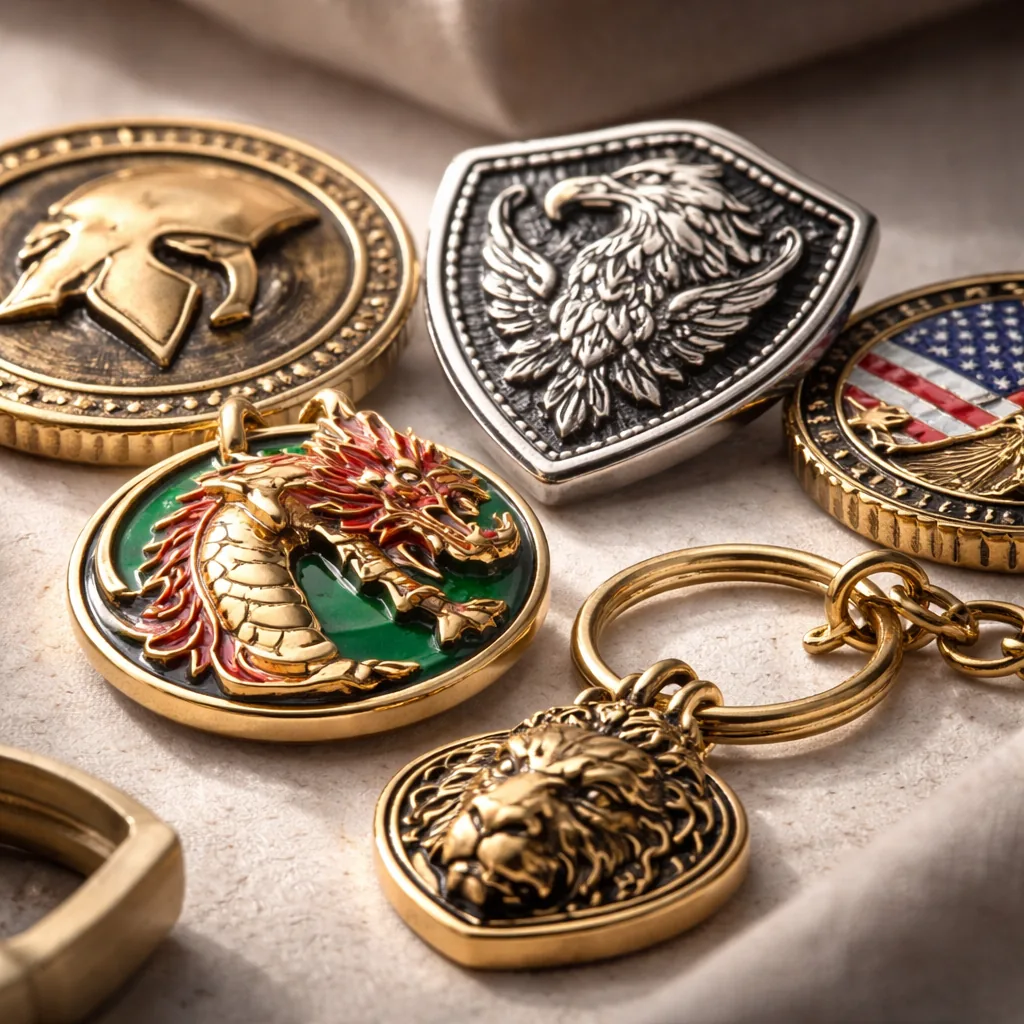
Why Most Orders Fail at the Same Six Points
The biggest production losses in custom metal promo products usually do not come from one dramatic defect. They come from small mismatches between what the buyer meant and what the factory can actually hold on line: line widths too fine for the chosen build, plating that is not matched to handling, backing hardware that suits the item but not the use case, or artwork that looks clean on screen but collapses in tooling. Once the order hits die-making, stamping, casting, filling, plating, and assembly, every vague instruction turns into a cost or delay.
For buyers, the practical problem is not knowing every process detail. It is knowing which failure mode is likely for the product you are buying, then writing a spec that blocks that failure before mass production. At ZheCraft, we see the same root causes repeat across enamel pins, coins, keychains, badges, patches, and lanyards, which is why the best RFQs are built around risk points, not just appearance.
This article is a failure-modes teardown: what breaks, why it breaks, and what to specify so the factory has a measurable target instead of a guess.
Failure Mode 1: Artwork That Cannot Survive Tooling
A design can look perfect in Illustrator and still fail at the tooling stage. The common offenders are tiny internal gaps, thin connector lines, crowded text, and gradients or visual effects that do not translate into stamped or cast metal. If the design forces the factory to shrink features below the practical minimum, the result is blurred edges, merged cavities, weak bridges, or extra manual cleanup that changes the intended look.
The safest fix is to write the artwork spec around the production method. For standard hard enamel pins and stamped badges, keep minimum line width at 0.25 mm to 0.30 mm, with minimum negative space of 0.20 mm to 0.25 mm. For soft enamel, 0.20 mm lines can work, but anything below 0.15 mm usually becomes a tooling risk. Small text should be no smaller than 5 pt equivalent at final size, and fine serif fonts should be avoided unless they are converted to outlines and checked at actual production scale. If you want openwork, cutouts, or layered relief, confirm the build method and ask for a pre-tooling review before sample approval.
A practical RFQ should state final size in mm, not artwork scale; minimum line width and gap; and whether the factory may simplify unsupported detail. For a 25 mm lapel pin, for example, a 0.18 mm bridge between two letters may look fine on screen but is not a safe production target. If the design depends on that bridge, increase the width or switch to a process that can hold it.
- State the final size in mm, not just the artwork scale.
- Mark the minimum line width and minimum gap you will accept.
- Ask for a tooling check before sample production when the design has fine text, cutouts, or layered relief.
- Reject any assumption that screen resolution equals production readability.
Failure Mode 2: Plating Looks Fine on Paper, Then Turns Patchy
Plating problems usually show up after the design is already approved, because the sample looked acceptable and the buyer assumed the finish was stable. In production, patchiness, tone variation, and edge burn happen when the surface prep is inconsistent, the base metal is rough, the part geometry traps solution, or the chosen finish is too thin for the environment. Even a good nickel or gold color can fail if the plating thickness is not specified or if the item will be handled heavily.
For most indoor promo items, a decorative plating thickness of 0.03 microns to 0.05 microns is common on visual finish layers, but that is not a durability target. For better abrasion resistance, ask for at least 0.1 micron on the exposed finish where feasible, and define the finish type clearly: shiny nickel, matte nickel, black nickel, antique brass, or two-tone. For items expected to be worn, carried, or touched repeatedly, also state whether you want salt-spray resistance, anti-tarnish coating, or clear lacquer. Do not assume antique finishes hide every defect; they can hide color variation while making residue and edge wear more visible.
If the color matters, specify the appearance standard and acceptability band. For example, “silver tone to match Pantone Cool Gray 4C equivalent, no yellow cast, no visible copper bleed at edges.” That is more actionable than “nice silver.” If the order includes multiple finishes, ask the supplier to separate plating baths and confirm whether any base metal migration is likely on sharp corners or thin edges.
| Plating choice | Best use case | Main risk if underspecified |
|---|---|---|
| Shiny nickel | General corporate giveaways | Patchiness and fingerprint visibility |
| Antique brass | Vintage-style coins and badges | Uneven dark wash and spot variation |
| Black nickel | Premium dark-toned items | Edge wear exposing base tone |
| Imitation gold | Presentation pieces | Color drift between batches |
Failure Mode 3: The Fill System Fails Under Real Handling
Enamel issues are rarely just about color matching. The deeper problem is fill depth, surface leveling, and how the color sits against the metal wall after curing. If the cavities are too shallow, the enamel may dome unevenly; if they are too deep, the surface can sink or trap bubbles. Mixed effects, such as glitter, transparent fill, glow, or epoxy dome coating, add another failure layer because each finish changes viscosity, curing behavior, and final height.
The spec should define the target fill level relative to the rim, not just the pigment. For soft enamel, the color is intentionally recessed below the metal edge, usually by 0.15 mm to 0.30 mm, so the metal line remains tactile. For hard enamel, the finish should be polished flush to within about ±0.05 mm on visible faces unless the design intentionally uses a raised effect. If you want glitter, translucent, or glow enamel, ask for a named control sample and define whether gloss, clarity, or height can vary. If the item will be worn, packed, or stacked, add a wear expectation because raised fill can chip at corners.
Be explicit about what level of variation is acceptable. A useful example is: “Main logo panels flush, background panels recessed 0.2 mm max, no sink marks deeper than 0.1 mm, no bubbles over 0.3 mm diameter, and no color overflow onto the metal border.” That level of detail gives QC a clear pass/fail check instead of a subjective judgment.
Failure Mode 4: Attachment Hardware Looks Cheap or Breaks in Use
Hardware failures usually surface after shipment, when pins spin on fabric, key rings open under strain, magnet-backed badges slide, or lanyard clips loosen. The issue is often not the hardware family itself but the mismatch between item weight, user movement, and attachment choice. A heavy brooch-style piece with a small butterfly clutch may be acceptable for light display wear, but it is a poor choice for repeated use or delicate fabric.
The spec should tie hardware to mass and use scenario. As a rule of thumb, a single butterfly clutch is suitable for lightweight pins up to about 8 g, while heavier pieces around 8 g to 15 g are better served by a deluxe clutch, rubber clutch, or dual-back support. For pins above 15 g, ask for a brooch pin, two clutches, or magnetic backing depending on fabric sensitivity and security requirements. For keychains, specify split ring diameter, chain length, and connector style; for badges and magnets, define anti-rotation or backing strength if orientation matters. For lanyards, call out clip type, breakaway force, and swivel preference.
If the item is meant for events, corporate uniforms, or retail resale, ask for hardware that can survive repeated attachment cycles rather than a one-time decorative fit. A practical RFQ should include the expected use case: “daily wear on woven cotton, remove/re-attach at least 50 cycles, no fabric puncture visible at 300 mm viewing distance.” That pushes the supplier to recommend the correct fastener instead of the cheapest one.
- Match hardware to expected weight, not just item type.
- Specify whether the item must be fabric-safe, theft-resistant, or quick-release.
- Call out anti-rotation needs for badges, magnets, and hanging items.
- Ask for hardware samples when the item will be worn daily or handled by the public.
Failure Mode 5: Dimensions Stack Up Into a Rework Problem
A single dimension is rarely the problem. Rework happens when thickness, rim width, chain length, backing size, or hole placement all stack slightly off in the same direction. One part may still pass its own tolerance, but the assembled product feels wrong: a badge sits crooked, a coin looks too thick for its diameter, or a lanyard clip lands too close to the print edge. These are integration failures, not isolated defects.
The cleanest fix is to specify the functional dimension and the allowable variation together. For many stamped or cast promo parts, ±0.2 mm is a realistic general tolerance on outer dimensions under 50 mm, with ±0.1 mm preferred for critical fit features such as backing cavities, magnet pockets, and insert slots. Thickness often needs a separate callout because a visually acceptable part can still fail packaging or assembly if it is 0.5 mm over target. If there are multiple linked dimensions, identify which one is primary and which can float.
For example, if a badge must sit flat in a presentation box, thickness and corner radius may matter more than the outer contour. If a keychain needs to align with a printed card, hole-to-edge distance and hole diameter become the critical dimensions. The point is to control the interface, not just the silhouette.
| Dimension | Common failure | Spec to write |
|---|---|---|
| Thickness | Product feels bulky or cannot fit packaging | Final thickness target with tolerance |
| Hole position | Clips or chains misalign | Center-to-hole distance and allowable drift |
| Rim width | Weak edge or poor visual balance | Minimum rim width and symmetry requirement |
| Assembly offset | Logo or hardware appears crooked | Max acceptable assembly misalignment |
Failure Mode 6: Surface Wear, Tarnish, and Handling Damage
Many buyers discover durability issues only after the first field use: darkening, rubbing at raised edges, scuffs in packed cartons, or color loss where the item contacts skin or clothing. This is especially common when a product looks excellent in a fresh sample but was not specified for wear, abrasion, sweat, or storage conditions. Decorative metal products are often judged as gifts, but they are handled like consumer goods.
If the item may be used outdoors, worn frequently, or stored for months before distribution, state the expected exposure up front. Nickel-free requirements, outdoor use expectations, and abrasion resistance should all be written into the order if they matter. Ask for wear testing on the relevant surface areas, not just a general visual check. A polished finish that survives shelf life may still be the wrong choice if it fingerprints heavily or shows edge wear after a few uses. A reasonable QC request is a 24-hour humidity hold, light rub test on raised edges, and carton transit check for scuff transfer.
This is where an honest trade-off matters: a harder or darker finish can hide handling marks better, but may also make surface defects more visible under direct light. The right spec depends on whether your priority is presentation, durability, or low reject risk in transit. If it is a badge for a conference uniform, say so. If it is a collectible coin that must keep its luster in retail packaging for 12 months, say that instead. Ambiguity here almost always turns into disputes later.
How to Write Specs That Reduce Rework
The most effective spec sheet is short but unambiguous. It names the build method, the finish, the critical dimensions, the hardware, and the acceptance criteria in plain language. It also separates appearance preferences from functional requirements so the factory knows what can flex and what cannot. If everything is labeled important, nothing is controlled.
Use one line for each critical item: size in mm, thickness in mm, plating type and thickness, color standard if relevant, attachment type, tolerance, and any wear or safety requirement. For example: “Pin, 30 mm, hard enamel, 1.5 mm thickness, shiny nickel plating, Pantone 186 C matched, 0.2 mm line minimum, butterfly clutch, no visible scratches over 0.3 mm, AQL 2.5 on major defects and 4.0 on minor defects.” That kind of line is easy to check at tooling, sample, in-line, and final inspection.
If you are ordering multiple product types in one promo set, do not assume the same spec logic applies to all of them. Coins, pins, badges, keychains, magnets, patches, and lanyards fail differently, so the spec should be product-specific even when the branding is shared. MOQ and lead time should also be stated separately by SKU. As a practical benchmark, many factories quote 100 to 300 pcs MOQ for simple enamel pins or keychains, 500 pcs for custom coins, 100 to 200 pcs for badges with special hardware, and 500 to 1,000 pcs for printed lanyards depending on construction. Typical lead times run 7 to 15 days for sampling and 15 to 30 days for production after sample approval, with rush orders often possible at higher cost.
For budgeting, FOB pricing usually falls into broad bands depending on size, finish, and complexity. Small hard enamel pins may run about USD 0.60 to 1.80 FOB at 500 pcs, while plated die-cast coins often land around USD 1.20 to 3.50 FOB, and custom keychains or badge holders commonly range from USD 0.80 to 2.50 FOB. Complex multi-layer items, epoxy domes, or mixed-metal finishes can move above those ranges. Writing the target range in the brief helps the factory propose a build that fits both spec and budget instead of over-engineering the quote.
What to Do Next
Start by marking the three highest-risk failure points in your current item: fine detail, plating durability, or hardware fit. Then rewrite the RFQ so each of those risks has a measurable spec, a tolerance, and an acceptance rule. If you already have artwork, ask for a production review before sampling; if you already have a sample, compare it against the same written spec rather than memory.
If you want the fastest path to lower rework, send one consolidated brief with the final size, build method, finish, target use case, MOQ target, and any must-not-fail requirements. That gives the factory enough information to flag problems early and keeps the order from drifting between design intent and production reality.
- Confirm final size, thickness, and build method before tooling.
- Write minimum line width, gap, and text size in mm or pt equivalent.
- State plating type, finish thickness, and wear expectation.
- Tie hardware to item weight and real use case.
- Add AQL, tolerance, and acceptance criteria in the RFQ.
- Request a sample approval step before mass production.
Have a project? Send your artwork and target quantity and we’ll reply with a detailed quotation within 12 working hours.
Ready to get this made?
Send your sketch, target quantity and ship-date. Detailed quotation in 12 hours.



